deleg_n

IAWRT will launch its latest publication, the Philippine Community Radio Experience, and feature the first showing of IAWRT’s latest global documentary. Displacement & Resilience: women live for a new day.

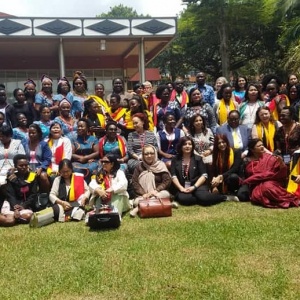
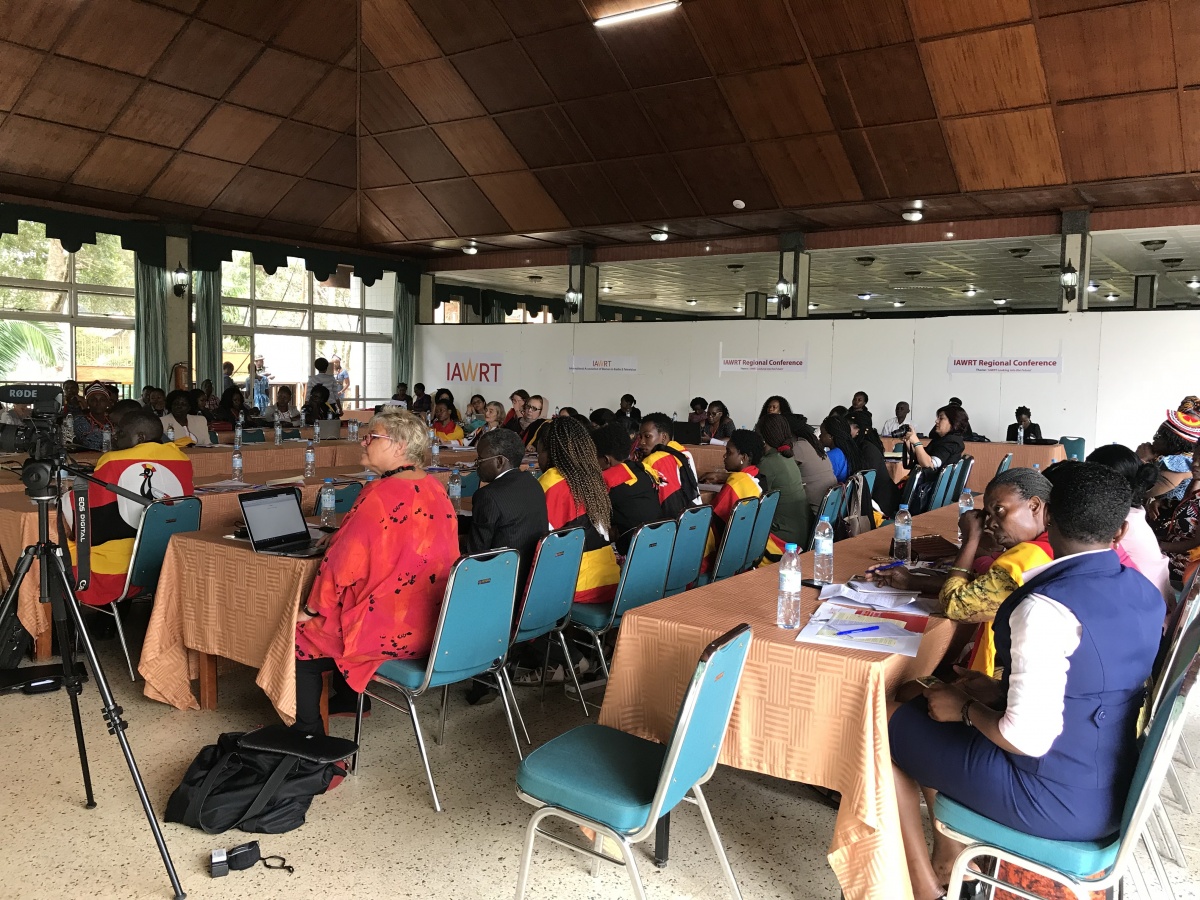
Around 60 members of International Association of Women in Radio and Television (IAWRT) all over the world have begun arriving to participate in the regional conference in Entebbe, Uganda.

The event will have some regional focus on media and women in the region, with addresses from the Hon. Frank Tumwebaze, Uganda’s Minister of Information and Communication Technology and the Hon Mary Karoro Okurut, Cabinet Minister in Charge of General Duties in the Office of the Prime Minister. She will oficially open the conference, representing the Speaker of the Parliament of Uganda the Rt. Hon Rebecca Kadaga.

Amplifying The People’s Voices: The Philippine Community Radio Experience and Challenges follows the official opening. It tells the story of the ups and downs of the community radio project in areas of the Central Philippines hard-hit by typhoon Yolanda (Haiyan) in 2013.   

“This book is a fruit of our labor – four years of hard work by the chapter and the community,” said Jola Diones-Mamangun, book project manager and IAWRT Philippine Chapter President.

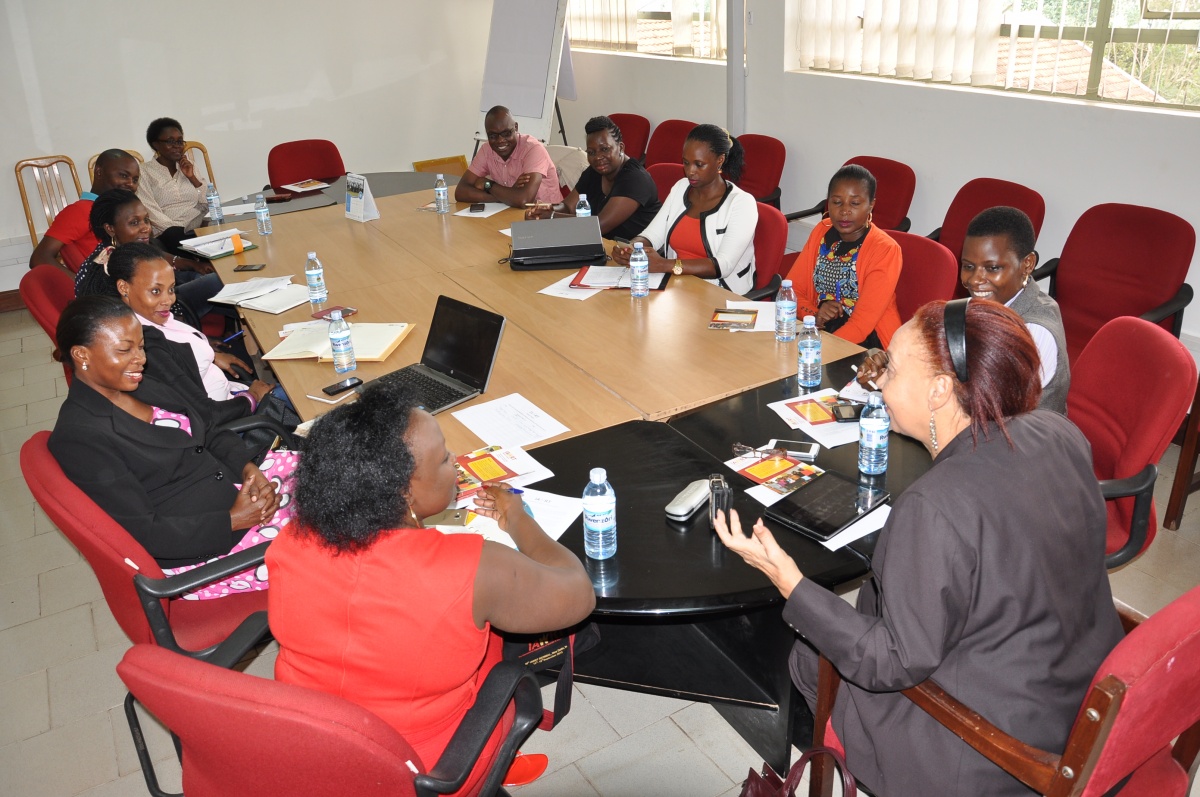
Workshops on community radio, proposal writing, countering gender-based online harassment and safety will be conducted. The IAWRT board has been meeting to finalize the program (pic right).

“The workshop on countering gender-based online harassment is about creating policies in the newsroom,” said Abeer Saady, journalist safety trainer and IAWRT Vice President.

She said her safety workshop will move away from women working in dangerous places—it will be about how to engender safety cultures in media workplaces.  

Two new chapters, in Afghanistan and Iraq, which are already active, will be officially installed.

Uganda Chapter head, Sarah Nakibuuka Bakehena says the regional conference will also be about providing the means to enhance skills, “members and chapter heads will undergo capacity training aimed to give them skills to raise resources locally for their activities. It will include training in safety, fundraising, proposal writing and how to establish community radio.”

IAWRT President Violet Gonda says a lot of work will go into setting IAWRT’s future direction, “this regional conference is now going to be no less than a mini-biennial” she said. “We have to discuss and arrive at conclusions about our structural changes and chart out the roadmap ahead vis-à-vis funding and our organizational development, which will include strengthening IAWRT chapters and policies. We want to discuss new areas of programs, such as: Rural Women & Media (recently started), expansion of our Community Radio project, Gender Mainstreaming, and a pilot project on raising awareness about gender-based online harassment.”

Full program attached.

The full text of the Presidents letter to members Uganda Regional Conference is available to members after logging into ‘my account – members download – international board.


me too Uganda 3

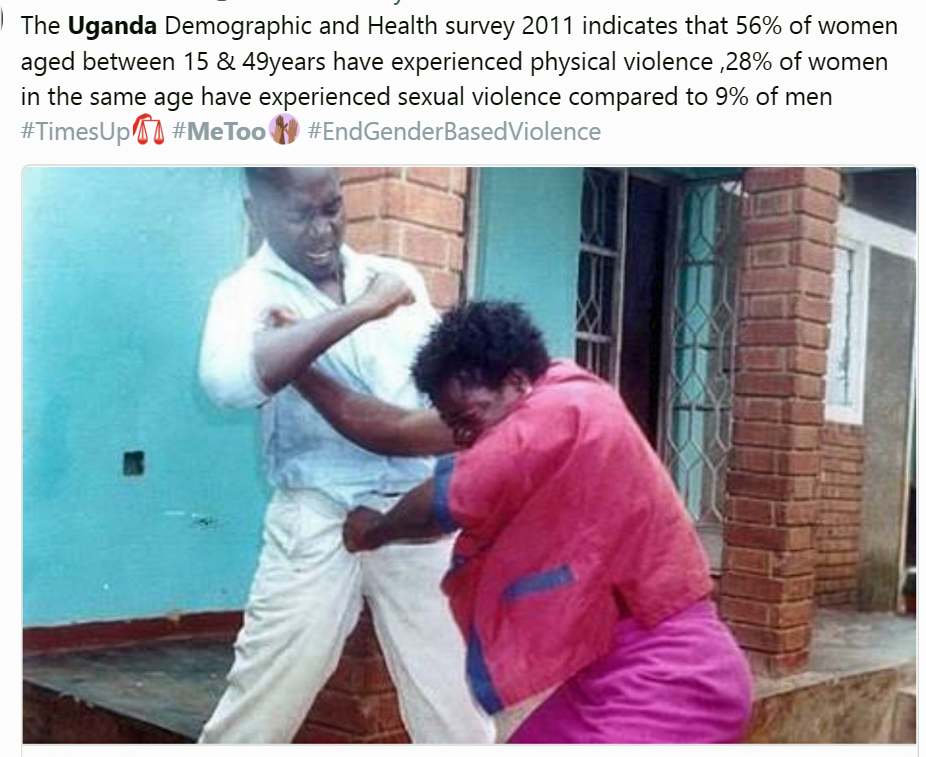
“many cases of sexual exploitation and abuse and gender-based violence still go unreported,” Awareness of  #MeToo campaign is not high in the media or the general population. the journalists unions leadership have not been made aware of any problems.

By Florence Nakawungu

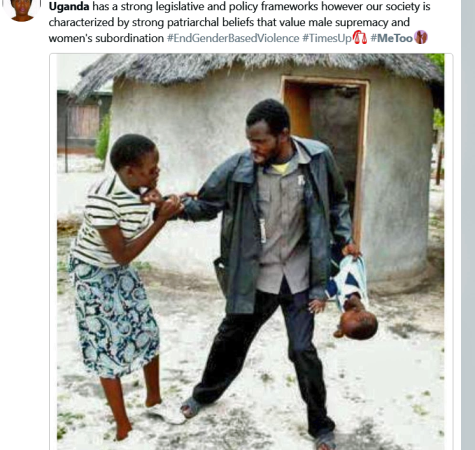
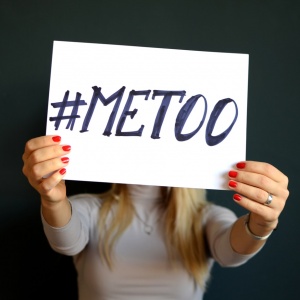
In Uganda the #MeToo campaign went live in October 2017 as a hashtag on social media and electronic media which demonstrated the widespread prevalence of sexual exploitation, abuse and gender inequality.  The #MeToo campaign encouraged all women who had been sexually harassed or assaulted to say it out loud or write #MeToo as a status to give people a sense of magnitude of the problem.

I realized the campaign was on in Uganda through  various non-government organisations (NGO’s) and other organisations using the hashtag (#MeToo) but people were not familiar with it, so I had to explain it to them.

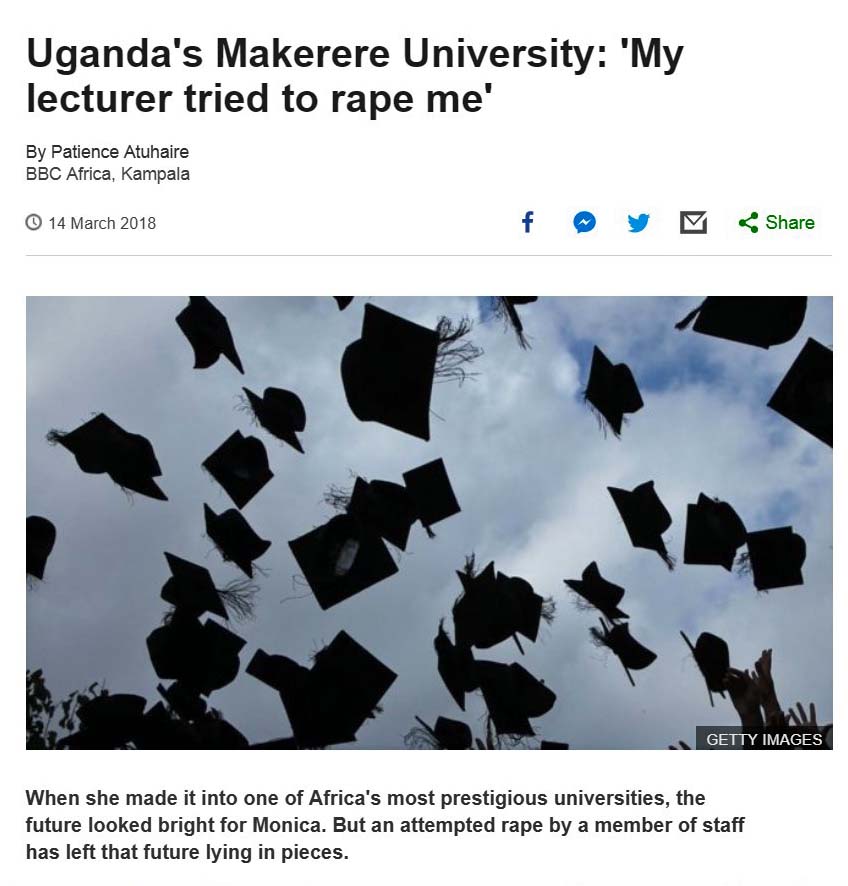
The #MeToo campaign offered a self-reflecting moment for most women and girls who had either through ignorance or reluctance kept silent about the sexual exploitation and abuse (SEA) and sexual and gender based violence (SGBV) they had experienced. I have not found any Ugandan women using the #MeToo to speak publically about sexual harassment except for a Makerere university student who recently spoke out about her lecturer harassing her on social media. She later went to police which the lecturer denied the allegations and the case is still under investigation by the university and police. BBC report

Ms. Pearl Karuhanga Atuhaire is a women rights advocate, she says despite the #MeToo campaign, many cases of sexual exploitation and abuse and gender-based violence still go unreported, ”due to survivors’ fear of being criticized by their families or communities.”

In Uganda, the Baganda clan have a saying, ‘EBYOMUNJU TEBITOTOLWA’ (No woman is supposed to tell stories from their home). They must be silent to keep their marriages. If marital violence or sexual abuse cases are reported, in some instances, prosecution is frustrated by insufficient facilities to dispose of the many SGBV-related cases.

Despite the existence of Uganda’s well-crafted laws against SGBV, Ms Atuhaire said they lack proper implementation so many of the laws remain only on paper.

While the constitution of Uganda guarantees equality between women and men, discrimination against women and girls persists in many areas. This includes direct or indirect reluctance to enforce the law, the assumed superiority of males as well as cultural norms.

Ms. Atuhaire says that some of the perpetrators of violence against women are renowned politicians or businessmen whose power in society jeopardizes efforts to bring justice to the survivors. She noted that in most of these cases, evidence against the perpetrators is destroyed through bribing the institutions of justice and letting the perpetrators walk free or, in extreme cases, survivors are murdered.

Statistics from the office of the Director of Public Prosecution (DPP) indicate that out of 1,594 rape and 7,618 defilement cases reported in 2015 and 2016, only 57 per cent od cases resulted in a conviction or punishment. Such deficiency in prosecution allows perpetrators to commit such crimes with impunity. Reports on cases of female-targeted killings are on the rise in the country, especially in the central region which has the highest population.

“The issue of women’s rights and empowerment is paramount if women and girls are to be protected from SGBV and SEA. Not only women’s rights are human rights, rather, women’s betterment has an intrinsic value” Atuhaire said.

In Uganda, like a number of countries in the sub-sahara, women are still grappling with having their voices heard and being included at all decision-making levels. Women still carry the burden of domestic chores with most of them doing the work of caring for their children. With such a challenge, women cannot perform up to their full potential in working life outside the domestic labor they are tied up with at home, and as a result, will not be promoted quite often as their male counterparts.

 UPDATE:

TAX ON SOCIAL MEDIA EXPECTED TO RESTRICT ACCESS.

A new revenue tax on social media has taken effect in Uganda, which could further restrict the effectiveness of social medis for campaigning. The tax is on users of sites such as Facebook WhatsApp, Twitter, Google Hangouts, Yahoo Messenger, Instagram, YouTube, Skype and others. Users now must pay upfront a daily levy of six cents to access all social media websites. It is to be collected by service providers.

According to Reuters, Amnesty International urged Ugandan authorities to scrap the tax, calling it “a clear attempt to undermine the right to freedom of expression” in the East African country.

“By making people pay for using these platforms, this tax will render these avenues of communication inaccessible for low-income earners, robbing many people of their right to freedom of expression, with a chilling effect on other human rights,” the group’s Joan Nyanyuki said in a statement Monday.

The campaign has exposed sexual assaults harassment and discrimination in the media and entertainments industry in many countries, but Mr. Kagolo Robert, the President of the Uganda Journalists Association (UJA) says cases of sexual harassment and violence against women in media were not common in Uganda, although he admitted “it is possible that victims kept their stories to themselves for fear of being victimized.”

He says the #MeToo campaign is not yet popularized –  except for a few journalists. “No-one among the female members of UJA had ever brought any case or complained about sexual harassment or abuse” he said.

Mr. Ssenyange Alfred, the Vice President of the Uganda Journalist Association in charge of the Central region said he had no knowledge about the #MeToo campaign. “This campaign should be popularized in Uganda since it’s not yet so much in people’s ears”. The vice president also stressed that there was an increasing number of female journalists joining the industry each year, implying the profession is a good place for women. Audio of the union leaders here.

Despite the various laws governing employers and employees such as ‘the Employment Act’ a number of media houses still experience sexual harassment and gender inequality. The IAWRT Uganda Chapter has been developing the Gender Media Guidelines for reporting in the various media houses in Uganda. It also held a number of workshops on gender mainstreaming for senior media managers and reporters (pictured below). A lot however, still needs to be done. 

Ms.Kasirye Eunice the Vice Chairperson of IAWRT Uganda, says ladies should get out of the closet and speak out on sexual harassment because if all victims speak out, men will have no more room to continue the harassment.

She noted that sexual harassment comes because of male dominance in the top most positions in companies, media houses and training institutions.

She also said that female journalists also face sexual harassment from sources in big companies or even government who always have the news/ information which journalists need. Before they give you a story, they want to receive sexual favors. Sometimes the female journalists are desperate or under pressure by their bosses to deliver on some assignments and therefore end up giving in to such harassment.

She also added that a number of media houses do not have gender guidelines, and some are owned by businessmen who do not care about anything but money. Several media houses do not want to employ women of a reproductive age. If they are employed, they are not given important programs or serious assignments to handle because the management thinks they would soon become pregnant and would need maternity leave which will inconvenience them.

“When I got pregnant with my 2nd baby, my boss called me a child manufacturing machine. I almost lost my job on several occasions. What saved me was my hard work” says Ms. Kasirye.

Ms. Sarah Nakibuuka Bakehena the Chairperson of the IAWRT Uganda Chapter called on women’s organisations and International bodies help train and give capacity to journalists and work closely with them to help execute programs that would benefit women.

“The #MeToo campaign is known to a few NGOs for example. They have been working on it without much involvement of the Ugandan media.  Unless journalists are sensitized about such campaigns, they cannot ably report or support the cause” she said.

IAWRT, India Chapter is has two exiting opportunites for members:The Directorship of the prestigious Asian Women’s Film Festival, or a scholarship to support a media or research project.  

Festival Director of the 15th IAWRT

Asian Women’s Film Festival (AWFF) 2019                                                                         


3rd Jai Chandiram Memorial Fellowship

ABOUT THE FELLOWSHIP

The Jai Chandiram Memorial fellowship has been instituted by her family to support media and research projects by members of the IAWRT India Chapter. Jai Chandiram was a distinguished media professional and former Deputy Director General (DDG) of  Doordarshan . She was the founding member and Managing Trustee of IAWRT India Chapter and the first Asian to be the President of IAWRT International..

The first and second Jai Chandiram Memorial Fellowship were awarded to filmmakers, Iram Ghufran  and Debjani Mukherjee, respectively.

ELIGIBILITY

The Fellowship is open for a member of the India chapter of IAWRT who has paid all her dues till date.

PROPOSAL FORMAT

  1. About the Project (500-900 words)
  2. How is the grant going to be used (400-500 words)
  3. Outcome 

  4. Budget
  5. A brief bio note and CV (not running to more than 2 pages)

TIMELINE

  • Call for Entries: 20 June, 2018
  • Deadline for Receiving Proposals: 20 August 2018
  • Selection Announcement: 20 September 2018
  • 1st instalment to be released: 15 October 2018
  • Report to be received at regular intervals of four months Final report to be submitted by 30 November 2019


RULES AND REGULATIONS

  • The fellowship may be awarded for research/ study tour/ script development/ dissemination/ or development of a multi-disciplinary performance.
  • The fellowship will be awarded to one or two candidates selected by a Jury.
  • The fellowship will be awarded once in two years.
  • The Jury will comprise three members (all from IAWRT India Chapter, one being a board member).
  • The names of the Jury members will be confidential i.e. the names will not be revealed till the fellowship results have been announced.
  • Jury members cannot submit a proposal.
  • Proposals will be submitted to the Managing Trustee by e-mail who will forward it to the Jury.
  • A contract will be signed between IAWRT India and the selected Fellow(s).
  • A methodology of monitoring will be in place. This may vary depending on the nature of the project. The methodology will be finalized by the Jury in consultation with the Fellow and the Managing Trustee.
  • The Fellow must submit a mid-term report and a final report. Other deliverables will be finalized by the Jury in consultation with the Fellow and the Managing Trustee, depending on the nature of the project.
  • A member who has been awarded a fellowship once cannot apply for another fellowship for the next two cycles.

CRITERIA FOR SELECTION

  • Originality of the idea
  • Relevance 

  • Impact 

  • Clarity
  • Plan of Action/ Methodology Feasibility

FELLOWSHIP AMOUNT

Rs. 60,000 (May be awarded to one candidate or shared by two as per the discretion of the Jury)

Proposals should be emailed to [email protected] with a copy to [email protected]

IAWRT, India Chapter has been organising the Asian Women’s Film Festival (AWFF) in the first week of
March in New Delhi since 2005. Over the years, this has evolved into one of the leading film festivals in
the country. The main aim of the festival is to showcase the work of women directors of Asian origin in
different genres – documentaries, short fiction, animation, experimental and feature fiction. The AWFF
has gained a reputation for being a forum to view films by women filmmakers from across Asia and for
well-organised discussion-based events and interactions. The Festival also assembles travelling packages
that are shown at other festivals in India and abroad.

IAWRT is putting out a call for the position of Festival Director which is open to any IAWRT India Chapter
member with the requisite experience. A 500-word note on your vision for the forthcoming festival along
with your CV should be sent by July 7, 2018 to Nupur Basu, Managing Trustee, IAWRT India at
[email protected] with a copy to [email protected]

POSITION DESCRIPTION

Title: Festival Director, IAWRT Asian Women’s Film Festival
Duration: From August 2018 to May 2019 (in part time capacity)
Location: New Delhi
Professional: While the work is voluntary in nature, an honorarium of Rs100,000 (One Lakh only) is
offered as a remuneration.

POSITION OVERVIEW:

The Festival Director is responsible for providing the unifying vision to the entire festival and designing the events taking place accordingly. The candidate should have film-programming experience and should have an understanding of IAWRT’s vision. An engagement with cinema is also necessary and filmmaking experience is desirable.

  • The Festival Director will be responsible for securing and planning the highest quality programme of films, panel discussions, an exhibition and related events.
  • The job calls for both curatorial and administrative skills and applicants must have experience that demonstrates a high level of organisational skills.
  • The person appointed as Festival Director will work with filmmakers, international agencies and other organisations, supported by the IAWRT India Board and other members taking an active role in the film festival.
  • The work will be done in collaboration with a team of sectional curators and volunteers whom the Festival Director will guide. 
  • The Festival Director would also help the Board in raising sponsorships for the event, making presentations and conducting meetings as required.
  • The Director’s responsibilities will include planning the budget and overseeing all matters regarding revenue and expenses of the Festival in consultation with the Managing Trustee and the Treasurer.

POST – FESTIVAL RESPONSIBNILITIES

As the festival has a life beyond the actual three day event, a period of 10 weeks is set aside, for the
remainder of March, April and May for the Festival Director to complete the set of post-festival tasks.
These include:

 Working with the Treasurer to pay off outstanding amounts
 Completion of accounts
 Closing of ongoing correspondence, including letters of thanks
 Formation of post-festival travelling packages and coordinating with filmmakers and
organisations concerned
 Handing over of complete records and physical assets so that the data is available for the
following year's festival team

As the physical work of the festival will be located in Delhi, preference will be given to candidates who
live in Delhi or at least those who will be available full time in the city from January to mid-March 2019,
with the post-festival handing over being completed over email and mail by May 2019.

VG_n

Regional conference Uganda Sept 2018; scholarships awarded: high profile Gender researcher appointed.   

from IAWRT President Violet Gonda

II am pleased to share the milestones IAWRT International has passed so far this year, much of it due to the good work of our committees.

CSW 62:  UN Commission on the Status of Women: Sixty-second session was held from 12 – 23 March 2018, New York, USA. This year our organization – IAWRT participated in a number of Parallel and Side Events. It was a grand success. See our coverage: UN addresses media and women ; Making IT work for Gender Justice ; #MeToo online ; CSW: Women Speaking out ; IAWRT @Commission on Status of Women62

IAWRT-FOKUS Scholarships: We received 15 very competitive and interesting applications. The Scholarship committee decided to award 13 and the awardees are:

(a) The Philippines chapter. It proposed something out-of-the box. The chapter sent a joint proposal, combining six candidates to attend an Investigative Journalism course for 4 months. Accordingly, IAWRT Philippines will sign a contract with Alipato Media Centre and will facilitate the scholarship for the six members.

(b) Makganwana Mokgalong from South Africa to receive suport to attend a fundraising course. IAWRT is investing in future fundraisers and we look forward to Makganwana assisting us soon.

(c) Valerie Lew from Malaysia to receive funds to attend a Training of Trainer (TOT) course in videography training – another future IAWRT trainer.

(d) Eunice Nankwanga from Uganda to receive a subsidy for her tuition fees for her master’s in management studies majoring in Human Resource Management.

(e) Sumi Khan from Bangladesh will receive support to pay her tuition fees for her master’s in mass communication & Journalism.

(f) Anusha Poudel from Nepal to receive support for her tuition fees for her Masters in Sociology.

(g) Linda Daniels from South Africa to be supported to pay her tuition fees for her masters in business management.

(h) Debjani Mukherjee from India to receive support for her Ph.D. on indigenous societies arts.

IAWRT Long Documentary –  Women Covering Conflict: The Invisible Stories: The Executive Producer is from India – Chandita Mukherjee. The four country directors are – Afrah Shafiq (India), Erika Rae Macapayag Cruz (Philippines), Eva Louise Brownstein (Canada), Khadija Lemkecher (Tunisia). The project is running as scheduled and we hope to receive the completed film by September 2018.

Gender Mainstreaming Project: I am pleased to announce that the committee recommended Ann Mabel Sanyuas as the 2018 IAWRT – Researcher/report writer. The board was pleased to confirm her appointment. It has been decided to expand our work on gender equality in the media to benefit all 14 countries where IAWRT has chapters. We plan to develop a handbook for media students, journalists, and media professionals, based on our experiences and best practices from the GMP pilot and additional research, particularly focusing on experiences and best practices from the Global South. Workshops would be held in the 14 countries to provide applied learning grounded in the handbook.

Regional Conference  in Uganda: The Uganda Chapter’s  proposal, besides outlining capacity building and organizational development, incorporated a draft budget, external funding to augment other expenses and a tentative programme on issues IAWRT will focus on this year. The scheduled date for the regional conference is 2 – 5 October, 2018.

Hope to see you in the Regional Conference. Regards, Violet Gonda IAWRT, Email: [email protected] 

Kanya

#MeToo Kenya by Florence Dallu

“As a journalist who reports frequently on gender and human rights in Africa, this movement signifies a timely and profound cultural reckoning.”

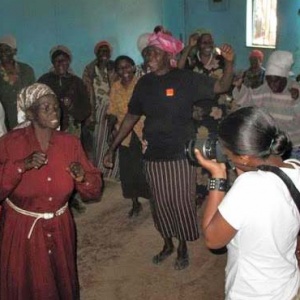
#MeToo, one of the most articulate feminist movements of the decade is not just about gender, it’s about the things that make people vulnerable – their class, their race and their sexuality.The movement has grown beyond simplistic narratives of women as victims and bystanders . A New Yorker article attributes the guilty verdict during the re-trial of Bill Cosby for sexual assault on the effects of the #MeToo movement. The first prosecution of Cosby for the same crimes last year had ended in a mistrial.  The judge, according to the article, acknowledged that the #MeToo movement and the allegations of sexual misconduct in the entertainment industry during the trial may have attributed to the shift in judgement. However the movement is not just confined in the West among Hollywood elites; women from all over the world are speaking up about sexual harassment and abuse in their work places. (pic: Kenyan women confronting rape and sexual harassment by learning karate)

As a journalist who reports frequently on gender and human rights in Africa, this movement signifies a timely and profound cultural reckoning. The last 9 months have exposed a silent epidemic of sexual assault and harassment that haunts every industry and every community. While the media has drawn attention to these cases, the sector itself has proven to not be different in the way it treats women. There are very few women in leadership positions in the media, and women journalists suffer various atrocities from sexual harassment to being deemed unfit for ‘manly’ journalistic assignments. A report by the Media Council of Kenya assessing the gender issue in the Kenyan media adds that stereotypes in the media tend to undervalue women as a whole, and diminish them to sexual objects and passive human beings.

Kenyan women journalists are coming out and talking openly about rife sexual harassment in the newsroom. A blog by Amina Chombo, a renowned political and current affairs talk show host, singles out sexual harassment, discrimination in promotions, and women being underrated among some of the obstacles she and her fellow female colleagues in the media face.  However, she said, many of the women feared to stand up and speak out. See sexual-harassment a challenge media women face in Kenya on Jambo News Network Gender Agenda.

An investigative story by South African newspaper, Mail & Guardian exposed the full extent of how pervasive sexual harassment has become in Kenyan newsrooms and in the media industry generally. The story, Sex Monsters in the Newsroom, revealed accounts from Kenyan female journalists about how their bosses were demanding sexual favors in return for professional assistance or better working conditions.

Many female journalists have been open about their experiences, marking commendable progress for women’s rights and empowerment in the country. An award winning Kenyan journalist penned a post on her social media titled ‘I am a Woman Journalist’ on her experiences in a patriarchal  newsroom saying that it was time for women to have courage, “Then one day the woman in me, the lioness who had been rained on and people thought was a cat, roared…it was the woman being fought yet fighting for her space in the newsroom at the same time.”

This transformative movement is not just for women and gender equality, it is for all who care to remove barriers for women to advance in the workplace. The media needs to interrogate and confront sexual harassment and ensure removal of all obstacles to equal opportunities and for the enhancement of women’s work.

meToo

“We are done pandering to the egos of change-resistant influential men in the hope that our gentle lead will eventually encourage them to join us on a meander toward gender equality in the news business.”

By AN OPEN LETTER June 19, 2018 Shared from niemanlab.org

This open letter, about the broad problem of sexism and sexual harassment in the news industry and at global journalism events, was published simultaneously at The Quint, European Journalism Observatory, ICFJ, Chicas Poderosas, WikiTribune, and NewsMavens. The letter was triggered by incidents during the World News Congress in Portugal hosted by the World Association of Newspapers and News Publishers (WAN-IFRA) in June.

The IAWRT President Violet Gonda, and Vice Presiudent, Abeer Saady, have joined signatories to 14 principles to end misogyny in the news industry.

NIEMAN EDITOR’s NOTE

Nieman Lab requested comment from WAN-IFRA Chief Executive Officer Vincent Peyregne and from João Palmeiro, head of the Portuguese Press Association. Their statements are available by clicking on their names. “Inappropriate incidents on stage in Portugal have been addressed by WAN-IFRA in many forums including at the conference, on social media, on our website and with our staff. They are contrary to our values and are unacceptable,” Peyregne said in part. “We will continue to use our position to push for change from within the industry.” 

“You link the action of one person, in a less fortunate moment and outside the sphere of discussions of the event, to news organizations in general and WAN-IFRA in particular,” Palmeiro told me in part. “I suspect that you are unaware of my activities on behalf of causes namely equality of gender, race or sexual orientation, which would show very clearly that what happened at the dinner was, as far as my actions intended, a sad moment of less attention by one person and not an affirmation of ideological, or disrespectful gender behavior of an organization or a sector of activity.” His full statement is here.

Laura Hazard Owen

An epic “manel,” sexist jokes about breasts, and on-stage sexual harassment at the recent World News Congress in Portugal put the gap between acknowledging gender inequality and actually empowering women into stark relief. In response, a group of senior international news professionals has penned this open-letter. It’s time to stop talking about the need for equality and start actively reforming the industry.

The World Association of News Publishers’ (WAN-IFRA) annual Congress in early June is one of the media world’s major industry events — a networking opportunity for close to a thousand attendees from international news publishing, with keynote speakers and panel discussions addressing the future of journalism and the news business in a time of convergent crises. It should be the pinnacle of good practice, shaping the path for industry progression.
 
But the 2018 World News Congress was a study in contrasts, one indicative of the news industry’s treatment of women: symbolic (and at times substantial) gestures of respect interspersed with real, sometimes shocking sexual discrimination and harassment.

Women in news: moving from the sidebar to the front page

The event began with the second annual Women in News Summit featuring the BBC, The New York Times, former editor-in-chief of USA Today and author of That’s What She Said Joanne Lipman, former CEO of Gizmodo Media Group Raju Narisetti, and many others committed to championing diversity within their news organizations. Their impressive stories and good practices alone made the trip to Portugal worthwhile.

However, the Summit was relegated to pre-conference programming — like an asterisk to the main event. And while the Congress curation achieved unprecedented levels of gender balance (46 percent of speakers were women), the opening ceremony saw a veritable wall of men — we lost count at nine — speak for 90 minutes before the prestigious Golden Pen of Freedom was eventually awarded to Maria Ressa. The award bestowed on Ressa, CEO and editor-in-chief of Rappler.com, recognized her sustained battle against the gendered, state-sponsored harassment of journalists in the Philippines. It was an important and deeply symbolic decision to select Ressa. But by the time she was allowed to speak, several delegates had left the venue in disgust with the total absence of diversity on stage.

Over the next three days, the event careened between spotlighting gender equality with awards and speeches, and disrespecting women in practice.

Fake breasts and forced kisses

 Talking about diversity is not enough to effect change. But, ironically, scandal sometimes is. The rampant displays of sexism and sexual harassment during the gala conference dinner at the Estoril Casino (the venue that inspired Ian Fleming’s Casino Royale) left so many participants and WAN-IFRA employees shaken that they ultimately triggered significant action.
 
The evening began with a joke from the MC comparing fake news with breasts. The punchline: in both cases he prefers the fakes.
 
Then came the editorial leadership awards given to outstanding female editors from Uganda and Jordan. One (important) goal for women in news.
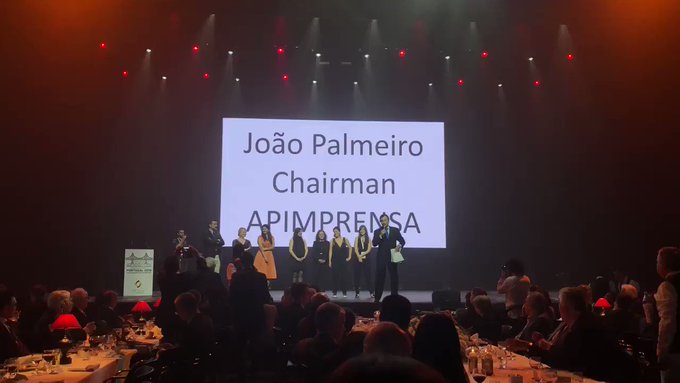
And finally, a closer so awful that many of us present (including WAN-IFRA employees we’ve spoken with) were in shock. At the end of the dinner, João Palmeiro, the head of the Portuguese press association, persuaded a group of women who organized the conference to join him on stage, before asking one of them to tie tablecloths around the necks of the others, saying he was giving them wings: “They are my angels and I don’t know if I am prepared to share them with you.” Palmeiro (a former WAN-IFRA Board member) continued, calling himself ‘Charlie’ and declaring: “In the name of all of you, I am going to kiss Christin!” WAN-IFRA’s senior project manager Christin Herger was one of a number of employees on stage. You can watch the cringe-inducing video here. 

The audience applauded. And gasped. Herger visibly bristled and withdrew from Palmeiro’s forced kiss, but he was undeterred. “She’s shy, please, please, and I hope you, Portuguese girl, are not so shy,” he said before grabbing the Portuguese WAN-IFRA employee Maria Belem and kissing her instead, despite her obvious discomfort. As he exited the stage, Palmeiro thanked the line-up of women and called them his “dream team,” making much of the fact they were all women. Ironically, a new WAN-IFRA handbook on combating sexual harassment in the media was launched during the conference.
 
Maria Belem, one of the women on whom Palmeiro had imposed himself, posted this message on the official conference app after the event: “We are not angels, and we do not work for Charlie. We are professionals working for press freedom and towards a healthy media ecosystem.”

When “platforming” sexual harassment triggers change

Here’s the good news: despite the (at times) overt sexism and sexual harassment on display during the World News Congress, the events appeared to trigger a chain reaction that has deepened WAN-IFRA’scommitment to reforms and delivered a chance for much-needed reflection within the industry as a whole.

14 PRINCIPLES of GENDER EQUALITY for the NEWS INDUSTRY

Here are 14 principles and recommendations for the global news publishing community to use when auditing their efforts on gender equality, and on diversity more broadly. Some of them were inspired by WAN-IFRA’s pioneering Women In News Summit.

1. Insist on gender equality in and through the media. Globally, the IMWF reports that women represent well under 30 percent of leadership positions in newsrooms, making the narrative of most publications skewed to the male perspective. Recent studies also show that mainstream newspaper journalists and commentators are dominated by men talking about what other men are doing. This imbalance is directly reflected in content, and in curation of panels and moderators at events throughout the news industry. It’s 2018 — push back and make sure you/your organization are not contributing to the problem. Bloomberg News’ recipe for embedding gender equality is a useful guide, as is this initiative from the Financial Times.

2. Use data to drive inclusive representation on panels, in leadership, and on stage. “If you can’t count it, you can’t change it.” This great point from Joanne Lipman is an important starting place. Most organizations feel that gender inequality is not their problem. But taking the time to map and measure is the only way to be sure. Track the gender of bylined authors, sources, speakers, and editors to see how balanced your teams and content really are. Simply counting can lead to change. (Read about/listen toLipman’s approach to leveraging data in the cause. Check out the BBC’s 50:50 gender balance challenge created by Ros Atkins, and see the toolkit produced by Gender Avenger) Consider sharing these metrics so you can be held accountable, in a spirit of transparency that should also help build trust in your organization.

3. Call out sexual harassment and tackle it head on (on and offline). “I deeply believe we need an overall code of conduct for men to learn how not to treat women in professional settings. There is a lot to learn,” Mariana Santos, founder of ChicasPoderosas has said. News organizations need detailed policies that deal decisively with harassment both on and offline. See Press Forward’s resources and read Julie Posetti’s 11-step guide to managing online harassment in newsrooms.

4. Don’t ghettoize gender equality initiatives. Schedule and feature content designed to empower women sources, journalists, and editors on the main program, center stage, and on the front page. This is vital if the issues are to be taken seriously, and to ensure male participants are also educated and motivated to embrace change and collaborate on gender equality initiatives. “To relegate issues about women is double-binding —because it makes it a ghetto,” says Catarina Carvalho, editor-in-chief of Portugal’s Global Media Group.

5. Conference organizers: create opportunities for women’s active participation. Consider sponsoring female speakers and moderators, who may have less economic power than their male counterparts. And what about sponsoring childcare to accommodate female professionals with primary care responsibilities for young children? (See also Hannah Storm’s 13 suggestions for a more inclusive conference.)

6. Insist that your partner organizations and contracted contributors abide by principles of gender equality. Ensure that all conference partners, sponsors, moderators and speakers are aware of, have access to, and abide by organizational policies and codes of conduct on sexual harassment and gender equality to avoid a repeat of the Estoril incidents. WAN-IFRA has a policy in development — could it become a model for the industry?

7. Sponsors: Consider using the funding stick to enforce gender equality standards. Sponsors of journalism and media conferences and events should make funding contingent upon gender balance in the content, or should directly fund female speakers and moderators. Audit content thoroughly after events and publication, and consider withholding funding if equality is not achieved as promised. Facebook, Google, Twitter — we’re looking at you (along with an array of Northern European media development funds and intergovernmental organizations). Alternatively, perhaps consider the carrot of a funding bonus for success.

8. Share the platform. If your event must include speakers or panels from partner organizations or sponsors, insist they nominate a woman/women with expertise. And if you’re a male executive asked to represent your organization as a speaker, consider nominating a more junior woman to take your place. Experience grows from opportunity.

9. Mind conversation culture. Male dominance on panels and in meetings, interruption of women who are speaking, or explaining to women things they are perfectly aware of (“mansplaining”) are common ways that women’s voices are silenced in work environments. Making your team sensitive to this and measuring contributions with simple apps can help foster an environment where women can thrive.

10. Edit bias out of your hiring and selection processes. The human brain is designed to use bias to navigate complex reality. It is not, however, designed to create equitable hiring and panelist selection procedures. We have to design programs and mechanisms to correct for bias by hand. For help, see Iris Bohnet’s recommendations on designing a bias-free organization.

11. Sponsorship from the top: Achieving balance can’t happen as a grassroots initiative. Without buy-in from the top, gender initiatives will pop up and peter out. Men sponsoring talented women for promotion is one of the best ways to set an example for management and build diversity into leadership. Adam Grant has some great advice on how to do this if men in your organization are nervous about mentoring and sponsoring women in the post-Weinstein world.

12. To pay equally, negotiate differently. Orit Kopel, CEO of the Jimmy Wales Foundation and co-founder of WikiTribune, says that the responsibility for equal pay rests with the employer, not the employee. To pay women equally, don’t abuse women’s tendency to undervalue their contribution. Give raises to those who deserve them, rather than to those who demand them.

13. Let women pull back and lean in when ready. Just because a woman refuses promotion when she wants to focus more on her family doesn’t mean she will never want to put her career in high gear again. Many women choose to focus on their children when they are small. Once kids reach a certain level of independence, their parents’ capacity to “lean in” tends to rebound in a big way. So, if a star player refuses once, keep trying.

14. Apply all of the above in reference to diversity more broadly. This includes race, class, and sexual orientation.

When social media users called out the misogyny in Estoril, it became a #metoo moment for journalism events. In response to expressions of outrage — both on and offline — WAN-IFRA publicly apologized, openly reflected on the incidents, issued a statement of condemnation via the World Editors Forum, and announced the promotion of women on its board.

Michael Golden, the chair of WAN-IFRA’s board and former vice chairman of The New York Times, appeared on stage the morning after the gala dinner to address the crisis:

“Last night what happened on the stage…with João Palmeiro calling up the staff was inappropriate. He imposed himself on our staff — on Christin Herger, on Maria Belem — in a way that made them uncomfortable and that made many people uncomfortable. I am here to say that that was not appropriate. I am here to apologize to our staff for what happened last night and to say that we recognize the extraordinary work they have done and that they did not deserve to be put in that situation.”

Palmeiro stepped up to the stage next, saying sorry “from the bottom of my heart.” But that apology seems hollow when viewed in the context of an interview he gave later that day to journalist Yusuf Omar. Echoing sentiments that had been hinted at by WAN-IFRA executives, Palmeiro blamed his behavior on Portuguese culture, claiming that such conduct was “absolutely OK” and “normal” in Portugal.
 
That was not a view shared by Portuguese women, including those on the stage. “I felt humiliated as a professional, as a woman, and as a Portuguese person. It was not cultural,” one told us.
 
In the aftermath, WAN-IFRA drew attention to the new appointment of South African editor Lisa MacLeod as the vice president of its board (which represents many of the world’s biggest news brands) – the first woman in the organization’s 70-year history to hold the position. The day before the gala dinner, two new women were voted onto the board and four promoted to the board’s executive committee. Though this is progress, WAN-IFRA remains heavily male-dominated, with women still comprising just 14 percent of board members. (The World Editors Forum board has achieved 35 percent female representation.) Indeed, WAN-IFRA CEO Vincent Peyregne acknowledged this by saying, “We have a lot more to achieve in the coming months.”

#TimesUp for newsrooms, publishers and event organizers worldwide

The Palmeiro incident didn’t happen in isolation. It followed a sexist trajectory deeply rooted in stigmas that marginalize women across all news organizations (and throughout society). Though many can point proudly to diversity goals displayed on corporate websites, and the injection of influential female voices into content and conference programs, women in the media continue to be under-represented in bylines, behind editors’ desks, and in board rooms. They’re also often paid less than their male counterparts.

Our industry has a responsibility to lead on gender equality in, and through, the media. Boader social change depends upon it.  

And we, members of the international journalism community, are not prepared to sit through another “manel,” support organizations that disingenuously claim credit for gender equality initiatives, or stay silent when female colleagues are sexually harassed before our eyes.

We are done pandering to the egos of change-resistant influential men in the hope that our gentle lead will eventually encourage them to join us on a meander toward gender equality in the news business. Time is well and truly up.

If you’d like to add your name to the list of signatories below — regardless of your gender — please do so here.

Signed:

  • Hannah Storm is director of the International News Safety Institute and a freelance gender and media consultant working with organizations including the UN. She is editor and co-author of “No woman’s land: On the frontlines with female journalists” and co-wrote “Violence and harassment against women in the news media” with the International Women’s Media Foundation. Before joining INSI, she worked as a staff and freelance journalist for the BBC, ITN, The Times, and Reuters.
  • Julie Posetti is senior research fellow at the Reuters Institute for the Study of Journalism at Oxford University, where she leads the Journalism Innovation Project. An award-winning journalist and media academic, she is author of UNESCO’s “Protecting journalism sources in the digital age” and and co-editor of “Journalism, ‘fake news’ and disinformation” (forthcoming). A former research fellow and editor with WAN-IFRA/World Editors Forum, she’s been a reporter and editor with the ABC and headed up digital editorial capability at Fairfax Media.
  • Zuzanna Ziomecka is editor-in-chief of NewsMavens, a pan-European collaborative round-up and current affairs magazine created exclusively by professional newswomen. The project is funded by’s Google DNI fund and Gazeta Wyborcza in Poland, and aims to answer the question: What will happen if only women choose the news?
  • Joyce Barnathan is president of the International Center for Journalists, a nonprofit dedicated to advancing quality journalism worldwide. She helps to develop a wide variety of programs at the nexus of quality journalism and technology. Previously, she served as BusinessWeek’s executive editor and Asia regional editor-in-chief in Hong Kong. She also worked for Newsweek in Moscow, Washington, and New York.
  • Ritu Kapur is the CEO and cofounder of Quintillion Media, which publishes The Quint in India. She is a board member of the World Editors Forum and is on the advisory board of the Reuters Institute for the Study of Journalism.
  • Orit Kopel is cofounder of WikiTribune, a wiki-based news platform. With a background as a qualified human rights lawyer, Kopel is CEO of the Jimmy Wales Foundation for Freedom of Expression, advocating for bloggers and social media users who are persecuted for speaking out online
  • Yusuf Omar is an award-winning mobile journalist and co-founder of Hashtag Our Stories, which empowers mobile video storytelling communities around the world. He has worked at CNN and as mobile editor at the Hindustan Times where he empowered 750 journalists to tell stories using mobile phones.
  • Raju Narisetti is an editor and media executive. He has served as CEO of Gizmodo Media Group, SVP strategy for News Corporation, and managing editor for The Wall Street Journal and The Washington Post.
  • Mariana Santos is the founder and CEO of ChicasPoderosas, a nonprofit organization that seeks to empower women journalists in digital media and leadership. She has been an ICFJ Knight Fellow and a JSK Fellow at Stanford and helped create the Guardian’s first interactive team.
  • Catarina Carvalho is the executive editor-in-chief of Diário de Notícias, the oldest paper in Portugal.
  • Violet Gonda President of the International Association in Radio and Television, London based Zimbabwean journalist.
  • Abeer Saady Vice President International Association of Women in Radio and Television, journalist safety trainer. 

PHOTO BY MIHAI SURDU ON UNSPLASH

Gender mainstreaming report

Members and non-members can apply for Research Postion

IAWRT has secured UNESCO funding to develop a project based on the successes of the 2014-2015 pilot Gender Mainstreaming Project (GMP). 

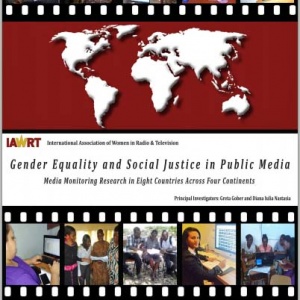
This will further our work in the area of freedom of speech and gender equality in the media. The 2014-2015 pilot GMP resulted in the report, pictured, Gender Equality and Social Justice in Public Media available here which was based on media monitoring research in 8 countries and the designing and presentation of IAWRT workshops and discussions on gender equality in the media inspired by that report.

In the the upcoming 2018 GMP,  we are planning to develop a handbook for media students, journalists, and media professionals, based on our experiences and best practices from the GMP pilot and additional research. It will focus in particular on best practices from the Global South. Then this will be followed up by workshops in all 14 countries where IAWRT has chapters to provide applied learning grounded in the handbook.

IAWRT is now calling for applicants for a researcher & report writer position to take responsibility for collecting and compiling experiences and examples of best practices, based on the GMP pilot study and additional research, particularly focusing on South Africa, Tanzania, Kenya, Uganda, and India.focusing on the key questions

●Why is gender equality important and what items related to gender equality are more often reported by women journalist and neglected by males?

● How journalists, editors, and producers understand the importance of gender balance in the media, and what works best to convey the message of gender equality to media practitioners. 

● How journalists, editors, and producers see the need for concrete guidelines on how gender equality can be realized in the media

● What strategies are helpful in keeping gender equality in focus throughout the daily difficulties and challenges of media work.

● What are the biggest obstacles to realizing gender equality in and through the media in practice and what are the best ways/examples of overcoming them

● What are the biggest cultural taboos that prevent gender balance from being reached in and by the media and how to overcome them.

● What is the need for guidelines and policies on how to prevent sexual harassment in media organizations and hate speech towards journalists.

The full text of the call for applicants and the application form attached below. Deadline May 21 2018.

photo Maundu

Video Editor, Filmmaker

Digital Safety Trainer & Consultant

Nairobi, Kenya

What type of projects do you do?

I edit raw footage of different programs into a sequence that tells a story. I input music, dialogue, graphics and sound effects, consulting with producers from production to the post-production process. Developsuperior skills and expertise in handling computer editing equipment, video switching devices. Organize and assemble video segments to deliver continuous and sequential stories to a specified length

As a digital safety trainer, I conduct training on how to stay safe online. Everything we do is becoming traceable, the websites we visit, who we talk to (and how often) where we have been and what we care about. All this data can be used to make sensitive inferences and predictions about people. Personality traits can be predicted from Facebook likes or phone metadata. And if the recent scandal of Facebook and the Cambridge Analytica company is anything to go by, where millions of people’s personal data was harvested, then digital safety has never been more crucial than now. As journalists it is important we learn how to be safe online. Digital safety is very crucial to journalists as there are times we handle very sensitive information, and we must protect our sources as well as ourselves.

Why did this sort work interest you, and how did you get started?

I remember vividly that I was in grade two, when a television crew came to our school, to record us as we performed dance and poetry. We were later featured in a programme entitled Variety Show, which was aired on Kenya Broadcasting Corporation (KBC), and I was thrilled and fascinated at the same time. This incident aroused my curiosity about television programming, I was curious to know how we managed to fit it in that “small box” called a television. And this where my passion and desire for television production began. After completing high school, I went to pursue film\video production, as I desired to tell stories of people, stories that will not only be interesting but also life changing.  

What part of this job do you personally find most satisfying? Most challenging?

First and foremost, I get to do what I love, and it is very satisfying. It gives me an opportunity to be creative. Creativity comes with the job and you find yourself thinking outside the box, working hand in hand with the producer to create a program that will keep viewers glued to their television. Working for the media, gives you an opportunity to network through several organisations, IAWRT being one of them and this strengthens your network; after all your network is your worth.

The media can be quite intimidating especially if you work with a big media house like KBC and the best way to survive to have a thick skin. It is not for the faint hearted.

What do you like and not like about working in this industry?

The media industry in Kenya is very vibrant; we are trail blazers in the African continent. And you get to see that the programs and productions you are involved in are changing people’s lives, they are having an impact on people. That brings a lot of satisfaction.  

Media everywhere is going through a lot of change. These changes are being driven by technology and where media channels are becoming more fragmented the media consumer is more empowered than ever before. The audience has moved from being passive to becoming an active audience. Social media has really revolutionized how most audiences are consuming content. And this is a threat to old media, like television.

There are a lot of amazing opportunities in this industry, fellowships, training, workshops, you name it. I have been very fortunate to have been granted several fellowships, for example in the year 2016, I applied for a film production fellowship in New York, to work on the production of the Emmy award winning series The { } And and I was lucky to be selected as one of the fellows. In 2017, I was selected for a coaching and leadership fellowship at the Poynter Media Institute in St. Petersburg, Florida. As fellows we were tasked to each mentor two young people getting into the media industry. In 2017 I was also selected to be a safe sister fellow, a fellowship on digital security conducted by Internews in Washington DC and DefendDefenders Uganda.

The media industry has a lot of opportunities especially for women, one has just to be on the look out for them.

My strongest assets/skills, areas of knowledge, personality traits and values are….

I am an excellent public speaker, very eloquent, and I have a good mastery of language. This has really come in handy when I am doing digital safety training. I am also dependable, whenever I begin an assignment I make sure I see it through to completion, because it’s not how you start, rather, how you finish. I have a great sense of humor I must say I make dull moments a little bit better.

I am a skilled video editor, with over ten years of experience. I am good with most of the editing software, am good at creating content and my greatest strength is my creativity.

I have a Masters in communication studies (which would not have been possible without the generous funding of an IAWRT Scholarship). I’m currently pursuing my PhD in communication studies. Because of my academic qualifications, I have been privileged to lecture part time at the Multimedia University of Kenya, which is a public university. I lecture on television production techniques, concentrating on the technical aspects of production – editing, special effects and camera work. I must say this is a field that is male dominated and hence I have used the opportunity to mentor young women in this field, encouraging them to take up more technical roles.

Has IAWRT’s network of media women around the world helped or inspired you?

IAWRT network is where it all began for me; this year specifically marks ten years since I became a member of IAWRT. When I wanted to join IAWRT I asked the then Kenya chapter Chairperson Rachael Nakitare, “What can IAWRT do for me? And she told me it’s not about what IAWRT can do for you rather what you can do for IAWRT” and that question challenged me and I love challenges, they bring out the best in me, they push me out of my comfort zone. Immediately I joined IAWRT, and I am the current elected Kenya chapter secretary. Through the members I have been inspired over the years to push myself, to keep going, no matter what. When I came into the media my vision was different from the reality on the ground. And it is through the network of the women in IAWRT that I was able to put things into perspective. I have also been privileged to get meet my mentor through IAWRT and she has been a great support in my career

Being a member of IAWRT is more than just belonging—it is not only about what you can get from your association but also what you can give back to the profession.

After IAWRT Kenya worked on research for the Women’s Rights Online, Digital Gender Gap Audit which looked at how many women use the internet, (Kenya report here) I saw that one of the major reasons why women were less online was because of  gender based online violence. One of the many things I have learnt through interaction with members of IAWRT is solution-based journalism. Hence, I immediately took the initiative of becoming a digital trainer to close that gap. It was during the one-year SafeSister fellowship that I got to literally learn everything on how to be a digital safety trainer. I am currently in the process of organizing a UX (user experience) training for women journalists.  I have also taken up online courses, on https://advocacyassembly.org where they have a lot of great resources on digital security. All this desire for digital security was born out my contact with IAWRT. We are living in a time of unprecedented connectivity, and it is easy to forget that there are dangers out there, on the internet, on social media, in the apps we use every day. The internet is the vehicle of the future and the future is now and we cannot afford for women to be left behind in fear of being harassed online. I am committed to preach the “gospel” of digital safety to the ends of the earth.

What are your long-term goals?

Currently I love what I do. However, my long-term goal is to set up my own production house where I can continue producing programs and films which are centered on social change – programs that bring about capacity building.  Through this production house I want to continue mentoring young women in the media, demystifying the idea that the technical aspects of production, like camera and video editing are for men.

Also, I want to venture into consulting work specifically in digital security. My main goal being able to get more women online and training them how to be safe online; Creating safe spaces for women online because unless the most vulnerable feel safe online, the internet will continue to be a male dominated space. Hence, we achieve one Millennium Development Goal.

What special advice do you have for young women seeking to qualify for this type of work?

In this industry it takes passion, zeal and enthusiasm. You must be willing to sacrifice your time and put your best foot forward, because the media industry is evolving every day, with new trends and one must keep up in order to stay on top of the game.

Do you have any special words of warning, or encouragement, because of your experience?

Passion is what should drive you in this industry, not money, because if it is vice versa you are in the wrong place.

links to some of work available online

Environmental Sanitation

The State of Journalism in Kenya

Twisted Love Cecilia

Personal profile

https://ke.linkedin.com/in/cecilia-maundu-33a24b55


iawrt blank square_resize-1

Attacks on media women undermine the work of women journalists and is a media freedom issue. 

Journalists around the world still face serious challenges and are victims of murder, detention, torture, disappearances, extrajudicial killings along with online attacks and sexual harassment which are overwhelmingly directed at female journalists.
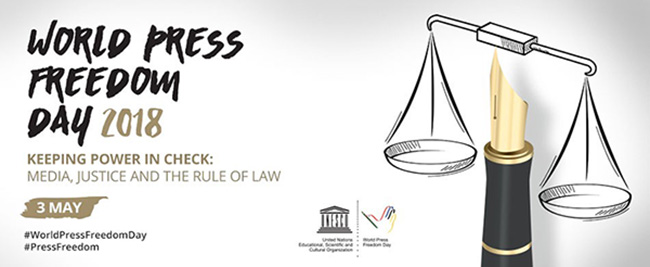
The International Association of Women in Radio and Television (IAWRT) once again joins the rest of the world to mark World Press Freedom Day to call for the safety of journalists especially female journalists around the World. We condemn the recent targeted killing of ten journalists in a series of attacks in Afghanistan; among them was one female journalist.

A number of women journalists have died in the line of duty in various countries. IAWRT would like to pay tribute to:

  •  Daphne Caruana Galizia (killed in a car bomb attack on 16 October 2017 for exposing corruption in Malta;
  • Gauri Lankesh (shot dead in India on 25 September 2017) for criticizing the woman’s place in the caste system;
  • Miroslava Breach (killed on 23 March 2017), an anti-corruption and human rights reporter for the Norte de Ciudad Juárez and La Jornada newspapers in Mexico;
  • Kim Wall, a Swedish journalist who was sexually assaulted and killed while working on a submarine story in August 2017.

We also condemn the threats to journalists in the Philippines. The most recent ones being threats to: Rosemarie Alcaraz of Radio Natin Guimba, who received threats after recording on camera the shooting of farmers by men working for a local landlord and Kath M. Cortez, who was physically harassed for covering a protest action in Marawi, the city at the cxentre of the matail law dclaration on the Island of Mondinao.

In Iran, Reporters Without Borders have revealed that many feminist journalists have been subject to judicial harassment and imprisonment in connection with their writing. They include: Mansoureh Shojaee, who now lives in exile, and Narges Mohammadi, who is still detained. Moreover, efforts to discredit the role of media have become stronger. The powers-that-be wield disinformation and lies via social media to undermine the truth. Women journalists have become targets of these attacks, often with a sexual dimension.

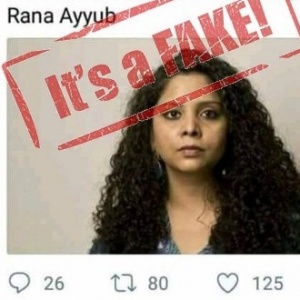
The recent cyber-attacks against Indian journalist Rana Ayyub is a case in point. According to the Committee to Protect Journalists, Ayyub received pornographic videos of her face morphed onto “bodies of naked women” in her Facebook inbox and via Twitter in April. After that, trolls barraged her with sexist comments.

The same treatment was received by Filipino women journalists Jamela Alindogan, Gretchen Malalad, Inday Espina-Varona, among others, for writing about killings associated with President Rodrigo Duterte’s so-called ‘anti-drug operations’.

The consequence of the attacks on media women globally undermines the work of women journalists and is a media freedom issue.  IAWRT is committed to ensure safety of journalists around the World. We launched a Safety Handbook for Journalists in 2017 , with advice and recommendations on security and safety, which is specially addressed to women journalists working in war and conflict. IAWRT has also given safety training to hundreds of journalists around the world.

We commend the support from various partners including UNESCO and FOKUS that have enabled us to reach out to vulnerable journalists. We have held a number of workshops around safety in our IAWRT Chapters and commit to continue with the struggle. IAWRT appreciates the work of the local chapters in countries that are high risk: such as Afghanistan and Iraq, where Najiba Ayubi and Awaz Salim respoctively have established chapters respectively (to be officially installed later this year).

On World Press Freedom Day 2018, IAWRT celebrates the fundamental principles of press freedom; pays tribute to our colleagues who were killed doing their jobs and joins partners all over the world including; UNESCO, RSF, IWMF, CPJ and EJN who continue to defend the media from attacks on their independence.

In the words of UN Secretary General António Guterres: “Promoting a free press is standing up for our right to truth.”

IAWRT President, Violet Gonda 


Ayyub

Mumbai-based investigative freelance journalist Rana Ayyub became the subject of online threats after a parody account on Twitter in April falsely attributed a quote defending child rapists to her.

“Minor child rapists are also human, do they have no human rights. This Hindutva Government is bringing ordinance for death to child rapists just to hang muslims in larger numbers. Muslims aren’t safe in India anymore,” said the false quote by an account @republicTV.

This false quote went viral on social media, with mostly right-wing accounts sharing it more than 10,500 times.

As a result, Ayyub, who investigated communal riots in Gujarat in 2002, was subjected to various online threats, including an exhortation to gang rape her. According to a statement by the Network of Women in Media in India, the threats warned her to “stop talking against Hindus and [Prime Minister Narendra] Modi.” Ayyub’s address and personal phone number were also published on social media.

Ayyub also told the Committee to Protect Journalists (CPJ) that her face was morphed onto those of women in pornographic videos, and that trolls on social media told her to “leave journalism because prostitution is your cup of tea.”

The CPJ has called on Indian authorities to conduct a thorough investigation into the threats against Ayyub. As of April 26, the police have not filed a First Information Report, a document filed at the start of an investigation in India. Meanwhile, the Twitter account that posted the false quote has already been deleted.

In 2016, Ayyub self-published a book, Gujarat Files: Anatomy of a Cover Up, which examined the role of government officials, including then Gujarat chief minister Modi, in the riots.

Since the book’s publication, Ayyub told The Commottee to Protect Journalists (CPJ) that she has been harassed by social media accounts that she described as supporters of the prime minister. “In the past, they’d troll me on the grounds of being a Muslim, being a woman and called me an ISIS supporter,” she said.

According to a recent report by Reporters Sans Frontiers (RSF) cyber-violence constitutes 43.8% of attacks against women journalists covering women’s issues. Cyber-violence includes increasingly violent and sexist online threats, with cases most common in India, the United States and France.

“Fake news,” or false information being circulated on social media is also of increasing concern in the information landscape. The case of Ayyub shows that journalists are also becoming victims of disinformation campaigns as a means of intimidation and harassment, with women journalists more vulnerable to the sexist and violent nature of such attacks.