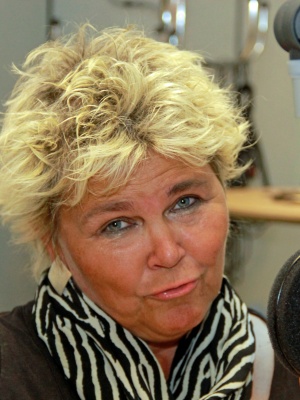
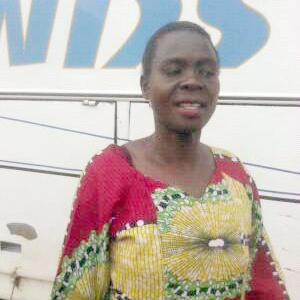
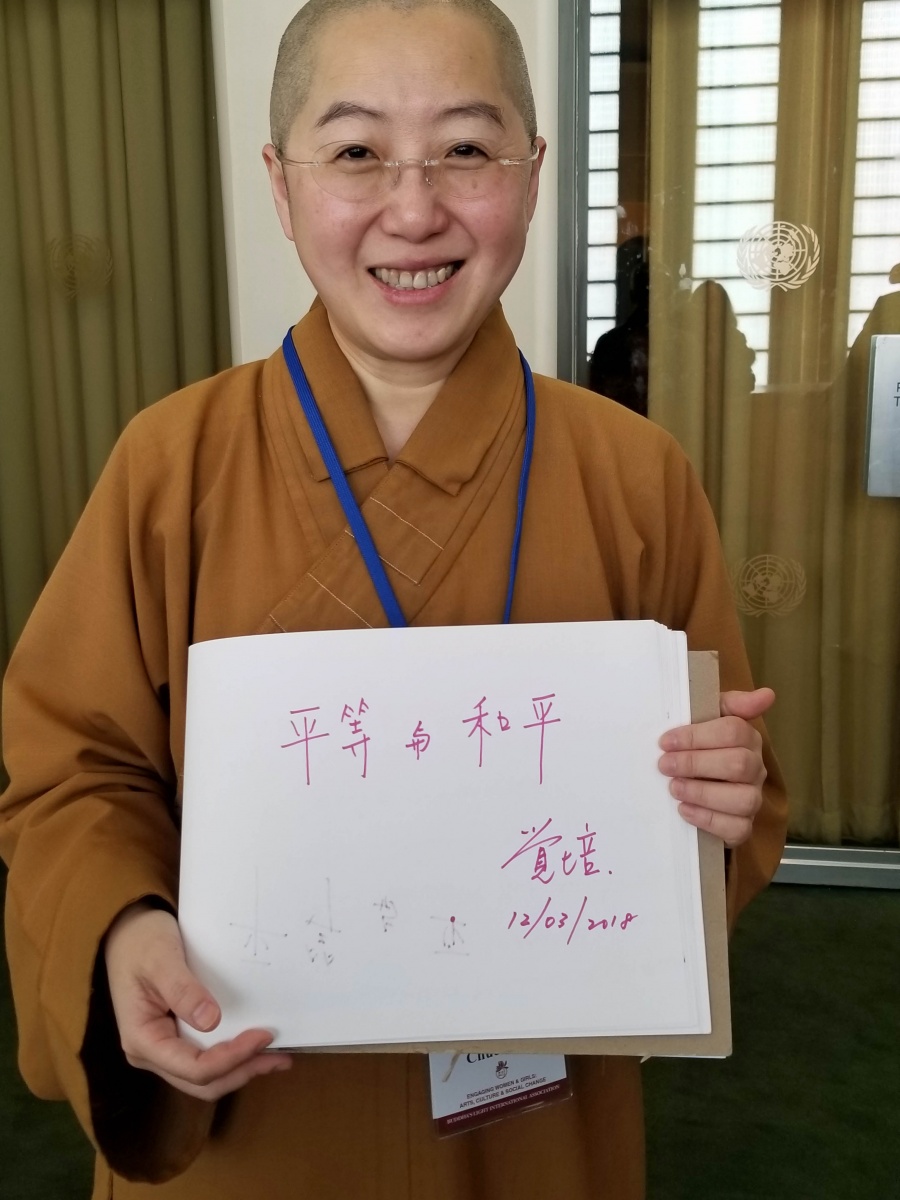
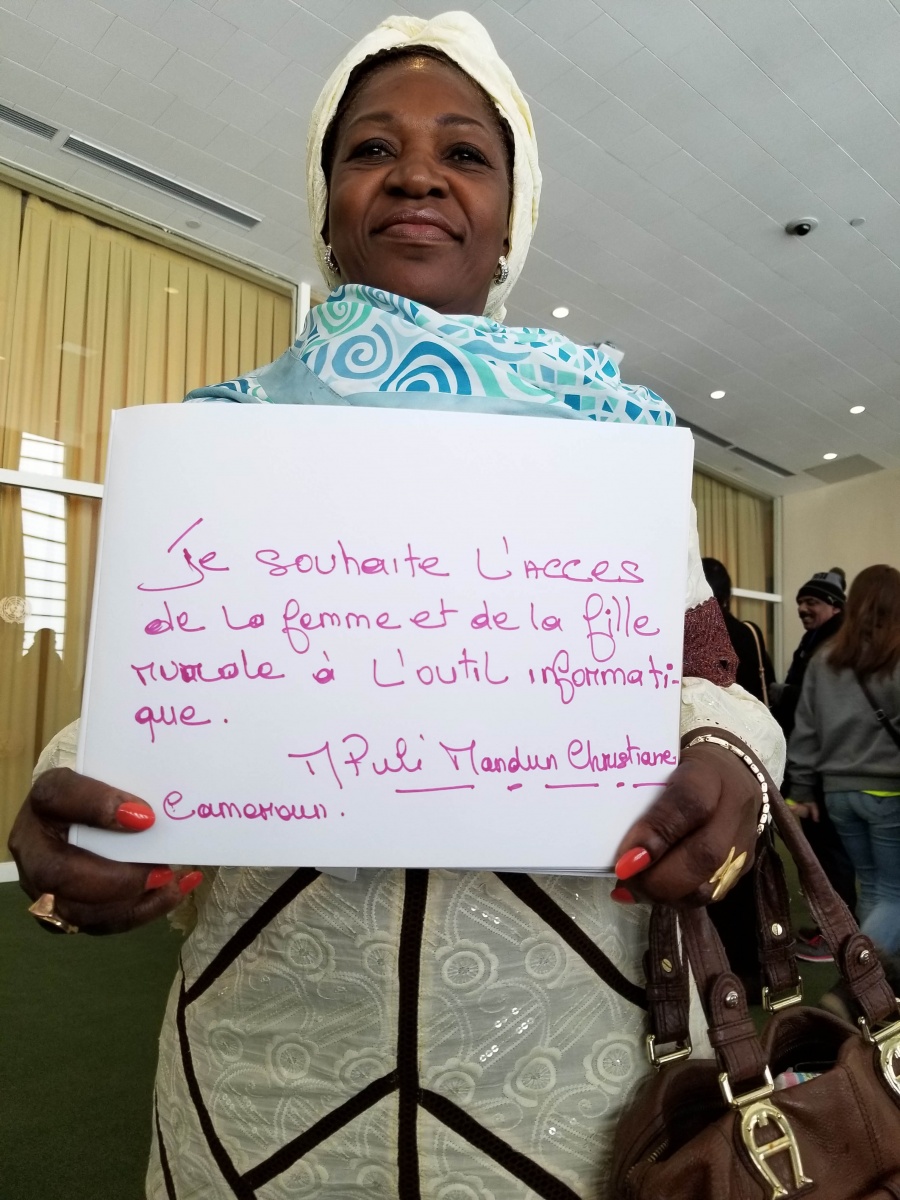
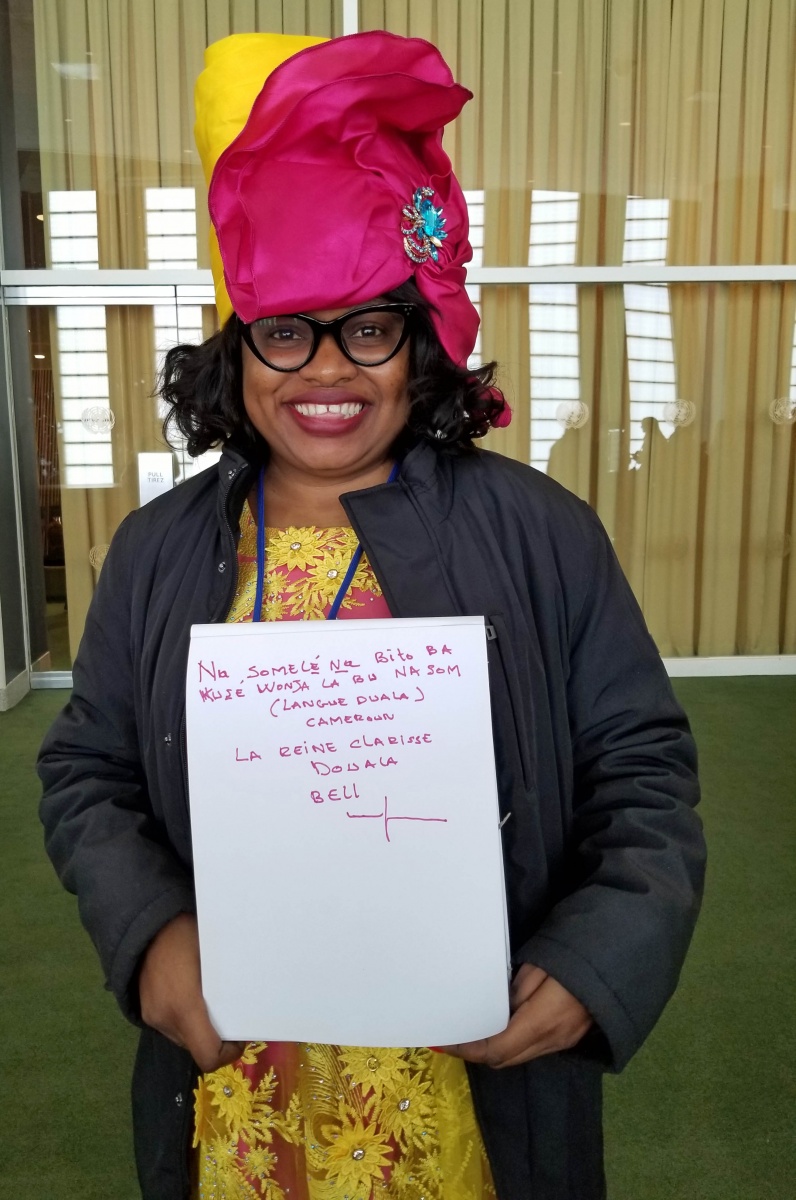
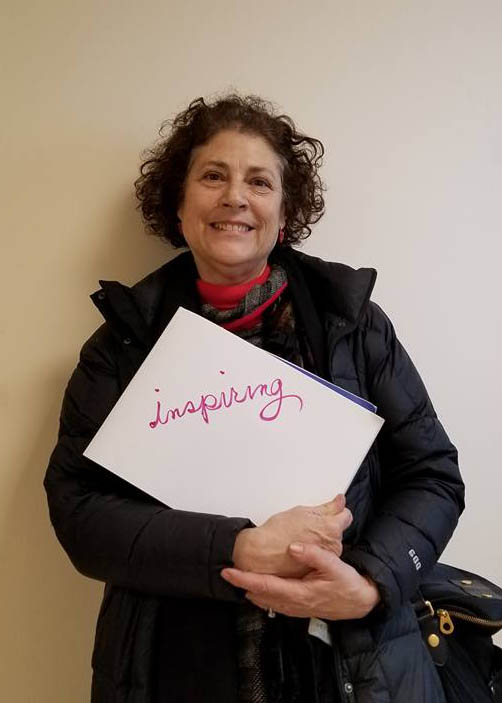
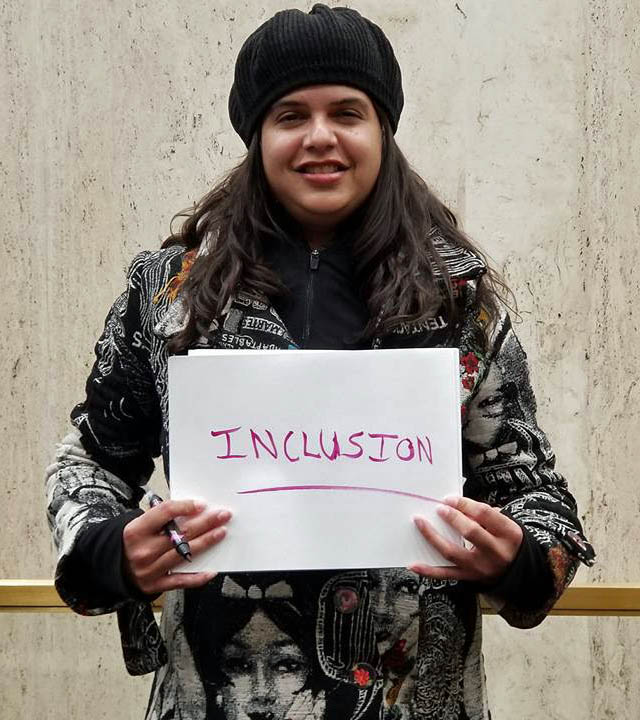
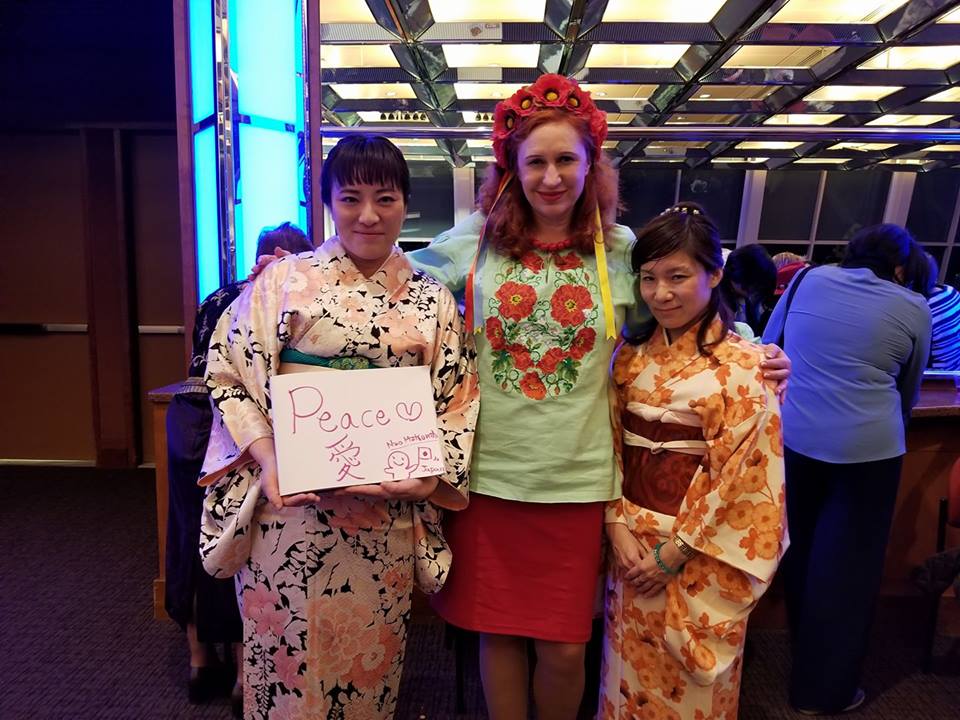
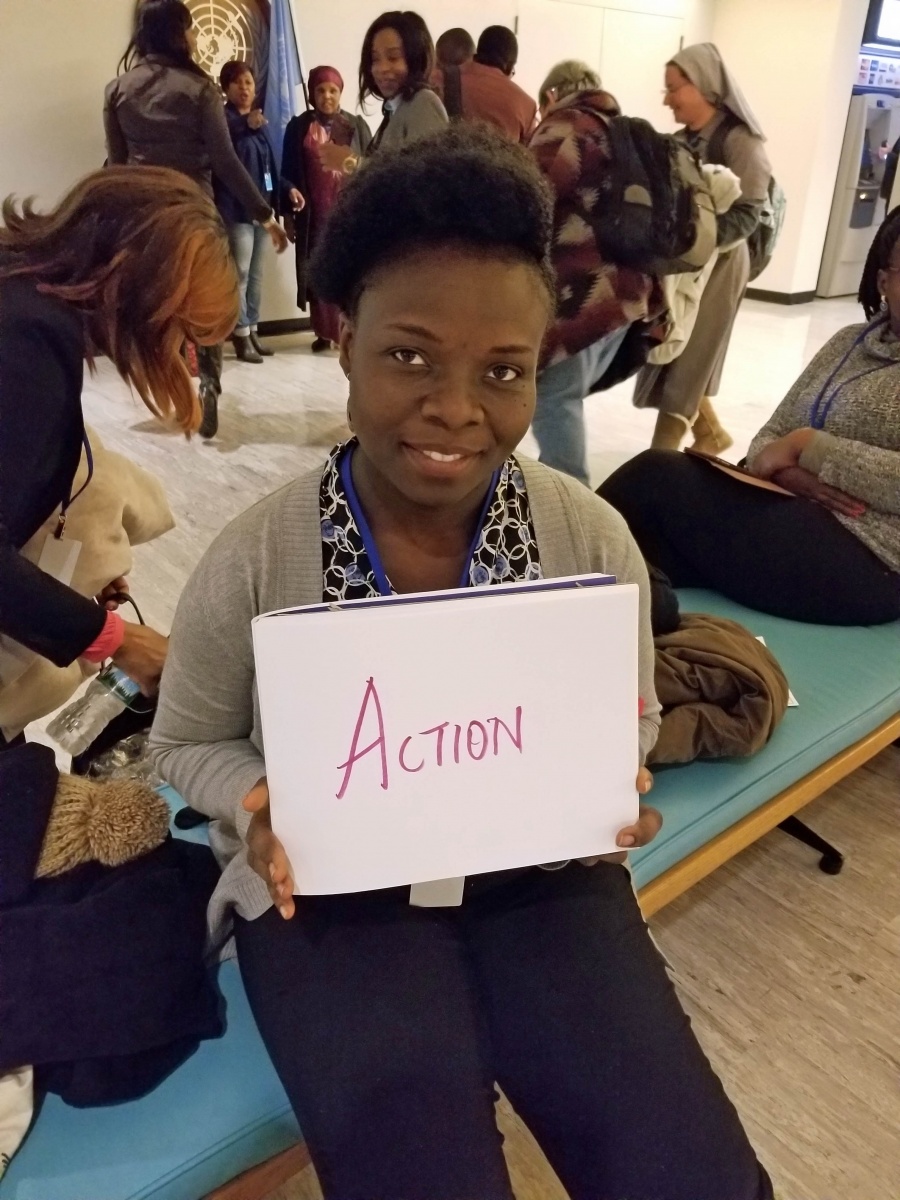
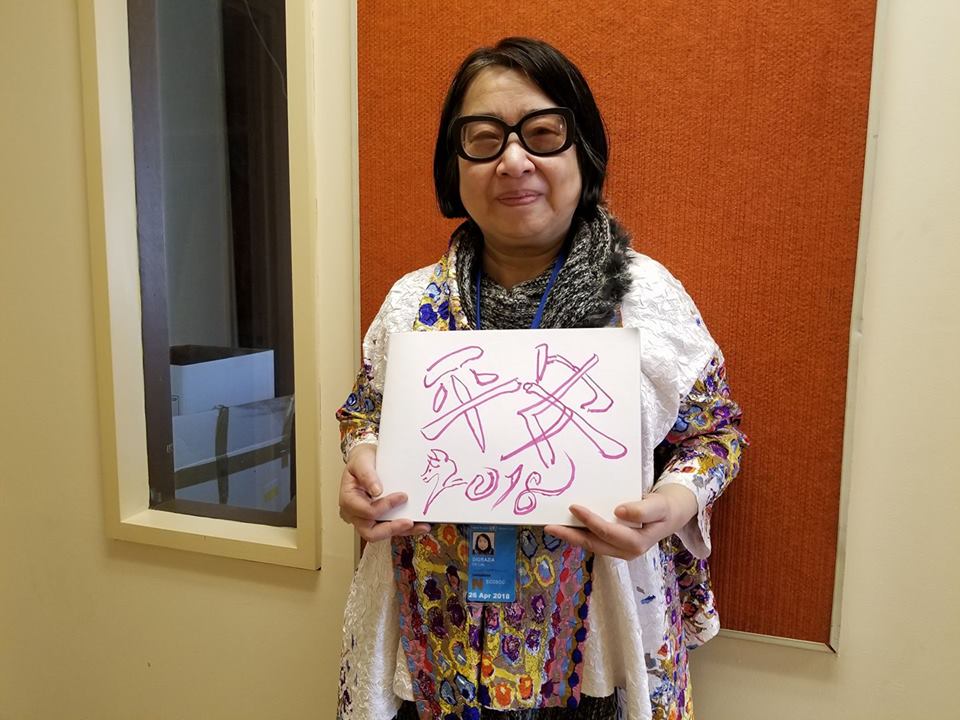
Awards ceremony to honor 30 Champions of Change including IAWRT’s Sheila Dallas Kazman.

The  Metro New York Chapter of the US National Committee for UN Women, is hosting a awards ceremony to honor slelected champions in the following categories: Economic Empowerment, Peace & Security, Political Participation, Eliminating Violence Against Women, Media Advocacy.

6:00 PM – 9:00 PM EDT SVA Theatre, 333 West 23rd Street, New York, NY 10011, United States. Tickets here.

mantis to use

A birthday Initiative

The #MeToo movement has empowered women to reveal the global extent of gender violence and harassment, but revelation in itself does not create change. “Many of us feel powerless in all this,” says IAWRT South Africa Chapter head Makganwana Mokgalong.

So IAWRT – South African chapter supported a young woman’s birthday initiative as part of its contribution to the #MeToo movement. This poetic sharing is Mantedieng Mamabolo’s #MeToo. 

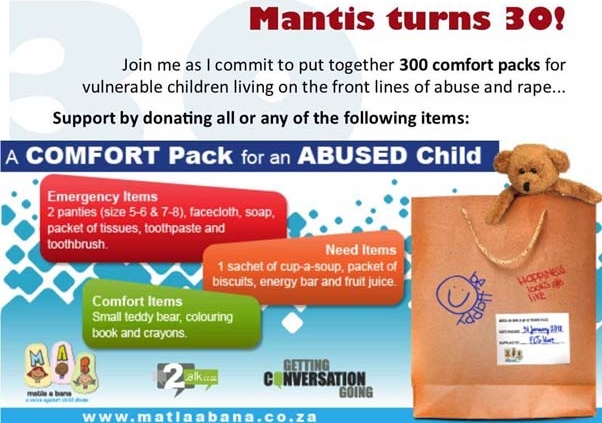
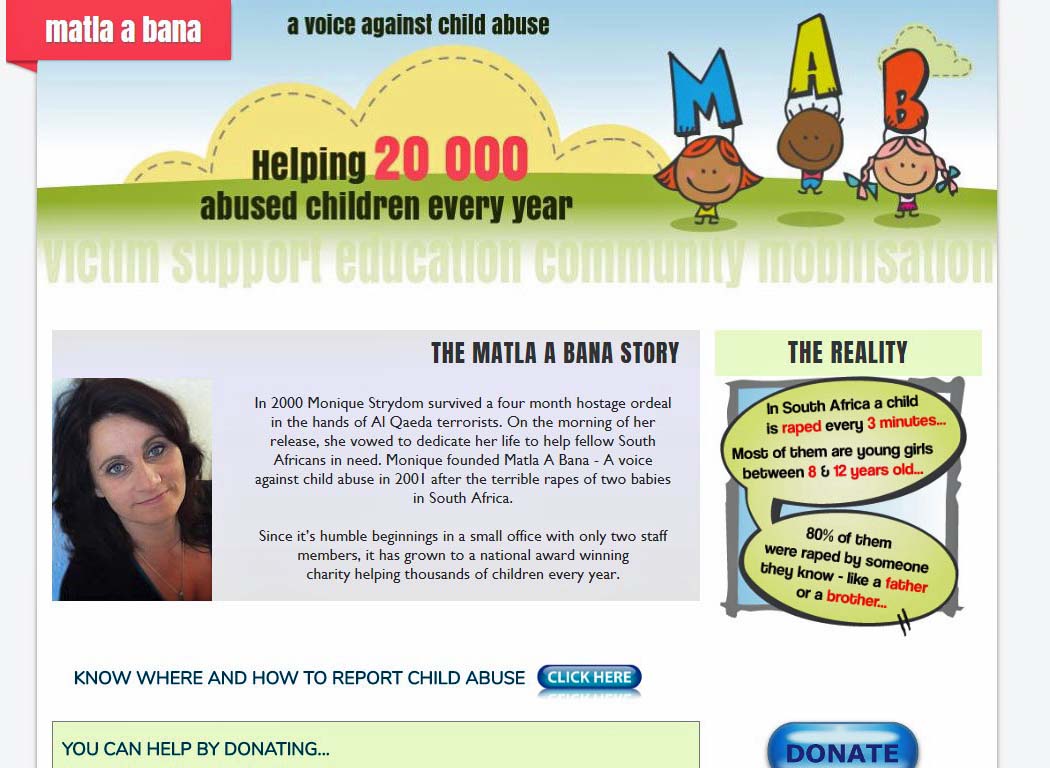
For Mantedieng’s 30th birthday, Mantis (nickname) wanted to put together comfort packs to give to an organisation called Matla A Bana which works with the police in handling cases of child abuse – According to IAWRT South Africa “this practical act is a bold stand in the face of what feels like a solution-less nightmare –  Mantis doing what can get done is inspiring to us” says the chapter head.

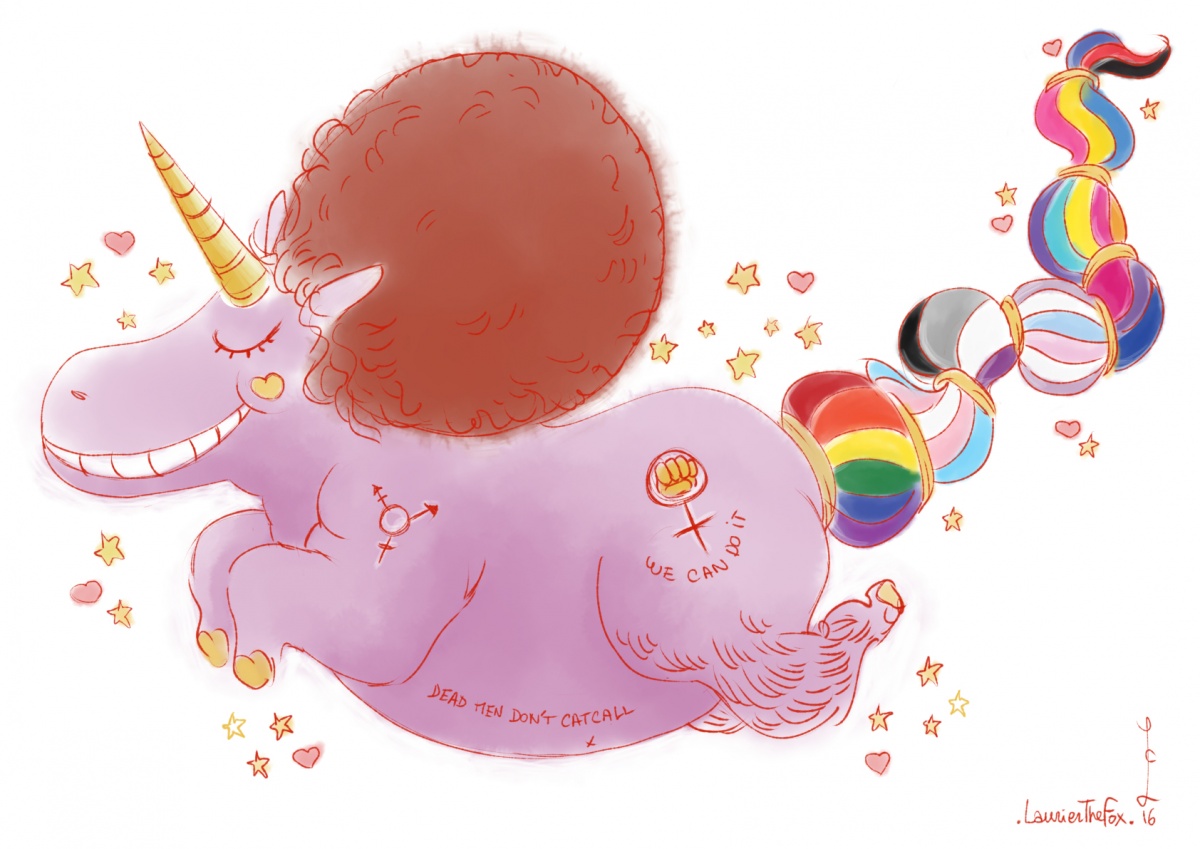
The Unicorn called Consent

The possibility that the first sexual experience will not be consensual is undoubtedly high.

Tint the shade of the skin a tad.

Coarsen the hair atop their crown.

Dusty up the streets upon which they walk every day.

Imagine an immature vagina between the thickness of thighs.

That possibility lessens with certainty and becomes probability.

It is probable that the first sexual experience of the Black girl child will not be consensual.

This is not proven or documented as fact. I do not need info graphs from FactCheck in the comments. This is also not an opinion that I hold. I do not need your point of view and discussion hereafter. I will not listen on the radio. Lived experience being a Black girl child informs this probability.

I was five.

The story is not a unique one and you have probably heard some version of from the Womxn who glitter your life. I was somewhere I was not supposed to be because toxic masculinity rules the streets. I was with the boys who lived two doors down from home; them not that much older than I was, but already undesirable in their actions before even their teen years. My first sexual experience happened. Unconsented.

On top of me.

Unconsented.

Inside me.

Unconsented.

To me.

Unconsented.

I went home, threatened into silence, and fell into a slumber so violent, unspoken and never ending. My sexuality awakened, unconsented, my entire relationship with my own sexuality, already determined, was to play itself out in that state of slumber; a dream, without rest. An unhealthy relationship sparked with myself,

my body,

my being

                sparked outside of my consent. Outside of myself.

Toxic.

Don’t touch me please.

Unable to believe your embrace platonic.

Don’t kiss me on the lips please.

Scenes of painful pecks replay themselves.

Graphic.

My demeanor always defensive.

Ready to put up the fight I could not have possessed.

I was five.

I am thirty.

I want to say consent has been a constant in my sexual experiences since, but I would be lying.

In a society that fails to educate its children of what it truly means to consent, the line between sex and rape blur in proclamations of love and drunken nights that end in sex not considered.

I am not sure if I am fully awake, but I have since stirred from the endless night of violent slumber and in this state of woke I keep moving.

My next sexual experience, as a Black, queer and non-binary Womxn, existing in patriarchal dominance, is not guaranteed to be consensual. It probably won’t be.

Mantedieng Mamabolo’s #MeToo.

16 October 2017.

If every Womxn who has been sexually harassed or assaulted wrote “Me too” as a status, we might give people a sense of the magnitude of the problem. 

My morning begins around 6:30am. Like most in my generation, characterised by an almost complete immersion in digital media, my morning begins with a now habitual scrolling through Facebook. The above post is first on my timeline. The individual who posts it is well versed in the “Men Are Trash” hashtag, so I read it as another extension of the Black womxn’s rage and move on to the next. Twelve statuses in, I notice that the same status appears for the third time. I scroll up and sit up for the first time in my day. The third #MeToo post comes through from a mixture of six Black men, four Black womxn, a nice White lady and a suggested post. My intrigue dares me to look a little closer, so I tap on the hashtag and my soul is rocked.

Friend A went to a party and woke up with only her panties awkwardly wrapped around her one ankle, and no recollection of saying yes.

Acquaintance A cannot remember a yes but has clear memories of a mutual friend thrusting in and out of her body. He still occupies space on her friends list.

Friend B lays her truth bare in a post, long and graphic in its account of the one attack. The perpetrator is kin to her and I.

I believe them. All of them. Friend. Cousin. Friend. Acquaintance. Celebrity. Activist. Friend post after post. I believe them all.

Triggered.

14 October 2017.

Her friends call for me to come and pick her up. She has been raped. A boy from school. Today is her 15th birthday.

#MeToo.

23 April 2016.

I am on my way to an interview for a job I don’t want but desperately need. I walk past a construction site at 7am and the wanting spits at me in comments about my ass and descriptions of how my body would be used to fulfil the fantasist of bricklayers. I am shook. I don’t get the job.

#MeToo.

I keep scrolling. I believe them all. I keep scrolling. Black men remain nonchalant in the posts. I notice the silence of White womxn as the pain of Black womxn screams at me.

2013.

Flashbacks of running through a taxi rank. My gender questioned and answered with threats of rape and violence. He came close. Twice.

#MeToo.

1993

I am five years old. . A scrap car. Cream in colour and without its windows is parked in the backyard of a place I was never supposed to be at. Time and time again, mama said never to go there, but here I am. A game turns to my shorts and panties awkwardly wrapped around my ankles and me flat on my back with the youngest of the neighbourhood’s troublemakers taking turns. Happenings beyond my immaturity and comprehension occur and I hold that in, for 25 years.

#MeToo.

I believe them. All of them. I believe me. #MeToo opens a new world of pain for me but in the many posts I find strength and light and love for the resilience of womxn.

Illustration used with the kind permission of Laurier Richard.

Birgittte_

Community Radio Capacity Builder, Communications Specialist
Denmark

Name of Job?

Director EMPOWERHOUSE. senior communications specialist.

What type of projects do you do?

Support development of community media; organizational development of community media, public media, journalism training institutions – including strategic, business and communication planning; evaluations of media development and community media programs and projects; planning and implementation of capacity building of community and other media. See my IAWRT bio here.

Why did this sort work interest you, and how did you get started?

From my early 20s I have had three building blocks, or corner stones, in my life – including my professional life: (the declaration of) Human rights; Feminism (have been engaged in movements, working groups, women’s stations since I was a young girl); belief that people should speak for themselves (as out lined in the principles for feminist journalism). Building on those values has led me to work with community media, press freedom and media development; and as a part of all this, women’s use of and role in media and communication.

What part of this job do you personally find most satisfying? Most challenging?

Working with small communities within their process to develop their own media. And especially (!!) working with women’s role and engagement here. I have seen the kind of powerful change this can generate!

What do you like and not like about working in this industry?

I know the power of media and communication, and I am dedicated to use my good experience to develop and promote effective use of community media/communication. With the Sustainable Development Goals highlighting of the commitment to ‘leave no-one behind’ I see a particular role for community media: they can be established by people themselves, be in marginalized communities and can engage all. They are a powerful platform for empowerment (see much more in my book about this). What I don’t like? A real challenge now is that funding to develop and work with people and the realities around the issues I present above, is now organized in bidding processes, where big companies ‘run with’ the assignments, and from what I have seen, the perspectives I believe in are often not presented. I don’t like international development actors, who pretend to develop community media without involving the community! Hence I have worked up material to ensure that communities setting up radio understand how to make it work for all of them.

My strongest assets/skills, areas of knowledge, personality traits and values are….

Aside from the broad insight and experience within my areas of specialization after 30 years of work –  some of the inspiring and important personality traits, that people I have worked with have highlighted, are that I am passionate, open, friendly, warm, kind and hard-working. I am recognized as able to ‘walk my talk’… bringing what I am engaged in to a full conclusion – to walk that extra mile.

Has IAWRT’s network of media women around the world helped or inspired you?

Having been a member since 2015 on the side-lines, I am now just returning from my first active engagement with the IAWRT at the CSW62, and can’t help but to wonder: Why only now? I belong in the IAWRT as the issues I care about the most are at the core of IAWRT action, including working to secure an equal space for women – in freedom – everywhere. I have so enjoyed being intensely engaged with CSW62 activities. And I have been so gracefully received and integrated by this amazing group of women from all over the world that I do feel as if I had been a part of it all along, connecting back to my engagement around Copenhagen, Nairobi and (at a distance, having just given birth) Beijing. It has been a truly inspiring experience, and I look forward to continuing to tap into – and to contribute to – all that the IAWRT is and stands for. And a warm thank you for the invitation and push to get engaged by Frieda Werden, whom I met when I was interning at Women’s Institute for Freedom of the Press in 1982-83. We have kept in contact and I have been supported by her over the years (see Wings interview below). In the past month she and Sheila Dallas-Katzman (USA Chapter Head) have helped me get into the IAWRT for real. All this is warmly appreciated!

What are your long-term goals?

To pull together my own experience with that of others about what it is that makes community media sustainable, inclusive and a community platform for debate and dialogue that includes the perspective of ‘leaving no-one behind’; and (i) ensuring that national and international decisions makers understand and have tools to make use of the potential ‘magic’ of community media – not least in the lives of women; and (ii) developing (compiling what exists and filling in gaps) easy access to tools for communities and their friends to develop and maintain such community media.

What special advice do you have for young women seeking to qualify for this type of work?

Listen to yourself and be true to what you really believe in. Then find groups, networks of women, or individual women, who work in your area. Ask for advice. I have done this a lot all along my 30+ years in this area, and all along I have received requests for advice, suggestions – and I have always readily and happily shared. And I know that there are so many more out there ready to help!
What I usually recommend is to find people doing what you want to do,  – if not possible to get a paid function, then get engaged as a volunteer. 
My own five first years, after my graduation, I worked in part time, poorly paid jobs and as a volunteer in a variety of different functions. At the end of the five years after graduation (Master in strategic communication, civil society and culture) I had worked as:
* a (volunteer) community radio broadcaster and trainer for 5 years
* a TV producer for 2 years (paid – based on education and community radio experience)
* a paid trainer of unemployed women in my home-country of Denmark, doing video productions about their dreams (really empowering)
* an editor of the magazine of our women’s movement in Denmark (partly paid)
* organizing a cultural centre for kids’ culture for the Nordic Cooperation (paid).
On this basis I began to get good and exciting jobs.

links to some work.

Empowerhouse (under each of the 7 professional specialisations, you find (i) a description of how I work, (ii) an overview of assignments in this area and (iii) a listing of publications by me, covering this particular area. I have, furthermore, on that website developed a special “community media universe”, with – again – 7 specialisations thereunder, presented. One of these are here: on women and community media, and you here see a description, again, of how I work and links to related documents / documentation.
Personal profile online
Birgitte Jallov audio profile on Wings


iawrt blank square_resize-1

Applications are open for the 2018 IAWRT/FOKUS Scholarships for Studies or Training. Deadline is 13 May 2018. 

 One year scholarships are available to members from countries in the global South, who have commenced or want to start studies or training in journalism, mass communication, or related fields,

The total fund for scholarships 2018 is 7000 USD that will be divided among the successful applicants. Applicants must have been a paying member of IAWRT for the last 2 years and the area of study or training should benefit the activities of IAWRT International and/or the local IAWRT Chapter, as well as women in media.

Both short and long term training or study with accredited institutions may be supported. The area of study or training can be for professional development in areas such as journalism, media management, leadership, fundraising for media projects or other related subjects..

The 2017 recipients were Florence Dallu, a Kenyan journalist who was supported in pursuing a Masters degree in corporate communications and Carmine Amaro from South Africa, who received support for her studies in communications science as part of her Bachelor of Arts.

Full details and application form attached.

London Feminist Film Festiva,logo

The London Feminist Film Festival is returning this year for its 5th edition and is looking for feminist films from around the globe. 

Submissions are open until 15 May 2018 and the festival will take  place at the Rio Cinema in Dalston from 16–19 August. More information about the festival and how to submit films can be found on Film Freeway: https://filmfreeway.com/LondonFeministFilmFestival2018 

London Feminist Film Festival Page on Facebook: https://www.facebook.com/LondonFeministFilmFestival/ 

MUHINDO RUTH (IMPROVED)

This story of one women shows how Ugandan women’s subservient status in intimate relationships creates a barrier to protecting them from domestic violence, and from being isolated if they become infected with HIV/AIDS. 

The Victimization and Vilification of Mrs. Muhindo Ruth Muwanguzi

By Florence Nakawungu

Lira is a district located far away from the heart of Kampala in the northern part of Uganda. Like most districts, commercial and small-scale agriculture is the backbone of the community living there.. 

When Lira was attacked by the heartless rebel Joseph Kony, the former head of the Lords Resistance Army (LRA) which terrorised the region between 1998-2008, a number of families shifted to other parts of Uganda for fear of being killed or their daughters being raped and infected with HIV/AIDS. Kony slaughtered people, or had body parts such as ears, mouths or hands cut off, leaving people suffering with wounds, and his soldiers were known for other atrocities such as killing babies and pregnant mothers. 

However even in their new homes, a number of females were still victims of gender-based violence. Such violence is defined as any threat or act forced on a particular gender, which results in physical, sexual or mental suffering regardless of whether it is in public or in private.

Gender-based violence is a serious concern in Uganda, mostly affecting women and children, in almost all the parts of the country. There are estimates that over 50% of women in Uganda face domestic violence in various forms.

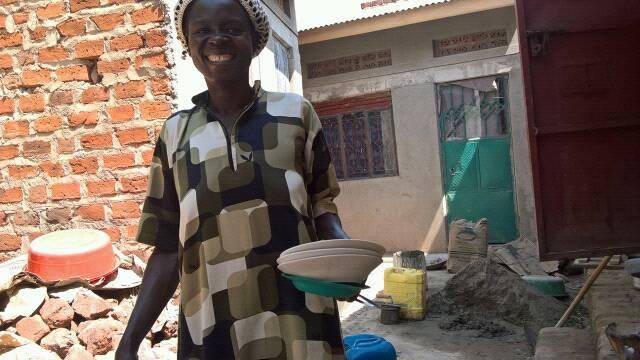
Muhindo Ruth Muwanguzi is no exception. The 47-year-old Acholi woman and a mother of two originated from Ngeta Mission in Lira and relocated to Nansana West Zone 2 Nsumbi Village as a result of Kony staging in their area.

In the village, Muhindo had a tribe mate friend when she was in her early 20’s. After some years they fell in love,they married and had 2 children, a daughter and a son.  A few years later, her husband was promoted to a position of captain in the Ugandan People’s Defense Force (UPDF). 

Muhindo says that after this promotion her husband’s behavior started changing and he became harsh towards her – shouting at her, and inflicting physical and mental torture. He started going out with various young ladies and eventually got infected with HIV/AIDS. However this was only discovered after 2006 when he got an opportunity for a UPDF mission in a foreign country and had to undergo several medical tests.

“But I only knew this later in our marriage” she said .”.. and I only got to know about my status after a Christian Crusade in 2007 where we were advised to test for HIV/AIDS to know our status. Unfortunately, I tested positive.”

Muhindo says that it was tough for her, but she had to open up to her husband who then reacted negatively accusing her of being unfaithful in the marriage. He started becoming more rough towards her and threatened to kill her and her children for having brought a deadly disease in their marriage. He said that he did not need them anymore because they were useless. He even stopped her from informing his relatives about her situation at home as well as their health status.

After a year, the husband dumped Muhindo, moved out of home with another woman and disowned their children.

“I had to work hard to sustain the family. I worked day and night to feed my children and I, pay school fees and everything with fear of leaving my very little children alone”  Ruth said, with tears rolling down her face.

Muhindo’s position worsened when her relatives got to know that she had HIV/AIDS. Her father and mother disowned her.

“After Six years, my husband came back home and asked us to leave the house – the only property that had remained for me and the children – so that he could sell it for his own self-interest so that we can suffer till death.”

This is not a case for Muhindo alone; thousands of women of all ages face similar problems which have resulted in increasing HIV/Aids infection rates .According to the Ministry of Gender, Social and Development 50% of women face the same problem. In some circumstances, women do not disclose their status to the men for fear of being neglected and framed as women who brought the deadly disease to the home. So In the long run, new born babies can be infected too, simply because after the disclosure, a woman would not have a source of food without her husband.

Despite the great strides women have made in terms of education, employment and civic participation in Uganda, many are still constrained by deeply held social norms governing women’s subservient status in intimate relationships.  Statistics show that wife beating and neglect is justified by men in a series of circumstances in the African tradition. Some of the cases where husbands justify wife beating include: if the wife burns the food, argues with her husband, does not seek permission from her husband to go out, or refuses sexual relations.

Despite the  availability of existing laws like the, Divorce Act, The Marriage Act, Domestic Violence Act and the support of Non-Governmental Organizations like Equal Opportunities Uganda, the United Nations Development Programme (UNDP) and many others that are fighting against that kind of  violence, still many women are unaware of their rights. Others fear to disclose their marriage issues and criticise the behaviour of their husbands because of the superior positions the men hold, the women are thinking nothing will come out in their favor.

So Uganda Gender Activities and those at the international level need to join hands to help Ugandan Women in building more awareness.

Florence Nakawungu is an IAWRT Web intern and a member of the Uganda Chapter.

ICTgroup

By Birgitte Jallov

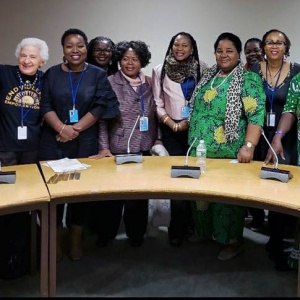
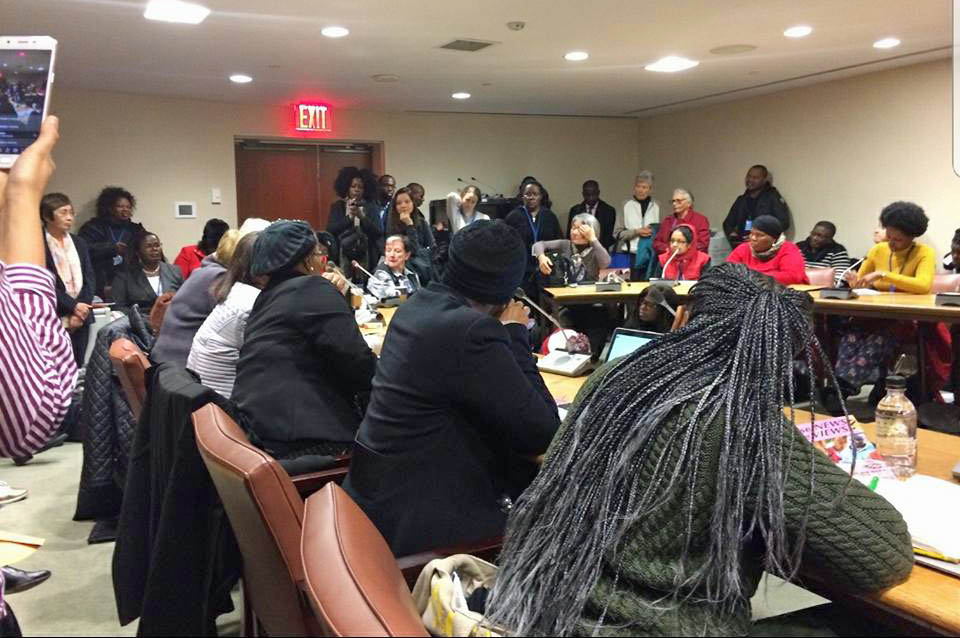
MP, Minister of Gender, Children, Disability and Social Welfare of Malawi, Dr. Jean A.N.Kalilani (pictured on right in green dress) set the stage and spirit for discussions about IT – repeating the important insight several times, “women’s space is never given, it has to be claimed” during the last week of the 2018 CSW62The session, co-sponsored by the Government of Malawi, Genderlinks, and IAWRT, with participation by UN Women,took place in a crowded room, with many participants standing. 

The Minister stressed that we stand on the brink of the fourth technological revolution, which will fundamentally alter the way we live, work, and relate to one another; because of  its scale, scope, and complexity, the transformation will be unlike anything humankind has experienced before. It is fast, and it is characterized by a fusion of technologies that is blurring the lines between the physical, digital, and biological spheres.

Considering this, Dr. Kalilani underscored the importance of having women on board in these developments, and shared the major legal steps being taken by the government of Malawi to ensure that women also have access to affordable, high speed internet, even in the remotest places.

Change is needed and possible – introducing the Gender and Media Digital Media Monitoring Tool


On this inspired and inspiring note, Colleen Lowe Morna, (pictured above far left) the CEO and co-founder of Genderlinks took over.

She documented how little change has actually taken place in the space given to women’s voices as news sources in Southern African media, between 2003 and 2015. This is despite the fact that Genderlinks and other actors have worked on gender representation on an ongoing basis.
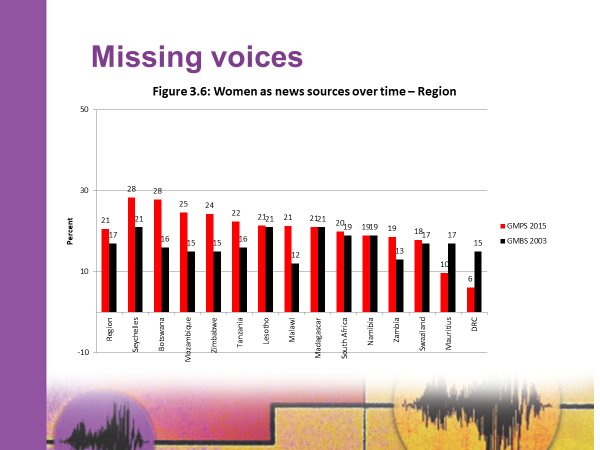
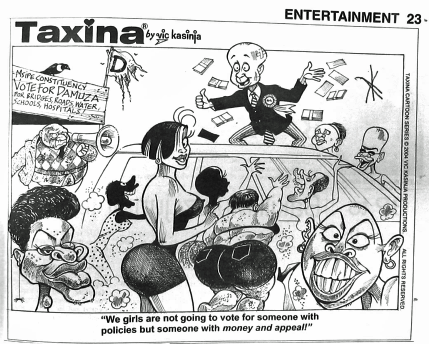
Documenting the ongoing and blatant misrepresentation of women in the media – to this day – Colleen Lowe Morna showed this newspaper “joke” from Malawi, adding that along with laziness and sloppiness by journalists, the job is still cut out for us.

To further highlight the need to continue to refine our ways of dealing with the promotion of gender equality and justice in the media, Genderlinks launched their ‘Gender and Media Digital Monitoring Tool’

The tool can be used to track the representation and portrayal of women and men in the media and is based on Genderlinks’ 15 years of media monitoring experience.

It offers customised monitoring and reporting for different clients to suit specific needs and it allows individuals to conduct their own gender and media monitoring projects, covering one country or more.

Individuals have access to and can analyze their own data and can add to global data on gender and media content for research and advocacy purposes. Such critical monitoring generates evidence for awareness creation and advocacy for change in media institutional practice, policies and editorial content.

Genderlinks says the tool is ideal for self-monitoring by media houses: training of media students; and use by media development organisations to hold the media accountable. available here.

Colleen Lowe-Mora stressed the importance of countering what she called a ‘silent form of censorship’ by simply leaving women’s voices out. “Life is the art of the possible – and change is possible!” she ended.


Turn women into coders and ensure that half of the billions of USD for digital development are for women!!!
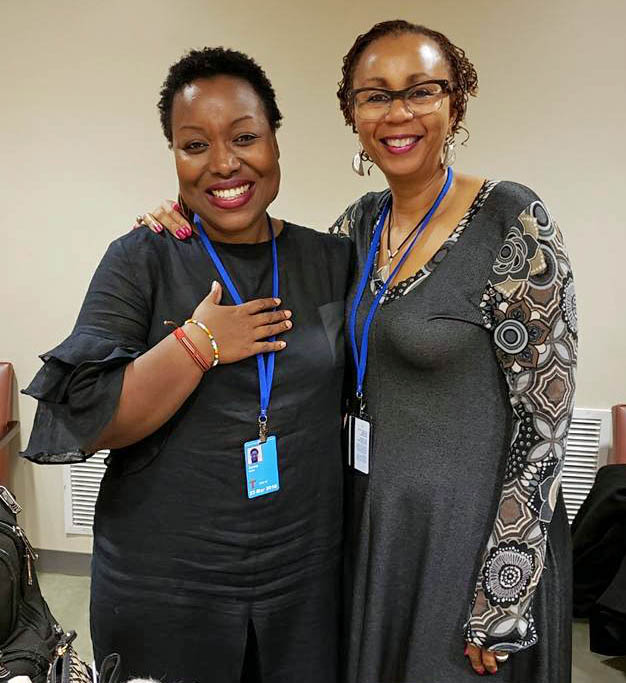
 

The UN Women southern Africa Multi Country Office representative, Anne Githuku-Shongwe (pictured left with IAWRT President, Violet Gonda) called for an expansion of the definition of the media and the way we address its impact on women. Due to deep-rooted gender stereotypes in all areas in and around the media, she says a transformation is required. Focused feminist initiatives are needed for this to happen. All participants in the session were invited to sign up for the un-stereotype alliance to eradicate outdated stereotypes in advertising. Multiple private sector companies have been engaging strongly with the initiative since last year’s launch.

She pointed out that Google is bigger than any African countries’ total budget and stressed the importance of understanding how these giants are dealing with and portraying women. Anne Githuku-Shongwe described it as a passive, untapped space, most often with very negative stereotypes of women and what women can do, which we need to influence for change.

She says the fact that almost all coders are men skews the focus and orientation of that space. They simply design online universes from their vantage point, but the world seen through the eyes of women is different. For example, she said, when searching for something related to women, you see images of women in the kitchen and with kids. When you search for men you see them active and in decision-making positions. This is stereotyping at work – probably an unconscious result of work by male programmers and coders.

It is therefore extremely important that women should make up half of all programmers and coders. “Unless we claim this space, it will continue like this.”

To turn this into action, Anne Githuku-Shongwe started her own tech company, AFROES Transformational Games with young women coders developing games. This was not a field familiar to Anne herself, but with the good advice and insight and her own clear vision and focus, she saw how it was – and is – possible to challenge the dominant narrative.

Moraba – an adaptation of Morabaraba or Zulu Chess – talks to young people about gender-based violence (GBV), where the gamers meet a lot of challenges and information. In the review after Muraba had been used by 250.000 school kids, a young South African man said: “I did not know that I was a rapist!” and he went on to explain how it in his culture is him, who decides all about sex in a couple: “I decide when we have sex, where we have sex and how.” And the young women recognized that this is the way it is.  Moraba was for them the beginning of new truths.

Wrapping up, Anne Githuku-Shongwe spoke about the ‘Universal Service Fund’ which – with national variations – requires telecommunications service providers like mobile companies to contribute one percent of their annual revenue to extend the reach of ICT. In Ghana for instance, the fund is managed by a company extending fibre-cable and supporting the creation of community radios and telecentres (Community Information Centres).

These national funds have large amounts of unspent money as UN women recenlty pointed out. In the US alone, the fund has 140 billion USD and in South Africa 2 billion USD.  “Half of this should be earmarked for ensuring proper access to women!” she said.


One of the oldest women and media organisations addressing today’s challenges


Violet Gonda opened with a presentation on the objectives of IAWRT, and reminded participants that even though it is now 23 years since the Beijing Protocol of Action was agreed upon, much still remains to be done in the area of women’s equality and justice as well as within the CSW special review theme this year: women’s role within and around the media.(pictured with Anne Githuku-Shongwe)

IAWRT has contributed – at an accelerated rate in recent years – to monitoring of the role of women in the media, advanced research to have evidence documenting the portrayal of women in the media; training women in several different fields, including security, and publishing a safety handbook for women journalists: What if…? which is available for free download.
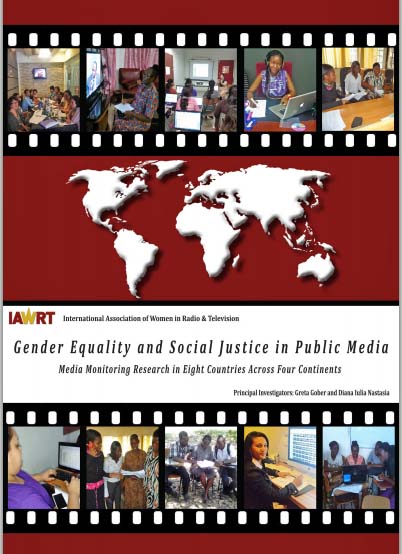
In 2015, IAWRT pursued the Gender Mainstreaming Project, which involved IAWRT members in the evaluation of public radio and public television programming (about 560 hours of broadcasting) in 8 countries (South Africa, Kenya, Tanzania, Cambodia, India, Moldova, Poland, and U.S.A) where IAWRT has either chapters or individual members.

Members from these 8 countries on 4 continents gained capacity by being trained to assess media programming and to collect, analyse, and interpret evidence about women’s participation and portrayal in the media.

Many of them have since stated that they have also become better media professionals by being empowered to critically examine the organizations they work for and judge how they serve their publics.

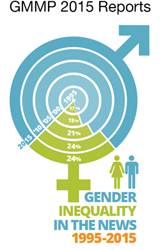
This 2015 report available here confirmed for public media, in a broad array of information and entertainment programming, what the Global Media Monitoring Report (GMMP) has evidenced for commercial media, and for news programming, since 1995, namely:


  • that men significantly outnumber women not only as media professionals having a voice in broadcasting but also as invited experts, eye witnesses, actors, or simply people shown in a crowd;
  • that in no medium, region, or topic does the female-male ratio approach parity
  • that the low visibility of women in the media, which persists in spite of on-going evidence gathering and awareness building, is multiplied by the relative invisibility of other groups including the young, the elderly, ethnic minorities, and the LGBTQ community (thus showing the systemic nature of underprivileged populations’ exclusion).

Women’s low visibility and denial of voice in the media and the continued portrayal of women in negative and denigrating ways has resulted not only in misrepresentation and stereotyping but also, particularly for women journalists, in real danger, where women fear for their lives when doing their work. That is why, in addition to the research and capacity building project completed in 2015, IAWRT also pursued a practical approach to safety with hands-on training and the safety handbook project in 2017.  
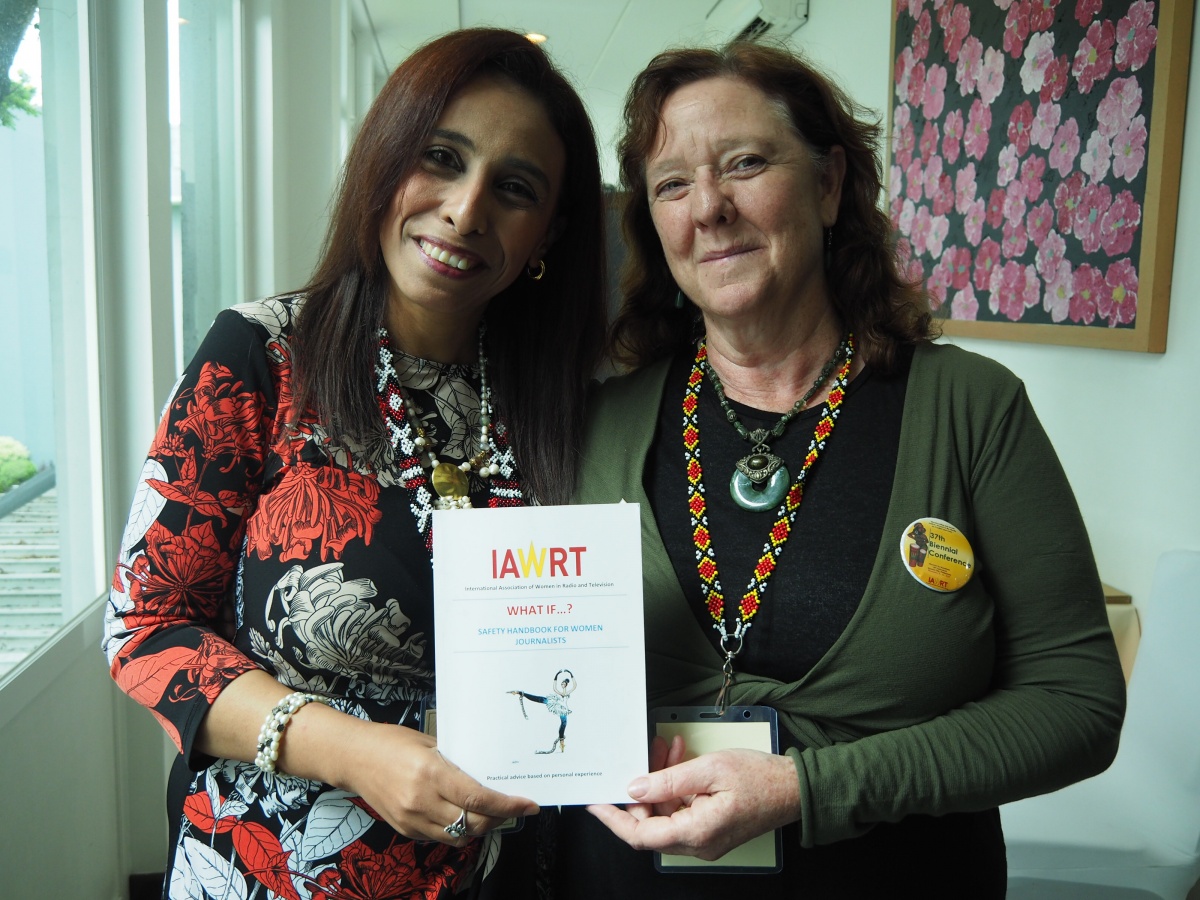
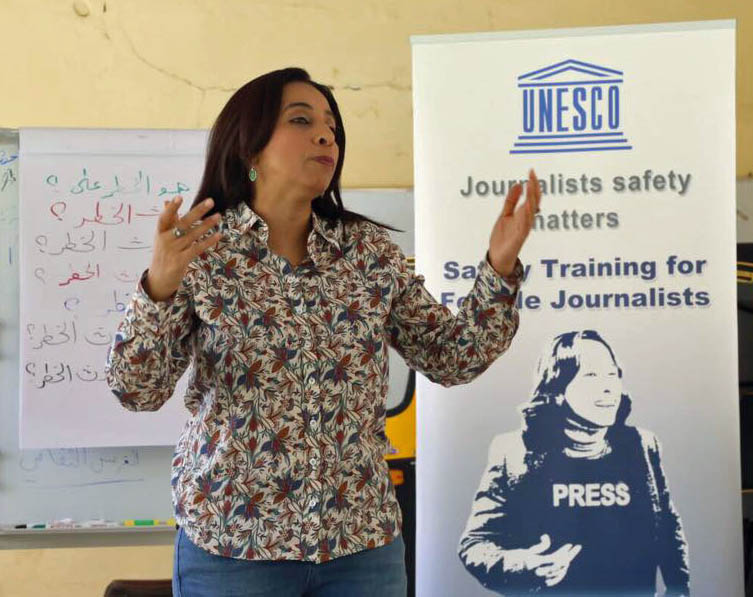
The Safety Training Handbook for Women Journalists  was informed by evidence that there is a dire need for advice and recommendations on security and safety, especially for women journalists working in war and conflict zones. The handbook written by Abeer Saady and edited by Nonee Walsh (pictured)  highlights the fact that women journalists wage a war on two fronts, the war to survive and the war against the system, which increases their vulnerability when war and conflict are also involved. The handbook focuses on issues related to physical safety, psychological safety, and digital safety, as issues regarding women’s work and representation in the media have crossed over from traditional media into digital platforms.

Violet Gonda concluded by stressing that there is a dire need for further strengthening of the role of women in the media, and she was happy that the government of Malawi, Genderlinks and UN Women are addressing that need and some of the ways forward.


Across parties, what women parliamentarians focus on, is the same!!!
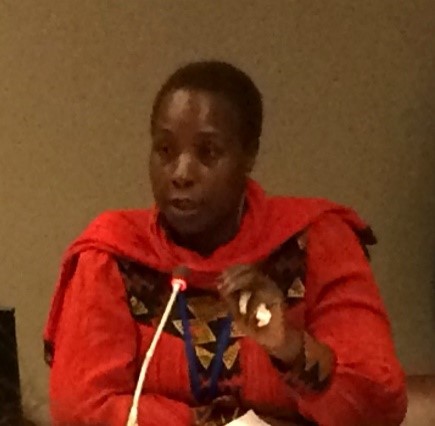
 

The Chairperson of the Malawian parliamentary women’s caucus, opposition MP Jessie Kabwila, pointed out that it is important to put politics aside to focus on what matters most for women across and within nations – it is the same! As women, our core objectives are the same. “To be effective we have to overcome being called “emotional”, “different” – and what is worse –  and we do that by working together!” she stressed.

Kabwila said all 33 women MPs together visit their constituencies to recognize the importance of a woman was elected – and to show what they will all fight for. They always sing a special song about exactly that – and she in the session led the Malawi delegation (all from different political parties) to stand up and sing the song they perform together back home, as a united front in their constituencies. She concluded stressing that: “The fight for food, electricity, water etc knows no politics”

We need to open spaces in the media, and to stand together across the African continent. she said.

 In discussion, A Minister from Zimbabwe said that the women’s caucus there had developed a women’s manifesto to focus the work in the lead-up to the upcoming elections, due in about four months’ time, to remind the electorate why it is so important to elect women.

Ann Abieye, MP and a member of the women’s caucus in South Sudan Parliament, shared the information that they as the world’s youngest nation have 33% women in Parliament. They want more! But they also realise that quality is maybe even more important than quantity – so she solicited support from more mature nations for building the capacity of the women in their parliament.

She concluded her contribution: “Let us treat Africa as one. We are one continent – and for women and our causes to really generate change, we need to work together!”

Birgitte Jallov is the founder of Empowerhouse which fosters the development of sustainable community media as an means for people centred community transformation and works with systematic and strategic communication, she is a member of IAWRT.



rapport_femme_cp_en (1)

Reporters Without Borders (RSF) has registerered more than 60 cases of rights abuses against women journalists reporting about women’s rights in more than 20 countries 

Ilang Ilang Quijano

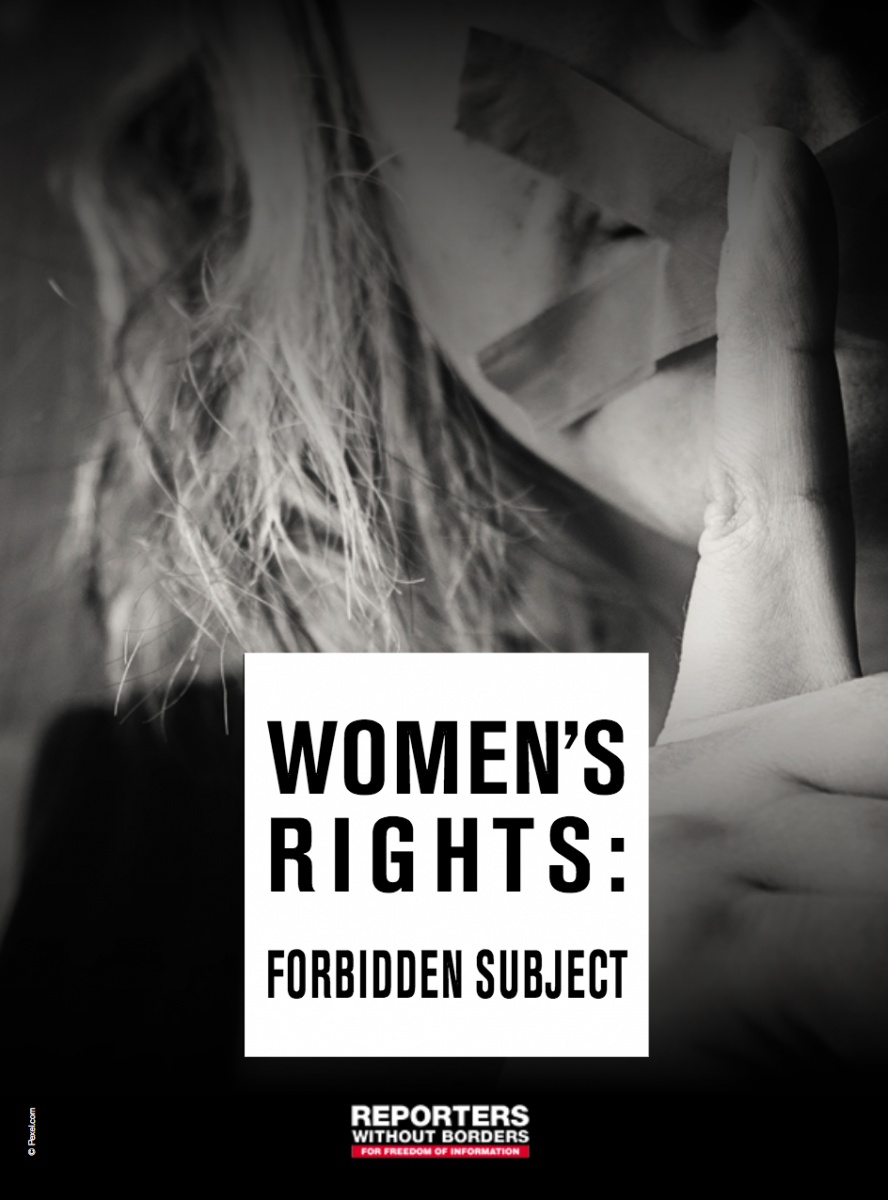
In the report Women’s Rights: Forbidden Subject, released on International Women’s Day, RSF turned the spotlight on female journalists who have been covering women’s issues who have faced various forms of violence, such as murder, imprisonment, verbal attacks, physical attacks and online aggression. Online harassment now constitutes more than 40% of the cases registered from 2016 to 2017.


“Censorship, harassment, threats and attacks all take a dramatic toll on journalists…many are forced to abandon the profession or even flee abroad for safety reasons. But despite the threats, many other journalists have redoubled their efforts in defence of freedom of expression,” the RSF report said.


Egyptian journalist and safety trainor Abeer Saady, Vice-President of the International Association of Women in Radio and Television (IAWRT), was quoted several times in the report explaining the context of such violence against women journalists.


The report highlighted two recent murders of women journalists: Miroslava Breach in Northern Mexico and Gauri Lankesh in Southern India. Breach, shot and killed on March 2017, had been covering organized crime in the state of Chihuahua, particularly the murders of women in Ciudad Juarez, for the past 20 years.


Lankesh, a 55-year-old editor of a feminist weekly, was shot in her home on September 2017. She had openly criticized the Hindu nationalist government, accusing it of defending a “system of hierarchy in society” in which “women are treated as second-class creatures.”


In the report Saady described the killings as “premeditated executions.” “Journalists can be shot in cold blood, even when they are not in the battlefield,” she said.
 

The RSF report identified three groups of leading perpetrators of crimes against women journalists covering women’s rights: religious groups, criminal organizations, and autocratic governments.


It was noted that such crimes are also done with impunity. This marked failure by local and national authorities to respond appropriately to crimes of violence against women journalists is tantamount to encouraging the perpetrators to continue, according to the RSF.


Murders constitute 12.2% of the abuses against women journalists, while the rest of the attacks are imprisonment (13.4%), with cyber-violence now rising to 43.8% of attacks, and various other forms of attack at 28%.


RSF has registered more than 20 cases of verbal, physical, or sexual attacks in connection with coverage of women’s issues during the past eight years. Mae Azango, a Liberian journalist who writes about genital mutilation, received telephone death threats. Sajeev Gopalan, an Indian journalist, was attacked in her home after writing about two young girls who were sexually assaulted by the police.


RSF RECOMMENDATIONS

For news organizations

• Promote coverage of women’s rights • Take account of the specific needs of covering women’s issues • Ensure that journalists are aware of gender practices • Take initiatives to create gender-related positions (e.g the New York Times created the positon of a gender editor in October 2017) • Take account of the specific nature of attacks on journalists – mainly women journalists – who cover stories related to women’s rights • Establish an internal emergency procedure for cases of threats • Take screen shots of threatening messages on social networks • Do not hesitate to report threats or attacks to the authorities

For journalists

• Get to know your subject matter in order to be able to evaluate the dangers before going into the field • Find out about cultural and social practices in the country where you are going, how journalists are perceived and what security is like on the ground • Decide together with your editors who is the best person to cover this kind of story: man/woman • Try to work in a team when in dangerous places • Ensure that sources are protected • Delete all information of personal nature from laptops, smartphones and tablets • Secure professional data that could compromise you or your sources • Ensure that stories are not published until you have left areas controlled by militias or armed groups to avoid being spotted

Alarmingly there are increasingly violent and sexist online threats to women journalists. Anita Sarkeesian, a Canadian blogger critical of the way women are portrayed in video games, was the target of a hate campaign, which included receiving pornographic drawings showing her being raped by video game characters.


In total, RSF has registered 39 cases of cyber-violence, by far it is the most common form of abuse suffered by journalists covering women’s issues. Many cases are found in India, the United States, and France.


Authoritarian governments were found most likely to charge women journalists with defamation or to imprison them in an attempt to cow them into silence. For instance, in Somalia, the government imposes a complete blackout on women’s issues, especially sexual violence. Abdiaziz Abdinur Ibrahim, a reporter who interviewed a woman raped by Somali government security officers at a refugee camp in Mogadishu was sentenced to a year in prison.


Because of the repression and threats faced in their home countries, many journalists are also forced to quit the profession or go abroad into exile. According to the Centre for the Protection of Afghan Women Journalists (CPAWJ), around 100 women journalist have given up their jobs because of mounting pressure from radical Islamic groups. Meanwhile, the RSF has registered an average of two cases a year of journalists fleeing abroad for safety reasons since 2012.


To address the systemic violence against women journalists covering women’s rights, the RSF report came up with a list of recommendations to news organizations, individual journalists, governments, the United Nations and other institutions, and online platforms.


RSF secretary-general Christophe says “We offer very clear recommendations for ensuring that both halves of humanity enjoy the right to equal treatment by the media everywhere, without which we cannot talk of journalistic freedom and pluralism.”

sheilametoo

Ending violence against women and enhancing women’s representation in and access to the media is a key concern in and around the Commission on the Status of Women in 2018.

With these two areas converging in the form of cyber violence against women and girls (Cyber-VAWG) or technology-related violence against women, IAWRT and Gender Links held a Parallel Event #MetooOnline – Workshopping Solutions to Counter Cyber Violence Against Women on 16 March 2018.

The panel discussed a number of issues affecting women using online media: The un-regulated harassment that, in most cases, goes unnoticed has affected many female journalists negatively. Many women loose interest in journalism as a career, others have been psychologically or physiologically affected, due to the ongoing vigorous and sometime planned humiliation and abuse.  Some journalists have lost their personal reputation and dignity  (which is crucial to survival in some cultures) and others have lost their privacy. Therefore this affects the media industry as a whole, and practical solutions are needed.

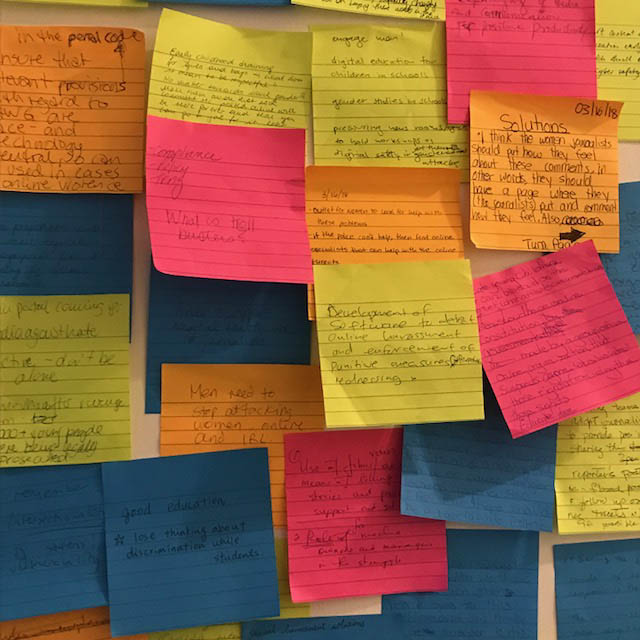
The panel highlighted key solutions which included:
 Start a movement of women to support women using online media

 Strengthen the positive movements acting about the violence against women

 Governments should establish online regulation for the safety of journalists on and offline. Both local and international regulation is paramount

 Media houses have a responsibility to support their female journalists or media workers against such abuse.

 Gender sensitive language should be encouraged

 Start a campaign on supporting women journalists working online

The extremely attentive and participative audience. came up with many solutions which fell basically into three categories – early education, legislation for punishment and responsibility of owners/publishers.


Nancy3

IAWRT has already been involved in several workshops at this year’s Commission on the Status of Women (CSW) being held in New York,  joining the discussion on the #MeToo campaign and issues of online harassment and violence against women in media.
The CSW is meeting at the United Nations to form guidelines on policies on rural women and to review the progress on women’s role in and on the media. NGO’s like IAWRT are participating in hundreds of parallel events and side events in the UN this year 

IAWRT President Violet Gonda, an award-winning journalist who recently returned home to Zimbabwe after 17 years in exile, says “Even though the Beijing Platform for Action has a mandate on women and the media, this has never been implemented.” Delegates have also used this opportunity to raise awareness about the Safety Handbook for Women Journalists and raise the issues of gender representation and safety for women in media.

IAWRT is involved with six separate events being held in tandem with the CSW, and the immediate past President Gunilla Ivarsson is moderating a GAMAG session on policies and research in Gender and Media.

CSW Observations

Beyond A Pretty Face: Tackling Gender Bias In Media Industries organised by IAWRT_USA and Zonta International

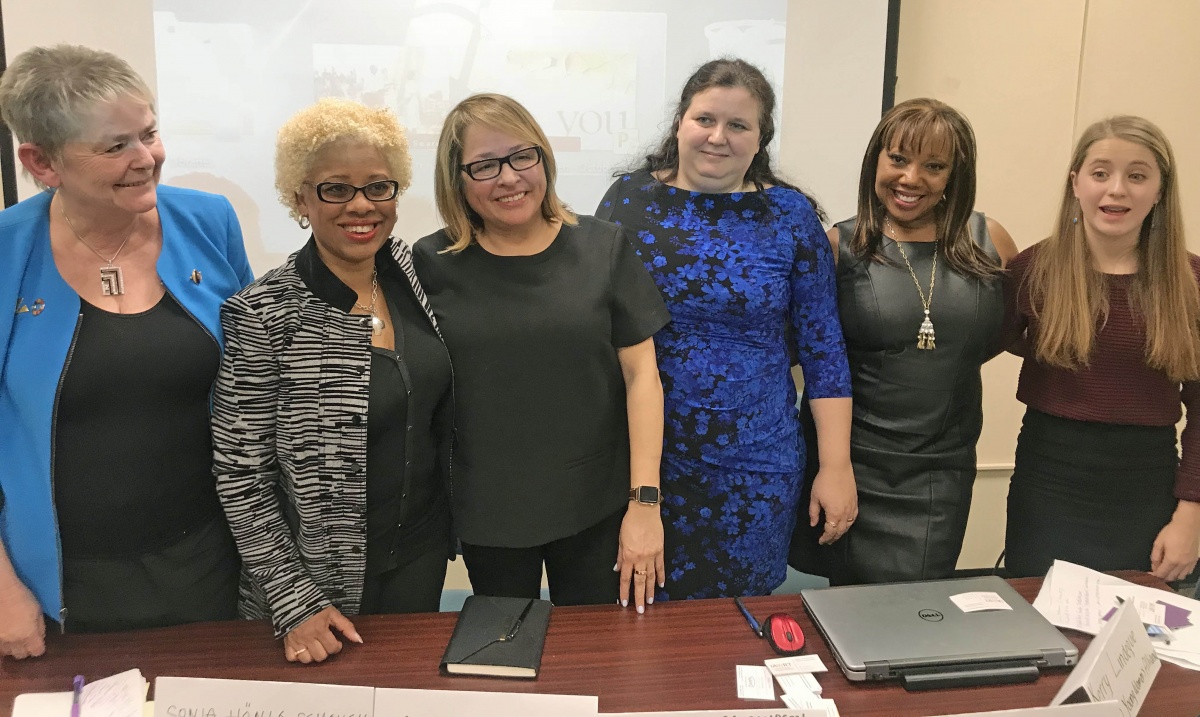
Panelists from From Left: Sonja Honig Zonta International, Dr. Michelle Ferrier, Professor and founder of Trollbusters, Patricia Siera Sampson, Voice Latina, Dr. Diana Nastasia, Gender researcher/IAWRT USA, Vanessa Tyler, WPIX reporter, Kerry Lindeque, Youth Women’s Alliance.

by Sarah Nakibukka

The panel discussed a number of issues ranging from the negative portrayal of women in the media, to the #MeToo campaign and the online media. Below, some nighlights of the key issues emerging from the discussions.

Impressions on the portrayal of women in the media.

  • Recent reports indicate that there is progress in women’s empowerment and portrayal as a result of media support. A lot has happened from the 1950’s to the 1990’s up until the present day. Women in the 50’s were portrayed mostly as house wives and the trends have improved through the 90’s and now where we see more women portrayed as media managers.
  •  Despite that improvement, the numbers of women heard, read about or seen in the media, is not improving. According to the most recent global monitoring statistics, media women numbers have been stagnant at around 24%.
  •  The number of women journalists keeps going down despite the fact that a number of them study journalism. This is because women prefer to do public relations work, rather than journalism. Cultural influence and society pressures keeps the Journalists away from their career.
  •  Journalists should be sensitized about their cultures and should appreciate their role in the empowerment of women. This would go a long way in establishing “Sustainable Media”
  •  We now need to strengthen and improve on the numbers of women in leadership / managerial positions to enable them to control content fully to curb existing negative portrayals.
  •  Media can be an agent of change and should be able to tell their stories appropriately. “You cannot be what you cannot say.”
  •  If women are to succeed, economic empowerment is key, women should seek mentorship, go for the relevant training courses and support each other.
  •  We need to hold people accountable for negative reporting

What is your take on the #Metoo Campaign?

  •  This campaign helps the women in the media and advocates to reflect on the progress made for women and come up with solutions.
  •  It helps us understand the role of various stakeholders if we are to achieve success. We need our own families to be involved right from childhood to understand their cultures. Unless this is done, there will not be appreciation of our cultures and the stereotypes will continue.
  •  Unless we start to love our societies and cultures, then we can not do much. Let us start by loving ourselves. “we cannot go far unless we work together”
  •  This campaign has some positive achievements. We now see women being profiled in powerful sectors like mining, and women in some powerful positions. These types of stories need to continue.
  •  Universities and colleges need to integrate issues of gender mainstreaming in their curriculum. We need to push for gender representation in all circles and diverse representation of women in the media.

What is your experience regarding online media?

  •  Online media is a good platform but a number of women have had serious issues with it. Lots of women have been pushed away from their careers on social media with lots of abuse and embarrassments. And the litigation process is too costly and time consuming.  We need clear regulations on online media. Governments, media managers and policy makers need serious engagement on this matter.

Media and Information Technologies: A Double-edged Sword for Women’s Advancement

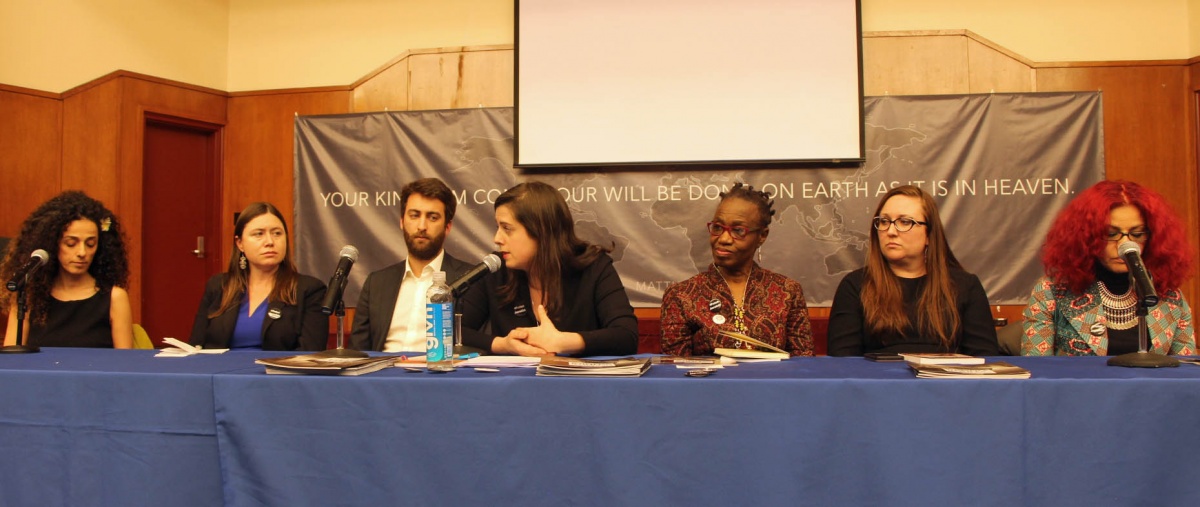
 live on Facebook  International Association of Women in Radio and Television (IAWRT) This parallel session was organized by Reporters Without Borders (RSF), the International Women’s Media Foundation (IWMF) and the Committee to protect Journalists (CPJ).

  • “I cried a lot when I was first called me a prostitute … I wrote about it. I became really powerful. If defending human rights means I am a prostitute, I am a prostitute.”  I filmed myself crying, dancing, showing my hair – what scares the government of Iran? –  I started ‘My Stealthy Freedom’. and have a million followers. recently a million women in Iran have taken off the headscarves they are forced to wear and waved them on a stick. “They kicked me out of my country, but I found a window.” Exiled Iranian Journalist – Masih Alinejad
  • “you can be killed for reporting on women’s menstruation, an ordinary every day thing – about girls not having access to sanitary napkins for that you can be killed in some countries.” IAWRT’s Sheila Sheila Dallas-Katzman
  • “It is really awful out there, both in the real world and the virtual word. I have been called an ugly lying whore, an Islamic terror bitch, a Zionist agent.” Mona Eltahawy says she was targeted by Egyptian Riot Police in 2011 during a demonstration and physically and sexually assaulted. last year (2017) Egyptian newspapers reprinted a picture of her with broken arms from that assault because she described the US President Donald Trump as a fascist in the same vein as the Egyptian leader Abdel Fattah el-Sisi. It was designed to send a message “we did this to you but we can do it again.” Egyptian New York Times Journalist: Mona Eltahawy 
  • Humour and mockery can be powerful but can be signing a death sentence. Women can take their headscarves off in Iran but they can’t be left standing alone.  There are way more avenues more to abuse women. The state won’t use sexual slurs against male journalists. I grew up coming home to graffiti being spay painted on the family house, I though it was normal. we should not accept it as normal it is just the first step before physical violence. Digital abuse must not be accepted as a normal part of work it wears one down. We must take action against it use legal avenues. Matthew Caruana Galizia, Pulitzer winner, son of murdered journalist, Daphne Caruan Galiza
  • We are hearing a lot from women wo are speaking out who are retaliating but there a lot of women who are silenced. There is a real defensive position by newsroom to our survey on harassment one HR person said it might create the expectation of a solution if we hand out the survey. They are not alone “There may be a don’t ask don’t tell policy. This is a threat to the news industry as a whole. It is not easy but there are solutions. IWMF’s Nadine Hoffman
  • companies like Twitter want to do something – but do not understand the scale of the problem –  there is a lot of good work but no one central repository. Many trying to give uses more control of privacy but could be double edged sword hiding or blocking threats as CPJ finds that journalist killings are preceded by threats and abuse. Global social media has trouble identifying threats according to each culture. however, they are definitely not doing enough an released in data. CPJ advocacy director, Courtney Radsch, 

The main IAWRT workshop, #Metooonline – Workshopping Solutions to Counter Cyber Violence Against Women to be held soon is aimed at creating guidelines for media organizations to protect female journalists. IAWRT is calling for the creation of robust industry-wide guidelines on how media organizations should protect their female employees from sexualized and/or gender cyber violence. Discussion in the IAWRT – Genderlinks event aims to kickstart the process of getting the media industry to put such protections in place. 

For the first time, IAWRT delegates will be involved in three Side Events in UN headquarters. Abeer Saady, the author of the safety handbook and Chair of the IAWRT CSW organising committee, says partnering with like-minded NGO’s, “has enabled us to present and participate in an unprecedented number of events” (Side events involve government representatives collaborating with NGOs to present a topic speaking directly to governments).

Abeer, who is the IAWRT Vice President and a journalist safety trainer has accepted an invitation to join a panel at the UNESCO side event, A Dent in Democracy: how on and offline attacks on women journalists are hurting us all, which will highlight the UN Plan of Action on the Safety of Journalists and the issue of impunity.

The IAWRT Gender Links joint side event, Making Information and Communication Technologies Work for Gender Justice will workshop solutions to cyber violence problems, such as hacking targeting female journalists and attempts to destroy reputations. A digital gender and media-monitoring tool, developed by Gender Links, with assistance from Free Press Unlimited, will be presented.

IAWRT’s radio experts will be at a side event to speak to the CSW’s main theme rural women and girls. ‘The event, organised with the UN Department of Public Information, is Community media broadcasters: Building capacities for amplifying voices of rural women will include IAWRT board member, Archana Kapoor, an Indian community radio leader, and Sheila Katzman (former UN Chief of UN Radio and Public Information at DPKO).

Reports and live streams from our delegates are on our Facebook group International Association of Women in Radio and Television (IAWRT), on Twitter #CSW62 @iawrt and here, iawrt.org.

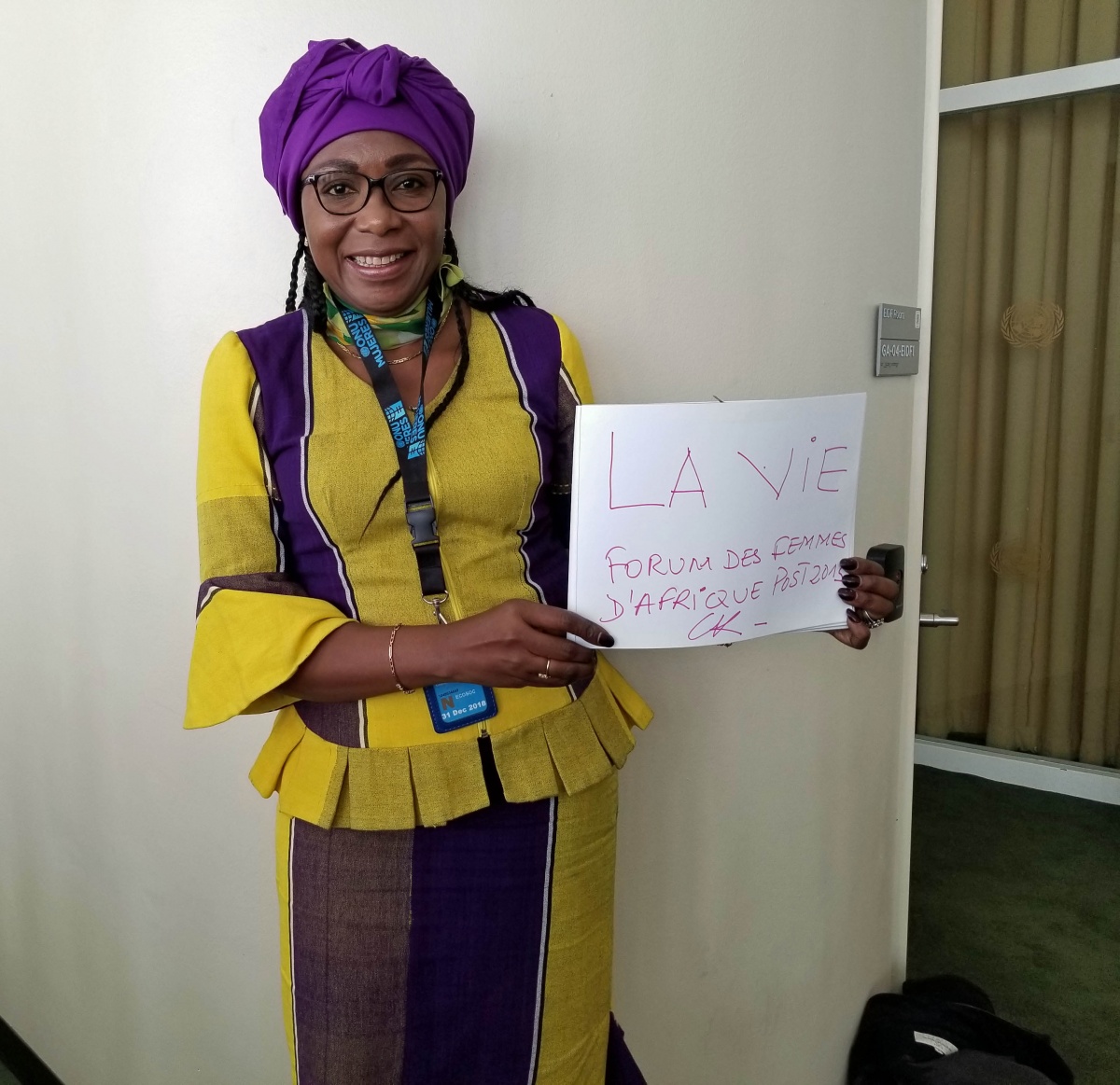
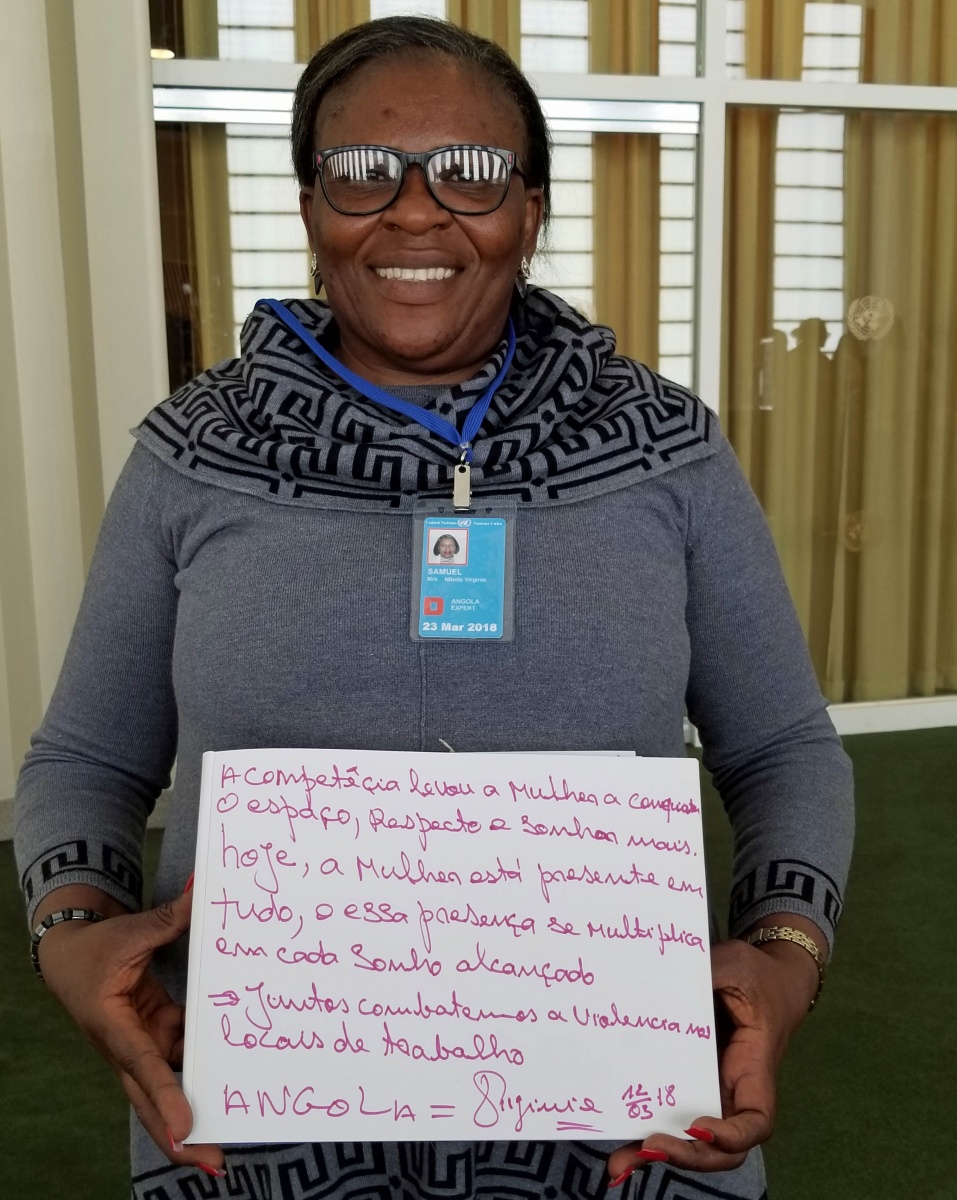
CSW Delegates Photo essay.

By Nancy Cohen