Tackling Gender Bias in Media Industries. Join Zonta International and the International Association of Women in Radio and Television – USA Chapter for this parallel event.

It will examine the progress that has been made on the Beijing Platform for Actions mandate regarding women and the media. Audience members will learn how to identify gender bias in media and how to advocate for balanced depictions of women in media industries.14 March 2018 10th Floor, Church Center, 777 United Nations Plaza, 4:30 p.m. EST

biennial report

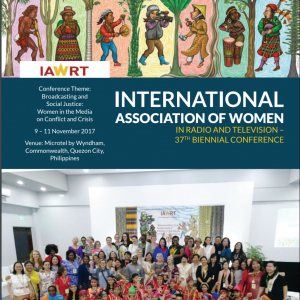
The 2017 Biennial Conference Report is now  available

The 2017 Biennial was held in Quezon City in The Philippines in November 2017. Proceedings highlighted the core issues that women in media face while covering the war on terrorism, the war on drugs in The Philippines and reporting natural disasters and their aftermath. The Safety Handbook for Women Journalists was launched and a new IAWRT Board and new President were elected.

Report produced by Communications Officer, Geeta Sahai. [email protected] See attached, or go to the Publications tab of iawrt.org.

Rapporteurs notes available to member’s in downloads.


14thAsian

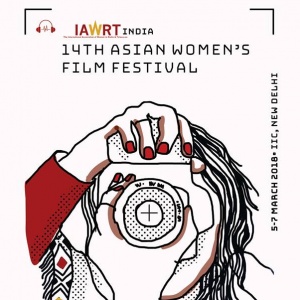
The 14th Asian Women’s Film Festival  will be held from 5-7 March 2018.

The annual event at the India International Centre, New Delhi, is organised by the IAWRT India Chapter.

The event showcases Asian Women filmmakers, and it travels to other Asian Cities after the March event.

MIFF-E-Flyercut

Of Love and Struggle

This is a central theme running through a selection of films made by women from The Philippines, which will be showcased in screenings at India’s Mumbai International Festival for Documentary, Short & Animation Films (MIFF) in late January.

The selection has been jointly curated by IAWRT members Ilang Ilang Quijano (Manila) and Reena Mohan (New Delhi) and includes classics such as Tondo, Beloved: To What are the Poor Born? (2011), Jazz in Love (2013) and Nick and Chai (2014).

Tondo is a gently observational film that focusses on a single family, who live in a dank house on the coast, near a gargantuan shipping port. The family is headed by Virgie Simpron – a pregnant mother of three. The family is workless, but not apparently for lack of trying.

Jazz in Love by Baby Ruth Villarama tells the story of Jazz, a young man from Davao whose dream wedding is within reach. His boyfriend of 11 months has proposed. However, as no law allows him to get married in the Philippines, he must fly to Germany, his boyfriend’s home country. Jazz has to move to Manilla for German lessons while his parents remain completely unaware of what is happening in their son’s life.

Nick and Chai are a couple from the island of Leyte, who try to recover after all their children die in super typhoon Haiyan, the strongest typhoon ever recorded. This film steps inside their Quieta home and observes how they suffer and try to cope with their loss. 

”Love and struggle are the themes running through this collection of films, which takes us to the vast underdeveloped countryside of the Philippines and the dense slums of Manila. These are places where socio-political conflicts play out, places where the struggle for survival is most intense” say Reena and Ilang Ilang.

“These are also places where the most recognizable aspects of Filipino culture thrive—from the love of karaoke singing, to bayanihan,or working collectively.

Exhibited by various protagonists are values that range from conservative to progressive, behaviour from abhorrent to endearing — not immovable but, always, in a state of flux or struggle. And always, with an enormous capacity to love — the self, family, community, and country.”

Ilang Ilang Quijano ‘s film Heart of the City (2011) is the opening film of the selection. It tells us about the life-and-death struggle of Manila’s urban poor settlers whose homes are about to be demolished. 

Reena and Ilang Ilang say the films are just a glimpses of a people and a country that many in the audience may not be familiar with.

“What we are hoping is to elicit is that immensely satisfying spark of recognition of our commonality and universality in these stories of love and struggle as told by Filipino women.”

MIFF runs from January 28 – February 3. of Love and  Struggle Venues: Films Division Complex & Russian Cultural Centre. Click for more information


Diana Iulia Nastasia 300x300

Diana Iulia Nastasia joins IAWRT board

Diana Iulia Nastasia from the IAWRT-USA chapter has joined the international board of IAWRT. 


She fills the vacant position created by the death of our colleague and friend, Yasmine Ryan.

“Yasmine Ryan would have been an exceptional board member, and the professional world of journalism has suffered a great loss due to her untimely passing,”Diana says.

Diana is an international lecturer and scholar in the areas of gender, culture, and the media who says “ I will make every effort to honor the commitment to the IAWRT. I also think that, together with other IAWRT board members, I can help put research on gender and the media back strongly on the IAWRT agenda, and I can also help with identifying and pursuing grants.”

Diana’s research focuses on voices and portrayals of marginalized populations including women, children, and immigrants. In 2014-2015, Diana served as a Project Co-coordinator, together with Greta Gober, on IAWRT’s Media Monitoring Research Project which resulted in a research report Gender Equity and Social Justice in Public Media as well as policy activity through IAWRT country chapters.

She began her career in Romania, teaching communications and media studies at several universities. Arriving in the USA as a Fulbright Visiting Researcher, she pursued a Ph.D. while continuing to teach communications and media studies.  Now a Faculty Fellow at the Southern Illinois University Edwardsville (SIUE) she is also a Project Management Associate for the Building Illinois’ Bioeconomy Consortium. This is a partnership between SIUE and regional community colleges, aimed at connecting underprivileged populations (women, ethnic minorities, unemployed, and underemployed) with educational opportunities leading to living wage careers.

IAWRT President Violet Gonda says “We look forward to working with Diana, who is a scholar who was a co-coordinator on the IAWRT GMP and is a grant-writer who will thus will be an asset for IAWRT’s fundraising initiatives.

NGO CSW/NY has created an online orientation video series for those who are new to the Commission on the Status of Women. 

The gathering of thousands of NGOs as well as the representatives of governments in the UN for the CSW can be overwhelming.

 A new video covering different topics will be released every week. These videos contain helpful information, advise, and how-to instructions to prepare you for CSW62.

Look for videos on the NGO CSW/NY Youtube ChannelFollow on twitter at @NGO_CSW_NY and Facebook for updates.

The sixty-second session of the CSW (2018) will take place at the United Nations Headquarters in New York from 12 to 23 March 2018.

Representatives of Member States, UN entities, and ECOSOC-accredited non-governmental organizations (NGOs) from all regions of the world are welcome to attend the session.

Priority theme: Challenges and opportunities in achieving gender equality and the empowerment of rural women and girls. Review theme: Participation in and access of women to the media, and information and communications technologies and their impact on and use as an instrument for the advancement and empowerment of women (agreed conclusions of the forty-seventh session).

IAWRT will be organising and participating in side events in UN Headquarters and parallel events outside UN headquarters in New York.

Archana

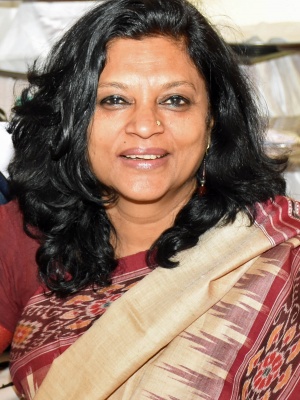
Archana is a Filmmaker & Broadcaster, based in New Delhi, India.

What type of projects do you do?

I direct and produce documentary films, mainly advocacy films on social issues. I run a community radio station that broadcasts programs on local issues involving the community. 

Why did this sort work interest you, and how did you get started?

As a documentary film maker, I have worked with farmers, weavers, labourers and socially excluded communities. At times I felt that I used them to make a film, but never went back to help them get over their problems or misery. In 1997 I started a ‘not for profit’ and began working in an extremely impoverished and marginalized community close to Delhi, the capital of India. In 2010 I set up a community radio and started to use information to empower the community. Today we broadcast for over 14 hours a day and have trained over 100 community members to become broadcasters. Our radio station has won two national awards and several other commendations for the work we are doing.

What part of this job do you personally find most satisfying? Most challenging?

Working with the most vulnerable communities is extremely challenging. Giving women the confidence to speak out is most satisfying. After seven years of constant struggle it is heartening to see women defy all kinds of restrictions to come to the radio station and participate in the programmes.

What do you like and not like about working in this industry?

As a filmmaker, we move from one theme to another and that is something I don’t like. I enjoy meeting new people, exploring new ideas and traveling to new locations for my films. I like the diversity of themes that we work on. As a broadcaster I like the idea of looking at information as a tool for empowerment. I also like the idea of a holistic approach and of working within a particular community defined by its geography. The community broadcasting sphere, unlike filmmaking has an immediate impact and is extremely interactive and engaging and the space for making independent programmes is shrinking and government control on all forms of media is increasing.

My strongest assets/skills, areas of knowledge, personality traits and values are….

My strongest assets are that I am not afraid of hard work and am extremely calm in periods of crisis. I have leadership qualities and am a team player. I respect diversity and am comfortable working with people from different cultures. I am task oriented, organized and have a very target driven approach. I have an eye for detail and have good oral and written communication skills. I am perceptive and am a visionary. If I undertake a task, I give it my best.  I am an achiever and have the ability to turn an adversity into an advantage.

I am an award-winning filmmaker and community broadcaster. I have been featured in many journals and magazines for the work I have done in empowering underserved communities. I am a good trainer and have a good knowledge of gender and politics in India. I understand issues pertaining to minority communities rather well. I am well-travelled. My areas of knowledge are community radio and community media, documentary filmmaking, gender and women’s empowerment. I have done several films on disaster management and have worked on all kinds of disasters.

Has IAWRT’s network of media women around the world helped or inspired you?

 It has certainly inspired me. As Managing Trustee, IAWRT India, I have acquired new skills in terms of organizing film festivals and enhancing skills in organizing events.

What are your long-term goals?

I would like to make a difference in the lives of women through my work, I would like to work with women from different countries and create opportunities for experience sharing and learning.

What special advice do you have for young women seeking to qualify for this type of work?

My only advice is that they should be honest to themselves. They should be patient and perseverant. They should learn to stand up for what they believe in and now bow down to pressures and power games. Life is tough, but if you believe in yourself, you can fight for yourself and your values under all circumstances.

Do you have any special words of warning, or encouragement, because of your experience?

Don’t give up. Work hard, believe in yourself, there will be many who will say Why to you but very few who would say Why Not? Look out for such people and stick to your own goals.

 Links to some of Archana’s work  

Archana Kapoor Productions

Radio Mewat: radio by the people, for the people and of the people 

Twitter @archanakpr

Media attention

Riding the air wave

Change is in the airwaves in rural India

Tune into Mewat

FM of the masses

How One Award-Winning Radio Channel Forever Changed an Underserved Community in Haryana

Community radio to take care of consumer complaints in Mewat

Rural radio poised to bring hinterlands to speed

This Community Radio Programme Encouraged a Father to Support His Daughter’s Education

In India’s Rural North Community Radio Empowers and Inspires

Radio Mewat: radio by the people, for the people and of the people

Forget Newspapers or the Internet. Indian women are betting on one of the oldest forms of media

Community Radio Inspires Women In Isolated Village To Express Themselves

Big data to cameras: How technology is empowering Muslim women

Devi Awards by Indian Express Group  devi awards- facebook

Featured in the Vodafone coffee table book: Women of Pure Wonder

Ronalyn

The IAWRT Safety Handbook for Women Journalists, launched in November 2017.

Ronalyn V. Olea takes a look at what the handbook can do for female media workers.

Security and safety for journalists (especially for women journalists) is something that’s not taught in schools and rarely discussed in newsrooms. We learned the principles of journalism, the basics of newsgathering and other reporting skills and the tools for critical thinking and analysis but never how to prepare ourselves for threats and challenges we might encounter as women journalists.

Abeer Saady’s book, What if…? Safety Handbook for Women Journalists, provides practical tips for women journalists on how to minimize risks when covering sensitive and dangerous assignments.

The handbook’s main strength is its compilation of experiences, not only those of Saady as a journalist for 27 years, but also those of other women journalists who faced difficult situations.

Saady underscores the importance of physical, psychosocial and digital safety and security.

Looking back at my own experiences and those of colleagues in the alternative media, I realized most of us tend to overlook our own safety and security when in the field.

How to protect and minimize harm to our physical safety is something we learned from experience. We only bought a helmet after our colleague covered a violent demolition in San Roque a few years back. She was crying while tear gas canisters and stones were thrown from all directions. Unlike colleagues from the wire agencies, our reporter did not have a bulletproof vest and other protective gear. After that, we decided we need that type of gear but due to limited resources, we could not purchase even just one set.

But yes, as Saady points out in the handbook, risk assessment, profile management, situational and digital awareness and a safety plan are also crucial.

Many of the tips shared in the handbook are practical enough for any journalist or newsroom to do. Going back to the incident I mentioned earlier, the newsroom knew that the demolition of shanties could turn violent but we did not have a safety plan. Our reporter went there without a grab bag (which should contain water, snacks, and a first-aid kit, amongst other things). After the chaos, she called up two of our colleagues to ask for help. We did not have any communication plan either. She was fetched by our Editor in Chief, from the site.

We usually do one-woman coverage, even for out-of-town assignments, due to limitation in resources. Looking back, I managed to survive with the help of people’s organizations. Almost always, they assigned somebody to assist me as I do my job. This proved helpful when I went to cover a fact-finding mission in Hinoba-an, Negros Occidental about the impacts of mining on local communities. My buddy served as my interpreter during interviews, and he never left me when security guards of a private mining company intimidated the group.

The handbook provides tips on what to do when stopped at checkpoints, arrested during coverage, when kidnapped or held hostage, and when caught in crossfire.

Psychosocial security is something that’s not always being attended to. A colleague working for a community radio could not sleep for three months after covering a violent dispersal of farmers in North Cotabato and to this day, she feels the trauma of witnessing a farmer die beside her. The handbook suggests ways of dealing with survivors of such trauma.

The handbook suggests the following ‘how to’ for colleagues who have experienced trauma: (Its useful pronciples can also apply to reporting on survivors of trauma)

  • Take time to let someone who’s been through a bad time tell their story.
  • Ask them open-ended questions. Listen to what they want to say. Don’t interrupt or come back with your own experiences.
  • Don’t tell them you know how they feel. You can’t.
  • Don’t put down their experience or imply they only need to pull themselves together.
  • Never be judgmental.

What if…” also provides tips in dealing with online harassment. Some of our female colleagues in the dominant (or manistream)  media were threatened with sexual assault on social media by those alleged to be Presidental supporters. For such cases, the handbook suggests naming and shaming the online harasser, and moderating the comments section and preventing people from being anonymous, amongst others.

A Norwegian journalist who became a victim of online harassment believes that a better solution would be to develop what she calls harassment competence, such as learning how to distinguish between various forms of bullying, as her interviewees did. She suggests distinguishing between ‘the angry’, ‘the crazy’, and ‘the dangerous’ bullies. “The ‘angry’ are people you can respond to, and perhaps even make them understand that you’re a person who might get hurt by their utterances. Harassment coming from ‘the crazy’ and ‘the dangerous’ had better be ignored…since a reply often makes the bullying even worse,” she shared.

In this time of social media, women journalists should take precautions in protecting their digital safety and security. Some of our colleagues in the dominant media reported that their social media accounts were hacked. Logging in by default (remembered passwords) to one’s emails or social media accounts through applications on mobile might be easy but compromises one’s safety and contacts. The handbook lists tips on how to do a digital cleanup.

The handbook has a separate section on ethical safety decisions. The point is to ‘do no harm’.

Another section is devoted to legal safety. Knowing one’s rights as a journalist and the libel and other media laws in one’s country, or one being visited, is helpful.

The handbook, which can be downloaded from the IAWRT’s website, should be read by every woman journalist.

Creating an environment where women journalists can perform their job without fear or danger is something that we must continue to struggle for. Yet a  2013 global survey of security risks for women journalists revealed that a majority preferred not to report gender-based violence for fear of losing their job or of being stigmatized.

Twelve women Filipino journalists have been killed in the line of duty since the restoration of democratic institutions in 1986; four of whom died during the Ampatuan massacre on Nov. 23, 2009. Not one of the perpetrators of these murders has been brought to justice.

Every journalist must fight impunity, which engenders gender-based violence and media murders. 

Ronalyn (pictured) is a non-mainstream media practitioner in the Philippines and member of the IAWRT,  This article is adapted from original publication in (http://bulatlat.com)Posted with permission.

safety

Take care of personal safety before your equipment

By Sarah Nakibuuka Bakehena

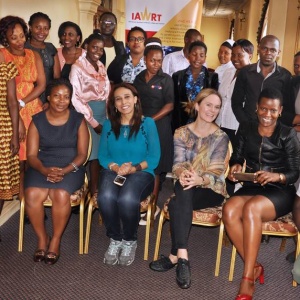
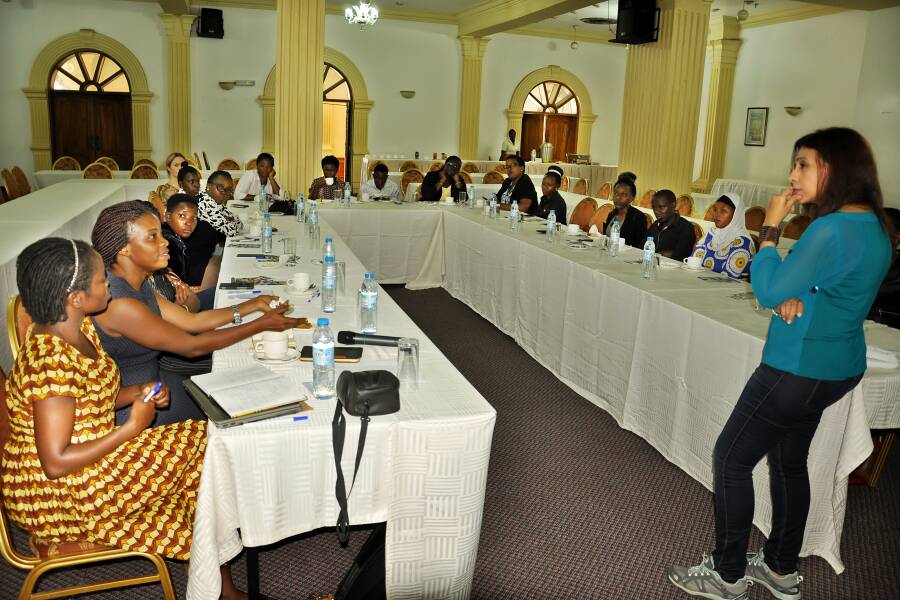
The IAWRT Uganda Chapter held a ‘Safety Training Workshop on safety measures and protection for female journalists 

The training was conducted by Abeer Saady the Vice President of IAWRT International on 21 November 2017 at the Grand Imperial Hotel Kampala. The workshop was aimed particulalry at those who report in conflict zones

She cautioned journalists to take care of their personal safety before considering their equipment because their life is much more important. Journalists were also told to take the precaution  of knowing how to carry out first aid,  both for themselves and their colleagues. While they were advised to avoid unnecessary risks, they need to be able to deal with any injuries received on the job.

Abeer also called on journalists to always assess risk by identifying the threats, estimating the level of risk, and managing the risk through a security plan which involves: Preparation (risk assessment and gender related preparation); Travel to the site (mobility preparations: transportation, times, and routes); Implementation of mission (situational awareness) and returning home.
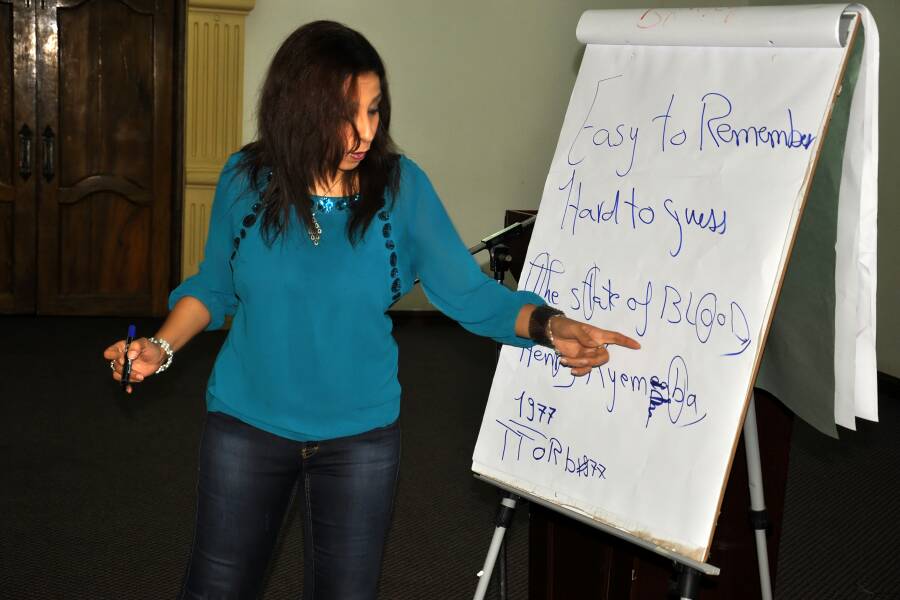
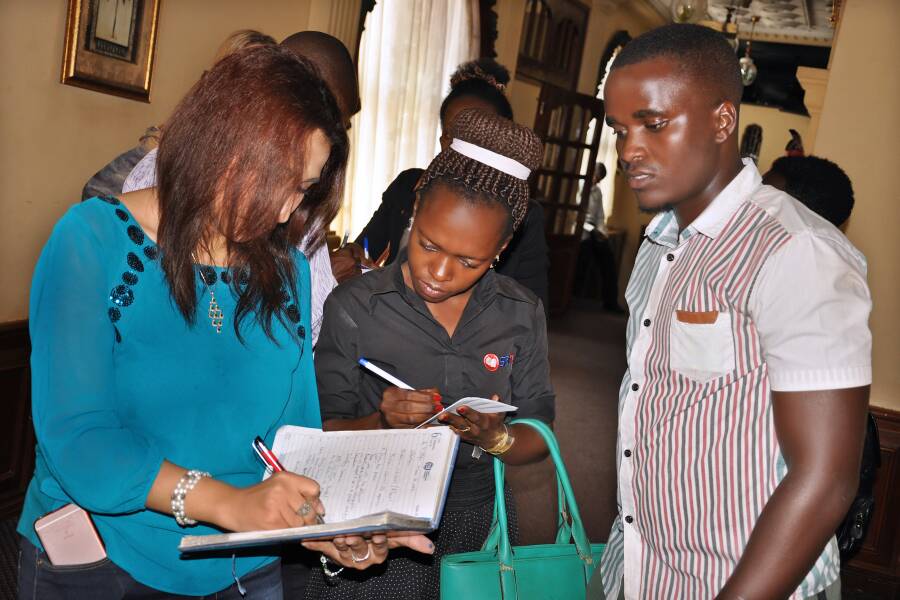
Abeer called on journalists to consider the following ethical questions as they develop stories: Why am I publishing the story? Will someone get hurt by my story? Can I find alternatives? Can I reduce the harm? Can I defend my decision? These are key to avoiding risk.

Ms. Sarah Nakibuuka Bakehena Secretary of IAWRT noted that a number of journalists, especially female journalists, receive lots of threats but never report them – something that puts their lifes at risk. She called on the media in Uganda to always report any cases of threat to the police and to work with IAWRT Uganda to enable them seek legal support.

She called on women’s organizations and law firms to support an initiative to ensure that all journalists benefit from such legal support.

The workshop was attended by IAWRT Members in Uganda from various media organisations including: Radio One, Akabozi Radio, NTV Uganda, Impact FM, Vision Group, (Bukedde FM and Urban Television), Ndejje University Kampala Mass Communication Department, Salt FM, Human Rights Network for Journalists (HRNJ), KFM and Dembe FM, CBS FM and Mama FM.  Ms. first name? Marte H. Hoiby Department  of Journalism and Media Studies Oslo and Akershus University College (HiOA)  and also a member of IAWRT Norway also attended the training.