0213 frenchie image 02

IAWRT joins media groups calling for the immediate release of Frenchie Mae Cumpio, a member of the IAWRT Philippines chapter.

Cumpio was arrested with four other human rights defenders in simultaneous early morning police raids on offices on February 7 in Tacloban City.

by Lady Ann Salem

Prior to her arrest, Cumpio has been subjected to surveillance for several months.

In December 2019, Eastern Vista raised alert on the tailing and surveillance on Cumpio, the latest of a series of such incidents. Eastern Vista believes the harassment on Cumpio are related to the group’s human rights reporting.

On January 31, an unidentified person reportedly visited the premises of the Eastern Vista office. He was reportedly carrying a photo of Cumpio and a band of flowers while asking for the exact location of the office. Human rights groups have noted several incidents where state agents sent flowers as a form of death threat and intimidation.

We believe these acts of surveillance and types of harassment on journalists have no place in a democratic state like the Philippines. It is also a country that has enshrined freedom of expression and press freedom in its Constitution. We call on the Philippine government to uphold these principles and rights and immediately release Cumpio. In tandem, the government must also address and resolve cases of harassment, violence and killings against journalists in their country.

Cumpio is the executive director of independent media outfit Eastern Vista and the radio anchor of Lingganay han Kamatuoran. Cumpio is also a broadcaster of community radio Radyo Tacloban.

Cumpio is an active IAWRT member who has participated in our investigative training program, global secretariat launch and the Philippines’ chapter general assembly. Her team reported on Radyo Tacloban, IAWRT’s own mobile disaster community radio project in the city/region.

IAWRT is an international organization of women in media founded in 1951 and has since then worked on gender equality, giving women journalists a voice in the workplace and in media and on journalists’ safety among others. It currently has 14 country chapters and more than 400 members globally.


iawrt 16th Film Festival

“If you listen closely you can hear many tongues speaking in unison, in a cacophony, in rhythm, sometimes with its own beat. As filmmakers we go out into the world to record these voices in the hope they will never be lost.”

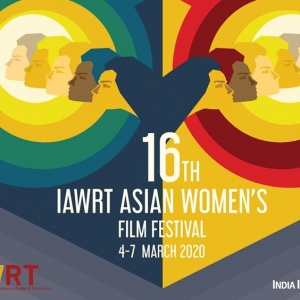
This year 52 films from 15 countries have been selected from more than 700 entries to the 16th IAWRT Asian Women’s Film Festival. It will be held at the India International Centre (IIC), New Delhi on March 4, 5, 6 and 7.

The 2020 Asian Women’s Film Festival Director is Surabhi Sharma and the co-Director is  Priya Thuvassery.  Surabhi is an award winning documentary filmmaker most recently at the faculty at the New York University in the United Arab Emirates. Priya is an award winning documentary filmmaker who has worked in India’s prime television channel, New Delhi Television (NDTV).

The director’s concept for this edition of our festival says “The way we record is as different as the voices we record. At the 16th IAWRT Asian Women’s Festival, we hope to create a space where we can collectively listen to the voice speaking at a distance, the whisper, the guffaw, the shout, the song, the sigh.

Perhaps, the act of listening and seeing can bring us back to articulating the way women shape and subvert the world we live in.”

The Festival this year seeks to reflect on the idea of claiming democracy and the many claims on democracy.

Women use multiple strategies to claim democratic spaces while being painfully aware of the many ways in which they are made invisible by majoritarian claims. The festival will bring together women artists working with films and photographs to both document and intervene in these processes.

The festival begins with a day long workshop on the issues around producing and distributing a film. Three curated sections are bing planned:

Her Upside Down Gaze: This section will include films across genres- narrative, documentary, experimental and VR films

Country Focus:We have always had an Asian country or a region focus in the previous edition of our Festival. This time we plan to focus on the films from the Gulf region.

Women and Photography: Our third section will bring together the works of women photographers and collectives. We hope to invite some of these artists to speak about their work. The works of the selected photographers will be exhibited at the festival venue. We are particularly excited with this section because we have not engaged with the medium of photography in the past.

16th IAWRT Asian Women’s Film Festival, March 2020

Festival poster designed by Zoya Riyas

IMG_2464

NGO CSW monthly meeting in January discussed creating a gender-equal world through participation and accountability

by Marry Ferreira Busquet

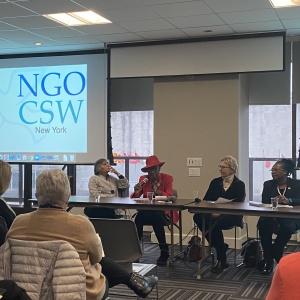
Two months before the sixty-fourth session of the Commission on the Status of Women (CSW 64), over 60 activists and NGO representatives gathered at the NGO CSW monthly meeting on 16 January 2020 to discuss how to create a gender-equal world by shifting power through participation and accountability at the United Nations (UN) Church Center in New York.

Sheila Dallas-Katzman, President of IAWRT USA, unpacked the title of the meeting, Create a Gender-Equal World by Shifting Power Through Participation and Accountability using a media and CEDAW framework.

“When we speak about gender equality, we are speaking about human rights for everyone. I don’t want to shift power. I want to balance power. And to do that, we need the participation of the media at every level,” she said.

Katzman emphasized the multiple inequalities faced by marginalized groups, especially Black women, using the lens of intersectionality by Kimberly Crenshaw.

When spoke about media and the MeToo movement, she highlighted that we need the media now more than ever.

“The media has jumped into the MeToo movement as if they have always been there for us the whole time. But that is the same media that have been abusing us through distorted images and that is presenting us in a certain way,” she said

According to her, participation is the key to create new narratives and institutions to achieve gender equality.

“The media tell us what to think about, not how to think, so we have to make the media responsible, with responsibility comes accountability,” Katzman said.

Focusing on the importance of NGOs and civil society to hold governments accountable, Ambassador Koki Muli Grignon discussed the role of policies and legal frameworks in perpetuating gender inequalities.

“Legislation is actually nothing if it is not implemented. We have to create institutions that can implement those laws toward gender equality,” she said.

She also emphasized the need of allocating budgets to finance gendered-approach projects and divide the battles into small steps to success.

“There is nothing more political than resources and the location of those resources. Through them, institutions can bring different perspectives and energies to implement frameworks towards gender equality,” said Grignon.

Grignon echoed that there is still a lot to be done to achieve gender equality, but activists should remember their success as a strategy to keep moving forward.

Aparna Mehrotra, director of UN System Coordination Division in UN Women, has been working with the United Nations for over 30 years in several capacities, including serving as the Focal Point for Women in the U.N. system monitoring and reporting on issues relevant to the status of women and their representation.

“When you articulate with the HR what the gender resource is, they can’t say they don’t know what to do. Enforce the behavior, and the actions will follow,” she said.

She called attention to the Women’s March, which took place on January 18th, 2020, and the importance of showing support and building a solidarity network.

“Sometimes we are so immersive in change that we get tired. It is imperative how you break down your work into more manageable pieces and build a solidarity network,” she said.

Dr. Yasmine Ergas, director of the Gender and Public Policy Specialization at Columbia University’s School of International and Public Affairs, focused the conversation on the importance of participation, accountability, and gendered institutions.

“When we do not have participation, we don’t know how to participate. Exclusions lead more and more exclusion,” she said.

She also emphasized that knowledge informs participation, which is an active subject of democracy, and that we are in a dangerous era of backlash against gender and women’s rights.

“We are in trouble when civil society and organizations are not allowed to connect across borders, especially because so much of our strengths is the ability to form a transnational coalition,” she said.

Audience members showed great interest from their questions.  For example, Queen Mother (Doris Blakely) was interested in media coverage for Consultation Day at the Apollo Theater in Harlem. She asked what can be done to attract the media to cover the event. 

“The Apollo Theater has a vast media network link and NGO CSW should invite them to be partners of the forum. This way, the event may stand a chance of some coverage,” Katzman suggested.

The meeting was moderated by Yvonne O’Neal, Member-at-Large, NGO CSW and U.N. Representative African Development Interchange Network.

The panel speakers included Sheila Dallas-Katzman, Former Chief of U.N. Radio and Public Information for the peacekeeping mission in Sierra Leone; H.E. Koki Muli Grignon, former Deputy Permanent Representative to the U.N. from Kenya; Dr. Yasmine Ergas, director of the Gender and Public Policy Specialization at Columbia University’s School of International and Public Affairs; and Ms. Aparna Mehrotra, director of U.N. System Coordination Division, U.N. Women.


The sixty-fourth session of the Commission on the Status of Women is to be held at the UN in New York from 9 to 20 March 2020.

NGO CSW Forum which IAWRT participates in, operates in parallel to this event in venues around the United Nations Headquarters

in order for delegates to prepare, NGO CSW New York has prepared an Orientation Series for participants to be released every Friday until January. which are accessible here.

Any suggestions or comments at [email protected]

Ampatuans IAWRT
Sentences passed on those responsible for murdering 58 people, including 32 journalists, have been welcomed.
 
 
The mass murders happened 10 years ago  in the southern province of Maguindanao. a Philippine court sentenced 28 people on December 20 2019.
 
 
IAWRT’s Philippines Chapter says that 5 female journalists were killed, and here was evidence that at least 5 of the female victims, 4 of them journalists, were raped before being killed, while “practically all” of the women had been shot in their genitals.


Human Rights Watch says more than 80 suspects are still at large, and it and while Reporters Without Borders (RSF) has hailed the sentencing, it has voiced concern about the high number of acquittals. RSF has urged the Philippines judicial authorities to keep investigating.


A total of 28 defendants were convicted of the November 2009 massacre in the town of Ampatuan, including eight members of the Ampatuan clan, a political dynasty that continues to exercise absolute control over the province.
 

The three brothers regarded as the leading masterminds – Anwar Ampatuan Sr, Andal Ampatuan Jr and Zaldy Ampatuan – were sentenced to life imprisonment. The other sentences ranged from 6 to 40 years in prison. But 55 defendants were acquitted for lack of evidence, while dozens of identified suspects have yet to be brought to trial.


“The world’s worst massacre of journalists deserved exemplary sentences and these were commensurate with the crime,” RSF’s Asia-Pacific desk said. “But this is just a first step in the long road that the Philippines must travel to combat impunity. The judicial system must keep working because dozens of other suspects have yet to be tried. Everything must also be done to protect the families and witnesses after today’s acquittals.”

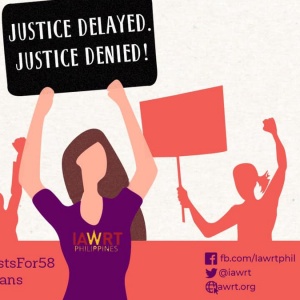
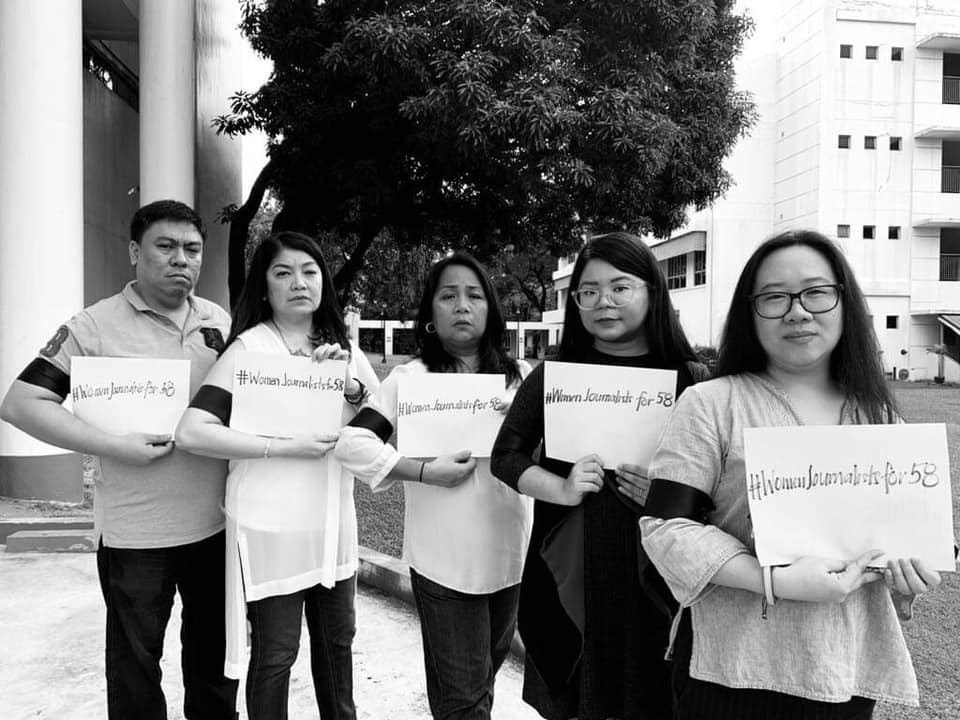
Pic left: President of IAWRT Philippines, Lynda Garcia with fellow faculty members at the Miriam College Department of Communication, Therese San Diego Torres and Gilbeys Sardea.call for justice for the victims of the Ampatuan massacre.


The massacre occurred when supporters of a political candidate accompanied by journalists were attacked as they travelled in convoy to file his papers to run for governor, a post traditionally controlled by Ampatuan family. Those responsible were quickly identified but, because of judicial obstruction and harassment of witnesses and the families of the victims, the case took years to come to trial.


The Philippines is ranked 134th out of 180 countries in RSF’s 2019 World Press Freedom Index.


Our International Relations Committee says journalists can only continue to demand justice for journalists killings and continue to stand for press freedom to uphold the public’s right to information.


“We stand with Filipino journalists and the Filipino people in their yearning for press freedom to be upheld, in the meting out of justice in the Ampatuan massacre.”


sources:

Reporters without Borders

Justice for Ampatuan massacre victims – IAWRT

Human Rights Watch

media reports:

After Ampatuan conviction, CHR urges gov’t to ensure same ‘full force of law’

Maguindanao massacre: Andal Jr., Zaldy Ampatuan convicted; brother walks free


Activism against Violence


Across the globe from Uganda to Kurdistan to the USA, IAWRT members were involved  the 16 days of activism against gendered violence.

In Uganda statistics indicate 49% of women and 41 % men believe a man is justified in beating his wife for specific reasons. 56% of women aged 15 to 49 years have experienced physical violence at least once since the age of 15.
The Ugandan statistics are representative of the real lives of women and girls in that country and the IAWRT Ugandan Chapter believed that media has the responsibility to demystify and personify these statistics. This is needed for the public to fully understand the true meaning of violence against women and the related negative impact on lives.


Against this background the IAWRT chapter, in partnership with UNWOMEN thought it right to mobilize the media to discuss the role of media in influencing the public response towards the fight against gender-based violence against women and girls.


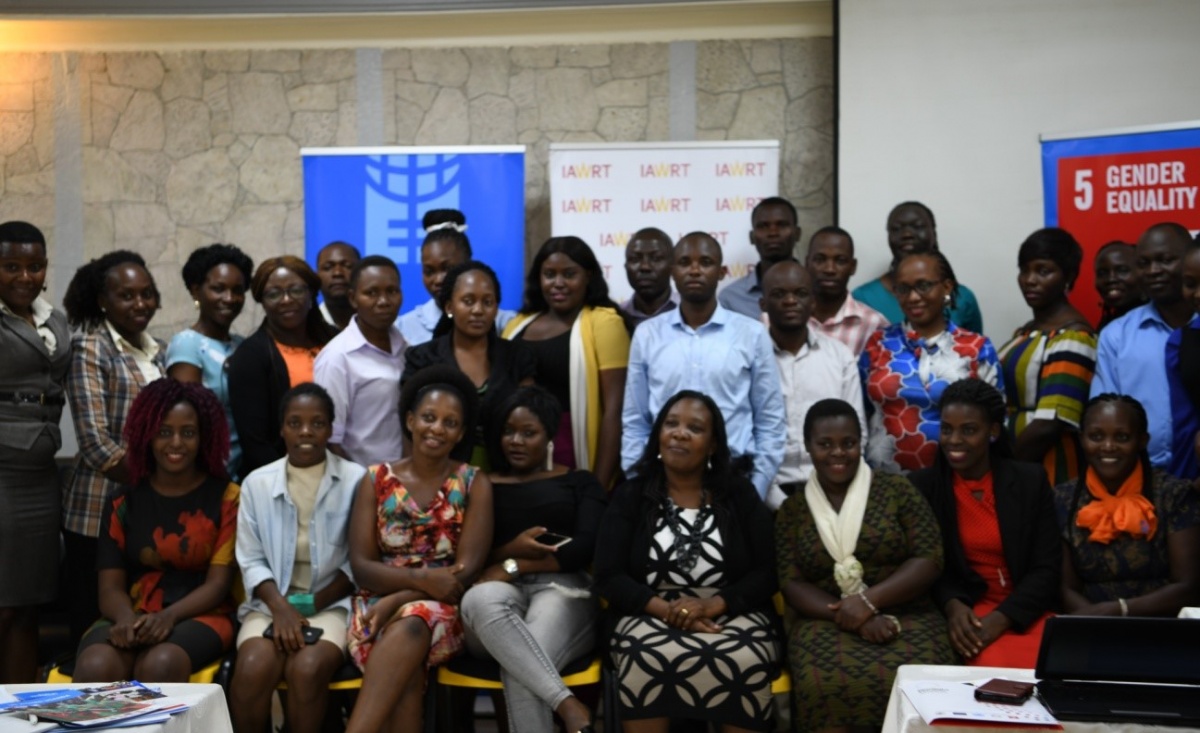
As one of the activities to contribute to the 16 days of Activism against Gender Based Violence, a media engagement was held in Kampala on the 27th of November 2019.The full day engagement that aimed at creating public awareness in the fight against GBV, brought together 65 participants including editors, senior journalists, bloggers and other stakeholders from like-minded organizations.

The purpose was laying a foundation for the media to fully understand and actively contribute to creating public awareness on ending violence against women and girls.
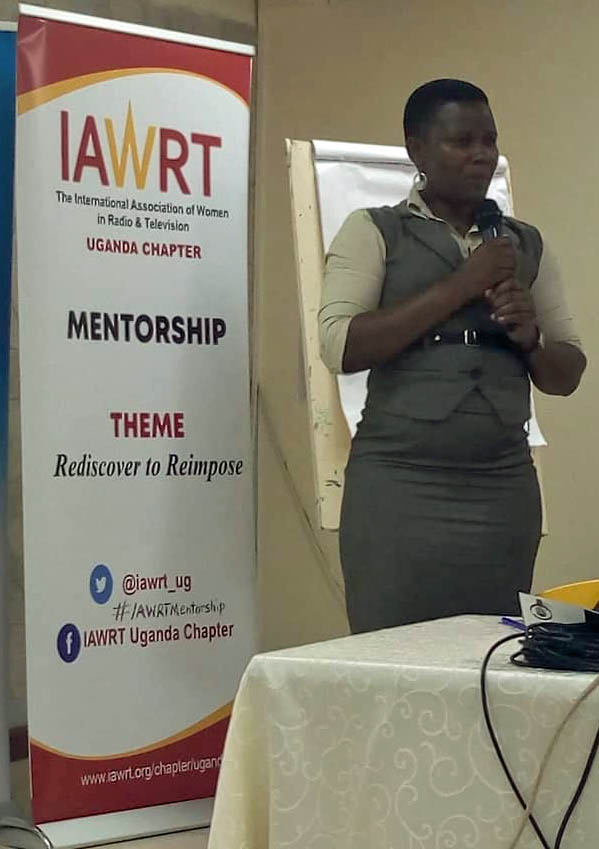
 

Nankwanga Eunice Kasirye, the chapter Head IAWRT Uganda, made the opening remarks with an emphasis on the day’s specific objectives, of  briefing the media on 16 days  of activism activities, enabling participants to obtain a clear understating of the 16 days of activism, upskilling the media to identify story ideas during the 16 days of activism and lobbying for media promotion of positive portrayals and fair treatment  of women. She highlighted the vital role the media has in raising awareness of GBV by setting the agenda with the power to dictate public perception.


Eunice challenged the media and individual journalists to seek out knowledge and information on gender reporting since it is a sensitive and delicate subject which requires full authority and confidence to take on.

“The subject of gender violence calls for ethical professional reporting, requiring fairness, honesty and accuracy. Otherwise, a lack of such values may instead seem to condone violence against women and girls.”


Without thorough knowledge of gender equality, Eunice says it is literally hard for a reporter to come up with a captivating story pitch to the editorial team therefore making it almost impossible for gender related stories to find space in bulletins and publications.


She called upon IAWRT members, wherever they are, to take centre stage in promoting, lobbying and setting the pace to achieve a gender sensitive Media. That should start with individual responsibility to avoid negative stereotypes of women in media reports and ensuring positive portrayal is emphasized.


Supporting one another as media women is one other approach to attaining positive portrayal of women in the media, women in different media organization structures should deliberately help each other to be better at their tasks through continuous improvement and positive criticism, and more women should meaningfully take up positions at the decision tables.


Eunice challenged women to desist from trivial differences, backstabbing, intrigue and blackmail but concentrate on building a formidable professional, reliable and objective force to make, enforce and oversee critical decisions that affect the space of a woman in the media.
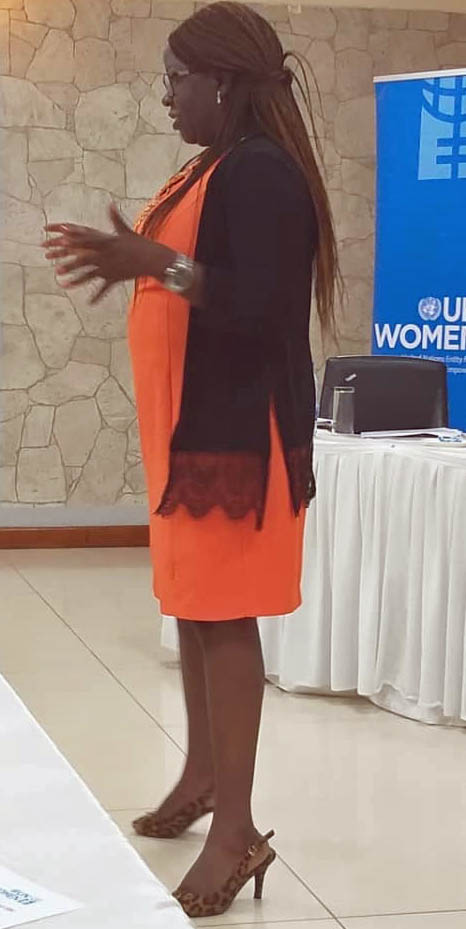
 

Evelyn Letiyo, a program specialist with the UN women in Uganda discussed the connection between gender violence against women and power. According to Evelyn, people with power are never abused but those without power tend to accept some levels of abuse just to survive and be in the ‘good books’ of those in power.

“Gender Based Violence are acts that result or are likely to result into physical, sexual harm to women including threats of such acts, coercion, arbitrary deprivation of liberty, whether occurring in public or private life”


“Violence starts slowly with subtle nonphysical acts until it graduates into physical violence, sometimes escalating into permanent damage or death. Consistent threats should not be ignored because with time they are put into action” She said.


Evelyn Letiyo cautioned the media against being judgmental while reporting incidences of GBV, saying understanding the context of the entire story is more important than rushing to file a story because in that process the media end up hurting the innocent persons.


She says violence against women manifests in a number of ways easily seen but the violence extends beyond the physical to psychological and mental forms of violence.The abusers also move with trends in technology taking advantage of the internet and its diversity.


“Such continuous manifestation of violence against women calls for continuous media refresher courses and capacity building interventions to ensure the media helps in the fight against GBV with a deliberate approach to protect the victim and helping them to survive and live past the abuse.”
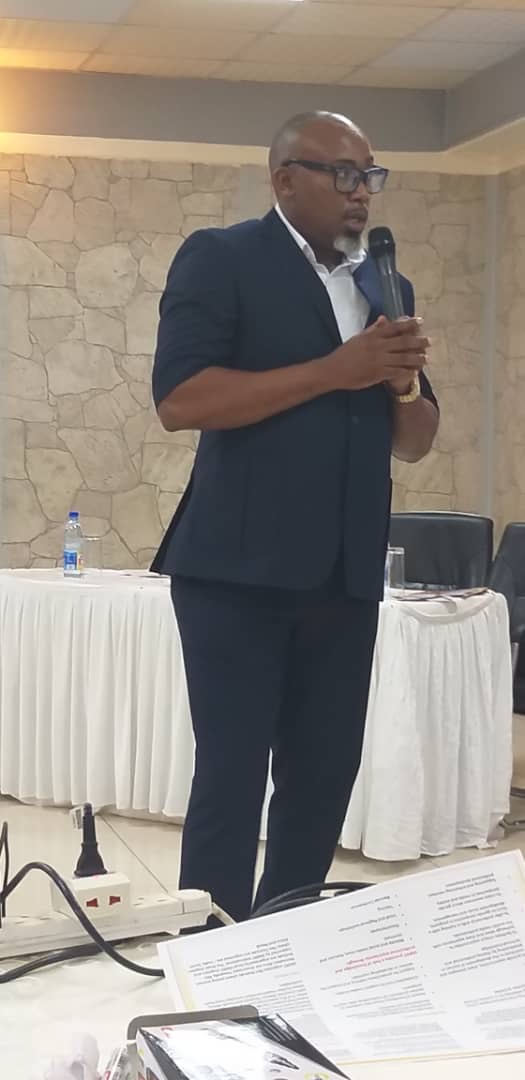
 

Martin Ninsiima the Communication and Advocacy Specialist at UN Women Uganda, called upon the media to deliberately champion the positive portrayal of women at all times. “The media should be gender sensitive in preparing content such selecting panellists for shows and programs, choosing sources for key stories, internal media house recruitment and management structuring among other approaches”. Martin emphasized that the media has the power to influence general perceptions of issues of concern therefore should use the same power to promote positive portrayal of women.


He encouraged the journalists to come up with well thought out story pitches on GBV and said that UN women would be able to support the production of such stories.


Counsel Carol Idembe, the GBV program Manager at the inter Religious Council of Uganda, appealed to the media to use a survivor-centred approach that seeks to empower survivors by putting them at the core of the healing process while reporting on GBV issues. According to Counsel Carol, the  journalist  following up on a GBV  story  should recognize that each person is unique, reacts differently to GBV, has different strengths, resources and coping mechanisms, has the right to decide who should know about what has happened to them, and what should happen next.


“GBV is a manifestation of power inequality, and reporters should desist from imposing their own perspective to avoid disempowering survivors.”

Dealing with GBV survivors in a survivor-centred manner involves prioritizing their best interest, and applying the guiding principles of safety, confidentiality, respect, and non-discrimination, Carol emphasized.


Resolutions and Observations:

  • Need for train and sensitization. Not many journalists know what GBV is.
  • Increase the number of stories written on GBV
  • Journalists should know how to pitch stories on GBV.
  • Networking with stakeholders to ensure there’s consistent coverage of GBV
  • Need to set up a fund dedicated to enhancing coverage of GBV stories
  • Set up a forum for journalists where quarterly or bi quarterly meetings can be held to help them access and improve on GBV reporting.

(source of statistics: Uganda National Household Survey report (DHS).


IAWRT Iraq-Kurdistan Activities to end Violence against Women


By Binay Shorsh

Under the 16th days campaign against violence against women, which began on November 25 and continued until mid-December, members of the IAWRT-Iraq-Kurdistan chapter organized different activities aimed at for reducing violence against women and raising social awareness.


On November 30, Awaz Abdulla participated in a short movie festival about gender-based sexual violence in Erbil. This was supported by Internews.


In the festival eight short movies were presented by different directors from the provinces of Iraq and the Sulaymaniyah governate.The project goal was to challenge society’s reaction towards survivors of sexual and gender-based violence by supporting journalists and women human rights defenders to focus on sensitive issues through coordinated reporting and advocacy.
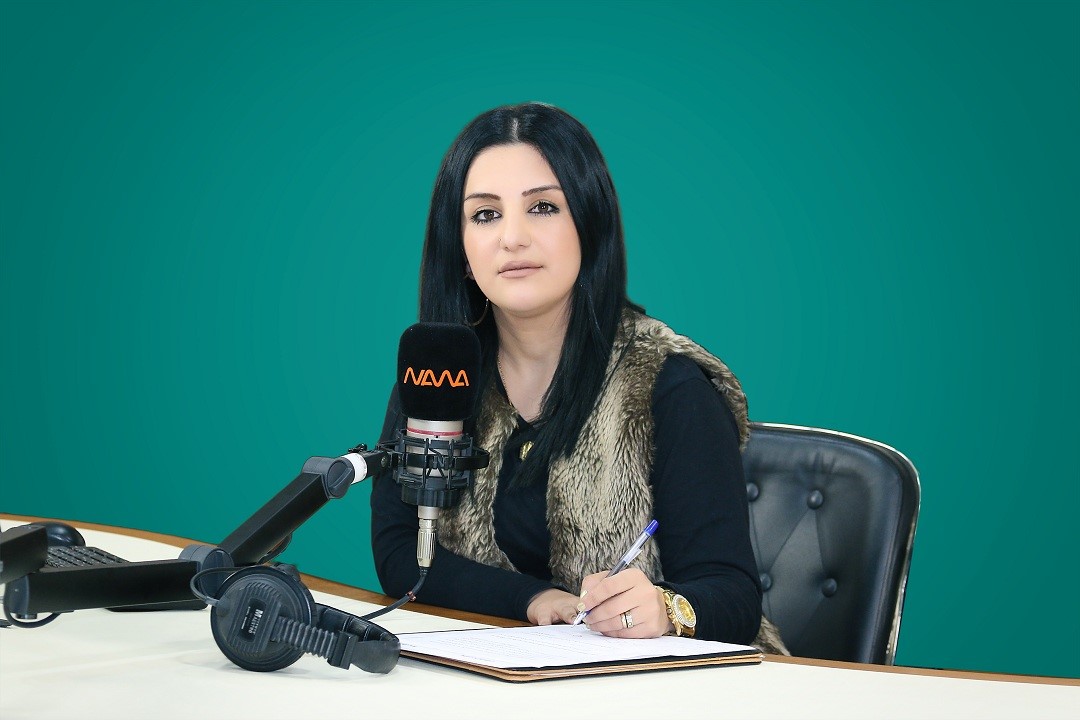
 

On November 24, Lava Kurd prepared and presented the Shaqam program at Radio Nawa for November 25  for this year the international day to end violence against women.


According to the program, female employees was a motto for this year and during the program Hannah Shwan – women’s rights activist and Avin Nasreen, a journalist, discussed the media’s role in reducing violence against women and spreading awareness in society.
 

Dlsoz shafiq khalaf, a journalist and activist organized awareness sessions, and visited a number of girl’s schools

She participated in different activities to explain how to reduce violence in all forms against women.


The Awareness and Capacity Development Organization(Awan) launched the Women’s Center for Protection and Legal and Social Guidance.


The center will provide comprehensive protection services for abused women and girls. It aims to improve access to help for women and girls who are victims or survivors of gender-based violence. The center is headed by Manar Al-Zubaid, and has an advisory body consisting of expert volunteers in coordination with the relevant professional unions as well as the Diwaniyah Police Command and the Health Department.
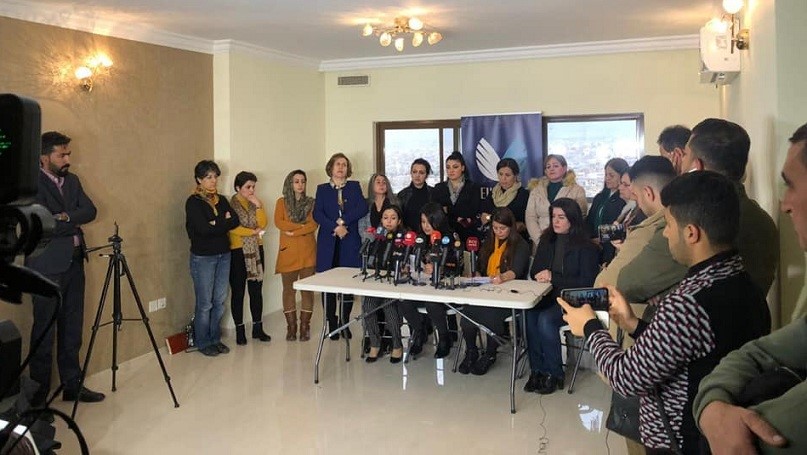
 

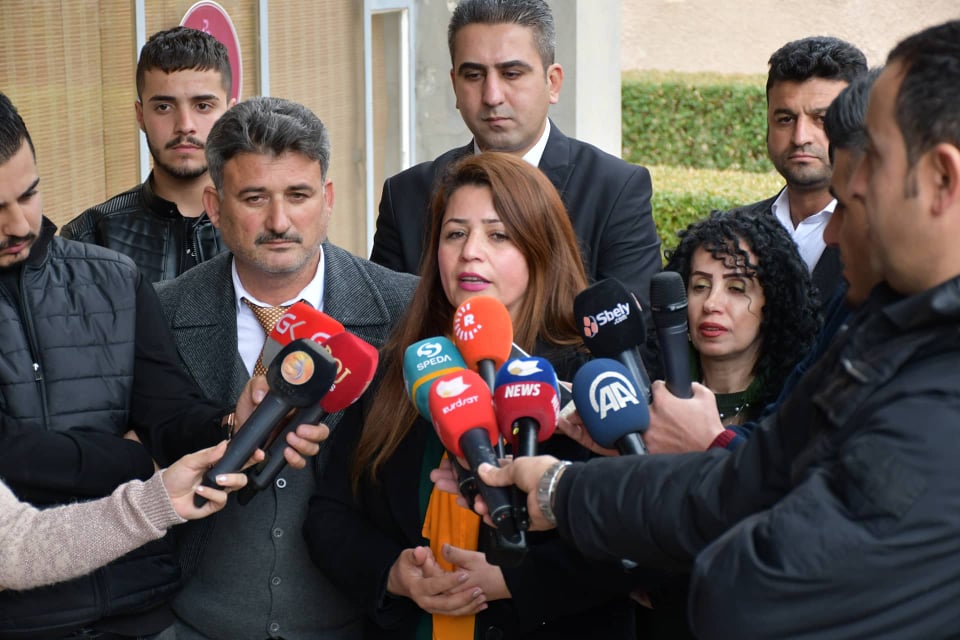
On December 8, a group of civil organizations, condemned the advice of some Kurdistan clergymen advising avoiding women riding in taxis without a man.  

The group included ministers, journalists, activists, clerics, including our IAWRT Kurdestan members, At the time when groups around the world included Iraq and Kurdistan, are busy participating in campaigns against violence against women and for gender equality, in the Kurdistan region these clerics were advising women to not ride a taxi if they are with a male driver.  This is clear evidence that gender is different, and this is creating a fear of the taxi driver, further restricting women’s freedom.


Shno Osman Participated in a TV program about the media’s role in reducing women victims and spreading awareness in society about the fear facing women who are using social media


USA The Commission on the Status of Women/NY focused on violence against women and girls (VAWG)


By Marry Ferreira


A November gathering discussed how to use data and behavioral insights to prevent and eradicate VAWG, and the 16 Days of Activism Against Gender-Based Violence.
Ms. Houry Geudelekian, Chair of the CSW/NY, started the meeting by highlighting the Women of Distinction Award Nominations for NGO CSW64. In 2020, CSW/NY will commemorate the 25th Anniversary of the Fourth World Conference on Women, Beijing +25. In celebration, the organization will honor five women, one from each United Nations Region: Africa, Asia-Pacific, Latin America Caribbean, Eastern Europe, Western Europe, and others. More information is available on the CSW/NY website.


Daniela Philipson Garcia, Feminist Task Force, and Women’s Economic Justice Program Assistant, moderated a panel conversation with Marta Garnelo, Senior Advisor of The Behavioural Insights Team; Adra Manasi, Campaign Manager of the 16 Days Campaign at the Center for Women’s Global Leadership; Mishka Martin, Policy and Advocacy Specialist at Plan International; and Monica Meltis, Executive Director at Data Civica.


Ms. Garcia and Mishka Martin began the conversation remembering the 30th anniversary of the Convention on the Rights of the Child and the speech of the 15- years- old Millie Bobby Brown about cyberbullying, harmful practices, and bullying against girls at the United Nations General Assembly on November 20th. “I was thrilled to see Brown talking about harmful practices because girls have been strategizing against gender violence for years,” said Ms. Martin.


Focusing on adolescents and girls, Mishka Martin’s job is to research and design solutions to close the gap in policies and programs related to gender violence. “Yesterday, member states, NGOs and civil society made commitments at the United Nations headquarters in the 30th anniversary of the Convention on the Rights of the Child. But it is worth noticing that the adolescent and girls are quite invisible to those international legal frameworks. There is no mention in the Convention to gender or specific position of girls”, she said.


During the CSW/NY meeting, Ms. Martin highlighted the intersectional marginalizations that impact girls’ rights because of the gap in policies and programs. According to her, invest in international legal frameworks related to adolescents and girls, and in activists on the ground are practices that can secure their protection.


The different definitions of feminicide have also impacted public data and strategies to eradicate VAWG in Mexico. Monica Meltis, Executive Director at Data Civica, called attention to how the state’s legislations affect the prevention of femicide. “It is hard to compare the data in each state,however, we know that feminicide is not an isolated effect in Mexico. That violence is generated at home, perpetrated by partners and intensified by the presence of guns in the households”, said Ms. Meltis.


In terms of behavioral science, Marta Garnelo’s research at Behavioral Insights Team is to understand the communities’ behavior for not interfering when witnessing domestic violence. “The belief of the violence as a private matter and the lack of knowledge of how to act to help are some reasons that are preventing the community from supporting a person who is in a situation of violence,” said Marta Garnelo.
Ardra Manasi, Campaign Manager at the Center for Women’s Global Leadership, ended the panel discussion emphasizing that gender violence is a human right issue, and inviting the society to join the 16 Days Campaign.


The 16 Days of Activism Against Gender-Based Violence kicked off on November 25th, the International Day for the Elimination of Violence against Women, and ran until December 10th, Human Rights Day. It was started by activists at the inaugural Women’s Global Leadership Institute in 1991 and continues to be coordinated each year by the Center for Women’s Global Leadership.

 

1219 IAWRT statement Ampatuan

Justice for all journalist killings:

Statement as the Philippines, and the world, awaited the the verdict in the Ampatuan massacre, after 10 years of waiting.

Numbers remind us of the harrowing story that earned the event the gruesome titles of worst case of election violence in the country and the single deadliest event for journalists in the world in recent history.

On November 23, 2009, 58 civilians were killed, some of them passersby, 32 of them journalists covering the filing of candidacy of an ally-turned-rival running against the reigning political dynasty in the province, the Ampatuan clan. Witnesses said there could have been more than 70 killed, because of those missing and reported to have tagged along or mistaken as part of the convoy, but physical evidence only turned up 58.

There were around 12 women civilians and 5 female journalists killed. There was evidence that at least 5 of the female victims, 4 of them journalists, were raped before being killed, while “practically all” of the women had been shot in their genitals. Two were pregnant at the time of their murder.

After 10 long years, with 198 suspects, 200 defendants and 300 witnesses identified at the beginning and more than 80 suspects still at large since the time of the massacre, the world will witness how justice can prevail in a patently heinous crime – one with at least 58 bodies to show for it.

Press freedom stands on trial as well in the Ampatuan massacre, and wherever and whenever journalists are killed. Whenever justice is not served.

UNESCO in November 2019 reported no convictions in 90% of 1,109 journalists’ murders around the world from 2006 to 2018 and a rise in killings of journalists by 18 percent in the past five years (2014-2018) compared to the previous five-year period.

The Ampatuan massacre case promulgation comes at the same time as the case of the killing of Daphne Caruana Galizia, a Maltese investigative journalist who exposed government corruption, is making progress in identifying masterminds and accomplices. A businessman was detained and charged with complicity to murder and other charges related to the case. Some government ministers stepped down and the prime minister announced on December 1 that he would stand down in January in the wake of the continuing investigation.

Journalists can only continue to demand justice for journalists killings. Journalists must continue to stand for press freedom. Those are in the interest of the journalist’s duty to uphold the public’s right to information.

We stand with Filipino journalists and the Filipino people in their yearning for press freedom to be upheld, in the meting out of justice in the Ampatuan massacre.


(Statement from the International Relations Committee of the International Association of Women in Radio and Television)


IAWRT_UN_VAW

UN Women Executive Director Phumzile Mlambo-Ngcuka

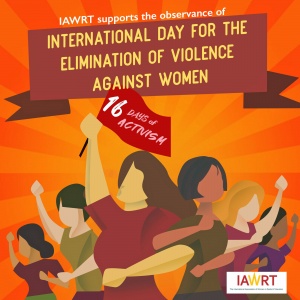
Statement for the International Day for the Elimination of Violence against Women, 25 November

2019
End rape—an intolerable cost to society

If I could have one wish granted, it might well be a total end to rape. That means a significant weapon of war gone from the arsenal of conflict, the absence of a daily risk assessment for girls and women in public and private spaces, the removal of a violent assertion of power, and a far-reaching shift for our societies. 

Rape isn’t an isolated brief act. It damages flesh and reverberates in memory. It can have life changing, unchosen results—a pregnancy or a transmitted disease. Its long-lasting, devastating effects reach others: family, friends, partners and colleagues. In both conflict and in peace it shapes women’s decisions to move from communities through fear of attack or the stigma for survivors. Women and girls fleeing their homes as refugees also risk unsafe transport and insecure living conditions that can lack locked doors, adequate lighting and proper sanitation facilities. Girls married as children in search of increased security at home or in refugee camps can get caught up in legitimized conditions of rape, with little recourse for those wishing to escape, such as shelter and safe accommodation.

In the vast majority of countries, adolescent girls are most at risk of sexual violence from a current or former husband, partner or boyfriend. As we know from our work on other forms of violence, home is not a safe place for millions of women and girls.

Almost universally, most perpetrators of rape go unreported or unpunished. For women to report in the first place requires a great deal of resilience to re-live the attack, a certain amount of knowledge of where to go, and a degree of confidence in the responsiveness of the services sought – if indeed there are services available to go to.  In many countries, women know that they are overwhelmingly more likely to be blamed than believed when they report sexual assault, and they have to cope with an unwarranted sense of shame. The result of these aspects is a stifling of women’s voices around rape, significant under-reporting and continuing impunity for perpetrators. Research shows that only a small fraction of adolescent girls who experience forced sex seek professional help. And less than 10 per cent of women who did seek help after experiencing violence contacted the police.  

One positive step to increase accountability is to make rape universally illegal. Currently more than half of all countries do not yet have laws that explicitly criminalize marital rape or that are based on the principle of consent. Along with criminalizing rape, we need to get much, much better at putting the victim at the centre of response and holding rapists to account. This means strengthening the capacity of law enforcement officials to investigate these crimes and supporting survivors through the criminal justice process, with access to legal aid, police and justice services as well as health and social services, especially for women who are most marginalized. 

Having more women in police forces and training them adequately is a crucial first step in ensuring that survivors begin to trust again and feel that their complaint is being taken seriously at every stage of what can be a complex process. Progress also requires that we successfully tackle the many institutional and structural barriers, patriarchal systems and negative stereotyping around gender that exist in security, police and judicial institutions, as they do in other institutions. 

Those who use rape as a weapon know just how powerfully it traumatizes and how it suppresses voice and agency.  This is an intolerable cost to society. No further generations must struggle to cope with a legacy of violation.  

We are Generation Equality and we will end rape!

Spanish and French treansaltions in pdf below.  Links to the statement in: ar, es, fr, ru, zh

For the latest updates and more, visit unwomen.org


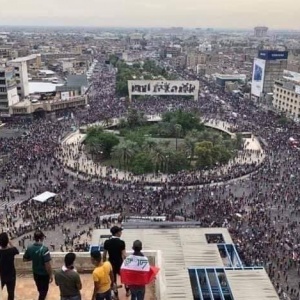
Iraqi_protests_in_Tahrir_square Photo credit_FPP via WikiMedia Commons

Media and women are being targeted in the midst of a governmet crackdown on mass demonstrations.

Our Iraq Kurdistan chapter reports that the targeting is happeneing as thousands of Iraqis demonstrate against government corruption, failing state services and a lack of job opportunities.

Amidst six weeks of unstable conditions in Iraq, journalists and civilian activists, including women journalists and media workers, are being targeted and are more are at risk from the danger of ongoing violence.

We, the Iraq-Kurdistan chapter of IAWRT, want to let the whole world know that with the demonstrations in Iraq at a very dangerous stage, a day does not pass without youth, young women, activists and media being targeted by government security forces and alligned militias.

The BBC and other outlest have reported on attacks on media and various shutdowns of the internet to combat the protests.   

Victims from October 2019 to now, number about 320 dead and more than 11,000 wounded. People who have been victimized include countless journalists, media workers, writers and activists, including women media professionals.

One very alarming incident is the killing of civil activist and cartoonist Hussein Adel Madani and his wife Zahra. In the southern city of Basra, unknown assailants stormed the house early in the morning on October 3rd, shot and killed the couple in front of their 2-year-old daughter. The well-known activists had been taking part in protests in the city the day before their killing.

In addition to the dire situation in Iraq, journalists in Kurdistan are also subjected to violations of their rights. One of our colleagues and IAWRT member Niyaz Abdulla, 38, was arrested and tried for an article published on Draw Media, of which she is a member. She is not the author of the article and also not the editor of the group. She was released on a bail bond of five million dinars and was prosecuted under the Electronic Device Abuse Act, rather than being prosecuted under the Kurdistan Region Press Law.

We live in a country considered one of the most dangerous countries for journalists. The Committee to Protect Journalists Global Impunity Index 2019 ranked Iraq as 3rd worst country for prosecuting murders of journalists. There are 35 unsolved cases of journalist killings in Iraq over the last 10 years. 

The Iraq-Kurdistan chapter of IAWRT asks journalists and media workers in the world to support the call for journalists and people’s rights to be upheld amid continuing anti-government protests and the violent crackdown on these protests.

picture: Iraqi protests from Tahrir square in 25 October 2019 Photo credit: FPP via WikiMedia Commons

Indonesia confab 3

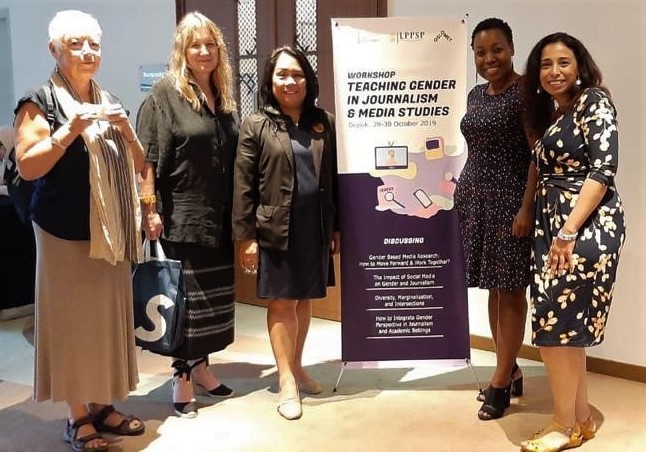
Fifteen countries were represented by women journalists and media educators.

By Lynda Garcia

Countless women still experience fear and are threatened when exercising their rights to freedom of expression on the internet despite the United Nations recognition that such rights are the same online as in real life.

Female journalists, for example, have many negative experiences with online expression and this is one of the reasons for the Workshop on Teaching Gender in Journalism and Media Studies was organised in Indonesia.

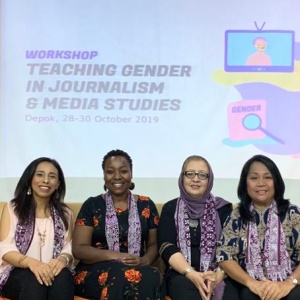
Four IAWRT members were invited to participate in the 3 day long workshop in Jakarta on teaching gender in journalism and media studies, held at Depok, Indonesia, in the Margo Hotel October 28-29.

The opening remarks were delivered by Nina Armando, Chair of the Communication Department, Faculty of Social and Political Sciences, Universitas Indonesia,  Elisabeth Eide of Journalism and Media International Center (JMIC) of Oslo Metropolitan University, and Arie Setiabudi Soesilo, Dean of Faculty of Social and Political Science, Universitas Indonesia.

Three topics were covered on the first day. These were gender-based media research: How to move forward and work together and, the Impact of Social Media on Gender and Journalism.
IAWRT President Violet Gonda presented on the proposed IAWRT Transnational Project on Protecting Women Working in the Media from Online Harassment and Cyber-violence: Research Implementation.

She noted that the risk of exposure to sexualized and/or gendered online abuse has been noted to be greater amongst women working in journalism and media.

Gonda used the Zimbabwe situation as a case study, where she recently returned after living in exile for almost 20 years. Her presentation looked at the impact of social media on gender and journalism. She argued that technology has created a new space for increased violence against women journalists and women in politics.

She reported that IAWRT, with its unique network of women working in the media, is planning to launch a transnational project plus handbook on protecting women working in the media from online harassment and cyber violence. This project will have two phases, research and implementation with industry wide recommendations.

IAWRT Vice President Abeer Saady’s presentation was on the Influence of Women Journalists’ Gender on Safety Decision in ISIS controlled regions.

This is part of her PhD research work, which is a cross border study conducted with journalists covering conflicts in Syria, Iraq and Libya.

This is a comparative research from the three Middle Eastern countries to investigate how gender influence the safety decision-making process of women journalists covering the conflict in regions controlled by Jihadi groups operating in Islamic State (ISIS) regions in the three countries.

On the same day, a Global Mass Monitoring Project (GMMP) orientation was conducted by renowned academic Karen Ross, where she invited the participants to the 2020 GMMP.

On October 29, the IAWRT representatives Violet Gonda, Abeer Saady, Najiba Ayubi and Lynda Catindig-Garcia also presented a session profiling various IAWRT projects around the world. The projects discussed included the Disaster Community Radio project in the Philippines, Asian Women’s Film Festival, Gender Mainstreaming Project, Safety training for women journalists in conflict areas, and Long Documentary series among others.

In the afternoon, sessions three and four were held around the issues of Diversity, Marginalization and Intersections, which was chaired by Karen Ross. Saady presented her study on Measuring the Impact of Training Local Trainers on Safety Manuals for Women. She presented the results of a model issuing safety manual for women journalists and training local trainers on safety offline and online using the manual.

Session 4 was titled How to integrate Gender Perspectives in Journalistic and Academic Settings, which  was chaired by Indah S. Pratidina. Lynda Catindig-Garcia spoke about the Philippine Experience in Mainstreaming Gender in the Higher Education institutions.

She informed the audience about the standpoint of the Commission on Higher Education (CHED) of the Philippines on gender education. It focuses on the gender-inclusivity in the higher education institutions’ curricula, examines to what extent the discourse on gender equality and sensitivity is integrated in the curricula and syllabi of media and communication programs and, analyses how gender is viewed by communication/media educators.

Najiba Ayubi talked about Teaching gender and media in Afghanistan. Najiba’s presentation included the Gender-based media research: How to move forward and work together.

The results of the survey conducted by DHSA/TKG with the support of UNESCO Afghanistan and SWAN on Gender Balance in Afghanistan Media included an overview on the overall situation of women journalists, including challenges and barriers that Afghan women journalists encountered with in their routine work due to ongoing conflict and the cultural taboos.

Dina Listiorini discussed the topic Making Module Integrating Gender, Sexuality and Reproductive Health and Rights for Communication Subjects in the University.

She created modules on the subjects of Mass Communication, Media, Gender and Sexuality and Health Communication. The making of these modules were part of the cooperation between Atma Jaya University Yogyakarta University and the Yayasan Jurnal Perempuan and the Ford Foundation.

Karen Ross talked about The AGEMI project and Birgitte Kjos Fonn spoke on Gender perspectives in teaching economic journalism. Ross shared that the EU-funded AGEMI project was developed over a 30-month period (February 2018-July 2019). The principal aim of the project which was to support and promote gender equality in media industries. The primary vehicle through which to deliver the project’s aims is the project’s web platform. The moving image resources (mini-lectures and expert interviews) are also uploaded to the project’s You Tube channel – AGEMI project. 

Birgitte Kjos Fonn shared that when teaching economic journalism, Norwegian J-Schools tend to stick to the orthodox, mainstream variant, a variant that is based on a number of assumptions that may both lead to power imbalances and enhance them, such as the idea that we are all atomic individuals in the market with equally distributed power. There is also the prevailing view that journalism should be detached, value free and ‘objective,’ while alternative perspectives – on all aspects of society – regularly run the danger of being regarded and dismissed as ‘political.’ The presenter argued that for the sake of the public, there is nevertheless a need for journalism education to include these emerging schools of thought in the teaching of economic journalism.

On the last day of the three-day event, the participants trooped to Universitas Indonesia for the UNESCO World Report Presentation, Setting the Gender for Communication Policy and Gender, Media and ICTs Agenda by Ming Kuok Lim.
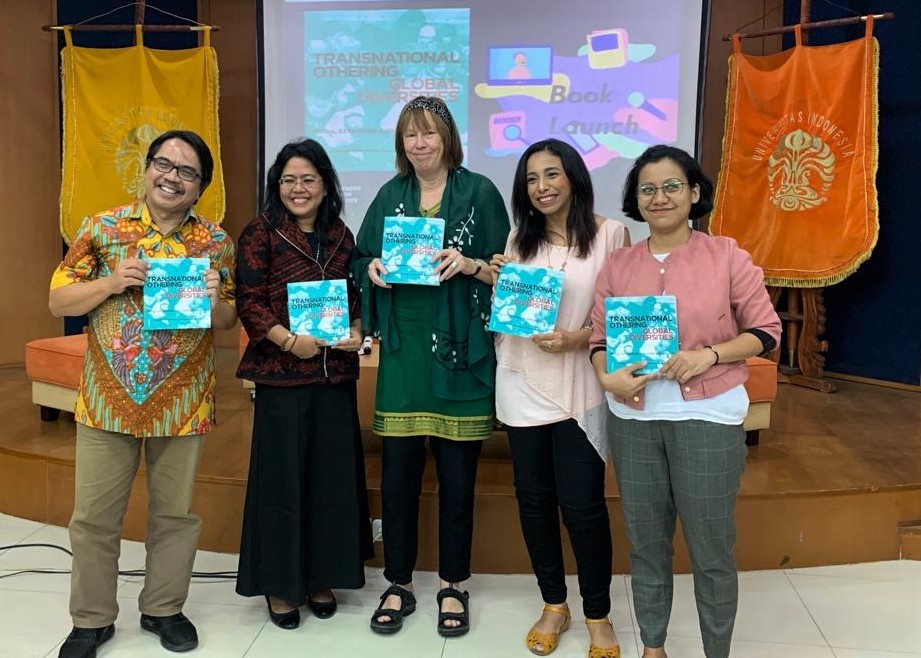
It was followed with the launch of the book Transnational Othering-Global Diversities, Media Extremism and Free Expression, published by Nordicom. Ade Armando, Andina Dwifatma, Lestari Nurhajati and Abeer Saady are contributors, while Elizabeth Eide is a contributor and the editor of the anthology.

Conference partners:

  • Department of Journalism and Media Studies/Journalism and Media International Center (JMIC) at Oslo Metropolitan University, Norway
  • International Association of Women in Radio and Television (IAWRT)
  • Department of Communication, Faculty of Social and Political Sciences at Universitas Indonesia
  • Communication Research Center, Institute of Social and Political Research and Development (LPPSP FISIP) Universitas Indonesia
  • Gender and Sexuality Research Center, Institute of Social and Political Research and Development (LPPSP FISIP) Universitas Indonesia