afghanistan safety poster

Promoting a New Generation of Female Media Leaders 

By Maryam Bahar Sadat

A ceremony held in Kabul has marked the completion of  IAWRT Afghanistan’s (AWRT-K) seven-month project to enhance the skills and influence of women journalists

The event opened with discussion of the project’s impact and the ideas of speakers from the leadership of the Afghanistan Journalists Federation. The USAID Rasana project was run in cooperation with the Afghanistan Women Journalists Union (AWJU) and the Centre for the Protection of Afghan Women Journalists (CPAWJ).
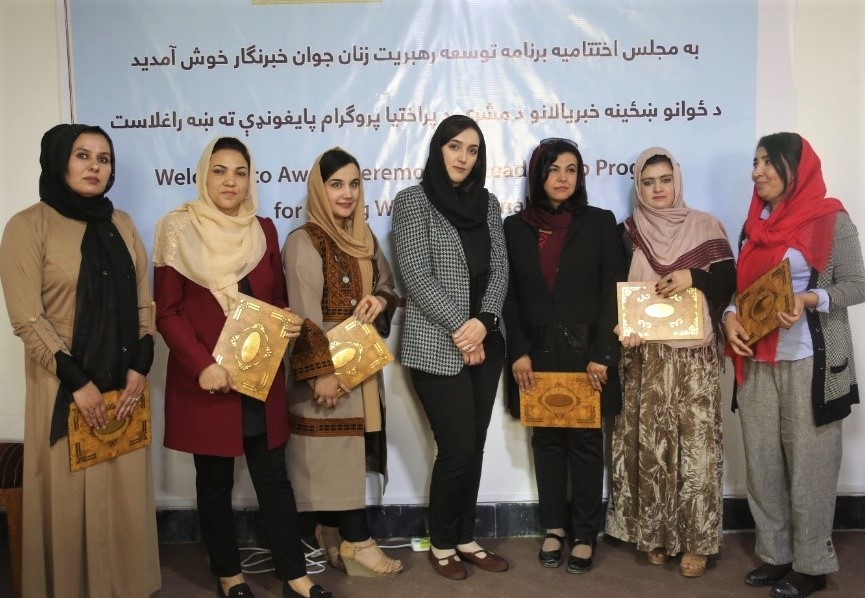
 

During the ceremony, the second-tier leaders of each organization which participated in different voluntary activities were awarded for their dedication to serving women journalists.


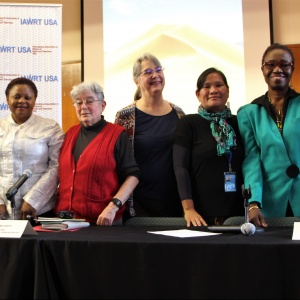
Pic: From Left to Right: Lida Ahmadi, Hajira Karimi, Laila Noorani, IAWRT Project Manager, Maryam Bahar Sadat, Shabnam Popalzai, Malala Maiwand and Freshta Faizi


The  Rasana Project with Internews involved two phases, the first, developing gender policy for the Federation of Afghan Media Associations and Entities and implementation of that policy, and secondly, the training of second-tier leaders.


The first activity was aimed at strengthening the presence and influence of women in the media within the federation, which is made up of 15 journalist unions and support groups.
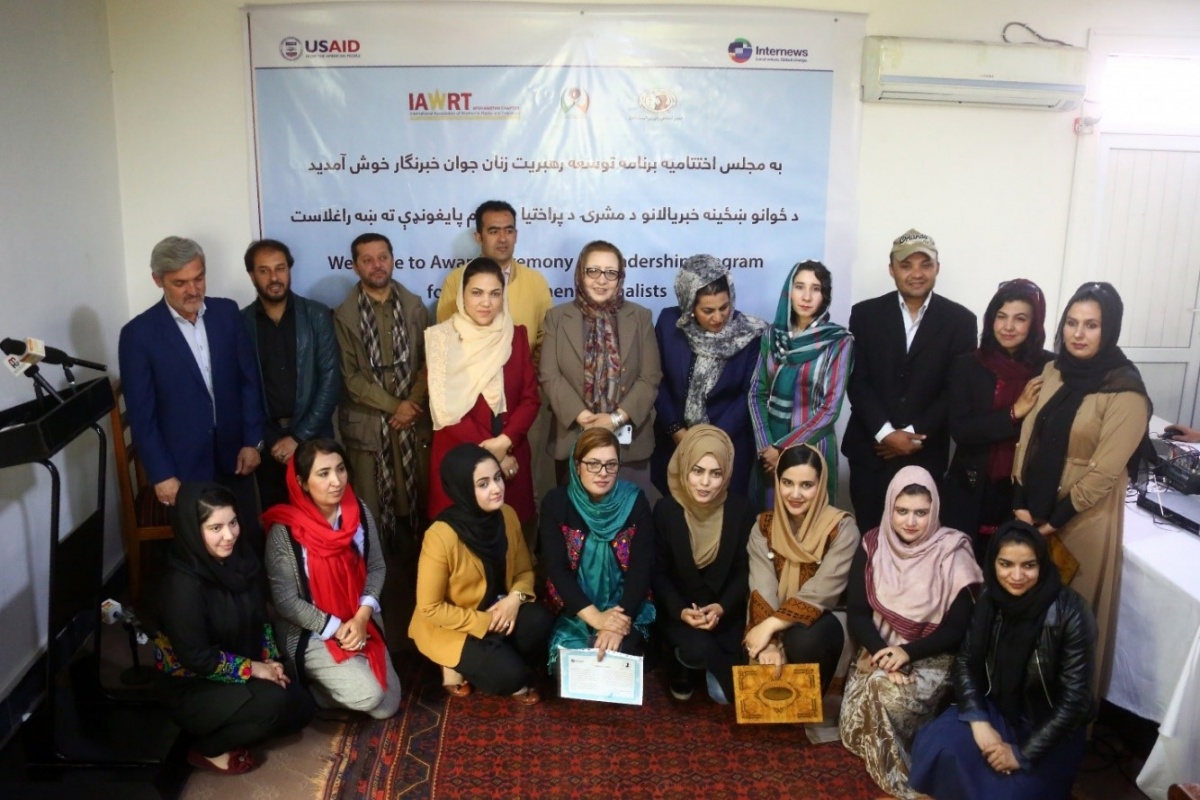
 

By firstly hosting a federation meeting, AWRT-K raised awareness of members about gender inclusion and facilitated discussion on gender inclusivity in federation policies along with strategies for implementation of the developed strategy.


  • An action plan for implementation of gender policy within the federation was developed and it is being followed up in each federation meeting until it’s practiced.
  •  AWRT-K worked with federation members to include gender inclusive policy in federation regulations and to ensure the implementation of policy across the board
  • AWRT-K gained the commitment of federation members to implement the gender inclusive policy and developed a hotline email for complaints from women journalists all over Afghanistan which will be led by the three women journalist organizations (AWRT, AWJU, CPAWJ).
  • Established a Gender Focal Point position to monitor the activities of the federation from a gender perspective. Ms. Farida Nikzad the Director of CPAWJ was assigned in cooperation with AWRT-K to act as a Gender Focal Point for the federation.


In the second activity, AWRT-K worked to develop second-tier leadership within women journalist support groups to ensure better representation of women as well as to sustain efforts within the federation to improve the status of women journalists.
 

  • Through conducting a workshop on women journalist leadership skills, along with identifying the challenges of women journalist in Afghanistan. We selected six young women journalists as second-tier leaders from Kabul, Parwan and Nangarhar.


  • A strategy for capacity building of second-tier leaders – developing their knowledge and leadership skills in the media sectors by assigning them small research projects, and through attending different programs, training and seminars, including short English courses.


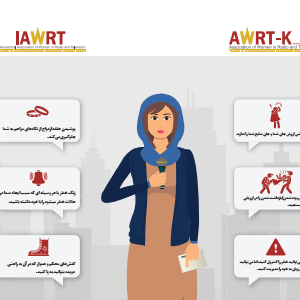
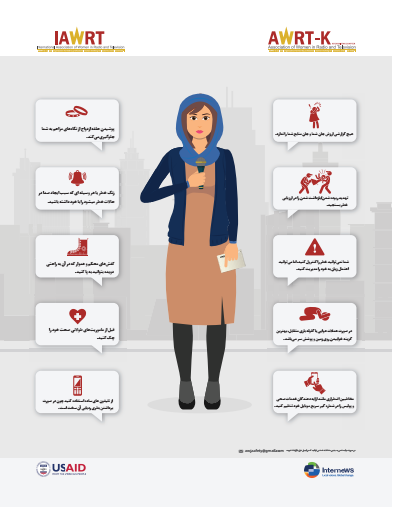
  • Two-page safety guideline brochure and a poster were developed by AWRT-K in local languages which will be disseminated all over Afghanistan for women journalists and media entities. 


Pic right: IAWRT Afghanistan safety guideline poster for women journalists in the Dari language, with advice on how to keep tehmselves safe by following some small points, including wearing sensible footwear, a wedding ring to repel unwanted advances, staying in contact with employers and when to take shelter.


Other coverage

Active Women in The Media

Fostering a New Generation of Women in The Afghan Media

3-6 June 2019  |  Vancouver, Canada. Organsers say #WD2019 7 thousand delegates are expected to dscuss gender equality and the health and rights of girls and women in the 21st century.

Registration to attend #WD2019 is CLOSED, but you can subscribe to the virtual conference to watch WD2019 live. https://www.facebook.com/events/886249681561579/ For details on speaker line-up and program, please visit wd2019.org.

A busy start to 2019 has seen IAWRT members turning ther attenton to localised and global strategies to further the impact of women in media of all types. This presentaton takes us through some of the efforts so far.

IAWRT in Action 2019


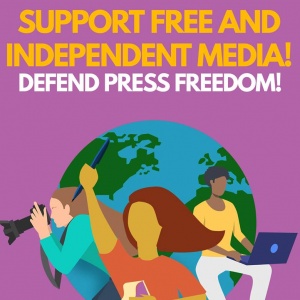
IAWRT press freedom

Courage in Journalism an Imperative in a Climate of Fear

Call for vigorous support for free and independent media and the defence of press freedom as it continues to decline around the world. 

On World Press Freedom Day 2019, the International Association of Women in Radio and Television (IAWRT), with its active members in 54 countries, issued a statement about the decline of press freedom as a climate of fear spreads (also available in Arabic and Kurdish).

In the World Press Freedom Index 2019 recently released by Reporters Without Borders, there were only around 43 of 180 countries and territories where the state of journalism is evaluated to be in a good and fairly good state; the rest are assessed to be in problematic, difficult or very serious conditions. Authoritarian regimes are tightening their grip on the media and other governments’ totalitarian propaganda and verbal attacks on the media blur the thin line with physical attacks against journalists. These situations contribute to a climate of fear and a situation prejudicial to a safe reporting environment.
 
Attacks against female journalists are career-altering
A study released on September 2018 by the International Women’s Media Foundation (IWMF) and Troll-Busters.com revealed that nearly two-thirds of female journalist respondents have been harassed, nearly one-third of female respondents consider leaving the profession due to harassment and those early in their careers are twice as likely to consider alternate employment. In addition, more than one-third of female journalists avoid certain stories as a result of the harassment they experience, threatening the ability of media to deliver unbiased and truly free reporting. The survey had 597 female respondents.
 
Women journalists show courage amid press freedom struggles
In the face of growing threats to press freedom, women journalists in various countries courageously carried out their duties and some of them died in the line of duty. IAWRT would like to pay tribute to:  

  • Daphne Caruana Galizia, killed in a car bomb attack on Oct 16, 2017 for exposing corruption in Malta;
  • Gauri Lankesh, shot dead in India on September 25, 2017 for criticizing the woman’s place in the caste system;
  • Miroslava Breach, killed on March 23, 2017, an anti-corruption and human rights reporter for the Norte de Ciudad Juárez and La Jornada newspapers in Mexico;
  • Kim Wall, a Swedish journalist who was sexually assaulted and killed while working on a submarine story in August 2017;
  • Viktoria Marinova, a Bulgarian journalist raped, hit on the head and suffocated and her body was found on October 6, 2018. She was looking into alleged fraud involving EU funds linked to big businessmen and politicians and prompted speculation that she may have been targeted as “a warning”;
  • Lyra McKee, a North Irish freelance journalist shot dead in Derry, Northern Ireland on April 18, 2019 while covering clashes in Creggan, a suburb of Londonderry (Derry). The ‘New IRA’, a dissident republican group, has admitted responsibility for her murder.

 
We salute all fellow women journalists in the world who, with all other responsibilities and tasks still asked of their gender, perseveres in this profession. We salute all supporters who believe in the importance of women’s voices being heard.
 
Commitment and courage
On World Press Freedom Day, we remember that our freedoms are ingrained with responsibilities. While a troubling, steady rise in attacks against journalists and media outlets internationally continue, we underscore the importance of press freedom by committing to the highest standards of the profession, to the truth and to the public that we need to keep informed.
 
The lives of vilified or incarcerated journalists depend on our ability to continue our work, to not be cowered, and for the rest of the people to act and join us in defending press freedom and freedom of speech in every corner of the world. These attacks, especially against female journalists, cannot continue with impunity and we should move to hold governments who silence news media accountable. We remind governments of the need to respect their commitment to press freedom.
 
In response to censorship, threats, harassments and intimidation, our response and defense are to continue to write, report and investigate for the public interest.
 
Freedom of expression, freedom of speech and press freedom are bulwarks of people’s civil liberties and human rights and the foundation for any democracy to exist and these are what journalists put their lives on the line every day for, as there is no shortcut or alternative to press freedom.

#PressFreedom #WorldPressFreedomDay
VIOLET GONDA
President,
International Association of Women in Radio and Television (IAWRT)

From the 26th celebration of World Press Freedom Day from May 1 – 3, 2019 in Addis Ababa, Ethiopia

Links to media coverage:

Arabic

Study: One third of women journalists think of changing profession

Radio and Television Women call for continued action against restrictions on press freedom

Arab Radio US

Kurdish

Most women journalists change or leave their jobs because of barriers faced at work

English

IAWRT calls for free, independent media ahead of World Press Freedom Day (Watchdog Uganda)

World Press Freedom Day protest (abs.cbn.com Phlippines)

panelnaudienceCSW63 (2)

Everyone desires to belong, to have a family, an identity, and a culture to love and be loved back; that is what makes humanity meaningful. A lot of people work toward attaining a sense of belonging and that makes life a struggle worthy to take on. With hope, it becomes beautiful to work for your life goals among people you call your own, a community you share a culture with and neighbors you laugh and frown with and a geographical area you call your home identity. A world you are familiar with; a flock you call your own; the true meaning of life.
But when natural disasters hit… such is gone in a brief but harsh moment; identities wash away; neighborhoods disappear; ancestral graveyards are washed off and people die; bodies disappear in rubble; traditional sacred places vanish with the ruins; birds and animals helplessly die. Like one abandoned in the middle of nowhere. So many years and generational struggles gone, all that is left is a life with no history and a dark tomorrow. Offering survivors hope is the greatest package one could imagine, because it never goes, trauma never goes. But one just learns to live positively with it.

Sheila Katzman, IAWRT-USA President

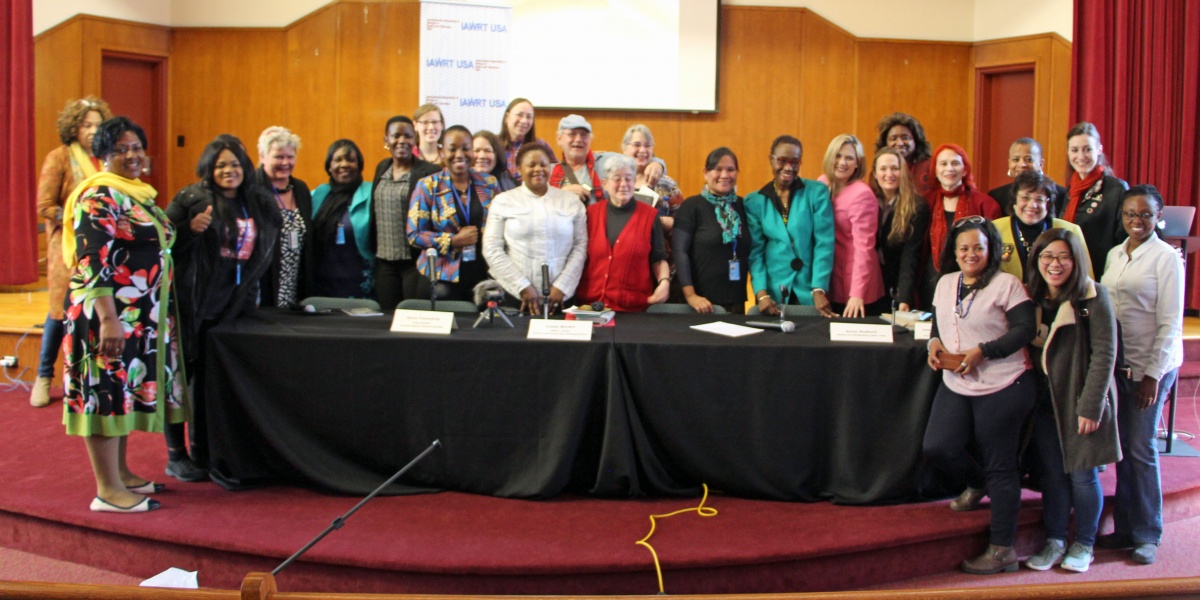
The International Association of Women in Radio and Television (IAWRT) sponsored a discussion on Community Media Models for Disaster Preparedness and Risk Management in New York and on international online platforms to complement the United Nations 63rd Commission on the Status of Women. The theme for CSW63 was: Social protection systems, access to public services and sustainable infrastructure for gender equality and the empowerment of women and girls. Moderated by Frieda Werden, from the Women’s International News Service, discussants with different disaster occurrence experiences and from different geographic location around the world shared and made recommendations on how community radio can help the community get access to social protection and survive times of disasters.

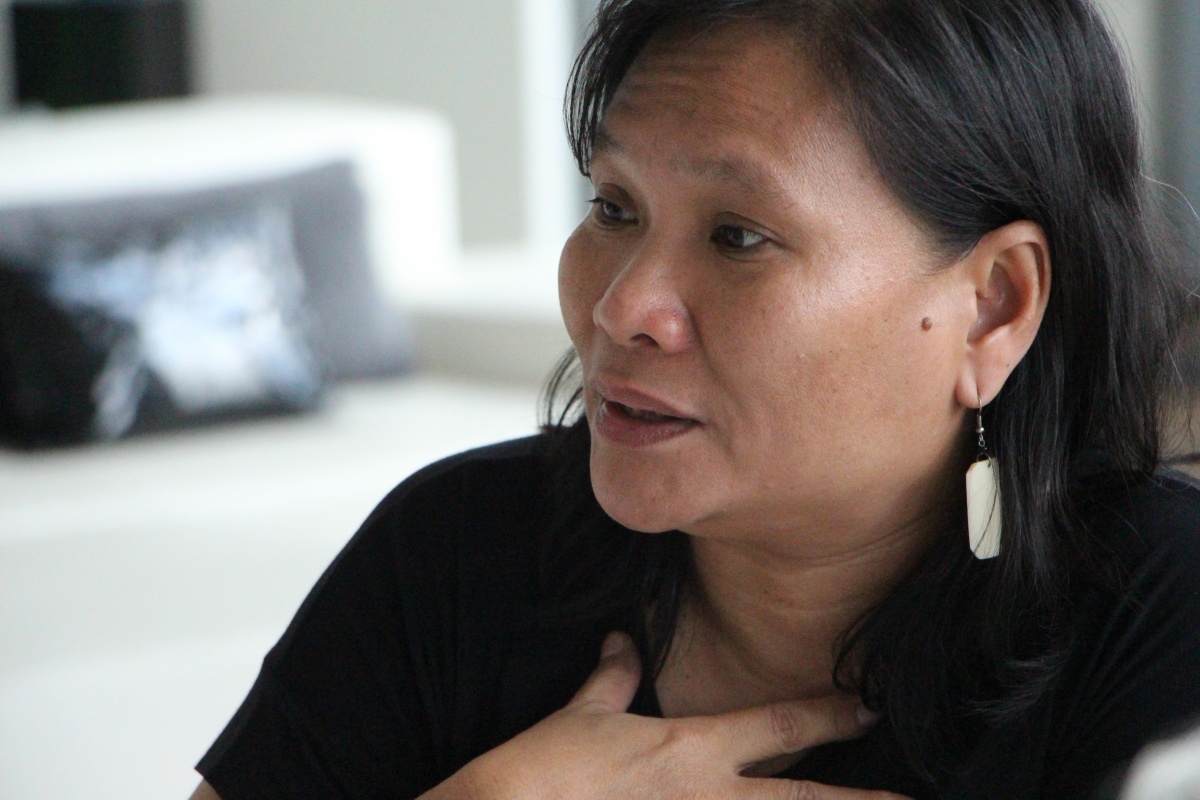
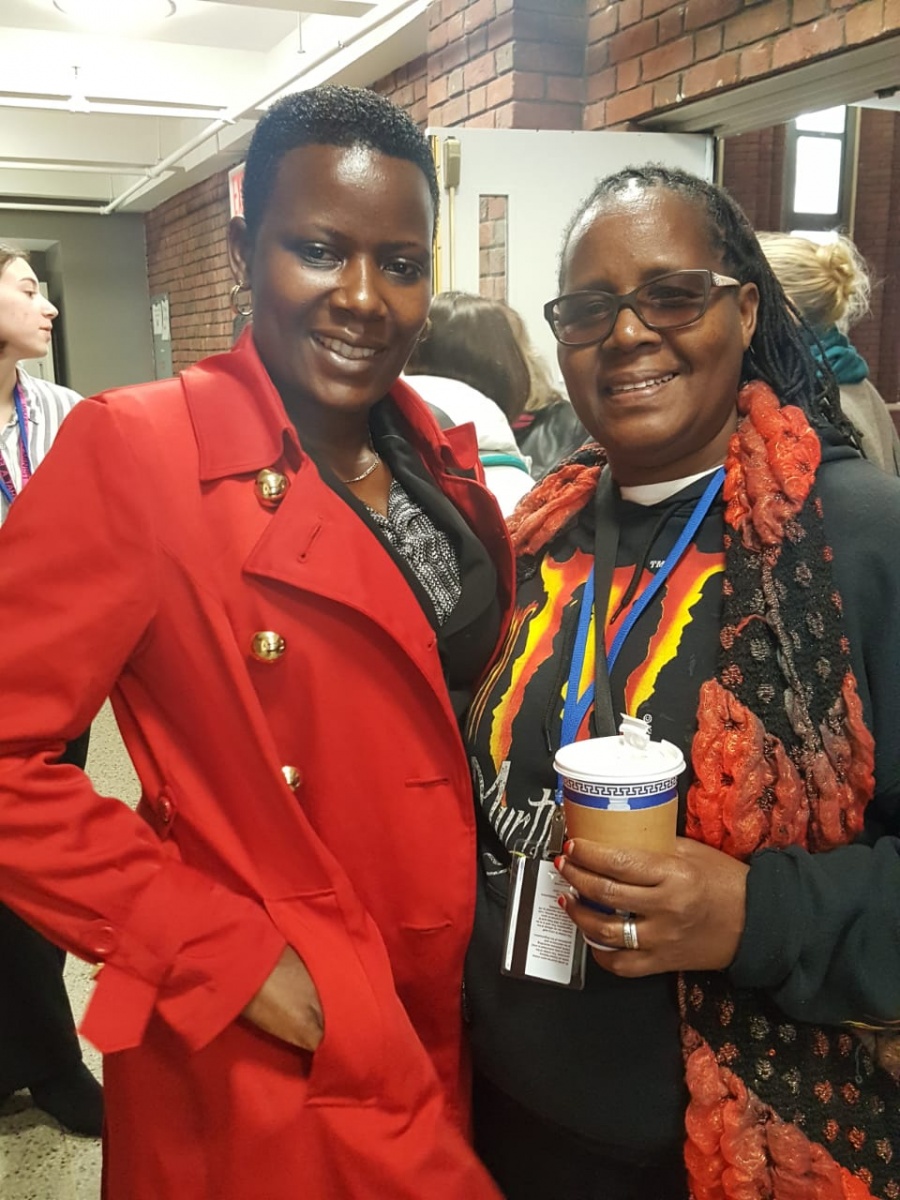
Jola Diones-Mamangun, (pic right) head of the Philippines IAWRT chapter, worked on establishing narrowcast radio in the aftermath of Typhoon Haiyan. The notorious typhoon was a devastating disaster for the Philippines that left survivors without hope, fearful of the unknown and anxious. “Over two thousand people are said to have died in the typhoon rampage that engulfed the country in 2018.” (Reuters)

Life after devastating disaster is empty, communities need to get together in one trusted voice to rebuild amidst anxiety and despair. Jola, under the IAWRT banner, formed narrowcast radio to mobilize affected communities, with the Disaster Preparedness Response Radio project which aimed to create a trusted arena to talk and to listen to each other about their shared experiences after the disaster; look at how best they could work together to live again and how they could minimize the disaster effect during subsequent disasters. Despite challenges, the narrowcast radio has slowly created positivity among typhoon survivors.

Olivia Tumanong, formerly of IAWRT Cameroon, shared her experience with the role of community radio in disaster prone areas drawing examples from her home country.  She says community radio is critical, immediately after a disaster, but after a short while they face stiff competition from commercial radio stations, making it hard to break-even financially and they are forced to close. This leaves communities helpless since they end up having no direct control over so-called community radio and have no stake in the content aired.

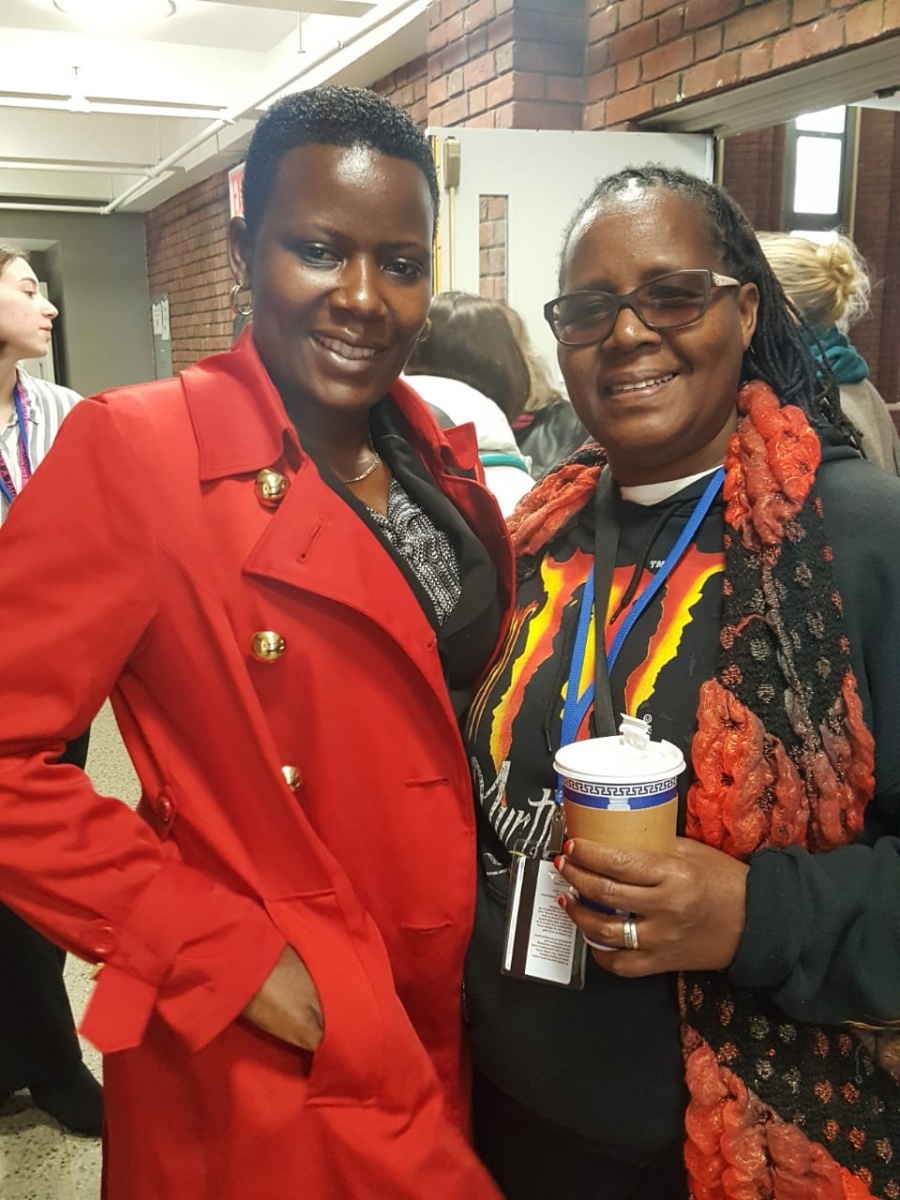
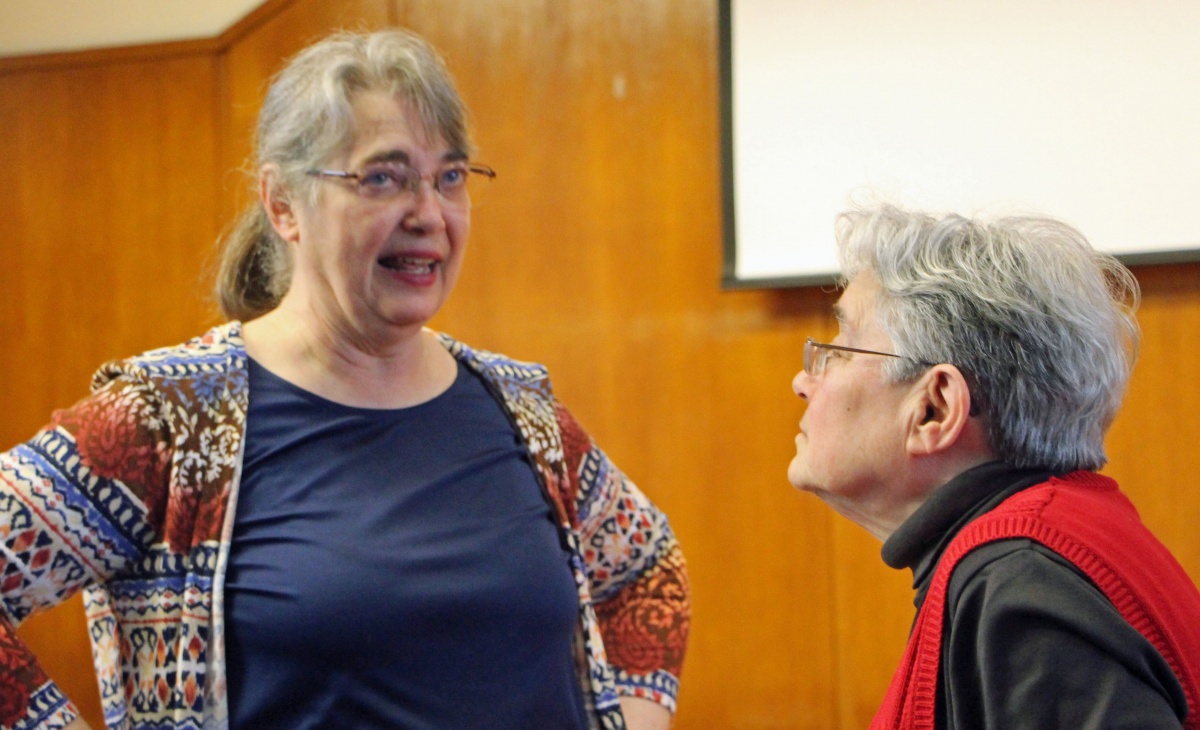
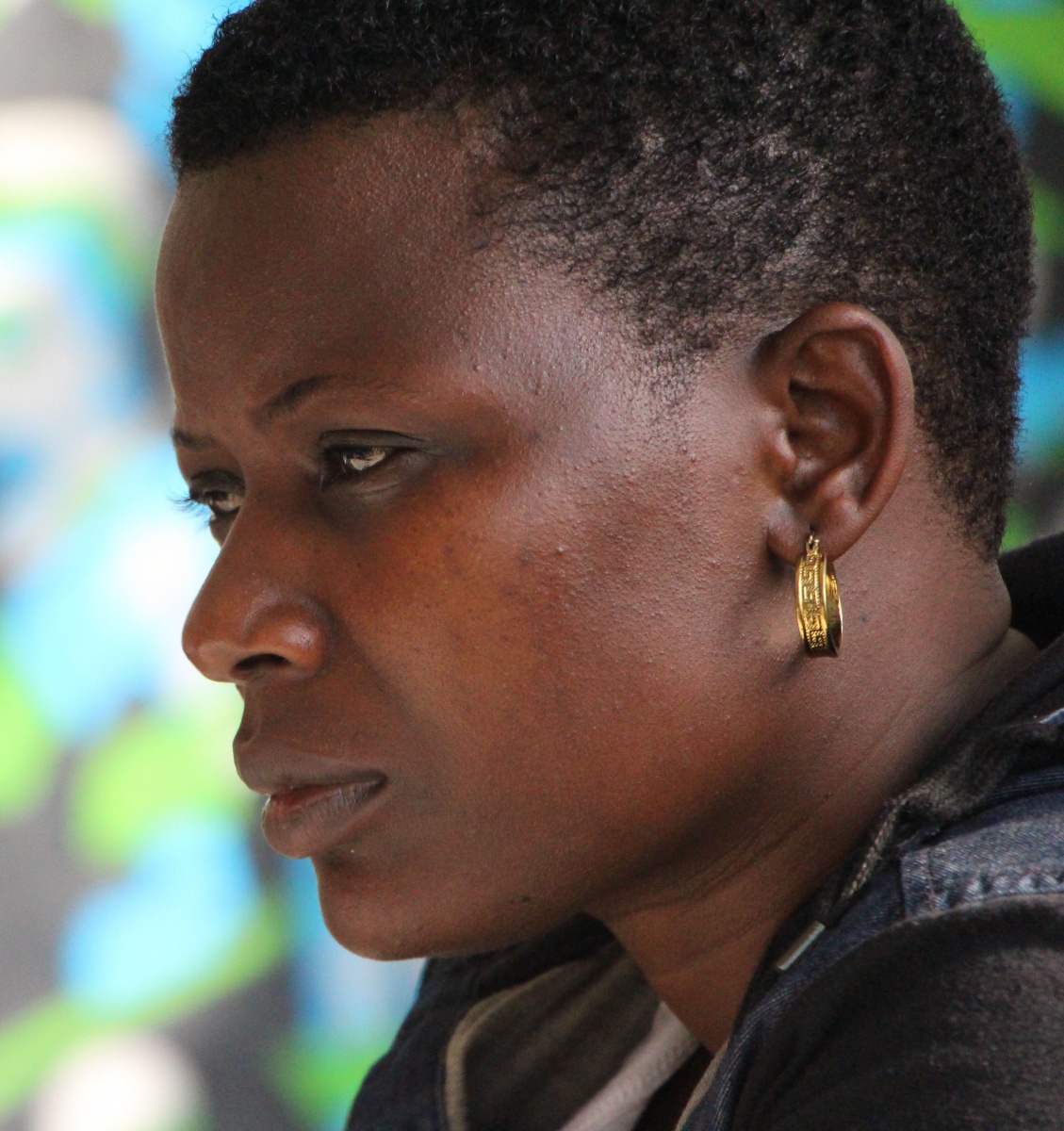
This article’s author, Nankwanga Eunice Kasirye, from the Uganda chapter of IAWRT (pc left wth Kanya IAWRT head Josephne Karani) shared the need to revive traditional media communications among communities for mobilization, since modern media outlets are abused by opportunists. Communities do not trust modern media because of the contradictions in their coverage. Traditional media, such as drumming, would easily speak to people and earn their trust in times of emergency.

Panelists also included Susan Raybuck of KWVH-LP/94.1 FM Wimberley Valley Radio, Texas. Like the Philippines situation, this low-powered radio was set up in the aftermath of a national disaster. The 2015 Memorial Day weekend floods destroyed over 400 homes, damaged hundreds more and killed eight people in a major flooding disaster which spanned multiple counties.

Californa is alos disaster prone, “We’ve had two major emergencies in the past 18 months. People sleeping on the beach, air thick and grey – the bushfires burnt out cell towers, the internet, and phone. It was huge, huge, huge…” These are the words of panelist Peggy Berryhill of California in a video presentation about the Santa Rosa fires in California. Mainstream media was giving misinformation she said. It was the radio she founded that gave people the information they needed to stay safe. Peggy is a Native American who founded The Native American Media Resource Center. She is a Muscogee Tribal member and an award-winning radio producer.

Sheila Katzman of IAWRT-USA explains that the CSW Commission compromises 40 UN Member States who examine the CSW theme. She challenged the audience about their individual understanding of social protection floors in line with community disaster preparedness. Social protection floors are the basic set of social rights derived from human rights treaties, including access to health, education, housing, water and sanitation (Editor).

Among audience responses was the need to prepare communities before disasters hit. Communities need to be educated in preparedness and not just concentrating on disaster after-effects. If communities are prepared in advance, they will be able to control the impact and the ability to rebuild lives afterwards.

Violet Gonda, of Zimbabwe and President of IAWRT, highlighted the Philippines Disaster Preparedness Response Radio model as an IAWRT initiative to empower communities to participate in carving out their own interpretation of pressing problems at the time, to create their own medium of communication, and discuss possible solutions together for a way forward. Violet encouraged the audience to make use of IAWRT expertise, including a booklet on the Philippines Radio Experience for empowering their communities to build their own medium of communications to shield themselves from the adverse effects of disasters.

The IAWRT parallel event, Community Media Models for Disaster Preparedness and Risk Assessment was the right thing to do at CSW63. Some 56 people attended the event which was a quality discourse where intellect meets grassroots on the same playing field, with common interest goals in mind.

Only days after the event, a devastating cyclone destroyed entire villages in Southern Africa: Mozambique, Zimbabwe and Mali. We are already thinking how narrowcasting can help ease the trauma for those people.

long_doco_poster

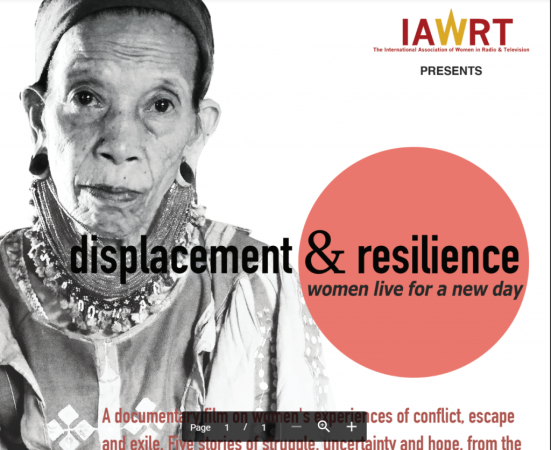
IAWRT 2019 documentary honoured at South Asian Short Film Festival.

The fesitval is run by the Federation of Film Societies of India in Kolkata, and IAWRT’s 2019 film won the P K Nair Critics’ Award for the best documentary.


The Jury’s citation: “Homeless and country-less, refugees pay the price for wars and purges. The film takes us deep into their psyche and focuses on the humanitarian work being done for their rehabilitation.”

This is an hour-long collaborative film with contributions from film makers Afrah Shafiq, Archana Kapoor and Chandita Mukherje from India, Erika Cruz of the Philippines, Eva Anandi Brownstein of Canada and Khedija Lemkecher of Tunisia.

Executive Producer, Chandita Mukherjee explains how it was made:

In response to a call from the IAWRT, I proposed a concept on women refugees and how they cope with being uprooted from home, which the IAWRT accepted;
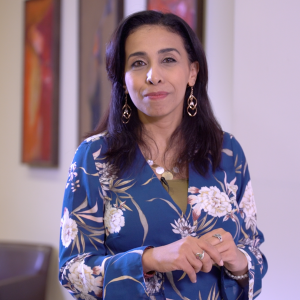
Then onward I acted as Executive Producer, steering the project, collecting proposals from women film makers, who are members of IAWRT of different countries, and finally inviting four of them to make their films.

Six of us shot different parts of the film and they sent rough cuts with the full rushes to Bombay.

The final compilation was by Puloma Pal and myself, with additional editing by Shyam Shimpi and Bhushan Ingole, sound design and mixing Atanu Sinha.


Displacement & Resilience: women live for a new day


abeer safety video

Omnia Elalfy interviews Abeer Saady for Arab Reporters for Investigative Journalism 

ARIJ makes safety advice video available in Arabic.

Abeer Saady, a war correspondent, media consultant and trainer, has about two decades of professional experience covering events in conflict areas in the Middle East, Africa and Asia. Abeer has gained an international reputation for media development and training in conflict areas. During her tenure as Vice President of IAWRT, the association has carried out many training activities in countries in Africa and Asia.
 
IAWRT has already prepared the journalist’s safety handbook published by the International Association of Women in Radio and Television. In your opinion, what are the most important points regarding the safety of women journalists in this region that must be taken into consideration?
 
Journalists are exposed to two kinds of attack, first of all they are being targeted as a journalist. We know that the world has become a very tough place for media professionals of both sexes in general. Second, there is the gender-related attack, which includes more threats, to women journalists as women. Such threats include harassment, for example, harassment of journalists in the workplace, by sources, or electronic or digital harassment. There are also threats made to the journalist’s own family, which are more likely to be aimed at female journalists working in war and conflict zones.
 
In my field of work, I focus on the e-threat of journalism, because the world is relying on social networking platforms more widely now, and the journalist is always exposed to some kind of comment or attacks, across those platforms. Often threats to the press which begin via electronic means, may end up killing the reporter, in the worst circumstances. This happened to the Malaysian investigative journalist Daphne Karuana Galizia, who participated in the Panama Papers report, a large investigative project in which journalists from all over the world participated. Those who killed her started by sending electronic threats.
 
I would like to point out that any kind of harassment and electronic threat can be dealt with, and the media outlet in which the journalist works must take responsibility for those threats, and make sure that there are clear policies followed by women journalists in this regard, within each institution.
 
How can journalists and journalists deal with these risks?
 
Preparation is the key, and a journalist is professionally prepared. She or he should also prepare for it in terms of security … to ask what the risks are and who is behind those risks. In the case of press interviews, assess whether the meeting places are safe or not. Because of her or his identity, such as nationality, gender and race, assess whether or not identity issues can be hidden or dealt with, or if they are inherently unchangeable, the journalist therefore decides not to do so.
 
The journalist must take into account all the details during the execution of her or his journalistic functions, as a means of moving to the site of the event, the paths s/he takes along the way, the question of surveillance, whether it is electronic and whether there are cars following or not. It is important that the journalist does not publish all the information on electronic communication platforms and classifies information according to sensitivity and privacy. Finally, I would like to emphasize the psychological integrity of the journalists. If you are conducting an investigation like the ARIJ network, these investigations put us under great psychological pressure, and we have to know that the person is a doctor to her or himself. Do not forget that we also have to live a normal life alongside the professional life..
 
Based on your experience … What are the most important skills that need to be available to a journalist specializing in war and conflict areas?
 
The most important skills are those related to journalistic work in general, along with good experience and constant attendance at the occupational safety courses, as well as constant access to the latest things related to this, even the first aid courses, these things became necessary, and there are many courses related to mental and physical safety, First aid courses, and most importantly, the journalist has the skill to assess risks and how to deal with them.

A video in Arabic with Abeer’s advice to investigative journalists is available from ARIJ Network on Facebook 

Key Video Points 

  • It is wrong to think that investigative reporters are in less danger than journalists covering conflicts
  • An investigative reporter should start his/her mission by a identifying risks and do a good needs assessment
  • She/he should do profile management because some aspect of profile may endanger her – a gender issue, for example
  • Then build a good communication plan to make sure the editor or colleague is following up every time she does a dangerous assignment
  • Travel safety means moving around to collect data of the story.
  • legal safety is very important for investigative reporters -verifying information and data is a must as a heavy price may be paid for any fault.
  • All information should be archived and kept even after the report is published
  • Don‘t publish information from your investigative report or exchange it on social media until you are finished -then publish it.

Finally Abeer stresses that safety comes first and that there is no story that is worth our lives, pointing to the death of famous colleagues such as Daphne Galizia and Gauri Lankesh


csw flier jpeg (2)

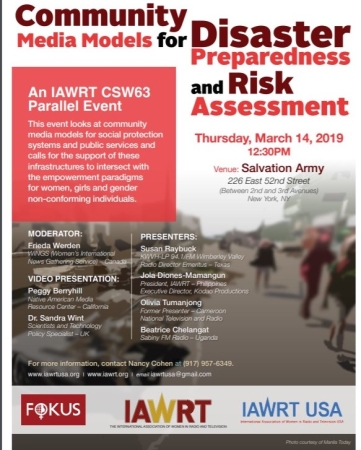
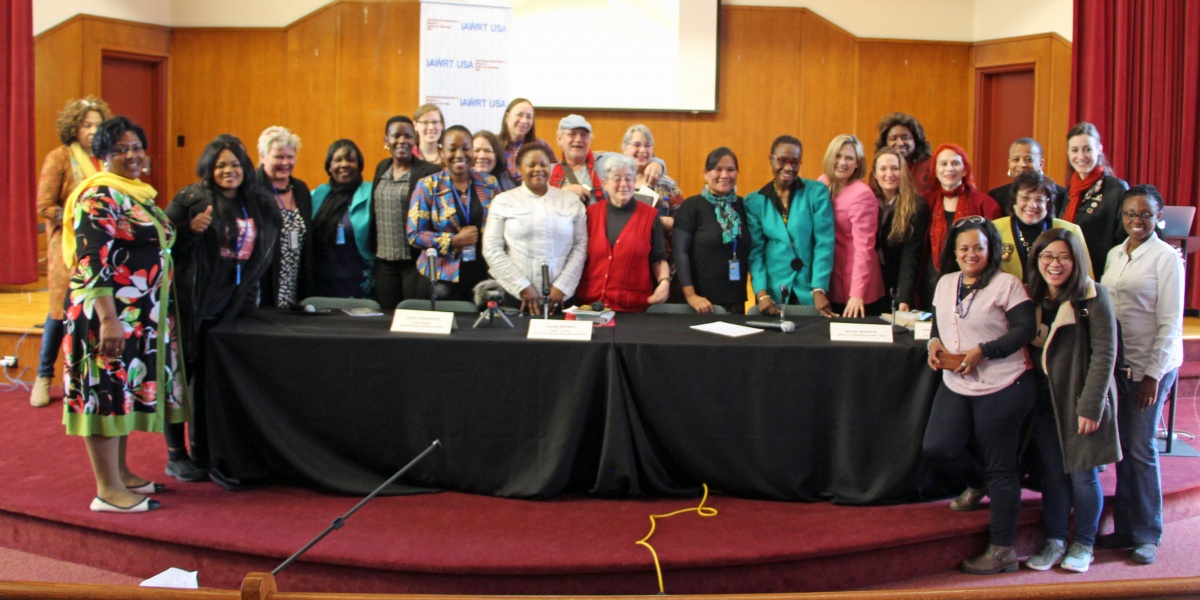
Over 50 people attended a panel discussion – Community Media Models for Disaster Preparedness and Risk Assessment – ­ on March 14, 2019 – a parallel event organized by the IAWRT- USA chapter and held during the Commission on the Status of Women at the United Nations.

The event occurred as a dozen US states in the northwest experienced flooding destroying infrastructure and farm land, Cyclone Idai pummeled the southwestern African countries of Malawi, Mozambique, and Zimbabwe leaving hundreds dead and a humanitarian disaster in its wake, and flash floods hit Thailand.

by Rebecca Myles, IAWRT- USA

The panel discussion focused on how community media could take a role during the time of climate change disasters and if it could, what form would it take and what would be needed. 

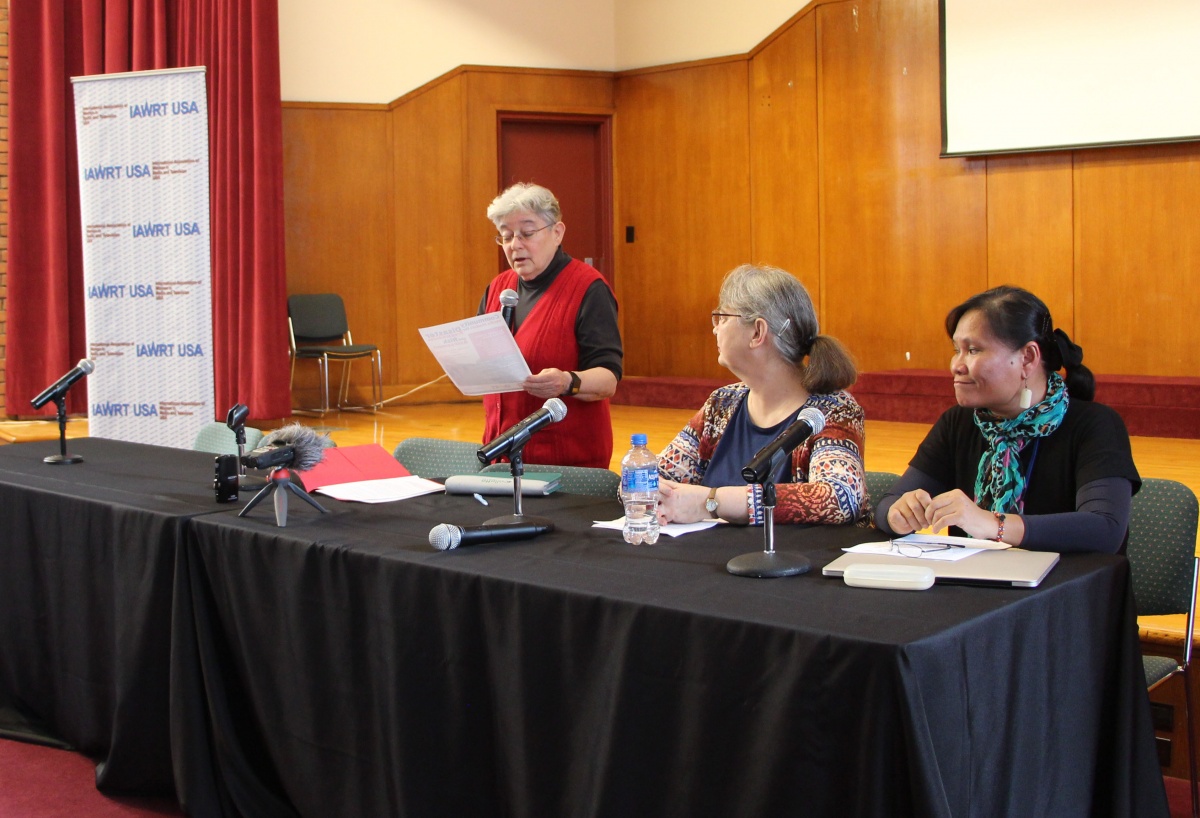
Frieda Werden, founder of Women’s International News Gathering Service (WINGS) and a member of the IAWRT-USA chapter, moderated the panel. She said in a climate disaster “you need to be able to communicate and to communicate your needs,” when introducing the first speaker, Susan Raybuck of KWVH 94.1/FM Wimberley Valley, Texas. She was granted a license by the Federal Communications Commission to broadcast during a climate emergency on a low powered FM radio. (pic Susan & Freida)
“I live in an area where there is a lot of drought, wild fires and flooding,” Susan said and explained her frustration not knowing what was happening in 2011 when 430 wild fires broke out in Wimberley and her weekly newspaper was behind a paywall and there was no information on the internet. 

Four years later Wimberley Valley had its worst flood in recorded history when waters reached 43 feet high, swept away a major bridge and destroyed 400 homes, displacing hundreds of people. She went on Facebook to start sharing information about the disaster until the internet went out, and access to other media was either unavailable or spotty. She decided radio was something they had to have. Through the help of Austin Airwaves, a group run by Jim Ellinger, who sets up radios all over the world in countries like Cameroon, she was eventually able to set up a low powered FM radio station.

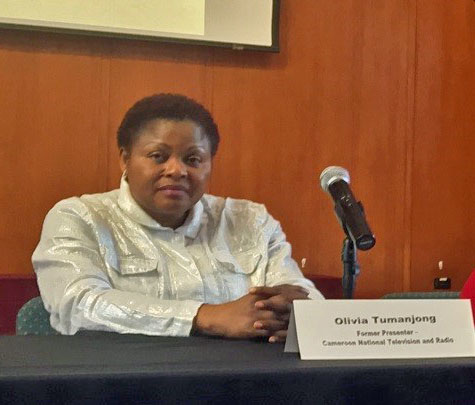
Olivia Tumanjong is a former presenter on Cameroon National Radio and Television and is now a member of the US chapter.She said community radio in Cameroon started by UN Women creating radio stations in early 2000. Radio stations were set up by UNESCO in rural communities for women, which sent out message about women for women and by women; at the height of the program there were somewhere between 100-200 stations. The stations worked for a long time before the media landscape changed and opened up to private media – before that only there was state owned media. Many of the UNESCO radio stations lacked funds and had to seek corporate funding becoming commercialized, and often gave out information that benefited funders rather than public. 
Tumanjong said the country suffers from landslides, the disruption of Mount Cameroon and also conflict situations.

“We don’t have those early warning stations to warn the people, to warn them what is about to happen and what they should do to stay safe,” said Olivia Tumanjong.

Olivia described how in September/October 2018 community radio functioned in an unorthodox, political way, during the conflict between Cameroon’s English speaking and French speaking parts of the country. She said the people were cut off from communication, little was coming from the mainstream media leaving them to depend on local community radio stations. She said a divisional officer put out an announcement asking people of 26 communities in the English speaking part of Cameroon to move out of their villages because the government was going to clamp down on them, causing a massive refugee movement of people, around 10,000 to head to Nigeria for refuge.

“Imagine if this information was geared to informing the people about an impending disaster, that these radio stations were owned and managed by the people so they could decide on the content for their development and protection; general information is supposed to help them as a community for self-improvement,” said Olivia.

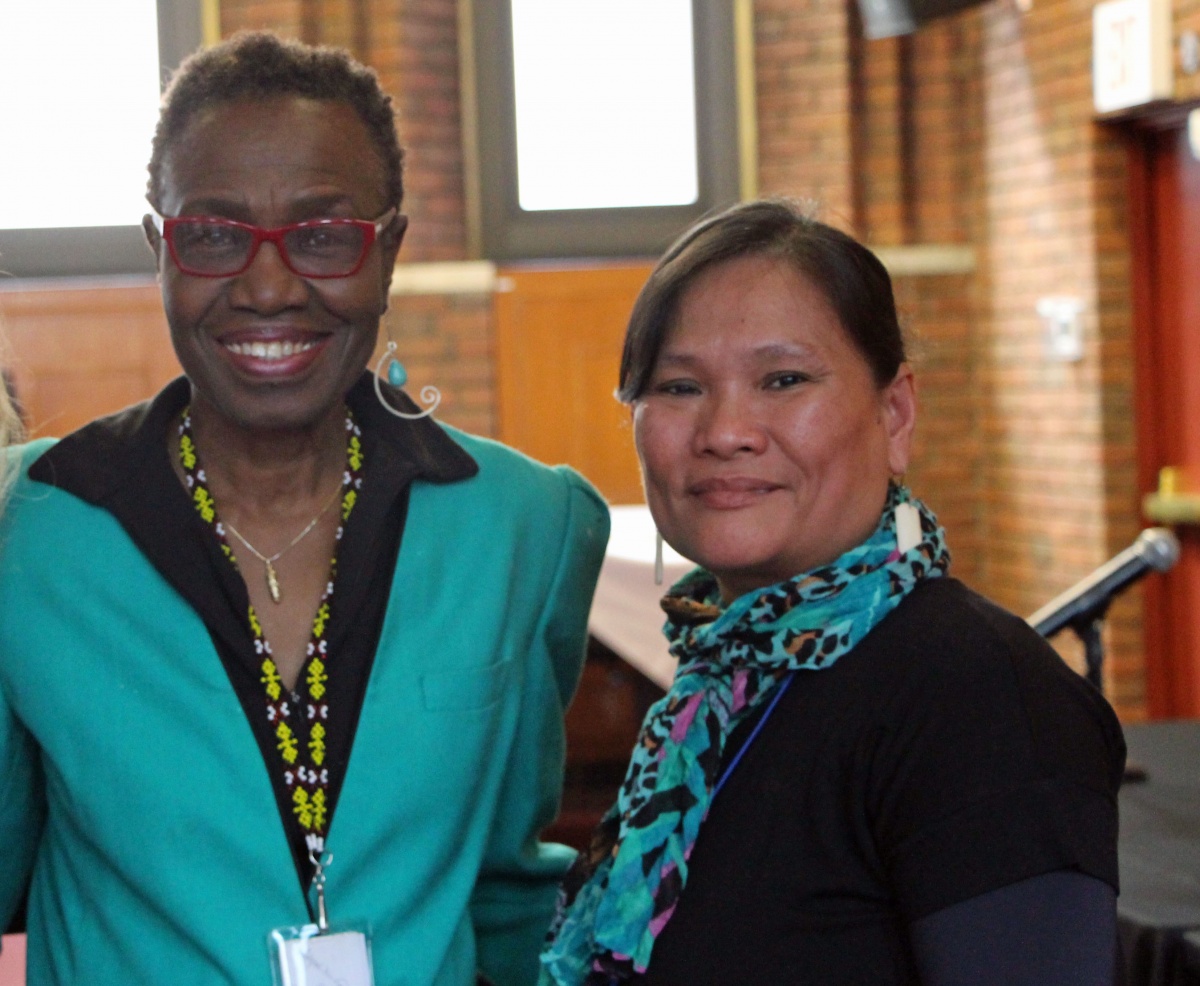
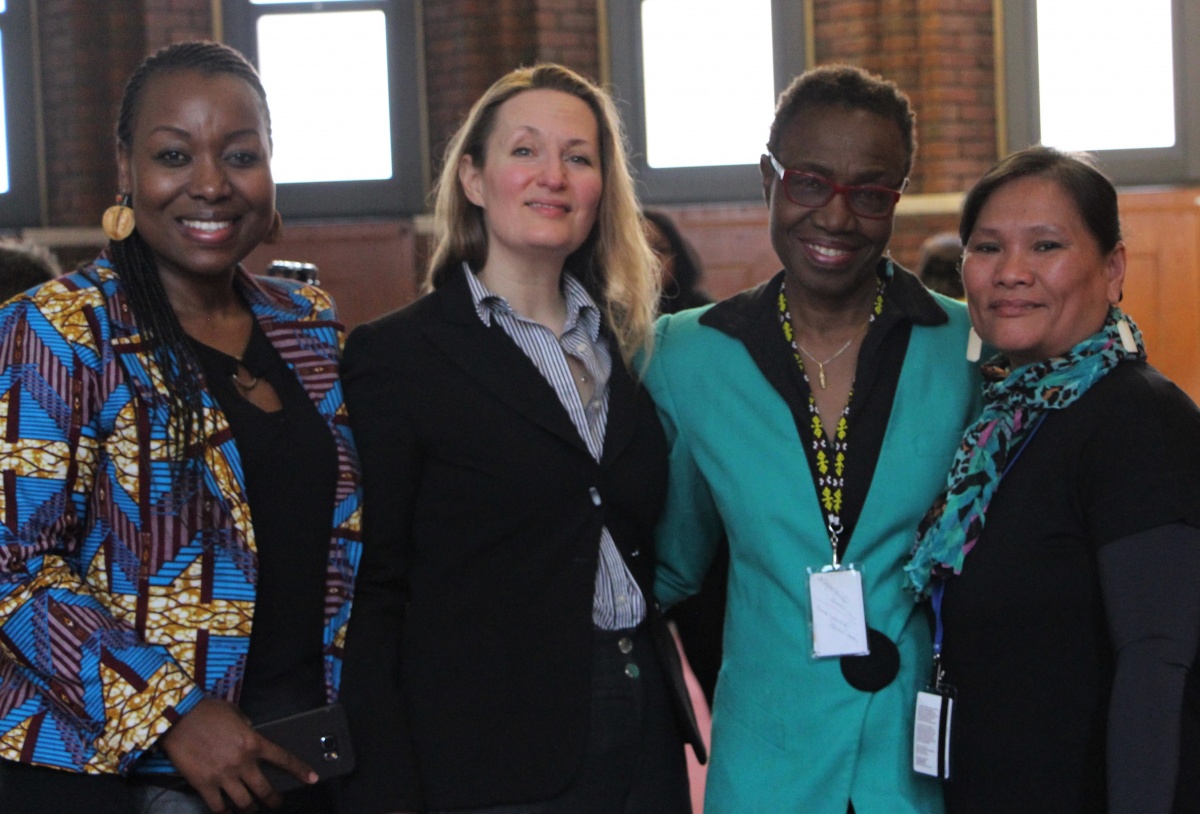
Through a multimedia presentation, Jola Diones-Mamagun, President, IAWRT Philippines (pic right with IAWRT US President, Sheila Dallas Kazman ) described the chapter’s disaster response and rehabilitation community media mobile project run by women and created to respond to the devastation wreaked by Typhoon Haiyan. The Typhoon with gusts in excess of 300 kph, hit the central region of the Philippines in 2013 leaving more than 6,000 dead, 1,000 missing, displacing a million people and destroying property.
“We began our disaster mobile project in 2015 for the typhoon survivors, most of them could barely talk because of the trauma,” said Jola.

On video Peggy Berryhill General Manager of KGUA Public Radio, 88.3 FM, Canada from Native American Media Resource center said they broadcasted for five days on KGUA radio, 13 hours straight on the air, when Santa Rosa, Canada was devastated by wild fires, and they carried fire and sheriff department press conferences five times a day, after fire destroyed cell towers and there no internet, and no telephone.

Nankwanga Eunice Kasirye, chapter head from IAWRT Uganda welcomed the room by drumming, and later talked about the devastating losses when rains come to Uganda and often as many as a 100 people die and farms and schools get washed away.
Frieda Werden said in Canada there is a campaign underway to get telecom companies to turn on the FM chips on cell phones. The chip is an FM receiver and doesn’t require WiFi to operate and connects to local FM radio stations. It also uses fewer resources, 30% less data use and three times less battery use. the chip used to be standard on android mobile phones.

NextRadio app lets you connect as well. click here

For the full discussion please scroll down to March 15 to watch the live broadcast

HERaff4

Her Africa! Film Screenings:

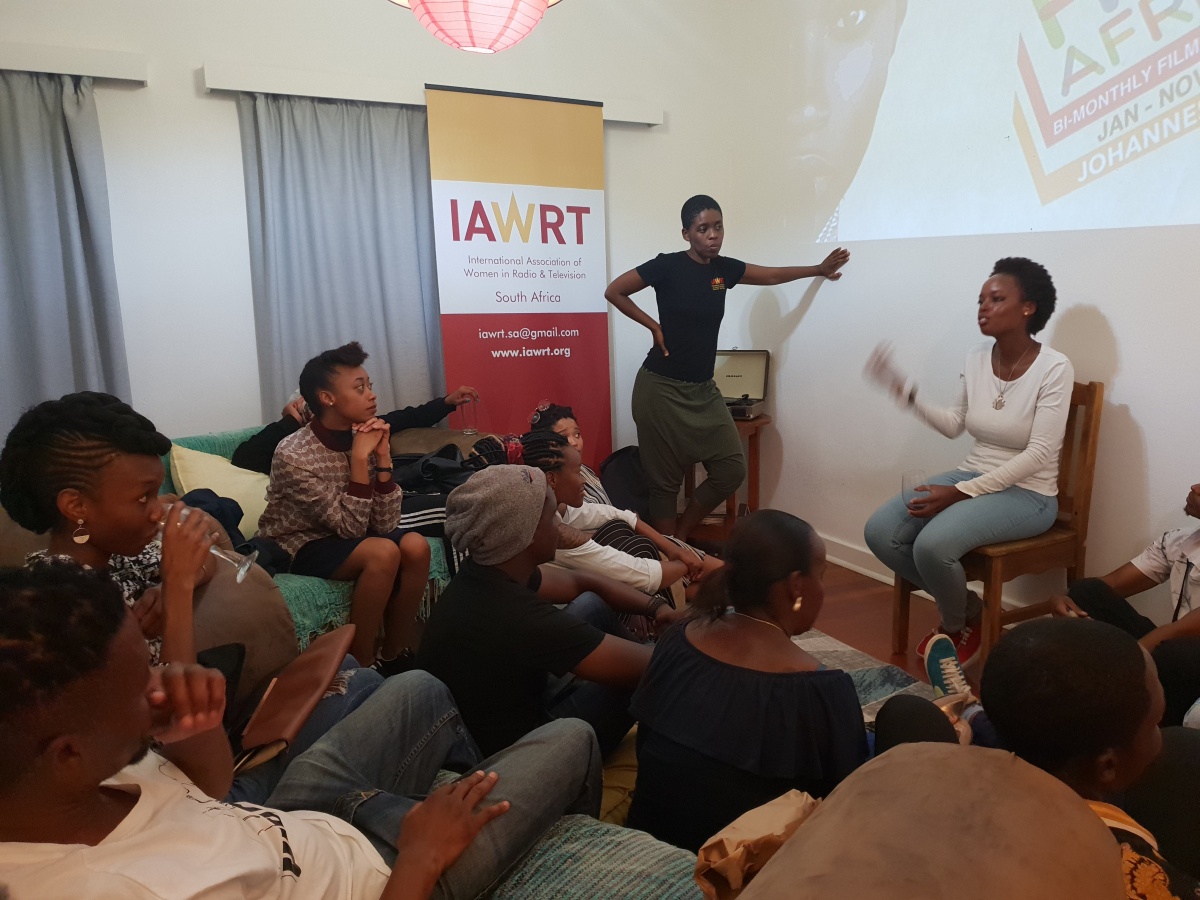
From South Africa our chapter is building a “movement dedicated to the promotion and celebration of African Women Filmmakers and building a cultural institution that will empower her to position herself most powerfully” through HER Africa monthly film screenings in Johannesburg.

The chapter’s idea is for people “to come and honour and meet hard working womxn film-makers, enjoy their beautiful and prolific art and enjoy an intimate conversation with them about filmmaking.


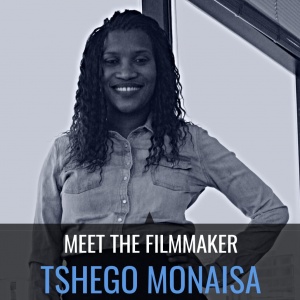
In March a new web-series had its world premiere in Johannesburg. It is the first web-series to feature in the chapter’s bi-monthly pop-up cinema. ‘Single Diaries of a Jozi Girl’ is from scriptwriter & novelist, Tshego Monaisa.


The diarists are: Lesedi, a dancer who is dating her dance partner, Nicholas. When Lesedi realizes that Nicholas considers her nothing more than a “dance partner with benefits,” she breaks up with him. She meets Thato, an investment banker who is besotted with her but when Thato asks Lesedi to open up a dance school together, Lesedi thinks that Thato was using her to benefit his career. However, this is not the case, and she has to learn to trust him.
 

Mmule, a daddy’s girl who wants to be a writer but her mother, MaKutlwano and sister, Lerato don’t approve of her career choice. Her father, Moshe, who later dies, is however, supportive of her. Lerato sets Mmule up with her colleague, Patrick but it turns out that he is secretly gay so they become friends instead. Mmule meets Kabelo, a musician and poet who she falls in love with, but MaKutlwano and Lerato disapprove of him. Mmule eventually encourages Patrick to live his truth, and he in turn encourages her to stand up to her mom and sister. She does, and goes after Kabelo, the love of her life.

Lastly ther is 29 year old Tracey, who has not been on a date in ages. She’s worried that if she turns 30 whilst still single, she might have to to resign herself to life as a spinster. She is desperate to settle down, so she decides to go on a date with anyone who asks her which sees her go on a number of dates with hilarious consequences. When she meets 45 year old divorcee, Sthembiso he offers her security and stability, which is what she wants, but she soon realizes that she is still unhappy, so she decides that she would rather be single than unhappy.


Bi- monthly screenings – home cinema/instant cinema installations have been organised in 2018 and 2019 and have been increasing in popularity.


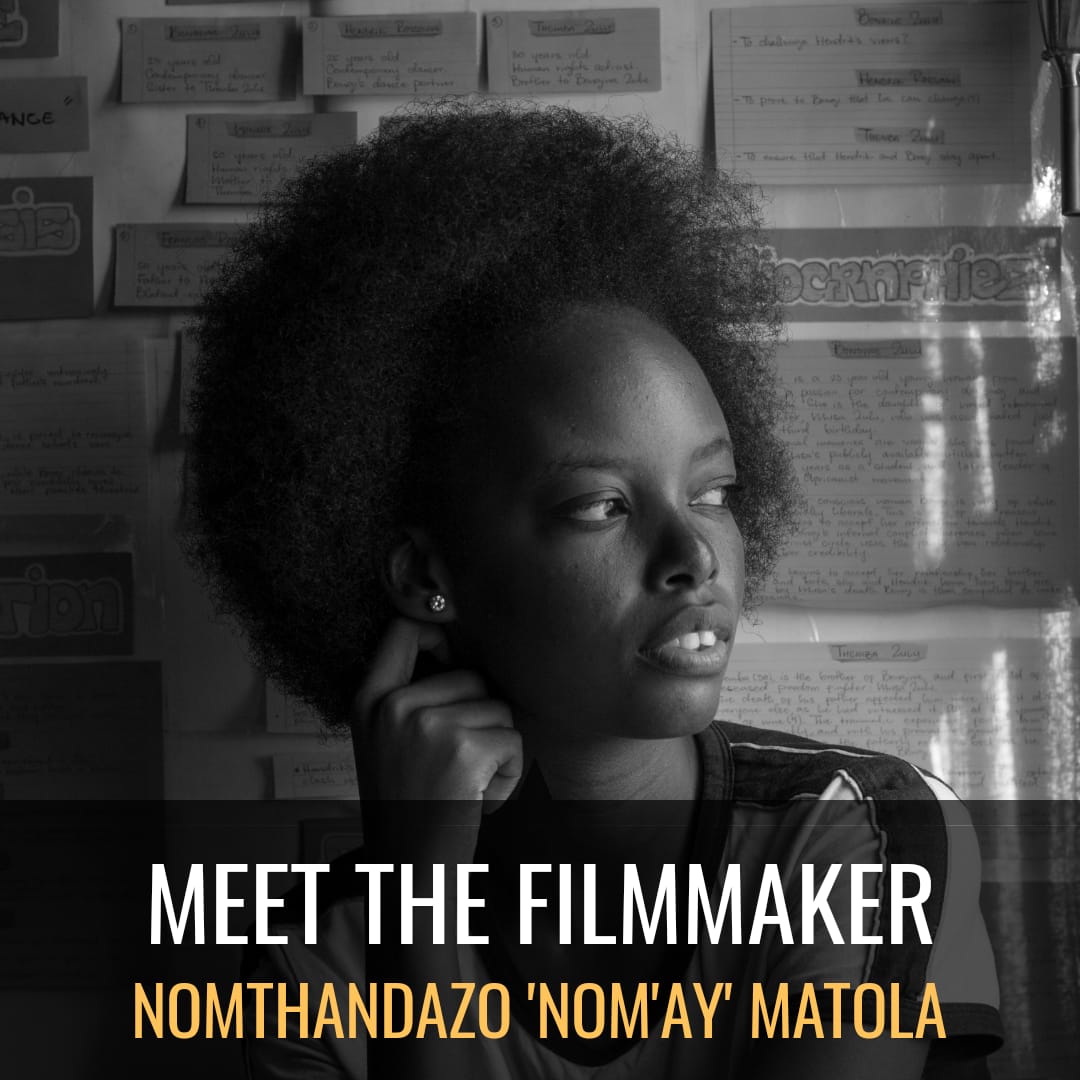
The 2019 pop up cinema had a roaring start with the well attended January screening of Nom’Ay Matola’s poignant ‘The things we harbour’.  She wrote and direcyed the short film about two brothers, estranged for many years, who are forced to confront their traumatic past when they reconnect to arrange their mother’s funeral.

Produced by Natives At Large in association with Jungle Works, under the Youth Filmmaker Project II.

Keep up with HER Africa pop up festival on Facebook Instragram or Twitter


The Global Investigative Journalism Network resource list for women journalists. Click here.

A sefety video for journalists with Abeer Saady now available in Arabic