0725 iawrt usa ph webinar fi

Discussion on current situation, challenges, and the future after the pandemic

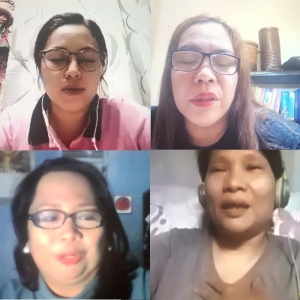
On July 22, IAWRT USA and IAWRT Philippines held the first webinar in a series of IAWRT chapter-to-chapter meetings. The topic is “COVID19: The Dilemma for Women, Journalists, and You.”

While it was a joint webinar by two chapters, members from the other 12 chapters of IAWRT as well as international members and the International Board joined the webinar.

During the COVID-19 pandemic, journalists find themselves working in more hostile environments with cyber-attacks, threats, arrests and kidnapping.

·    In the Philippines, we see a rise of cases of media repressions, with the kidnapping of Filipino journalist Elena Tijamo whose whereabouts is still unknown; the continuing detention of community radio journalist Frenchie Mae Cumpio, the conviction of Maria Ressa and former journalist Reynaldo Santos Jr.; shutting down of media giant ABS-CBN, vilification campaign against journalists and media outfits that are critical in their reporting, to name a few.

·    In the US, media houses like the New York Times, the Washington Post, CNN, and numerous journalists, have been publicly vilified as “fake news” since 2016. The most derogatory names, too, are assigned to journalists, particularly female journalists for doing their job.

This webinar event discussed the chapters’ current situation, challenges, and the future after the pandemic.

The meeting was moderated by Rebecca Myles, Radio broadcaster AFP/Producer RTV in New York and IAWRT-USA vice president.

The panelists included:

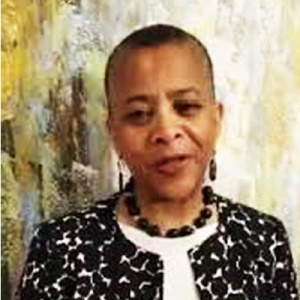
·      – Dr. Michelle Ferrier, Executive Director of Media Innovation Collaboratory / Founder, Trollbusters

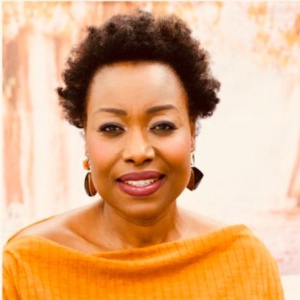
·      – Jane Tilman Irving, President, New York Press Club

·      – Frieda Werden, Women’s International News Gathering Service (WINGS)

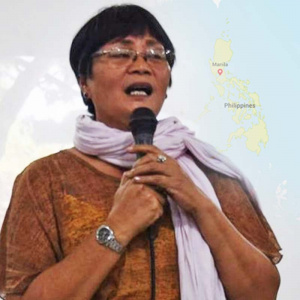
·      – Margarita Valle, veteran journalist and Vice President of IAWRT Philippines

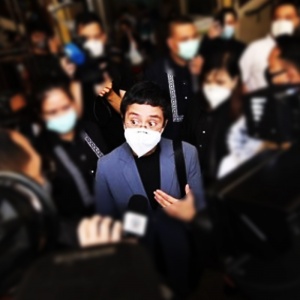
·      – Ronalyn V. Olea, Managing Editor, Bulatlat

·      – Randy Credico, Comedian/Activist/Radio/TV


Watch the discussion here:


0720 samina

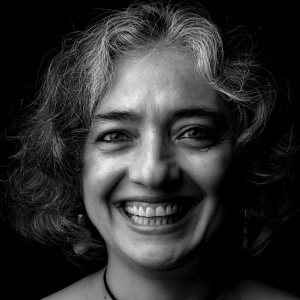
Samina Mishra is the new IAWRT India chapter head


Amid the ongoing COVID-19 pandemic and varying quarantine protocols in various countries have implemented, IAWRT’s chapter in India has found a way to pursue their chapter elections.

The elections were well-participated, with 51 of 59 eligible members who voted.


Nine were elected in the Board of Trustees. They have, in turn, elected their office bearers:

Samina Mishra – Managing Trustee

Shikha Jhingan – Secretary

Subasri Krishnan – Treasurer


Other Board members are:

Aparna Sanyal (outgoing Secretary)

Deepika Sharma (outgoing Treasurer)

Nina Sabnani

Padmaja Shaw

Paromita Vohra

Priya Thuvassery


Samina, as managing trustee, is the new chapter head. She is a documentary filmmaker, writer and teacher based in New Delhi, with a special interest in media for and about children. She has been an extremely valuable co-board member in the last Board. She was also part of the organising team of the IAWRT Biennial that was held in India in 2015. Samina has also represented the India chapter at the 2014 IAWRT conference in Nicaragua. 


0718 kumustahan fi

Women’s effort to check on one another amid the quarantine and pandemic


by Margarita Valle


Dubbed as “Kumustahan sa Hulyo” (Meet and Greet in July), 21 members of the IAWRT Philippines came together on July 11, 2020 via an online meeting.


 It was an effort to keep abreast of each member’s conditions as the COVID-19 pandemic continues to ravage through the country and the rest of the world.


 Among the matters taken up included a report given by IAWRT Philippines president Lynda Garcia, who appraised the members with the activities undertaken by the organization since the last general assembly on November 7, 2019.


Garcia likewise shared the rest of the activities undertaken by the chapter’s Executive Board that included meeting funding partners and discussed potential projects for IAWRT Philippines.


A brief break during the discussion was spent for “Mindful Breathing” presentation that shared tips on how to ease one’s stress amid this pandemic and the growing unease among women journalist facing the growing political and social tension as of late.


The passing of Anti-Terrorism Law and the non-approval of the renewal of the ABS-CBN franchise, the biggest broadcast network in the country, have been major issues that shook Filipino journalists and the Filipino people during the COVID-19 pandemic lockdown.


The meeting ended with plans of moving forward despite the restrictions due to the pandemic and quarantine, while each one makes a mental note on keeping tab of each other as we continue to fight together to help each other protect our common interest to protect our rights as human beings and as journalists.


0711 FWMAP FI

Side event to the High Level Political Form

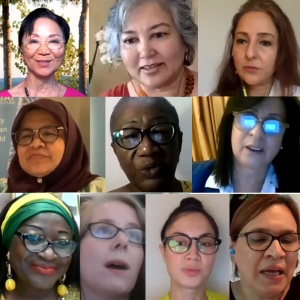
On 9 July, the Feminist and Women’s Movement Action Plan (fwMAP) with co-sponsors Center for Women’s Global Leadership (CWGL), NGO CSW/NY and WEDO held a webinar with the title “Imagine a Post-COVID-19 City with Women’s Human Rights.”

The theme was “Accelerated Action and Transformative Pathways Realizing the Decade of Action and Delivery for Sustainable Development.” The panel challenged listeners to “imagine how to build resilience to address crisis, make sure womenis leadership is in plance and puts feminist and women’s movements’ aspirations into local action.” 


UN Representative for the International Alliance of Women Soon-Young Yoon and CWGL Executive Director Krishanti Dharmaraj served as moderators.

“Post-COVID will come and the question is can we rebuild ecosystems that will sustain human health and livelihoods starting bottom up, remembering by 2050 or so, more than 75% of humanity is expected to live in cities,” said Soon-Young Yoon.

Maimunah Mohd Sharif (interviewed by Rick Smith), Khara Jabola-Carolus, Bridget Burns, Patricia Cortes, Vera Baboun, Clara Mavogo, Celestine K Courtes, and Melissa Upreti were the panelists.

More than 700 participants registered for the event who were able to participate in polling. The first such poll the participants “What is your priority to seize the moment for a feminist recovery plan for cities?” The choices were Universal health care or coverage, Ensure social protection for all and Climate justice. The results were 22% for Universal health coverage, 12% chose Climate justice and 67% in the meeting chose Ensure social protection for all.

Those who were unable to enter the Zoom room watched via Youtube. Aside from the US, participants in the meeting came from Canada, Trinidad and Tobago, Nigeria, Brazil, Georgia, Philippines and other countries.

“Women know what the problems are. Women know what the solutions are. Where we are lagging behind, where the greatest challenge is, we don’t have the level of institutional power in all scales that we need to make the transformation. We have made progress over the years. The question is not what the change needs to be, but it is how,” said Melissa Upreti, Vice Chair, UN Working Group on Discrimination Against Women and Girls, a Special Procedure of the Human Rights Council.

Watch the recording of the meeting here:


0713 dubravka

Exacerbation of gender-based violence against women journalists through digital technologies highlighted

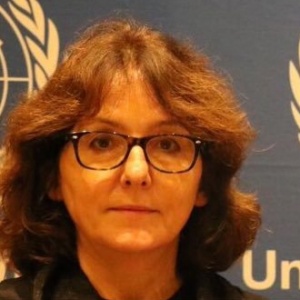
On July 8, 2020, the Special Rapporteur on violence against women Dubravka Šimonović, published her yearly report on combating violence against women journalists (VAWJ) at the 44th session of the UN Human Rights Council.

The new report “highlights issues such as the exacerbation of gender-based violence against women journalists through digital technologies, the specific types of threats and sexual violence faced by female media workers, intersectional discrimination, harassment in the workplace, as well as the stereotyped roles and sexualized images into which women journalists are often expected to fit.”

The Special Rapporteur recalled that 70 female journalists have been killed in the last decade, according to the UNESCO observatory of killed journalists.

“Women journalists have become increasingly targeted as visible and outspoken representatives of women’s rights,” Šimonović said in a UN Special Procedures news release.

“Much remains to be done, particularly in view of the emerging fundamentalist discourse and the global backlash against women’s rights,” she added.

Šimonović recommended that the UN Plan of Action on the Safety of Journalists and the Issue of Impunity be furthered through a UN system-wide coordinated approach to combatting and preventing violence against women journalists, involving the Special Rapporteurs on violence against women and on freedom of expression, and the Platform of United Nations and regional independent expert mechanisms on ending discrimination and violence against women.

She also recommended the development of training programmes for police, prosecutors and judges who are responsible for fulfilling State obligations concerning the protection of the rights of women journalists and other media actors.

Finally, she called on States to include a gender perspective in all initiatives aimed at creating and maintaining a safe and favourable environment for free and independent journalism.


0711 pamela

Eat Drink and Be Healthy.

Virtual sessions geared towards living your best life during COVID-19.

Get fit, stay in shape, meditate, eat great, enjoy your favorite oldies but goodies, and performances by award-winning musical artists, all in the comfort of your own home. This is what ‘Living Your Best Life…Virtually!’ is trying to offer amid the COVID-19 pandemic and varying lockdowns and quarantine protocols in areas around the globe.

Rutgers University’s Office of University—Community Partnership’s Advocates for Healthy Living and their Greater Newark Community Partners will hold five weeks of virtual sessions “geared towards living your best life during COVID-19.”

Virtual sessions will be held every Monday, Wednesday and Friday from 6 July to 7 August, 2020. Session times may vary.

IAWRT USA member Pamela Morgan is the Moderator of the Monday session. Mondays are for ‘Meditation, Motivation and Music’ that feature guided meditation, motivational/inspirational talk and music therapy.  

Wednesday sessions are on ‘Wellness Workshops’, while Fridays are for ‘Fun, Fitness, Food.’

Pamela Morgan is also the Executive Director of Women in Media-Newark that holds its annual Women’s History Month Film Festival. The 2020 edition of the festival “We Do What We Do Because…” was postponed due to the COVID-19 pandemic.

For more information, please visit https://oucp.newark.rutgers.edu/AHLI-2020/


0630 vgonda fi

IAWRT President Violet Gonda joins important disccusions in her home country of ZImbabwe

IAWRT President Violet Gonda has been sharing her time and expertise, mainly as moderator, in key webinars during the COVID-19 pandemic and varying lockdowns in the world, especially to important discussions in her home country Zimbabwe.

The southern African country is facing a multi-layered crisis including massive corruption, gross human rights abuses, economic collapse, political challenges, food insecurity and a collapsing health delivery system in the times of COVID-19. Gonda, who is a freelance journalist based in the United Kingdom, is also collaborating with various pressure groups back home using virtual media platforms to help find a solution to the unfolding events in her country.
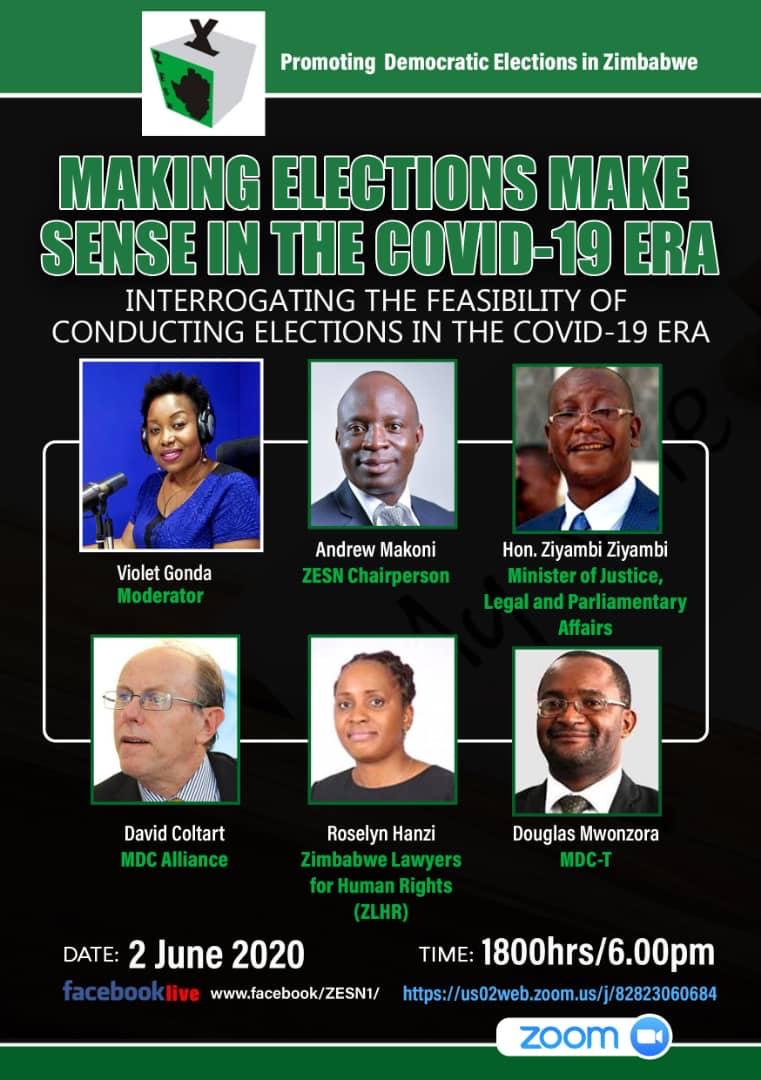
Among her efforts was a webinar by Zimbabwe Elections Support Network on the topic ‘Interrogating the Possibility of Conducting Elections in the COVID-19 Era’ was held on June 2.

‘Politics and Beyond: The Implications of the Mozambique Security Crisis for Zimbabwe was held on June 5 with Gonda as moderator.

On June 11, Gonda served as moderator for Sapes Trust Policy Dialogue Forum on the topic ‘Zimbabwe’s Deepening Crisis – what we have to do NOW!’ The discussions also tackled the proposals for all stakeholders talks and the establishment of a National Transitional Authority in Zimbabwe. The IAWRT President explained that her country has, over the last few months, witnessed an increasingly deepening crisis with growing political violence including arrests of journalists, abductions torture of opponents, intimidation of human rights lawyers, and coercion by the government. This has resulted in neighbouring South Africa sending envoys, and the African Union and the International Community issuing statements of concern. The panelists were representatives from civil society sectors. Watch the forum here.

Gonda said the new government under President Emmerson Mnangagwa has failed to show that it’s different from the Mugabe regime and there is little evidence to show that this so-called ‘new dispensation’ has the capacity or the will to deal with the escalating range of crisis issues being faced. 

She added: “These Policy Dialogue public meetings are addressing not only of what needs to be done, but how it should be done to move the the country forward.”

What will it take to reach a Settlement in Zimbabwe?: Watch the livestream of the discussion here.

On June 16, Gonda served as moderator for Zimbabwe Election Support Network’s meeting on the topic ‘Contextualizing the Implications of Constitutional Amendment Bill No.2 on Zimbabwe’s Electoral Democracy. Panelists included gender experts, a Constitutional Law expert, a youth expert and the Committee Chairperson on Justice, Parliamentary and Legal Affairs.

On June 25, Gonda again served as moderator for Sapes Trust Policy Dialogue Forum on ‘Harnessing Zimbabwe’s Diaspora Towards the National Settlement.’ Watch the livestream of the discussion here:


She has also partnered with her country’s leading elections monitoring group the Zimbabwe Elections Support Network in a programme called ‘Making Elections Make Sense’ discussing the feasibility of holding elections amid concerns of protecting public health and the right to vote in the COVID-19 pandemic era.  The discussions also help contextualise the implications of various sections of the  Constitution on Zimbabwe’s electoral democracy.

The Zoom debates, which are streamed on Facebook and Youtube, have also been focusing on other key areas such as regional security in southern Africa where insurgents have unleashed a reign of terror in Cabo Delgado and the situation in Mozambique is now spiralling out of control. ‘Politics and Beyond: The Implications of the Mozambique Security Crisis for Zimbabwe and the region. Watch the livestream of the discussion here:


Gonda hails from Mutare, Manicaland, Zimbabwe. Zimbabwean journalist Violet Gonda who has been in exile from Zimbabwe for the last 20 years, after she was barred from returning to her home country during former Zimbabwean President Robert Mugabe’s rule. She has been based in the UK and spent the time during the COVID-19 pandemic in the country.


See other discussions below on Zimbabwe and one on South Africa:

SAPES Trust Policy Dialogue Forums:

1. What will it take to reach a Settlement in Zimbabwe?: Watch the livestream of the discussion here.

2. South Africa’s Policy Towards Zimbabwe. A case of the tail wagging the dog, sheer incapacity, indifference or harvesting on a neighbour’s economic woes?: Watch the livestream of the discussion here.

3. Towards Constitutionalism & the Return of the Military to the Barracks: Watch the livestream of the discussion here.


ZESN public meetings:

1. Regulations of political parties in Zimbabwe. Watch the discussion here.

2. The Implications of Constitutional Amendment Bill No2 on Zimbabwe’s Electoral Democracy: Watch the livestream of the discussion here.

3. Interrogating the feasibility of conducting elections in the Covid-19 era: Watch the livestream of the discussion here.

0618 iawrt elena fi

Elena “Lina” Tijamo was forcibly taken from her home in Bantayan, Cebu in the Philippines in the evening of June 13.

by Sarah De Leon

Elena, 58, is the program coordinator for sustainable agriculture FARDEC,  non-profit, non-government organization that offers paralegal and educational services to farmers facing land issues. She is also the Community Radio Coordinator of FARDEC in Bantayan Island, Cebu. It has a radio program, Radyo Sugbuanon in partnership with the International Association of Women in Radio and Television (IAWRT) Philippines.

Suspected military elements—four armed masked men in civilian clothes accompanied by two women—held back family members while they covered Tijamo’s mouth with tape, tied her hands, and took her away. Elena remains missing after more than four days.

Elena’s sister Violeta Tijamo reported the incident at the police station.

Based on Violeta’s account, around 8:00pm after dinner of 13 June, 2020, all six members of the Tijamo household retired to their rooms to rest, except Elena who remained at the dinner table to work. Violeta went out of her room due to dogs barking and a commotion coming from outside. She saw two women toting pistols inside the house by the kitchen door holding Elena whose hands were tied behind her back and her mouth plastered by masking tape. An armed man was positioned in the front door at the sala, while another three armed men were positioned in the kitchen.

Violeta asked the men in Cebuano, “What are you going to do with my sister when she commited no offense?”

They heard one of the male perpetrators replied, “Her husband committed a major offense” and another was overheard saying “This house does not recognize a government.”

Elena and Violeta’s elderly parents, who were with them in the house that time and who are both deaf, was unaware of the incident when it happened.

FARDEC relayed that from the night Elena was taken, her family members received text messages instructing them not to contact the authorities and Elena would be able to go home later.

The following day, they received calls where they were able to speak to Elena who told them that she will be released if social media posts such as the one by Karapatan Central Visayas and news reports of her abduction such as the one by Rappler would be taken down.

Last May 24, Elena reported to the human rights group that a man claiming to conduct a survey for elderly beneficiaries of COVID-19 assistance visited her home but asked about her personal details instead. She later found out that the barangay had no knowledge of a survey.

The government returned Cebu to the ‘enhanced community quarantine’ protocol, also known as total lockdown, from June 16 and this has hampered the family and FARDEC’s search for Elena.

The incident happened while the much-protested “Anti-Terrorism Bill” in the Philippines is in the process of becoming law. The said bill was transmitted to President Rodrigo Duterte by Philippine Congress on June 9 and the Office of the President said it is undergoing review but Duterte is “inclined” to sign it.

The bill, fast-tracked from May 29 and approved in Congress three sessions later, was condemned by all quarters of Philippine society—media, schools, lawyers, church, business, celebrities, etc. for the broad definition of terrorism that may be used against critics. It also features an Anti-Terrorism Council made up of presidential appointees in the Cabinet who will have powers similar that to a trial court and a judge, such as designating terrorist tags and approving warrantless arrests. The bill also prescribes 14 to 24 days of warrantless arrest and detention that many found to be violative of the Philippine Constitution that allows only up to three days even during martial law when the writ of habeas corpus is suspended.

0615 iawrt maria ressa

Guilty verdict handed down on Monday morning, June 15

The International Association of Women in Radio and Television (IAWRT), its more than 400 members and 14 country chapters, stands with Maria Ressa, Reynaldo santos, Jr., Rappler and Filipino journalists who in a few weeks’ time saw the shutdown of ABS-CBN, the railroading of the “terror bill” and a cyber libel conviction.

The journalism world was watching and awaiting the verdict to be handed down on the case against Rappler Executive Editor Maria Ressa and former researcher-writer Reynaldo Santos, Jr. on the morning of June 15. The cyber libel guilty verdict carried the penalties of six months to six years of imprisonment, P200,000 in moral damages and P200,000 in exemplary damages. They will appeal the decision and were allowed to post bail. IAWRT is horrified and hurt by this latest blow to press freedom.

Today’s verdict sets a dangerous precedent not only for journalists but also for every Filipino online. The one-year prescription period of libel is extended to 12 years in cyber libel. The “theory of continuous publication” makes it possible for all online articles or posts to be evaluated for violations of the country’s Cybercrime Prevention Act of 2012 (also known as the cybercrime law). Journalists and the Filipino people fought the passage of the law that included stiffer criminal penalties for cyber libel than the current libel on print and included also posts online on Facebook, Twitter or other platforms.

The odds are against journalists and press freedom. But journalists and media workers must fight back.

Journalists and media workers would be hard put to practice responsible journalism and to serve the public’s right to information amid impunity and tyranny. Journalists, media workers and the public must all heed the call to defend press freedom anywhere we are in the world.

#DefendPressFreedom

#HoldtheLine

0609 iawrt on usa protests image

Women journalists are among those attacked or arrested while doing their job


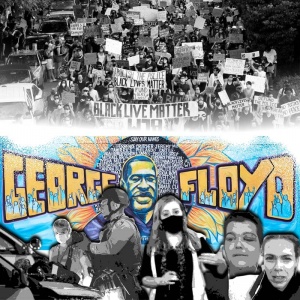
The International Association of Women in Radio and Television (IAWRT) strongly condemns the targeting of journalists covering protests over George Floyd’s death in the United States of America (USA) and in other countries. Journalists, who are at the very core of democracy, are not only being prevented from reporting the happenings on the ground but are also being threatened, attacked, shot at with rubber bullets, sprayed with pepper spray and arrested.

IAWRT, an alliance of women in media, finds unacceptable the intentional attacks on fellow journalists. To name a few:

Linda Tirado, a freelance photographer, activist and author was shot in the left eye on May 29 while covering the street protests in Minneapolis. Doctors told her that she is not likely to recover her vision in that eye.

Nina Svanberg, a Swedish foreign correspondent in the US, was struck in the leg by several rubber bullets.

Susan Ormiston, a Canadian Broadcasting Corporation journalist, was hit with a gas canister while covering the protests in the city.

Kaitlyn Rust and her team from WAVE 3 News, a local TV station in Kentucky, were struck with pepper balls by police while reporting live on air, despite following police instructions and staying behind police lines.

Ellen Schmidt and Bridget Bennett, reporting for Review-Journal were arrested at the Strip in Las Vegas, and released a day later only after having to post a $1,000 cash bond each.

The list is long and spares no media; radio, television, print or social media. Despite ensuring they are identifiable as journalists doing their job, over 100 media persons have been attacked.  These targeted attacks are appalling and are an attempt to stifle the press.

IAWRT President Violet Gonda said: “These are worrying targeted attacks on journalists covering the protests in the USA. Media organisations should be allowed to document and inform the public during these uncertain times without fear or favour.”

She emphasised the need to protect journalists and ensure their safety as they cannot be caught between fire from both ends – the protestors and the police.

Journalists have protection under the First Amendment of the US Constitution covering free speech. Where it gets blurred is that the right to freedom of the press is not different from the right to freedom of speech. Suffice it to say the media is not provided any special rights or privileges that are different from those of other citizens.

The current US administration has created an environment hostile to journalists. Calling the work of various journalists and media organizations ‘Fake News’ and then overwhelming the media with misinformation, has created an uncertain environment that cannot recognize legitimate journalists at the protest marches, even though they are well identified. This results in the lack of respect for journalists. The cornerstone of a robust democracy is a well-informed electorate, which seems impossible in this culture of hostility against the news media.

IAWRT expresses solidarity with our fellow journalists at this critical juncture, where the world is fighting not only a pandemic that has claimed so many lives, but also racial tensions, violence against minorities, and oppressive measures against people during lockdowns and ushering the “new normal.”