0922 iawrt ph statement fi

A call to stop the attacks against media

IAWRT Philippines Chapter shares a statement on the state of press freedom and situation of women journalists 48 years after the declaration of Martial law (that effectively lasted for 14 years) in the country


We view with deepening concern the state of press freedom in our country.

Media died on September 23, 1972, the day President Marcos aired a declaration of Martial Law [SG1] throughout the nation. (The deed already done, Proclamation 1081 was signed on September 21, 1972.) Except for a crony press, all media were shut down and hundreds of journalists tagged as “subversives” were thrown into prison caused by the suspension of the writ of habeas corpus during that period.

Fast forward to today, almost forty-eight years later, and amid the pandemic, the dark times of Philippine history are repeating itself. The use of draconian or militarist measures to muzzle freedom of expression in the country, the recent signing of the Anti-Terror Law and its chilling effect on media are no stranger to Filipinos, especially those who have experienced the horrors of Martial Law in 1972.

There is no let-up in maliciously tagging critical media as “terrorist” or supporting terrorism. Even before this, summary extrajudicial killings have hit journalists hard. 

Fourteen journalists have already been killed. Many more are red-tagged, harassed, and put under surveillance. Even the National Union of Journalists in the Philippines (NUJP) has been called a “communist front.” A renewal of the franchise of media giant ABS-CBN was turned down and thousands of employees lost their jobs. Rappler and Philippine Daily Inquirer have been slapped with charges of libel and tax evasion. Alternative media outfits like Bulatlat, Kodao, Pinoy Weekly, AlterMidya and Northern Dispatch have been cyberattacked.

Our women colleagues in media have not been spared. The prevailing misogyny enabled by leaders in the country, put the women in media in the line of fire.

IAWRT Philippines’ very own members, Frenchie Mae Cumpio and Elena Tijamo, were targets of attacks. For exposing military abuses against farmers in their region, Frenchie of Radyo Tacloban was arrested and charged with illegal possession of firearms. Elena of Radyo Sugbuanon was abducted by suspected military agents in her home and is still missing up to this day.

Other names, and mostly community journalists, that were either arrested, harassed or subjected to fabricated charges included Anne Krueger of Pahimutad, Kim Quitasol of Nordis, Gie Herrera of Radyo Natin-Guimba, and Chinkay Porquia of Radyo Sugidanon.

The Anti-Terror Law is a threat to democracy and must be scrapped. The Constitution of the Philippines has been explicit that no law shall be passed abridging the human rights of every Filipino including their freedom of expression

The escalation of human rights violations, including the muzzling of the press, has no place in our society especially in this time of the pandemic. So many dreadful things are happening in the country today such as increasing state violence and the plunder of public funds that only a free press can uncover and keep our people duly informed.

In this light, we call on our members to up their vigilance, call on the government to stop the attacks against journalists and other persons, and release all political prisoners, including journalists. No matter the obstacles, we must continue to keep the fire of press freedom burning in our hearts and soul. Never again shall we allow the abuses that happened during Martial Law happen. Never shall we forget.


===
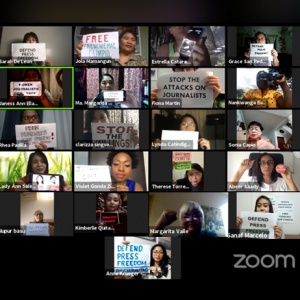
IAWRT Philippines Chapter held an online protest and solidarity gathering for Ph journalists, IAWRT members who were jailed, charged, harassed or missing on September 19.


0719 iawrt ph webinar for website fi

IAWRT Philippines holds online protest and solidarity gathering for Ph journalists, IAWRT Ph members who were jailed, charged, harassed or missing

The online protest is on Sep 19, 2020 05:00 PM in Manila

by Lady Ann Salem


IAWRT Philippines is holding an online protest to call attention on the cases of Philippine women journalists, also IAWRT members, who were either jailed, charged, harassed or missing. Some of them will share their situation in the protest.


Among the speakers is Krisma Nina Porquia, community broadcaster for Radyo Sugidanon. She was arrested, detained and charged while covering a peaceful protest on May 1 condemning the killing of Jory Porquia, her father, a well-known activist, environmentalist and relief volunteer in Iloilo City. She was released, along with other journalists who were also arrested. All the protesters were arrested and also released after posting bail.

Human rights group Karapatan Cebu will speak on the community radio broadcaster Elena Tijamo who continues to be missing to this day.  Elena “Lina” Tijamo, 58, was forcibly taken from her home in Barangay Kampingganon, Bantayan, Cebu in the evening of June 13. Suspected Armed Forces of the Philippines (AFP) elements—four armed masked men in civilian clothes accompanied by two women—held back family members while they covered Tijamo’s mouth with tape, tied her hands, and took her away. The lockdown in the country, specifically the extension/re-imposition of the lockdown in Cebu, prevented her family and groups to be able to look for her right away. Tijamo was able to make calls to her family only to tell them to take down posts about her abduction or else her captors said they would not release her.

Kim Quitasol, journalist of Baguio-based community paper NORDIS, and Gie Herrera, station manager of Radyo Natin Guimba, would share the origins and updates of separate libel cases filed against their media outfits during the pandemic and lockdown in the country.

Anne Krueger, a community journalist from Bacolod-based publication Panghimutad, was arrested along with 60 others in simultaneous office raids on progressive groups and independent media offices that police said yielded guns and explosives on October 31, 2019. Human rights groups and counsels for accused said the evidence were planted. Krueger was detained and charged and was only released after posting bail.

Counsel for Frenchie Mae Cumpio, executive director of Tacloban-based community publication Eastern Vista, is sought to share updates on Cumpio’s case. Cumpio was arrested on February this year, in a similar fashion as Krueger – a search warrant for their office served in a raid conducted in the wee hours of the day and the raid yielding “planted evidence.” Unlike Krueger, Cumpio was not allowed to post bail and continues to be incarcerated to this day.

Veteran journalist Luz Rimban will discuss the state of press freedom in the Philippines.

 Rhea Padilla will share a message from Altermidya, the network of alternative media outfits in the Philippines.

IAWRT Philippines chapter President Lynda Garcia said the event is “timely and needed” as harassment against journalists did not abate pre-COVID-19 lockdown up to present.

IAWRT members from different parts of the world will share solidarity messages: IAWRT President Violet Gonda, IAWRT USA President Sheila Dallas-Katzman, IAWRT Uganda President Eunice Kasirye, IAWRT Nepal President Montessori Rajbhandari and former IAWRT India Managing Trustee Nupur Basu.

To join, you may register here:

https://us02web.zoom.us/meeting/register/tZYldOivrT4jHNM-0B7oaFKJnIGolsN0ucKb

0912 shaheena fi

Statement and report from the Coalition for Women in Journalism

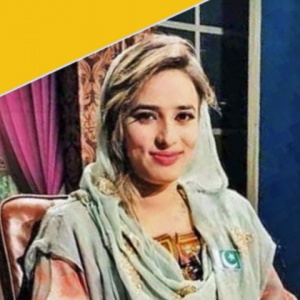
Shaheena Shaheen Baloch, a journalist with PTV Bolan was brutally murdered in Turbat, Balochistan in Pakistan.

Shaheena was allegedly shot twice to unsurvivable injuries by what the Coalition for Women in Journalism (CFWIJ) has found to be her husband.

Shaheena was the editor of a Balochi Magazine Razgahar (Saheli). She was also an activist and artist who was vocal about human rights and women’s rights issues. Four years ago, Shaheena worked as an anchor and morning show host at PTV Bolan – Pakistan Television Network’s regional service based in Quetta, Balochistan.

The CFWIJ is devastated and furious with this killing of a woman journalist in Pakistan. In the last 10 months, this is the second murder documented by CFWIJ in the country.

“We demand authorities in Pakistan – both Balochistan and the federal government – to swiftly investigate the case and punish Shaheena’s murderer,” said CFWIJ.

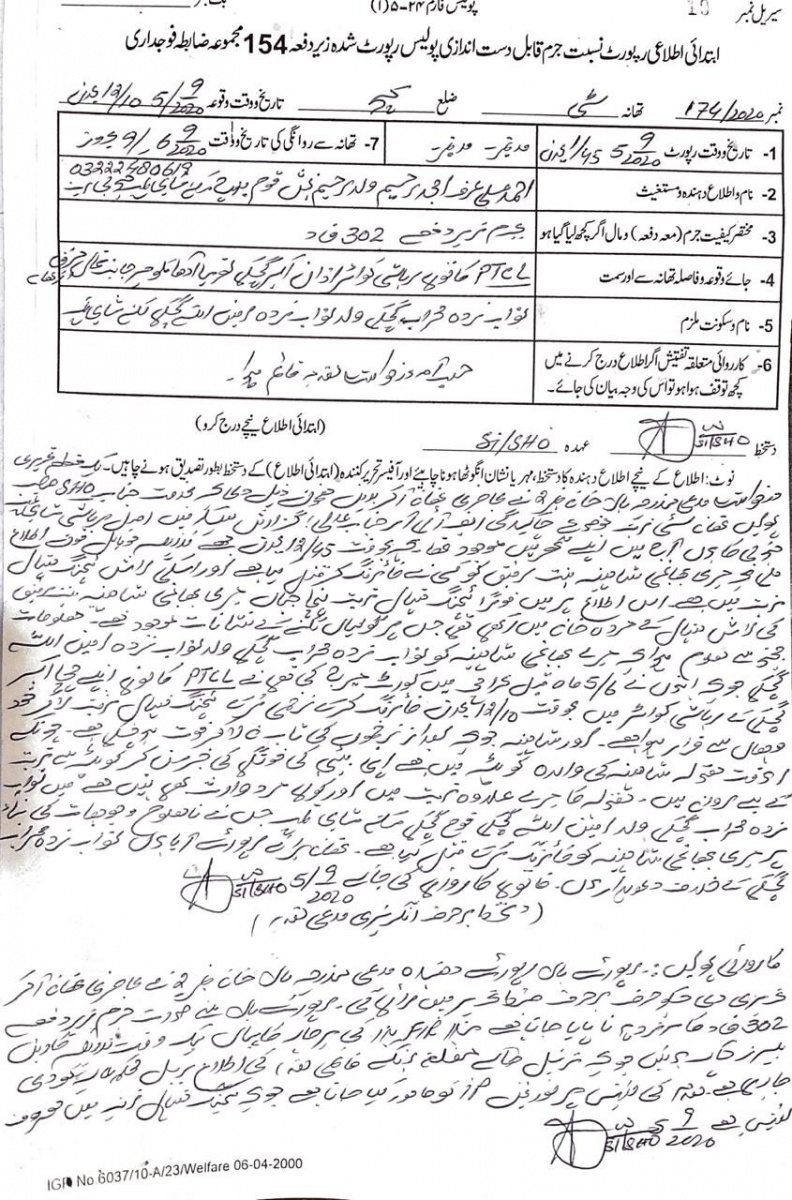
From CFWIJ’s findings, according to a press release issued by Turbat police, Amjad Raheem – Shaheena’s maternal uncle – has filed a first information report (FIR) against Shaheena’s husband Mehrab Ghichki. Reports and FIR suggest that she was brought to the Teaching Hospital in Turbat by her husband, but could not survive the injuries. After killing Shaheena at his uncle’s residence in the PTCL Colony, Mehrab drove her in a car and dropped her at the hospital. He then left the car at the scene and fled. This information was shared by district Keech’s superintendent police Najeeb Panjrani within the press release. The police have alerted all the checkpoints across Turbat to apprehend the culprit.

CFWIJ member Maria Memon, while reporting on this, spoke to SP [superintendent of police] Turbat, who said that Shaheena’s husband killed her. The two had attempted court marriage. While reports suggest it’s a case of honor killing, the police have not confirmed it as such yet, because they are still investigating the murderer’s motive.

Shaheena’s culprit must not be spared at any cost. She actively campaigned for gender equality and women empowerment through her work. While the murder is being linked to honor killing, it sets a dangerous precedent for women journalists working in Balochistan, where press freedom and women’s rights continue to be violated on varied occasions – CFWIJ

“This is a case of unprecedented magnitude. A woman journalist has yet again been murdered in Pakistan. The perpetrator is a man in her life. This has happened in a province where security agencies have great hold yet fail to maintain law and order. The state continues to do nothing about the violations women face in the country. If perpetrators are punished for the violations and murders of women in the country, these violations would stop,” said our founding director Kiran Nazish. “The state of Pakistan has a duty to its female populace and absolutely needs to look into this matter immediately.”

“We pray for Shaheena’s soul. She worked with PTV Bolan four years ago and was currently running her own publication in Turbat,” said Ayyub Babai, the General Manager at PTV Bolan.


Shazia Ahmed, an activist and one of Shaheena’s acquaintances, spoke with CFWIJ on call. She said that Shaheena’s murder has left her devastated.

“The lack of rule of law is the reason why it is so easy for a man to kill his wife and get away with it. We cannot call it honor killing and wrap up the issue. It is very important for the perpetrator to be punished. Women in our part of the world, especially in Balochistan are still not treated as equals. They are only respected if they stay at home or only step out for domestic chores. The minute a woman attempts to work as a professional, questions are raised and she is immediately labelled,” she said.

Shazia recalled mentoring Shaheena during a journalism training back in 2013. This was the first time she had met her. Shazia added that Shaheena was a talented journalist and an artist. She used her journalistic voice and  artistic skills to advocate for the rights of Baloch women.

“Shaheena was an inspiration for women and young girls in Balochistan. She was the editor-in-chief of a publication which shed light on crucial issues related to women rights in our society. This proved how passionate she was to work for the betterment of Baloch women. Her artwork also depicted their struggles. Balochistan already has very few female artists, but the way Shaheena portrayed the issues women in our province faced was something I have never seen anyone else attempt. The void left after Shaheena’s murder, both in journalism and art, can never be filled,” Shazia said.

CFWIJ demands authorities in Balochistan to find Shaheena’s murderer and punish him for the heinous crime he has committed. The murderer should not be allowed to get away with the crime at any cost.


0906 globay day of action

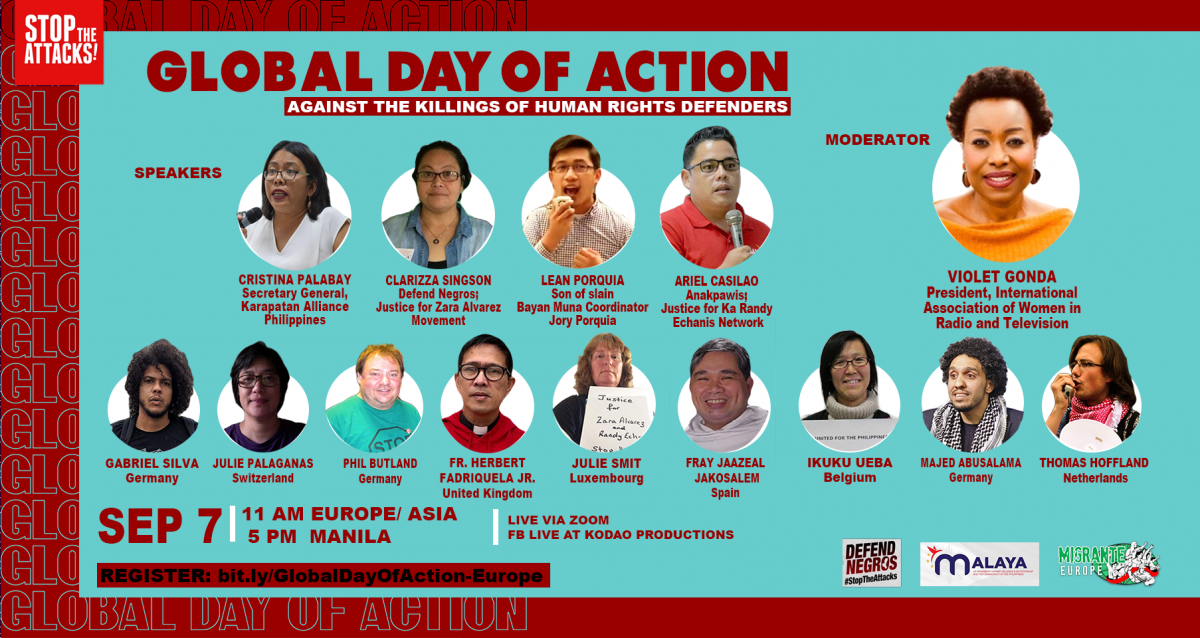
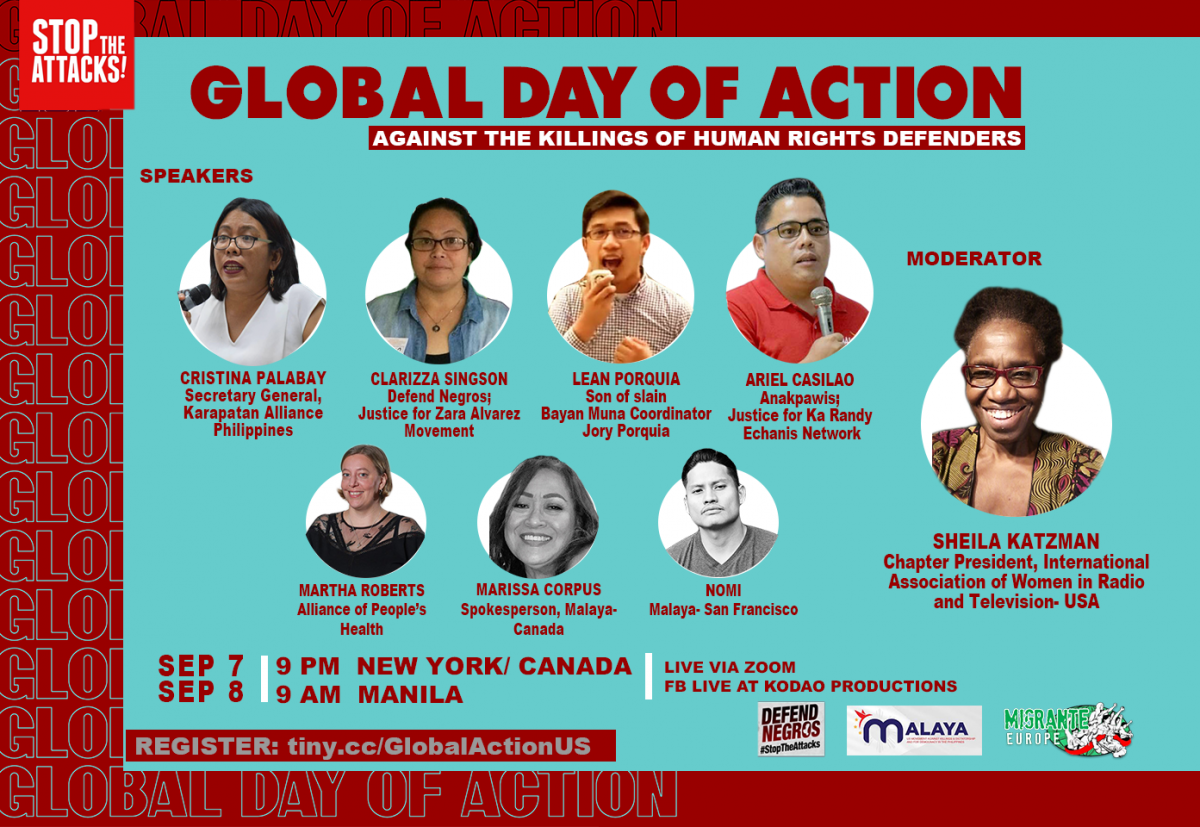
Malaya Movement and Defend Negros spearhead the Global Day of Action Against the Killings of Human Rights Defenders.

Europe event moderated by IAWRT President Violet Gonda and US-Canada event moderated by IAWRT USA chapter President Sheila Dallas-Katzman.

The Global Day of Action Against the Killings of Human Rights Defenders is in response to the series of killings of activists and human rights defenders in the Philippines since the Anti-Terrorism Law took effect.

The meeting will be joined by partners from the frontlines in the Philippines who will speak about Zara Alvarez, Randall Echanis, Jory Porquia and others who were recently killed, as well as discuss the overall human rights situation in the Philippines.


Advocates from Europe will join the online gathering is on September 7, 2020 11:00 AM in Amsterdam, Berlin, Rome, Stockholm, Vienna. IAWRT President Violet Gonda will be the moderator for said event.


The gathering for advocates from US and Canada will be held on Sep 7, 2020 09:00 PM in Eastern Time (US and Canada). IAWRT USA President Sheila Dallas-Katzman will be the moderator for the said event.


0828 afghan women letter fi

Women in Afghanistan have been urging for an end to the war since it began about four decades ago.

by Najiba Ayubi

Over decades, the issues of women in Afghanistan have constantly been the subject of brawl and controversy. In the past hundred years, the socio-political movement and the participation of Afghan women have mediated to been slow but steady; however, if we leave out the five years of the Taliban-ruled administration, during which, the Afghan women were deprived of their social and political rights, access to education and jobs, and their participation in the social and political arenas was invisible.


The last two decades were remarkable and productive for Afghan women. During this period, Afghan women were able to shine in all aspects of life and to heavily contribute in the rebuilding of their war-torn country. They have succeeded to actively participate in the social, political and economic sectors and have gained substantial achievements within and outside the government administrative structures.


Despite the ongoing war, conflict and insecurity, Afghans, particularly Afghan women have espoused difficulties and have gone through severe hardships and unjust walking through blood and fire, they have made their ways to the peaks of empowerment and progress, and now, only few workplaces can be found without women’s presence.


The Afghan nation is tired and exhausted of the unending forty-year war in the country. Enduring four decades of war, Afghans need peace and security more than ever. The injuries of the war-torn nation need to be healed, and a peaceful life is an unalienable right of the Afghan nation. From times onward, warring parties and international partners of the Afghan government have been putting efforts in bringing the longest-running war of the country to an end.


The United States, for instance, signed a peace pact with the Taliban in late February 2020, and earlier in 2012, the Strategic Partnership Agreement with the Afghan government.


Despite the debates at national and international level over bringing the never-ending war of Afghanistan to an end, the stories of war and violence across the country including the capital town of Kabul is heard and witnessed.


People of Afghanistan are less optimistic about peace because they do not see it real and factual. Anywhere in the world, when warring parties decide to go for peace negotiations, the first step they determine is to decrease conflict and hostility and agree upon temporary or permanent ceasefire. In Afghanistan, on the contrary, violence and crimes increase across the cities.


What is considered to be important for the Afghan nation at this stage, is to end the country’s longest conflict and to find a common solution to bring lasting peace with dignity in the form of establishing a state in which everyone can see themselves. But unfortunately, the preliminary signs of a bright and hopeful future are hard to see.


In the current situation when people of Afghanistan are concerned about the high level of uncertainty, women are more concerned about their future and achievements they made in the last two decades. Women in Afghanistan are moving forward through more cohesive and united movements and every day, they try to achieve more cohesion and unity.


Since the intra-Afghan negotiations clutched the headlines, different groups of Afghan women have come up with concepts and ideas which are focused on the needs to support women’s achievements and efforts over the past years. They have shared those concepts with the negotiating team with the ambition that a rational and national solution to achieve the goals and demands of women in the peace process, is essential.


One of women’s major activities in the past week was to write an open detailed letter to the Taliban.


Afghan women, who are now active in almost all social and political spheres, have the right to be sensitive and to maintain their multi-year achievements, wrote in a letter to the Taliban:


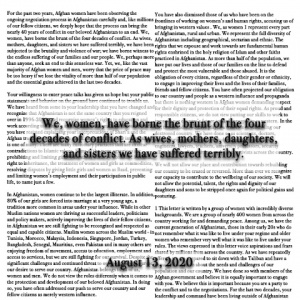
“For the past two years, Afghan women are carefully observing the ongoing peace negotiation process in Afghanistan, like millions of our fellow citizens, we hope that the process can bring the nearly 40 years of conflict in our beloved Afghanistan to an end. We, women, have borne the brunt of the four decades of conflict. As wives, mothers, daughters, and sisters we have suffered terribly, we have been subjected to the brutality and violence of war; we have borne witness to the endless suffering of our families and our people. We, perhaps more than anyone, seek an end to this senseless war. Yet, we, like the vast majority of Afghan women and men, worry that the price of peace may be too heavy if we lose the vitality of more than half of our population and the essential gains achieved over the last two decades.”


Afghan women who have had the bitter experience of being deprived of education during the Taliban regime have voiced their concern in this letter by saying the following:


“In Afghanistan, women continue to be the largest illiterate population. In addition, 80% of our girls are forced into early marriages at a very young age, a tradition more common in areas under your influence. While in other Muslim nations women are thriving as successful leaders, politicians and policy makers, actively improving the lives of their fellow citizens, while, in Afghanistan we are still fighting to be recognized and respected as equal and capable citizens. Muslim women across the Muslim world – in Tunisia, Morocco, Malaysia, Indonesia, Singapore, Jordan, Turkey, Bangladesh, Senegal, Mauritius, even Pakistan and in many others – are enjoying freedom of movement, access to education, employment and access to services, but we are still fighting for our survival.”


A century back, when Queen Suraya established the formal education of women in the country, until now, scores of women, with higher education, have been able to give a different picture of the Afghan women to the country and to the world.  Status of women and their social and political participations have seen a great change, which cannot be ignored.


Considering the developments in the world and in Islamic countries, Afghan women have been trying to carefully maintain their effective presence in any situation in a bid to build a peaceful Afghanistan and to demonstrate their ability to form a peaceful life. In their letter to the Taliban, Afghan women wrote:


“We will not allow our place and contributions towards rebuilding our country to be erased or reversed. More than ever we celebrate our capacity to contribute to the wellbeing of our society. We will not allow the potential, talent, the rights and dignity of our daughters and sons to be stripped once again for political gains and posturing.”


Women in Afghanistan have been urging for an end to the war, conflict and insecurity since the beginning of the war (about four decades ago).


Now that peace process and peace negotiations have hit the headlines, they expect this process and the parties involved to be honest with the people of Afghanistan and not to sacrifice the future of the Afghan people for their political interests. Afghan women call on the warring parties to allow a lasting and dignified peace to be established in the country.

0827 indu ramesh

Indu Ramesh was a longtime IAWRT member, beloved by those who met her and worked with her

The International Association of Women in Radio and Television (IAWRT) extends our sympathies to the loved ones and friends of Indu Ramesh who we have come to know passed away due to COVID-19.

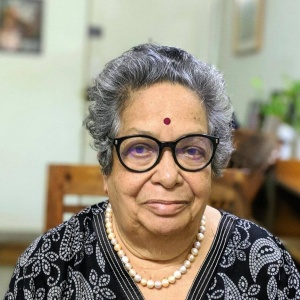
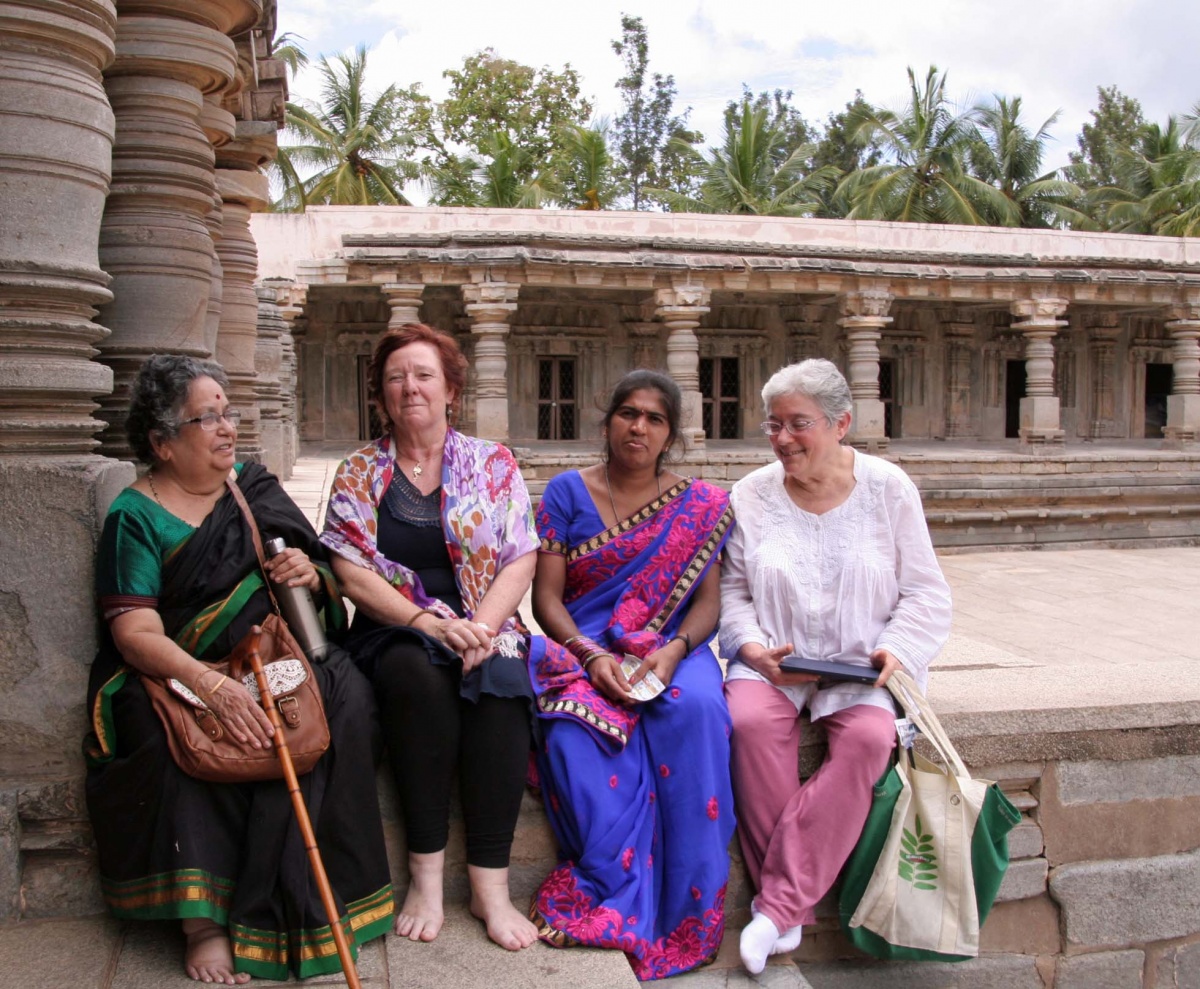
“I am so sad to report that IAWRT member Indu Ramesh has died of COVID-19. in hospital in Bangalore, India. She and I met at the IAWRT conference in Delhi in 1999. She was a retired producer for All-India Radio, an author, and a longtime contributor to WINGS. And a good, close friend. Here is a photo I took of her at her home in 2015. She is talking to her neighbour Smita Ramanathan, whom Indu trained to be an excellent radio producer, too,” shared Frieda Werden, co-founder of WINGS: Women’s International News Gathering Service and IAWRT member from Canada.


Indu was ten years old when the country got Independence. She remembered Independence Day and things that happened before that. After completing her school education in Kannada medium in government schools across small towns all over the princely state of Mysuru, she studied Sociology and English Literature in the Maharaja’s College, Mysuru.


Writing was her passion and her first article was published in a well-known Kannada newspaper when she was just fifteen. She wrote many articles and short stories in Kannada and English.


She worked for more than thirty years with All India radio, retiring as Station Director, Commercial Broadcasting Station (Vividh Bharati), Bengaluru.


Under her directorship, the station won Best Station award twice in a row. Retirement was said to have honed her passion for radio.


She also produced programs for international news agency WINGS. Her radio show for WINGS on tribal women, “Forest Women Dwelling In India won an honourable mention at an international media competition.


Indu was known to be passionate about traditional Indian food and feeding friends and family.
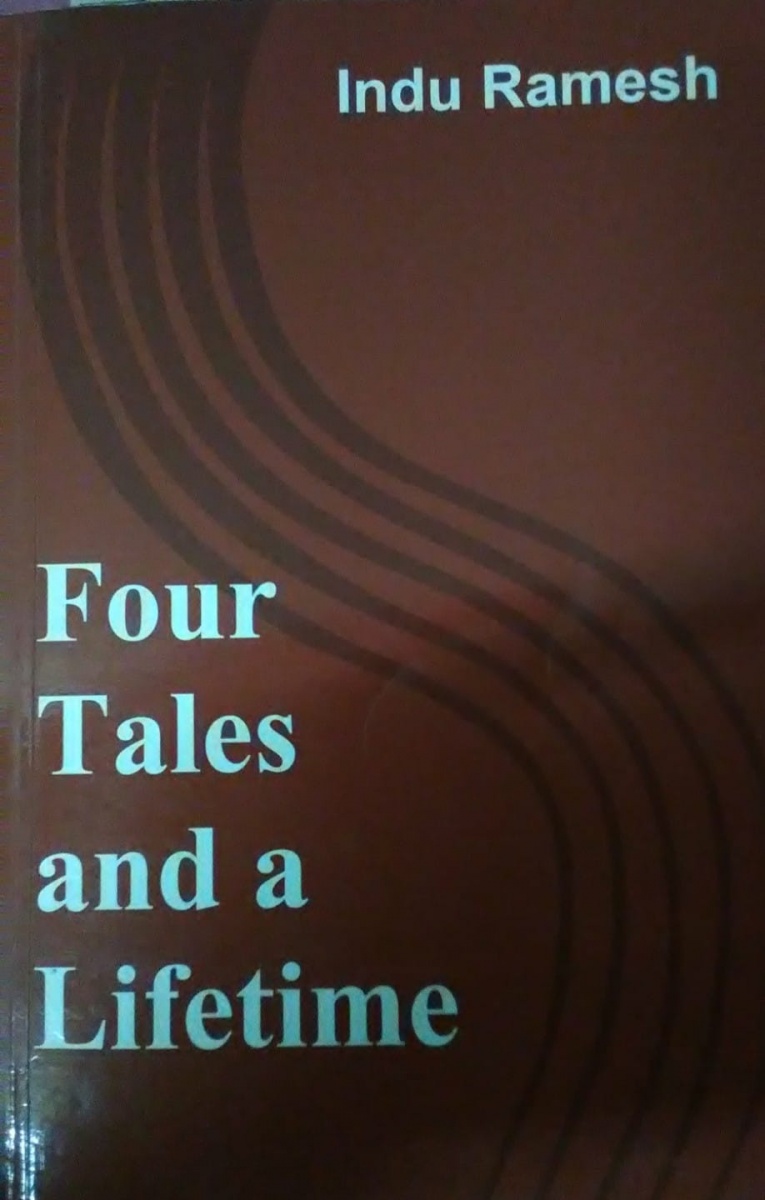
 

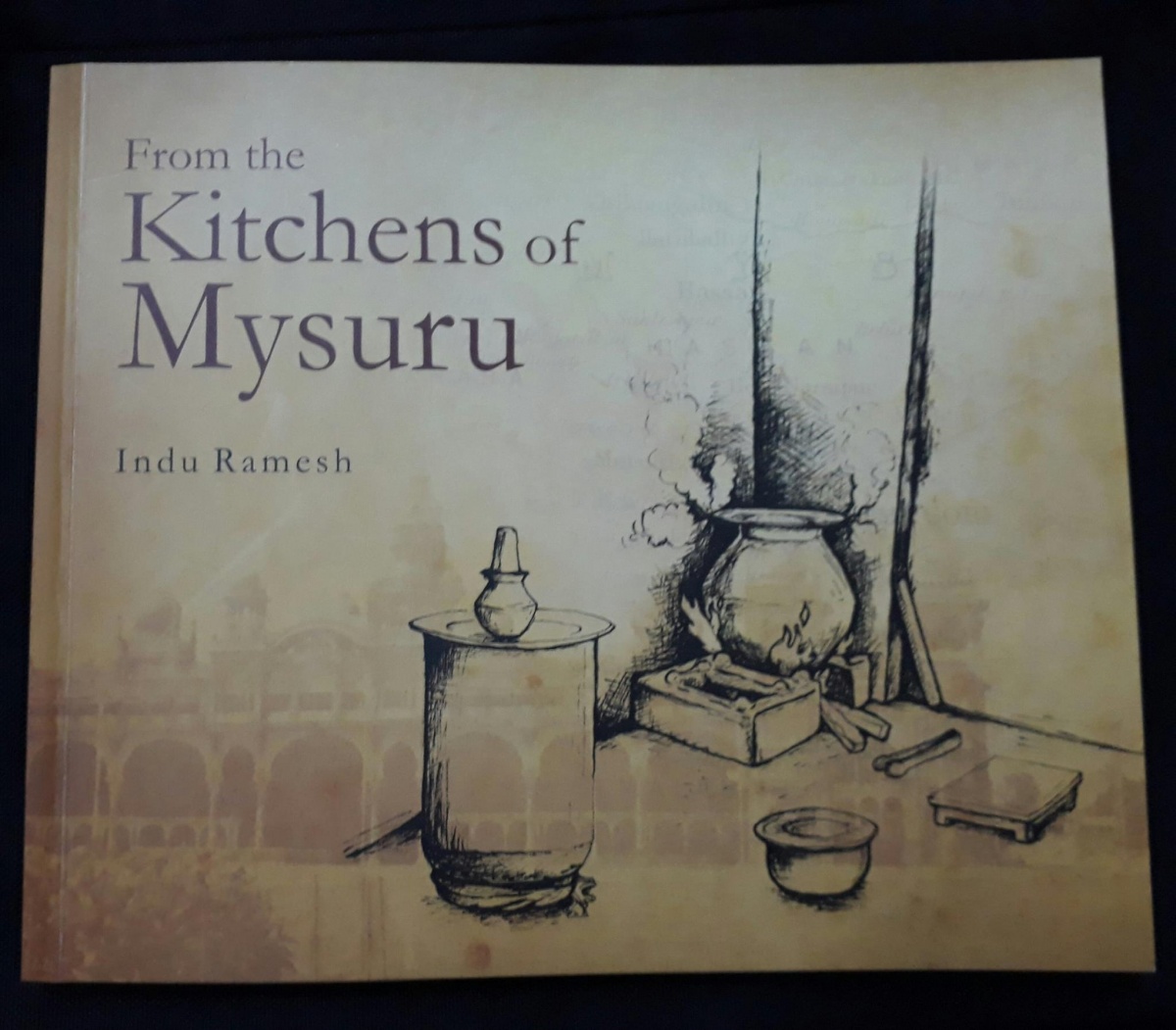
Nonee Walsh, IAWRT member from Australia, shared a book Indu wrote and launched in 2017. Nonee said of the book, “A cookbook for every house, with a lot of stories about our favourite food items and tips to take care while cooking, published by Geetha Book House, Mysuru.”


Indu also wrote a novel in English “Four Tales and A Lifetime.” In this book in Kannada, she wrote about her battle with Guillain Barre Syndrome titled ‘Mrutyorma Amrutangamaya,” and a biography on Lakshmiiji, the founder of Swami Vivekananda Yoga Annsandhana Samsthana.


Indu hosted Nonee and Frieda in Bangalore in 2015 and after Nonee got back home, her book club read the book based on Indu’s life and some of her friends.


In September 2019, the Mitra Tantra Archive of Personal Narratives and Oral Histories published 81 short videos (from 20 seconds to 3 minutes) of Indu where she shared details and stories of her life.


Indu’s family posted this on her death:

“When I die, make sure you post the news on Facebook so that my friends know about it,” she had said. So here it is…Indu Ramesh was grandmother, mother, mother-in-law, wife, sister and a dear dear friend to so many.  Radio person, author of several books, embroiderer, painter and maker of pickles, she was tech-savvy enough to communicate and shop online when she couldn’t go out on her own. She was an extremely good host and loved to feed people. She held strong opinions, and lately, did not hesitate to make them heard!  Most of all, she had a fighting spirit, overcoming challenges that would have flattened a lesser spirit.  Indu Bai Ramesh passed away at 9:54 am on 26th August 2020 after a battle with Covid.  We will miss her.
 

Indu turned 82 in July.

0825 iawrt usa uganda

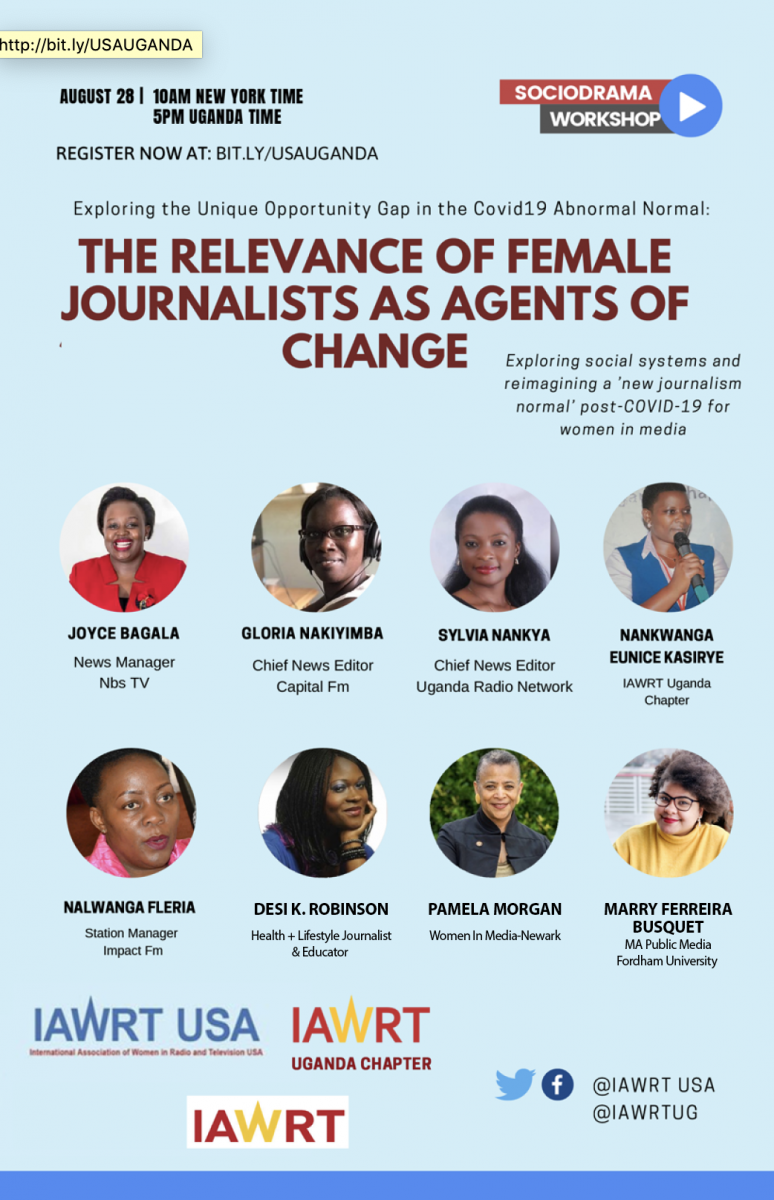
Exploring the Unique Opportunity Gap in the Covid19 Abnormal Normal

IAWRT USA and IAWRT Uganda holds workshop on August 28, 10am ET


COVID-19 is one inevitable challenge that has hit hard globally. Different from other global challenges, the pandemic and its effect has overwhelmed global emergency plans. The media however had to be at the centre of all the panic, the need to provide as much information as possible to educate the public about the strange virus was the obligation of the journalists yet survival was a prerequisite.


Media houses just like other businesses in Uganda for example, panicked between remaining relevant and sustaining the cost of operation. This became so hard for media houses to operate normally in a strange abnormal environment, advertisers shut down, yet the major source of revenues is from advertisements which made it more complicated to sustain even the threshold bills.

The situation prompted sharp and deep costs cutting with the obvious ones relating to staff cut offs. The Newsroom became the immediate target with media houses shifting their dependency on government media centre as the source of news. This resulted into a big number of journalists losing jobs with the female journalists being the most affected since it’s hypothetically believed that women are more expensive to maintain as staff compared to their male counterparts. The traditional media houses cut salaries for the few staff retained, stopped and limited freelancers.

The panic survival has not only disrupted the routine of the media operations but also demand for the re alignment of the survival and relevancy of individual journalists especially the women journalists.

It is therefore important that female journalists get back to the drawing board virtually share experiences on the effect of the COVID-19 to craft new practical avenues of survival as well as relevance in the media industry. It is upon this background that IAWRT Uganda and USA Chapter hosts a socio-drama workshop: Exploring the Unique Opportunity Gap in the Covid19 Abnormal Normal: The Relevance of Female Journalists as Agents of Change.

Register here to join: https://us02web.zoom.us/meeting/register/tZcrcO6pqDgrHNZhWbvZMyQlPL6FY5caotVp


0819 cecilia

Cecilia Mwende Maundu, IAWRT Kenya Secretary General, shares digital safety tips

UN Women features Maundu in article posted on July 21, 2020

Cecilia Mwende Maundu is a broadcast journalist, video editor and filmmaker and also a digital safety trainer and consultant based in Kenya. Read the article featuring her in the UN Women website:

https://www.unwomen.org/en/news/stories/2020/7/take-five-cecilia-mwende-maundu-online-violence


IAWRT published a profile on Maundu in 2018. Read more about her work as a digital safety trainer here:

http://iawrt.peoplesresearch.org/news/preaching-gospel-digital-safety


0730 lifeline toolkit

Lifeline launched its advocacy toolkit

A practical resource that emphasizes that advocacy is possible even in restrictive contexts

The toolkit places the planning process within the context of risk assessment and mitigation, which is essential in these environments.  

“The COVID-19 crisis has increased authoritarian restrictions on civil society globally.  Though this toolkit was produced prior to the pandemic, the case studies included speak to a moment when advocacy  needs to navigate around such restrictions,” said the group in its website.

The toolkit includes: 

  •        A step-by-step guide for advocacy planning that stresses risk mitigation and intersectionality. 
  •        10 tactics that can be used in restrictive spaces including “Engaging with Unlikely Allies,” “Addressing Slander, Stereotypes, and Stigmatization,” and “Creative Cultural Resistance”. 
  •        16 case studies with real-world examples of how CSOs achieved success with their advocacy.
  •        Links to over 50 external resources related to advocacy planning and security.
  •        Annexes related to digital security, well-being, risk assessment, and stakeholder mapping to enable CSOs to prevent and mitigate threats at each stage of their campaigning.

The group said the toolkit is unique in the sense that it looks at advocacy where fundamental freedoms are restricted, includes real world examples with concrete impact, and incorporates risk mitigation as a core part of the strategy. Read more here.

A workshop was also held to explore effective advocacy in restricted spaces using the new toolkit. Watch below:


The Lifeline Embattled CSO Assistance Fund was launched with the support of 12 governments in June 2011 to push back against a global trend of closing civil society space.

0729 iawrt usa fi

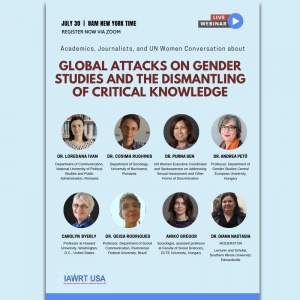
IAWRT USA holds a meeting on banning of gender studies on July 30, 8am New York Time

Gender Studies Scholars across the globe have experienced harassment and are under increasing pressures from forces outside the academy who want to delegitimize the field.

For example in Romania, academics, students, and human rights groups have condemned a new law banning gender identity studies in schools and universities, that has accused Gender Studies departments and scholars of “propagating theories and opinion on gender identity according to which gender is a separate concept from biological sex”.

This event aims to bring together member states, representatives of civil society, academia, policymakers, and journalists to discuss those global attacks on gender studies, the dismantling of critical knowledge, and what a future after COVID-19 would look like.

This event is part of a series of conversations of the 14 chapters of the IAWRT and more than 400 members in 54 countries that strives to meet the urgent global challenges faced by women in and around the media.


Invited speakers include:

Dr. Purma Sen, Executive Coordinator and Spokesperson on Addressing Sexual Harassment and Other Forms of Discrimination, UN Women

Dr. Carolyn Byerly, Chair, Department of Communication, Culture, and Media Studies, Howard University

Dr. Cosmina Rughinis, Department of Sociology, University of Bucharest, Romania

Dr. Loredana Ivan, Department of Communication, National University of Political Studies and Public Administration, Romania

Dr Andrea Pető, Professor, Department of Gender Studies Central European University, Hungary

Dr. Geisa Rodrigues, Professor, Department of Social Communication, Fluminense Federal University, Brazil

Anikó Gregor, Sociologist, assistant professor at Faculty of Social Sciences, ELTE University, Hungary


Moderator:

Dr. Diana Nastasia, Lecturer and Scholar, Southern Illinois University, Edwardsville