Cybercrime law used against whistleblower website

Police arrest an editor and raid offices of a popular East African website, Jamali forum, in an attempt to identify contributers.

Maxence Melo, the co-founder of the media outlet was released on bail after a few days, but immediately after his arrest and a raid on the Jamali offices, the Committee to Protect Journalists called for Melo’s immediate and unconditional release CPJ media release.The Collaboration on International ICT Policy for East and Southern Africa (CIPESA) reported that he faced three charges: management of a domain not registered in Tanzania and two charges for obstruction of investigations. It also called for Melo’s release Media statement.

CIPESA reports that Maxence Melo was released on December 19, after being held at a police station in the Tanzanian capital Dar es Salaam. He was granted an interim release with six individuals standing as surety for a bond amount of 6 million Tanzanian shillings (USD 2,700).

Tefo Mohapi the CEO of iafrica.com says the forum and whistleblower’s site has a history of exposing Tanzanian corruption.

Melo was charged under the 2015 cybercimes law which has been widely criticised because of its potentital impact on media freedom. It is currently under challenge in Tanzania’s courts as being unconstitutional. 

Melo’s lawyer, Benedict Ishabakaki, told the independent newspaper,The Citizen, that police detained his client for interrogation regarding a case which police had filed demanding his cooperation in determining the identities of several users of the online forum who have written about issues such as corruption.

The website reported that police raided its office, questioned employees about their duties, and took two additional employees, whom the website did not name, to a police station for further questioning. Jamii English coverage here.

Founded in 2006, Jamii Forum is  a popular online discussion sites, and hosts frank debates about such topics as graft in the public sector and government incompetence, mostly in Kiswahili.


CSW60

Planning for the NGO gathering parallel to CSW 61

IAWRT has begun planning for its event in New York, alongside the 61st CSW being held between 13-24 March 2017 in New York, USA..

The official main theme for CSW is: Women’s economic empowerment in the changing world of work. CSW will be reviewing challenges and achievements in the implementation of the Millennium Development Goals for women following the Agenda 2030 commitments made at CSW 60. CSW has nominated the empowerment of indigenous women as its emerging issue, or focus area.

To reflect the CSW main theme, at this stage the working title for IAWRT’s presentation is Women Making News in the Changing World of Work. This will most likely be based around a screening of parts of the 2016-2017 long documentary Women Making News with Nupur Basu, the Executive Producer, leading a panel discussion.

IAWRT President Gunilla Ivarsson, says “CSW is an event where experts from across the globe assemble and deliberate on issues concerning women. The event provides an excellent opportunity for the Member States, UN entities, and NGOs to discuss themes of the Commission and other critical gender equality issues, and to network.”


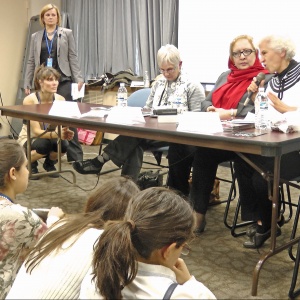
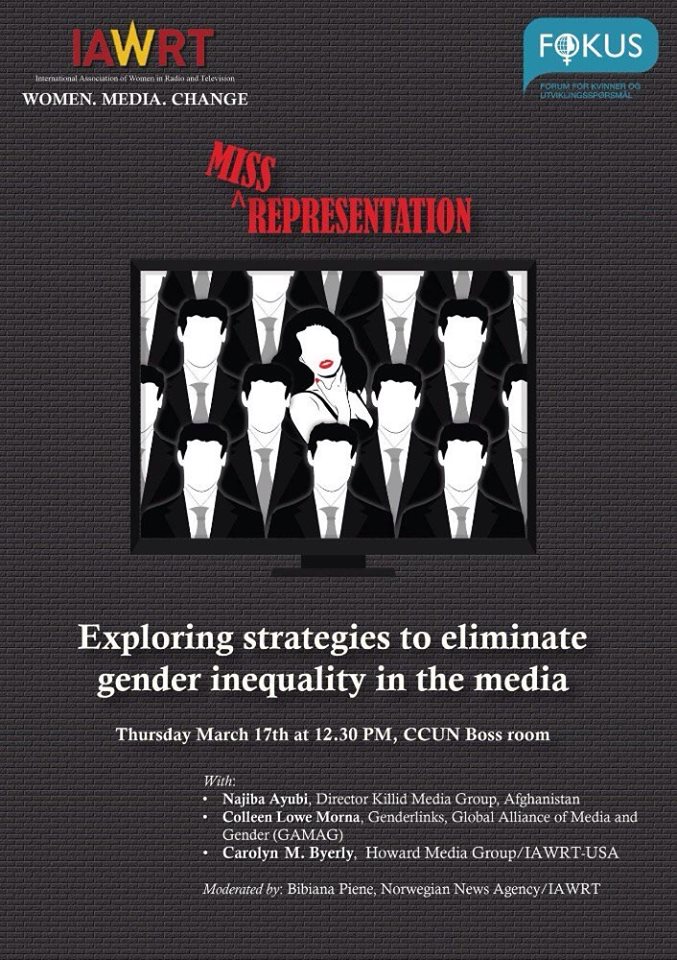
in 2016 alongside CSW60, IAWRT’s well attended event was entitled Exploring Strategies to Eliminate Gender Inequality in the Media. The panelists were:

  • Najiba Ayoubi, the Director-general of Kilid media, in Afghanistan,
  • Gender Links CEO and Chair of The Global Alliance on Media and Gender (GAMAG), Colleen Lowe Morna
  • Dr Carolyn M. Byerly, a Professor in the Department of Communications, Culture and Media Studies at Howard University (pictured right).
  • The event was moderated by IAWRT Norway Chapter head, Bibiana Dahle Piene.

A report on that event, To 2030:”THE BIG STRUGGLE IS CHANGING ATTITUDES” is available here.

IAWRT members who wish to attend this years events under the IAWRT umbrella, as self-funded participants should contact secretariat @iawrt.org as soon as possible and no later than the first week of January 2017.

The Johannesburg media came to the party at the IAWRT South African regional conference on October 26.

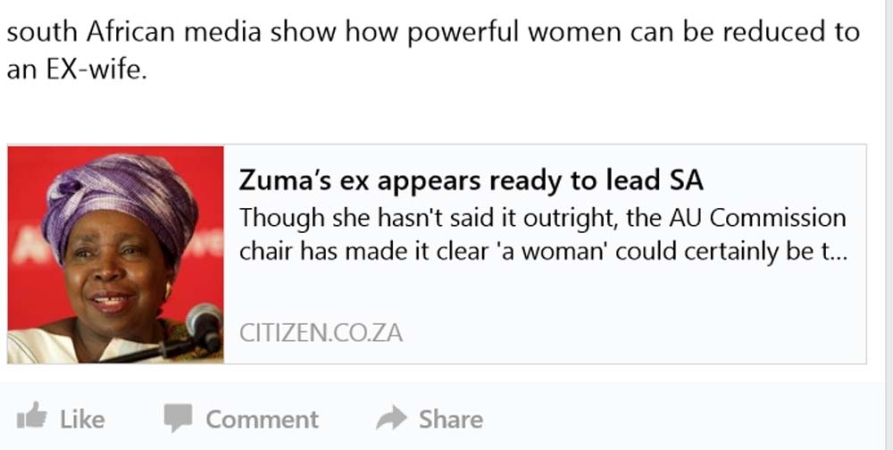
However, it was not because it promoted the event, but because it demonstrated how quickly women are reduced to stereotypes and the need for such professional meetings amongst female media professionals.
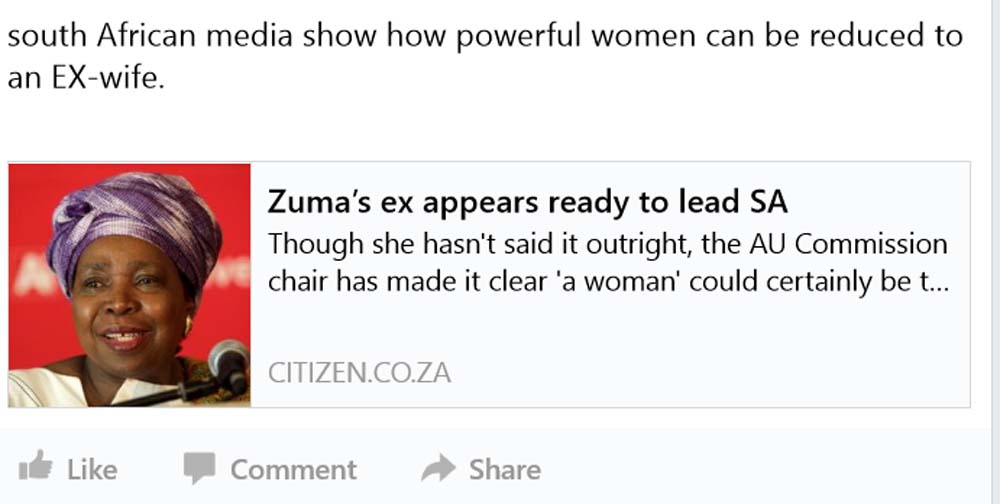
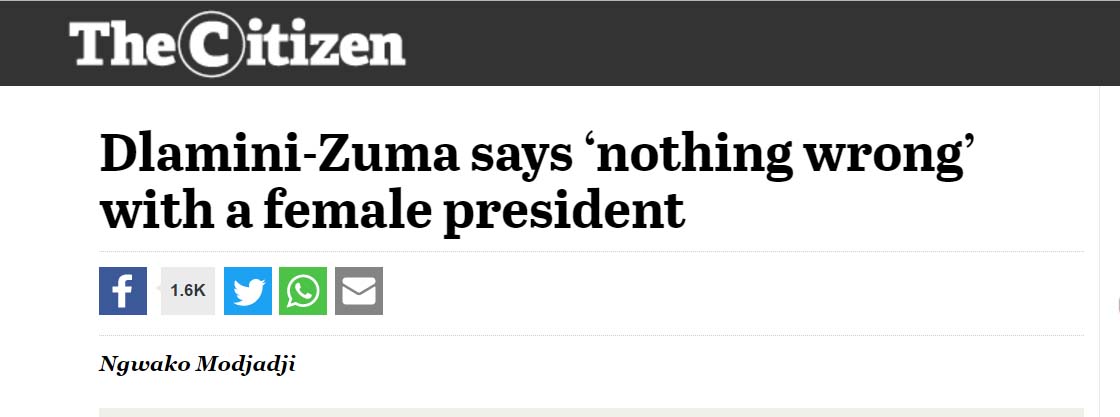
In welcoming delegates, South African Chapter head and lead organiser, Sara Chitambo, pointed to the Citizen newspaper, which had defined one of Africa’s most powerful and accomplished women, Dr. Nkosazana Diamini-Zuma, by her former relationship. The Chair of the African Union and potential candidate to head South Africa’s ruling party, the African National Congress, was reduced to being the President’s ex – wife.

It was at least heartening to see late in the day that something prompted the newspaper to change the headline to something more respectful.
IAWRT President, Gunilla Ivarsson, pointed out in opening remarks that all journalists – male and female – have to continue fighting for the principles of fairness to ensure all perspectives are included. In short, they simply are not reporting the full picture if the lives of women and girls are not an integral part of thir reporting. To that end, she argues that is important to prepare journalists with easy to use tools for everday work which help them accomplish that thoroughness in their storytelling.

The conference was being held at the  property of South African equality and justice NGO, Genderlinks, in outer Johannesburg; Genderlinks Chief Executive Colleen Lowe Morna compared the current situation for women’s voices being heard across media to pre-apartheid censorship. “Last week was South Africa’s press freedom day. so called Black Wednesday where we remember how in the bad old days of apartheid ,… whole pages in newspapers were blotted out because majority voices were being silenced. Something we don’t think about is that, still, every day, everywhere, 52 percent of the population is effectively silenced.” Audio

Silent censorship

The “silent censorship” of women is pervasive and the snail’s pace of any increase in women’s voices being heard in the media is by no means limited to Africa. In southern Africa a Genderlinks study saw women’s voice increasing as sources from 17 percent to just 20 percent in a decade. Globally the global media monitoring project has shown progress is very limited as well.

“What we need is a fifth estate – the people who watch our media from a gender respective” she said.
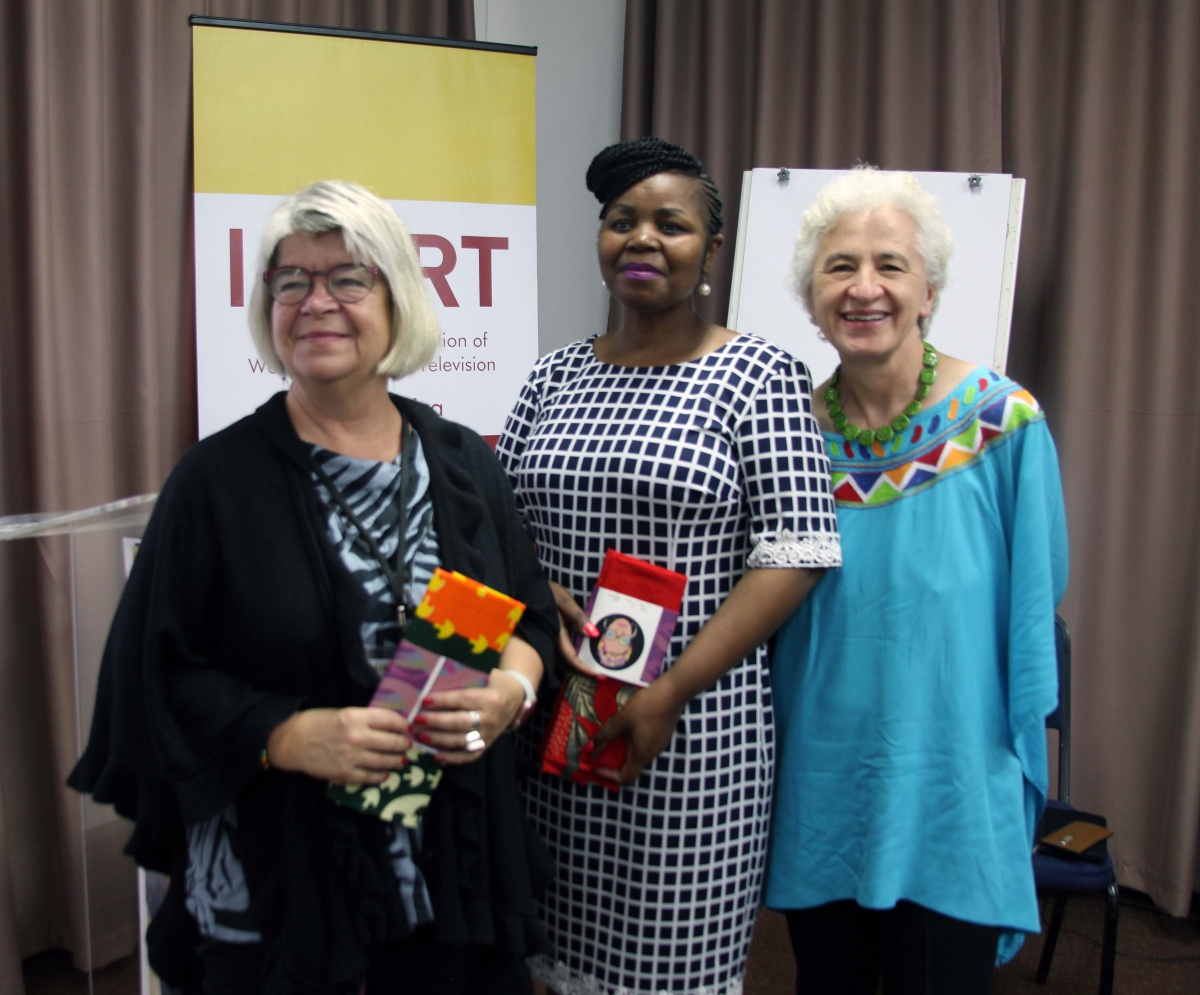
The keynote speaker, a development entrepreneur and women’s right advocate in South Africa and on the UN stage Dr. Vuyo Mahlati drew the delegates back to the problem of control of the media, a theme which resonated across the day.

“Is a time to move beyond visibility and portrayal; We are needing to deepen the conversation to ownership, for us the be part of change we need to be part of owning.”

“He who owns gold makes the golden rules, It does not help us that we will be seen as begging the masters to give us an ear; I fight my battles as a co-owner.”

She says Escaping the Prison of Portrayal is about breaking down the barriers to new entrants in South African media and “there cannot be a conversation about women and the media which does not deal with that”.

However, in southern Africa women are advanced in terms of participation in the media, and delegates were heartened to hear from some amazing local content creators who showed the many ways that women are already rewriting the narrative around the portrayal of African women in different mediums. Pic right Gunilla Ivarsson, Dr. Vuyo Mahlati and Colleen Lowe Morna

That is when I became incredible

Claire Mawisa never wanted to become a producer but as one in radio she learned editing and presenting and discovered the power of radio to give people a voice, and “that is when I became incredible”. Women are not seeing representations of young strong black women, ” instead they believe that to be relevant they have to twirk” (sexualized dancing) and that can “be reinforced by the stories we tell.” Mawisa now is a celebrated Television presenter working for Carte Blanche, an investigative TV program on M-NeT on Channel 101.
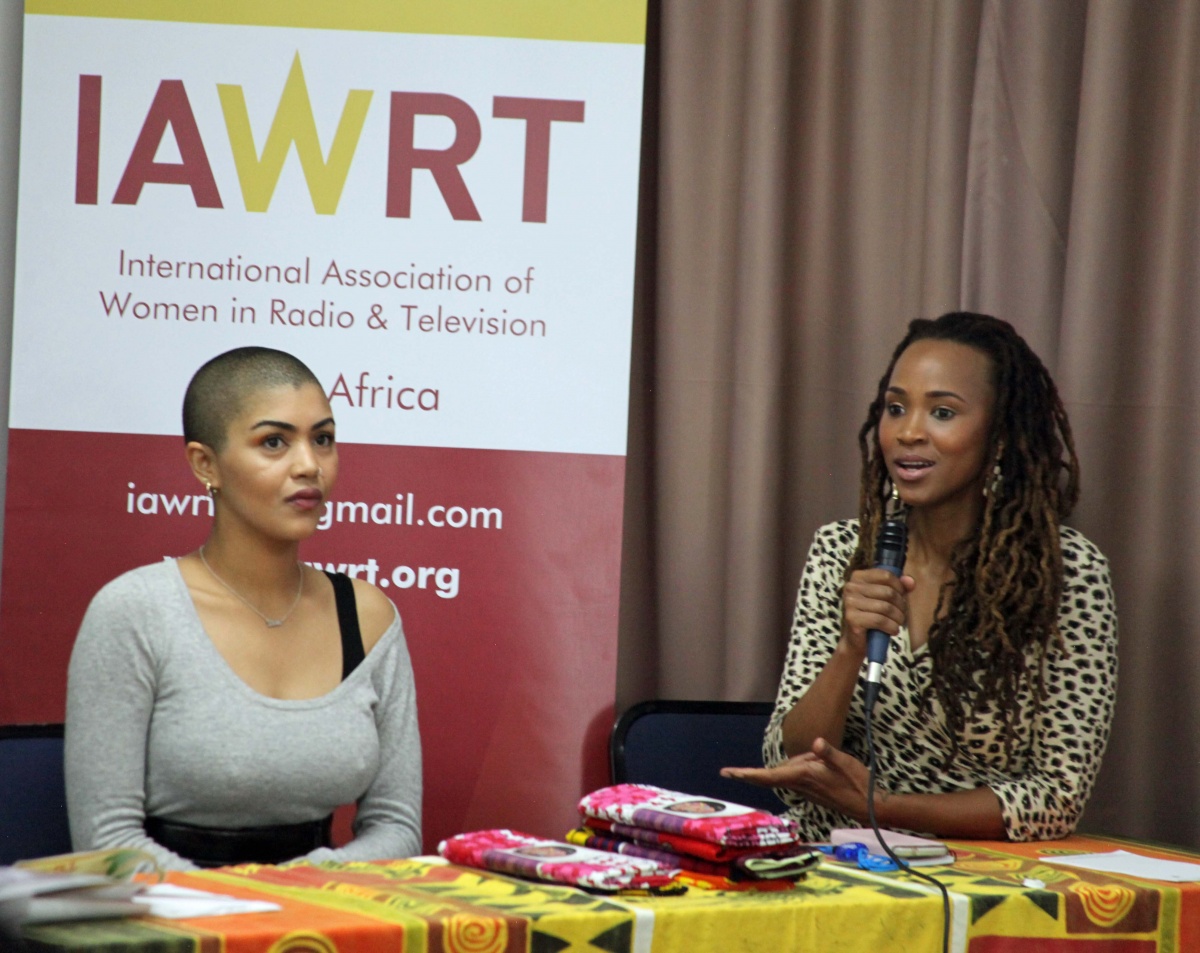
She argues that journalists can unintentionally be destructive by “assuming that we know” and end up reinforcing stereotypes. In these days of rapid fire journalism, “we still need to get out, go to the source, stay close to our humility, we need to have humility when it comes to telling stories about women, because even as a woman, I cannot presume to know what another woman is going through in her situation.”

“Yes, as working journalists we have to compromise to the producers (who are still mainly male) and the editors, but not to the point that it is compromising to women … if you have the sense of understanding that you are in a middle class bubble that is already one step closer to understanding that you have to tell the story differently and there are certain compromises that you cannot make.” Audio interview

pic: Lady Skollie left Claire Mawisa ​right.

I just want women to be feared

Visual artist and activist Laura Windvogel is less into compromise, also know as Lady Skollie, (Afrikaans – meaning a naughty, dirty or ill-mannered person)  she podcasts, writes for online publications and paints.  The fearless visual artist says she is an activist simply because she is a woman. “For me it not even about change – she laughs and continues – I just want all men that do bad things to die. It is very funny I just want women to be feared. I think we are at the point where we can’t beg men anymore,”
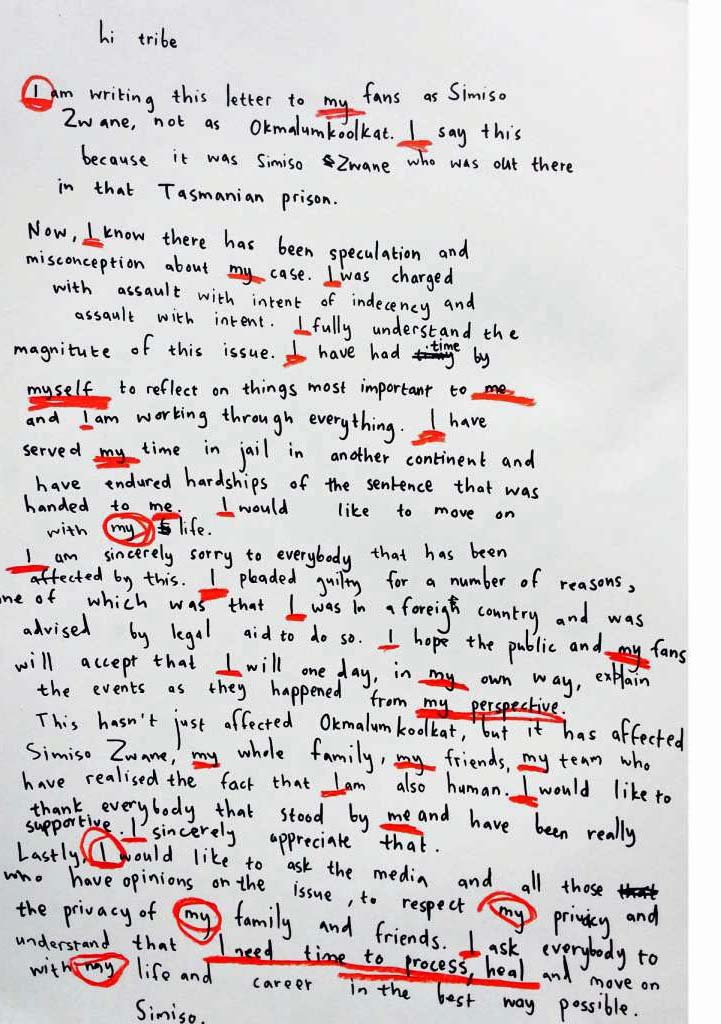
Much as she dismisses her activism as being about change, the way she took on musician Simiso Zwane, known as Okmalumkoolkat, when he returned to South Africa after serving a one-month jail sentence, for sexual assault, suggest she is very aware to the need to change the rape culture South Africa is infamous for. 

Lady Skollie says she had respected the artist until he produced an apology for the assault which she described as ” a self congratulatory very sick apology letter” sent to about 1.5 million followers. It led to her producing Sorry Not Sorry (pic right)

“How can we be accepting an apology where one, he does not ever reference the victim, ever, in any shape or form, and two, he says thing like ‘please give me the time to heal’ … and to me that was unbelievable that as a society and consumers we could sit back and accept this.”

She says her work which she was criticised for, is just to say that it is not OK and she says the letter was signed off  for the star by two women in a PR company ” which is a bit of a mind-f…”

“South Africa is really in a space where are in a national crisis, a rape scourge – one in every three women – and its normal – theft is normal, abuse is normal and we are just desensitised.” (Download conference report below and in publications)
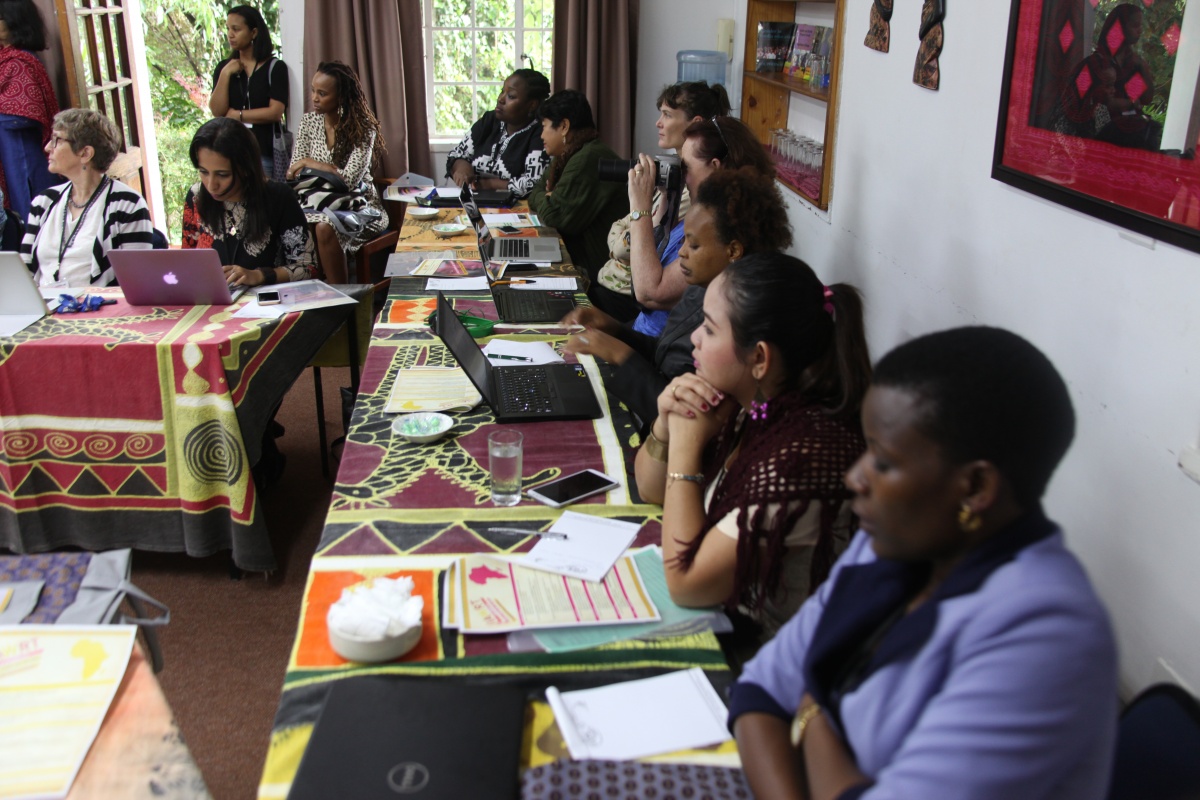


Breakthrough or backlash: Women, media and politics – Theater

The conference with its focus on news reporting, heard a lot about African politicians and the media: In one workshop, participants, facilitated by Sheila Dallas-Katzman, created some impromptu theatre which demonatrated the uphill battle female politicians faced in the local media, with Eunice Kasirye,  IAWRT Uganda, Raziah  Mwanga, IAWRT Rawanda, Anjje Schuhmann senior lecturer on gender and politics – University of Witwatersrand, Chandita Mukurjee IAWRT India, and Fonnah Mariatu from Gender Links, South Africa, and IAWRT President Gunilla Ivarrson. I can be viewed here.

The full conference report is available for download below.



iawrt blank square_edited-1


IAWRT and FOKUS are looking for an experienced evaluation team experienced with women’s rights and development co-operation through civil society groups.

The team will produce an assessment report on the International Association of Women in Radio and Television (IAWRT) to identify and assess the network’s organizational structure and capacity. Terms of Reference available here: http://iawrtnorge.blogspot.no/

The evaluation team

The team shall be external to IAWRT and FOKUS and have a designated team leader.
The evaluation team will need extensive knowledge of women’s rights and must:

  • Have demonstrable experience of producing high quality, credible evaluations
  • Have demonstrable experience of working with/evaluating development cooperation through civil societyHave knowledge of media and advocacy work
  • Be fluent in English (spoken and written)

Budget 

NOK 200 000 (including national taxes / MVA) to include Fieldwork and Chapter visits. Fieldwork to will take place in the first half of 2017. Two of IAWRT’s chapters will be visited and interviews with the member base and other stakeholders will be carried out. A detailed plan for implementation and the selection of chapters to visit will be defined in detail with IAWRT and FOKUS.

Evaluation specifications 

The evaluation will be organizational and process-oriented, with a primary intention of improving the structure and sustainability of the network. The evaluation shall be carried out as a field and desk study. A detailed plan for implementation and methodology as well as the selection of chapters to visit will be defined in detail between the evaluation team, IAWRT and FOKUS, Forum for Women and Development.

Technical proposal

Evaluators shall provide a technical proposal before November 18th 2016. The proposal shall contain the profile of the evaluation team, a detailed description of the proposed approach, methodology, timing and outputs, in relation to the Terms of Reference (ToR), a detailed work plan, a professional fee quotation indicating envisaged actions and a letter of reference. A final decision will be communicated no later than December 1st 2016.

Evaluation report

The evaluation team shall present a preliminary report to IAWRT and FOKUS by April 10th 2017. IAWRT and FOKUS shall have the opportunity to make comments and corrections to the preliminary report. These shall be reflected in the final report.

The final report is to be delivered to IAWRT and FOKUS no later than 28 April 2017.

Timeline

Submission of technical proposal: 18th of November 2016 to [email protected]

Selection decision: no later than December 1st 2016.

Preliminary report: April 10th 2017

Final report: 28 April 2017

The NGO FORUM will take place in New York simultaneously with the 61st Session of the Commission for the Status of Women (CSW61) from 13 to 24 March 2017. The Priority theme for CSW61 is: “Women’s economic empowerment in the changing world of work.” The review theme will be “Challenges and achievements in the implementation of the Millennium Development Goals for women and girls (agreed conclusions of the fifty-eighth session).”  The emerging issue/focus area is “the empowerment of indigenous women.

For more information on the NGO CSW61 Forum check the NGO CSW/NY website (NGOCSW.ORG) regularly and for information regarding the Commission: http://www.unwomen.org/en/csw/csw61-2017

Please note some deadlines for registration are in 2016  Self sponsored IAWRT members need to contact [email protected]. Check details below.


carmine

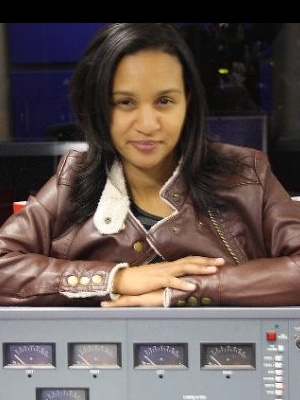
Location: Cape Town, South Africa. What do you do? I am an audio engineer for a news broadcasting station and a presenter and online blogger for an online radio station which aims to challenge gender stereotyping.

Why did this type of work interest you, and how did you get started?

Well, I always knew I wanted to be involved in a creative field, initially I thought of studying music after school but I wanted to do something a little broader than that. I opted to study for a diploma in Audio Engineering and I worked in theatre production as well as film for a while. It was by my former lecturers’ recommendation that I got an invitation to do an interview at a news broadcasting station.

It was only recently that I’ve started to broadcast my own interviews and articles on an online platform, Astute-Radio – Getting the conversation started beyond stereotypes. The media platform’s aim is to focus on the advancement of women and to challenge or break down and free people from the damaging effects of gender stereotypes. Learning to do interviews and create content is an ongoing learning curve and I am enjoying every minute of it! 

What part of this job do you personally find most satisfying? Most challenging?

I enjoy working in a live environment where news is being broadcast as it happens. Keeping up with what is happening around the world has really enriched me and helped me form my own ideas around big issues.  What I find challenging is the early mornings and late nights. Being involved in an industry that is “awake” for 24 hours requires commitment and often sacrificing your personal time. 

What are your long-term goals?

I would love to finish my Bachelor of Arts in Communications.

What special advice do you have for a student seeking to qualify for this position?

Be warned: being involved in television (whether it is in a technical field, as talent or even as a journalist) is never as glamorous as it looks on air. It requires commitment and often you will be working while everyone has already gone home (to watch your show) . Make sure that you are aware of the sacrifices you may have to make. 

 If you wish to qualify as an audio engineer, there are many different avenues to work in, make sure you explore and are familiar with all the options. 

Do you have any special words of warning or encouragement as a result of your experience?

First a word of warning: Where I live, the media Industry is a rather small, close-knit industry. It is important to make a good impression, especially in the early days of your career and to network a lot. Be humble and hungry for success. Always try to learn something new, as this industry is always evolving with new technology and ways to communicate. 

And a word of encouragement: Have Fun!! This is an incredibly interesting and stimulating line of work. 

My strongest assets/skills, areas of knowledge, personality traits and values are….

I am a dedicated, determined person and I value authenticity, honesty and kindness. My area of expertise is broadcast and audio systems.

Links to some of Carmine’s work.  

 http://www.astute-radio.com/black-bodies-do-they-matter/

http://www.astute-radio.com/sexualising-sarah-baartman/

http://www.astute-radio.com/the-value-of-time/

http://www.astute-radio.com/your-media-our-media/

http://www.astute-radio.com/stereotypes-people-living-in-poverty/


UgandaMOU signed

IAWRT Uganda chapter signs MOU with HRNJ-Uganda

The IAWRT Uganda Chapter and Human Rights Network for Journalists-Uganda (HRNJ) have signed a Memorandum of Understanding to work together on projects that promote the rights of  the country’s journalists.

The Chairperson IAWRT Uganda Chapter Ms. Sarah Nakibuuka Bakehena says that the partnership will strengthen both the institutions and ensure Gender Mainstreaming is a part of various programs aimed at providing capacity for journalists in Uganda.

The partnership gives IAWRT Uganda Chapter an opportunity to access office space and increase organizational systems capacity. The two organisations have agreed to promote each other’s activities.

Human Rights Network for Journalists-Uganda (HRNJ-Uganda) was established in 2005, as “a network of human rights journalists in Uganda working towards enhancing the promotion, protection and respect of human rights through defending and building the capacities of journalists.”

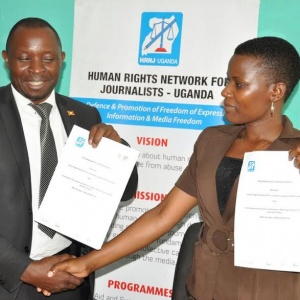
The MOU was signed by the Uganda Chapter Vice Chairperson Ms. Eunice Kasirye and the HRNJ Uganda Coordinator Mr. Robert Ssempala (pictured)  witnessed By Ms. Joyce Bagala, the Chapter’s Secretary General.

Aiden_White_delhi_k

Increasing trust in journalism

One of IAWRT’s partner organisations, the Ethical Journalism Network (EJN) has restructured and refreshed its website. Its aimed at strengthening capacity to build trust in journalism as a cornerstone of free expression and quality communications. 

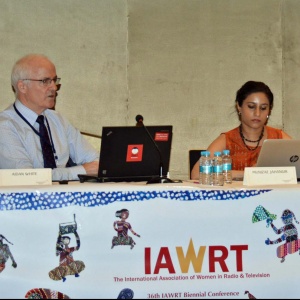
The global network, headed by Aidan White, (pic left IAWRT 2015 Biennial) was set up three years ago,  will now operate under a Board of Trustees  made up of media leaders from the United Kingdom and Norway, and has been registered as a charity in the UK . 

IAWRT member Oona Solberg remains a coordinator for both the EJN and the Norwegian Institute of Journalism. Former IAWRT President Rachael Nakitare of Kenya, who has worked on the EJN hate speech campaign, continues as an adviser. 

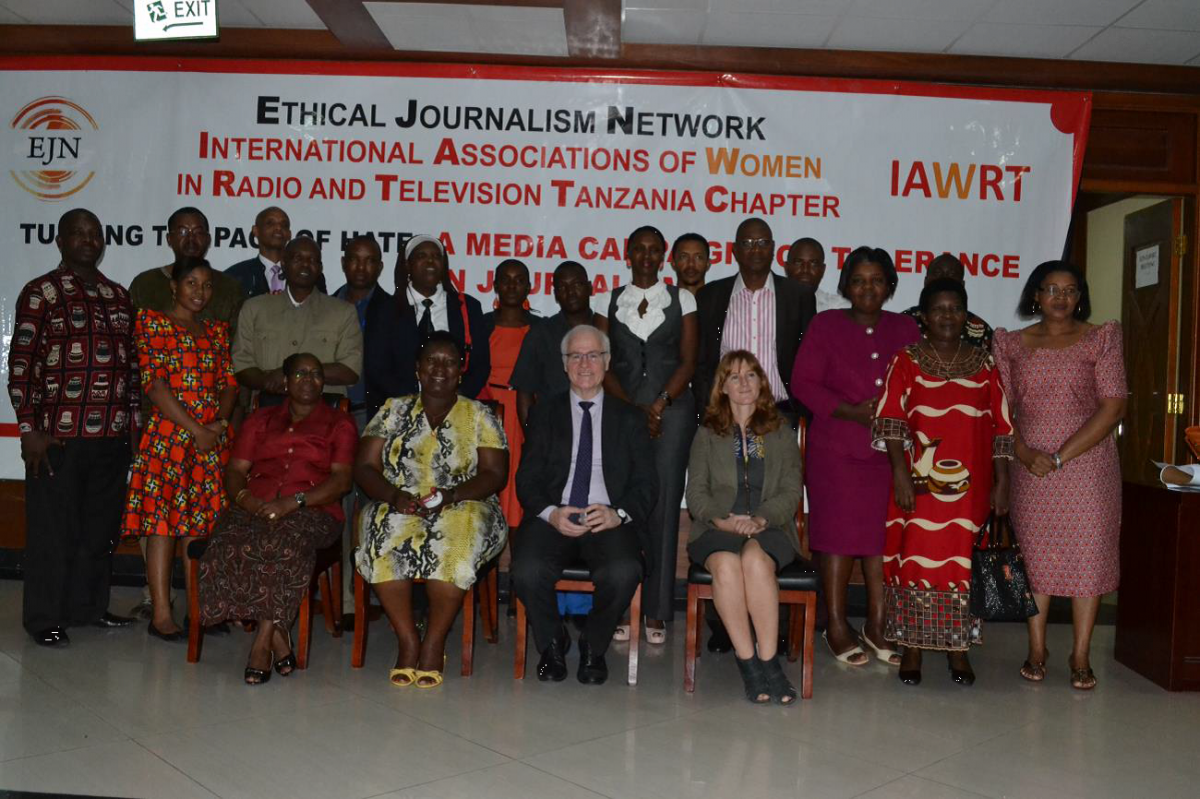
(pic below front with Aiden White in Dar es Salaam)   

The EJN is working with local media, IAWRT chapters,  journalists and leading academics in Africa, Asia, Europe and the Middle East to create programs that strengthen free media in the global digital age.  It recognises that journalism is in the midst of historic change; EJN argues that the days when a professional elite controlled the flow of information to a captured audience, are gone forever. The network’s object is to put journalism at the heart of plans to promote critical thinking and ethical values – to make them the key elements in strategies for responsible public communications.

EJN works across multiple regions including crisis-hit areas such as Turkey, Georgia, and Palestine, supporting journalists in their fight for professional freedom. 

  • in China EJN is organising new work with universities and setting up a regional network to combat political threats;
  • in Asia, working with media professional groups in Pakistan and Indonesia where hard-won freedoms are coming under pressure;
  • in Africa the EJN is building its campaign Turning the Page of Hate to help media and journalists eliminate hate-speech in public discourse;
  • in the Middle East EJN supports co-operation between universities and media to support tolerance in communication;
  • in the Western Balkans, EJN works with media to strengthen internal governance and transparency.

EJN’s Director & CEO  says editors and reporters struggle to maintain their professionalism in the face of a changing culture of communications driven by the two-edged sword of digital technology.

“This technology has created an inspiring world of open information, as well as a darker side. Some corporations, governments and powerful interest groups with limited respect for democracy and human rights use stealth and surveillance to compromise our privacy rights and to exploit our personal information. At the same time technology has opened the door to more propaganda, plagiarism, malicious abuse, rumour and speculation.” 

journalism-ethics-title

The EJN site contains materials on the role of journalism and why ethics are an antidote to the chaos, confusion and misinformation of modern communications. There the key values that drive journalism, are outlined, and it provides an explanation of how it differs from free expression and why ethical media can inspire a new era of responsible free expression.

accountablejournalism

EJN produces detailed reports that focus on the challenges of modern journalism and, in partnership with the Missouri School of Journalism, has launched the world’s first interactive and extensive database on self-regulation, ethics and standards for media – Accountable Journalism. Numerous other resources  can be found in the EJN website, .

EJN’s work is free for use by editors, managers, journalists, students, teachers and anyone who believes in the core values of journalism.

Aidan White argues that the work of the EJN to strengthen journalism and promote communications based on voluntary principles of restraint and respect, tolerance and transparency will be crucial to secure the future of journalism.

Adapted from an article by Aidan White. 


AlkaHingorani_1s

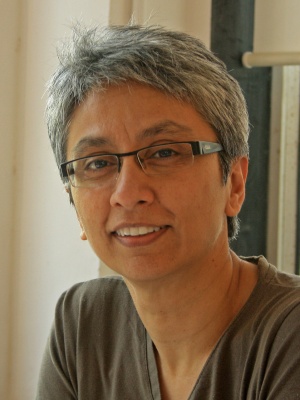
Alka Hingorani teacher in film, photography and story-telling

I am Associate Professor at IDC-School of Design, IIT-Bombay, Powai, Mumbai, India. A photographer and art historian, my interests in Indian art lie geographically in the lower Himalayas, and thematically in issues of aesthetics and identity. 

Why did this type of work interest you, and how did you get started?

I have always been a bit of learning-teaching junkie. I spent a good part of my life as a Graduate Student (and, consequently, a Graduate Student Instructor) at the University of California, Berkeley.

What part of this job do you personally find most satisfying? Most challenging?

Almost everything about it is awesome: creating a safe space for students to read, write, think, analyze, trip over their own thoughts, recover, eyes shining, as they walk the tight-rope of doubt and rumination again! It is all both challenging and satisfying. The other aspect that is fun and formidable is time and resources for research. My own is currently in the area of education: content design for English language learning in resource-constrained areas, with an emphasis on equipping and allowing children to become content creators rather than mere consumers. We collaborate on storytelling, storyboarding, book illustration, book design, and short animation films (work-in-progress) based on those books and stories. It’s a dream!

What do you like and not like about working in this industry?

I love the company of students, the promise and reality of friendships and collaborations across disciplines in a place like IIT. I deeply dislike the hierarchical structure of decision-making and the huge burden of inconsequential administrative work, beyond the call of reason.

What are your long-term goals?

To forever be amongst students.

What special advice do you have for a student seeking to qualify for this position?

If you don’t love it, leave it. Teaching is never going to make you money; you do it because you could not easily live without it.

My strongest assets/skills, areas of knowledge, personality traits and values are….

Luckily, an interest in a variety of different disciplines including photography, architecture, art history, evolutionary biology, cosmology—science, in general, I suppose, a love for photography, film (esp. analyses), and for making things: pottery, woodworking, origami are special joys, though I’m a novice at each.

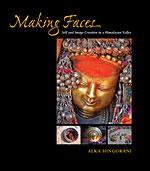
Alka’s book on her work with mohras and mohra-makers in Himachal Pradesh is called Making Faces: Self and Image Creation in a Himalayan Valley (University of Hawai’i Press, 2013; Niyogi Books, New Delhi, 2013). More information on the book here.

NefertiteNguvuSaraChitambo

The Inaugural IAWRT African Film Festival introduced an amazing diversity of black women: trendy fashonistas in Manhattan; a woman who takes on champion wrestlers in a Burkina Faso village; an Egyptian woman taking us through the unrest and a South African ‘virgin-vegan’. Women questioned or tested their relationships, their sexuality, and women’s roles in their homes, in their cultures and in politics.

The well curated presentation of features and documentaries at the Bioscope in Johannesburg, South Africa, on the 28th and 29th of October, 2016, featured African based and expatriate women producers, along with two IAWRT produced international documentaries. It well and truly addressed the lack of diversity and women’s voices in film, with passion humour and skill.

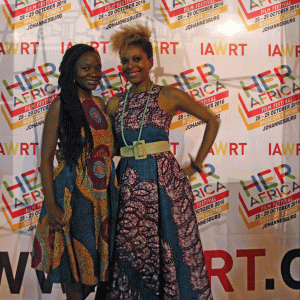
Members of IAWRT from around the world attended opening night at the independent film house in trendy Fox St, Maboneng, which featured Africa’s first screening of the acclaimed film In the Morning, directed by Nefertite Nguvu (pic left with  Sara Chitambo, South African IAWRT Chapter head and Regional Conference and film festival team-leader). 

The delegates had come from several days of stimulating discussion about strategies to reduce the under-representation of women in African media, both as content producers and sources of stories. The limited range of portrayals of women is constantly being battled (and addressed) in numerous innovative ways by female media professionals. However, the power of independent producers to break down barriers was wonderfully portrayed at this film festival.

Nguvu’s debut feature-film examining love, friendship and marriage and it’s change and decline in a group of nine friends, took place over the course of 24 hours in Brooklyn, New York. The U.S. director told the audience that the crowd- funded drama was partially promoted by her exhaustion with the one-dimensional portrayal of black women on US Television. She wanted to examine love and its dimensions, through “regular folk”. And she simply wanted to examine the timeless questions about love.


Members of the audience were appreciative of her ability to create likeable, multi-dimensional black male characters who did not live lives of constant violent conflict. In the Morning has received a number of accolades including the jury award for ‘Best International Film’ at Siena, Italy’s 1st annual Terra Di Siena Film Festival “for the great ability in directing a convincing ensemble … with great skill and direction, penetrating into the depths of human soul.” 

The audience was taken on a completely different direction with a much lower budget, village-based documentary, The Fight Goes On by Laurentine Bayala from Burkina Faso. Notwithstanding the title, it was not dealing with the wider conflict in that country, but the universal violence of the uneven division of labour in the home between males and females. The ensuing battle, both physical and psychological, between the macho wrestlers of the village and their strong wives ended with an unrepentantly gentle twist.

Another award-winning film from an expatriate director, Cameroon born Canadian, Dorothy Atabong, Sounds of Tears, is a heart-breaking portrayal of forbidden love and the perpetuation of patriarchal notions of shame, which lead to murders by family members. So-called honour killings are continuing even in more liberal cultures such as Canada.

The South African section, in many ways had a lighter touch, whilst again effectively highlighting the frustrations and loneliness associated with cultural and religious impositions on women.  The three selections were funded by the National Film and Video Foundation, an agency of the South African Department of Arts and Culture, as part of the Blingola female filmmaker project.

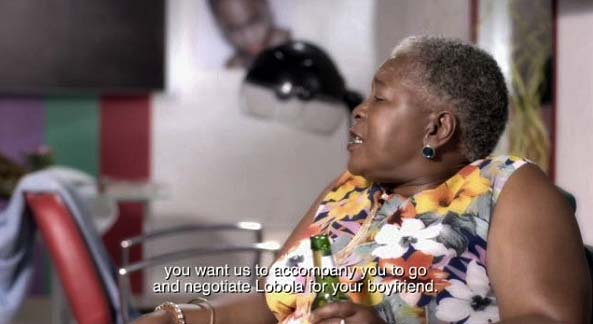
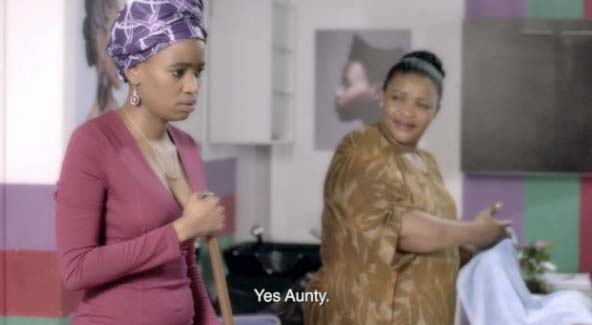
The delightful short film, A Groom’s Price by Mmabatho Monthso, has Meme and her two aunties, who she dragoons in to help her, using her own finances to pay a groom price for her long-term boyfriend, Musa. He cannot propose because he can’t afford the bride price. The quirky short film pokes fun at the continued existence of Lobola (originally it was paying a bride price in cattle) in the modern South African economy.

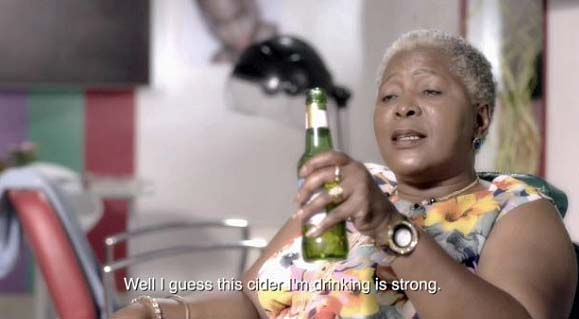
In the wonderfully titled Virgin Vegan, Reabetswe Moeti also approaches women making their own choices. The sitcom writer uses her skills to tell a story about the diaspora and young people challenging cultural understandings , with a large dose of familial love. Our hero Thato returns to her township in Limpopo province to face a huge table of carfully prepared meats prepared to celebrate her return from the UK with an Masters in Business Administration. Unfortunatley she has changed and now observes a strict vegan diet, while her family expects her to lead their butchery business. Of course, misunderstandings lead to things going hilariously awry, when her family mishears ‘vegan’ as for “virgin” and tries to ‘fix’ the problem.

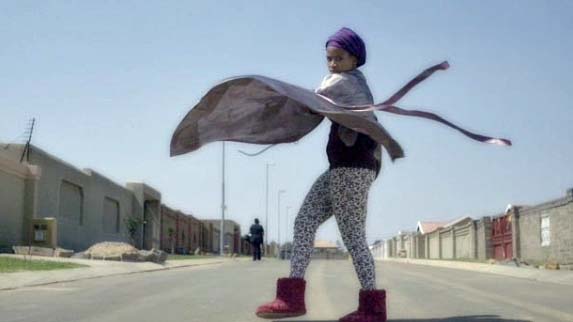
The delicate and moving UNomalanga and the Witch, the winner of the Best Short Film Award in 2015 at the Durban International Film Festival, took a more gentle turn. it was revealing about the loneliness of outsiders, and women trying to fulfil roles they may not be meant for.  It portrays a friendship between a newly married woman and a mysterious neighbour who is shunned by the local community. Ultimately the relationship develops into love and desire, in a community which is unlikely forgive their transgressions.

The festival also gave voice to a Queer women project, playing a loop of Straightup Media’s Pink Shorts between films. The group responsible, Jen, Keke, Dez, Didi and Dutwice have shot ten episodes this year, mostly featuring the queer women answering questions as ‘regular folk’ on everything from being single, to gender roles, to who likes what in the bedroom. (available on YouTube). 

The feature film The Trace of the Butterfly brought the audience back to the pain of loss and bravery of those involved in the civil unrest and the consequent killings of demonstrators which Egyptians suffered after the 25 January revolution. The award winning documentary by Amal Ramsis begins after the massive response to the death of Mina Daniel eight months later, at the Maspero massacre in October 2011. It traces the impact of the death of an activistw ho styled himself after his hero Che Gevara, through his surviving sister, Mary.

The director’s interest was piqued by Mary publicly accusing the Supreme Council of the Armed Forces (SCAF) of killing her brother and 27 other Coptic Christians during a peaceful march. Mary had held a red flag with Mina’s photo on it, in every march, since then. The Trace of the Butterfly was shot over two years of unrest, providing an intimate view of  many activists of all religions, who are not generally known as heroes, at home and in the streets, .

In the process the film documents the sufferings and struggles that women go through in a society like Egypt, along with the pain of losing someone close, and the ways of dealing with it.

The Festival also showcased IAWRT’S documentaries Reflecting her  (available by contacting [email protected]) and Hands on – Women Change – women seeking solutions which can be viewed here.

Media coverage:

http://www.ipsnews.net/2016/11/festival-spotlights-african-women-filmmakers/

http://allafrica.com/stories/201611030075.html