launch

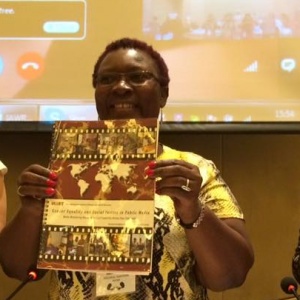
The Gender Equality And Social Justice In Public Media report has been  launched at the IAWRT Biennial Conference in New Deli. The eight country study of public radio and television, lead by Greta Gober & Diana Iulia Nastasia, measured representation of gender and other social justice measures such as age, ethnicity, and sexual diversity, across four continents and eight countries. ESP

The Full report is available, or listen to the researchers, Greta Gober and Dr Diana Nastasia explain how their monitoring project of public radio and television has found a very narrow spectrum of opinion which is predominantly male and middle class and not representative of the populations where they broadcast on Astute Radio .

Picture: IAWRT President Racael Nakitare at the report launch at the IAWRT Biennial New Delh


abu abid

the Asian Broadcasting Union in collaboration with Asia-Pacific Institute for Broadcasting Development (AIBD) have organised the 3rd regional workshop on Over-The-Top (OTT) and Integrated Broadcast Broadband (IBB) technologies and services.  It will be held  Sept 29 to Oct 1, 2015, Kuala Lumpur Hotel CaPITOL.

This three day workshop will introduce these technologies and address some of the main issues that broadcasters are facing when they want to introduce OTT and IBB services within their portfolio. It will not only explore the technology but also look at other value added services and business opportunities that they can introduce to attain a competitive edge in the market place. Case studies from Asia-Pacific region will be presented with some reference to European implementations too.

There are no registration/participation fees for ABU members interested or.involved in technical and production operations, who wish to attend this “OTT and IBB Hybrid Technologies” event. 

full details available http://bit.ly/1ELOwIk
 

Khadija portrait

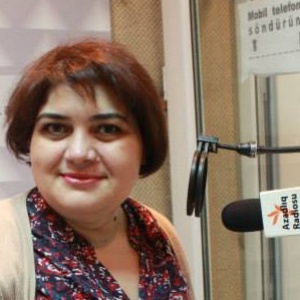
Khadija Ismayilova sentenced to more than 7 year jail. Human Rights groups have widely condemned the jailing of Azerbaijan journalist Khadija Ismayilova for seven-and-a-half years, for or what Human Rights Watch calls “spurious charges of tax evasion and other economic crimes, after a politically motivated trial.

HRW executive Director Ken Roth called the trial “a joke.” He says Khadija Ismayilova is “a real human rights hero, an investigative journalist prepared to expose human rights abuses”. His comment can be found here: http://bit.ly/1FqDZwT

The Council of Europe reiterated “its concerns about the systemic deficiencies in the Azerbaijani judicial system and the worrying trend of increasing cases against human rights defenders and journalists, which has a chilling effect on freedom of expression in the country.” Condemnation of the trial and sentence has been widespread, including Amnesty International, the International Women’s Media Foundation, the Committee to Protect Journalists, the International Journalists Federation, and by British and US government officials.The Organised Crime and Corruption Reporting Project has posted Khadija Ismayilova’s complete defiant reponse which she was not allowed to fully present to the court : https://www.occrp.org/en/daily/4350-khadija-ismayilova-s-final-statement-to-court-in-full (Photo courtesy of Radio Free Europe/Radio Liberty)

profile 3_edited-1

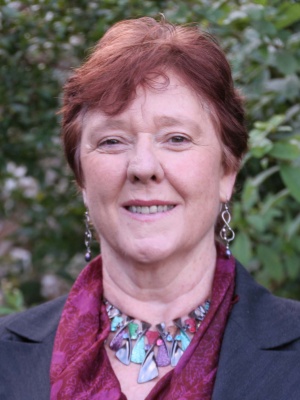
Name: Nonee Walsh 

Location: Illawarra region, New South Wales, Australia

What do you do?

I have spent three decades as a radio, and online reporter and journalist specialising in legal, environment science and human rights reporting, mostly for the Australian Broadcasting Corporation in Sydney. Prior to that I worked in community radio. I have just been appointed as the web journalist for IAWRT (July 2015).

Why did this type of work interest you, and how did you get started?

I think I always wanted to be in the media and my interest is maintained because I believe knowledge empowers democracy, and mitigates against any abuse of authority. In the mid 1970’s it was a small-scale beginning in high-school, challenging teachers’ control of the school magazine; at Adelaide University to challenge conservative students control of the student newspaper ‘On Dit’, through to Student Radio where I took up a challenge to join, after I criticised a clique of male students running programs; That began my radio career and I went onto another community (volunteer run) radio station at a time when the coverage of environment issues, women’s rights and homosexual rights were considered radical rather than main-stream. To this day, despite its technical inadequacies, I am proud of my first radio documentary, which allowed prostitutes to tell their stories as workers and women, who faced discrimination and illegal victimisation by Police. Prostitution was later decriminalized in South Australia. It was then that I first gained my respect for the proper function of law, through one University law Professor who gave advice which ensured the Police had no grounds to carry out their threat to prosecute for libel. Later I set up a community radio news show, designed to demonstrate that news must always be heard critically, by reporting the way in which different countries radio stations reported on the same event. After that I moved to Sydney to forge a professional career in radio journalism, starting as a cadet in the ABC Radio Current Affairs department. In my ABC career, I was the first Royal Commissions and inquiries rounds-person, and reported on many scandals and abuses of human rights. http://www.abc.net.au/news/2009-08-21/reporter-reflects-on-james-hardie-scandal/1399386 ; http://www.abc.net.au/news/2014-10-24/crown-solicitor-in-child-sex-abuse-case-mediation-years-ago/5839396;  http://www.australiaplus.com/international/2010-02-15/class-action-begins-over-iraq-wheat-payments/198944

I was the first ABC radio news Inquiries and Royal Commissions rounds-person and first Environment Reporter, http://www.abc.net.au/radionational/programs/backgroundbriefing/sydneys-cryptic-water-crisis/3554268#transcript; http://www.abc.net.au/news/2010-10-21/nsws-decision-to-run-a-new-coal-mine-has-been/2305972;

I reported politics and on science news, including women’s perspectives http://www.abc.net.au/science/news/stories/s217256.htm; http://www.abc.net.au/science/articles/2002/02/06/474862.htm:

I also acted as a Chief of newsroom staff. Truth-seeking has always motivated me. I am inquisitive (hence my first foray, interviewing women who sold sex because I knew nothing about them) and sensitive to the different ways in which people understand events, partially because of my own immigrant experience in Australia.

What part of this job do you personally find most satisfying? Most challenging?

I enjoyed meeting, and being able to tell the stories of people who usually do not get access to the media or the corridors of power, such as those who suffered institutional abuse by corporations, or the law or government. This can often be frustrating for a journalist who is primarily a news reporter, having to fit complex issues into small spaces limited by program formats and being expected to file ‘early and often’. It can be hard to deal with the disappointments of people who want more attention given to their individual stories.   I enjoy the feeling that I am adding to the body of knowledge which people require to participate in decisions which affect their lives. I especially liked following and reporting on investigations which uncovered wrongdoing and held perpetrators to account, or lead to change or improvements.  The most annoying aspect of modern journalism is now the extent of control of government and public statements, through public relations and media specialists, encouraging journalists to take the quick route to complete their stories.

What do you like and not like about working in this industry?

I arrived at a time when men dominated news management, and journalism was thought to be best done in an aggressive forceful manner. Much though I enjoyed holding politicians to account through questioning at media conferences, it was not a broadcast style I aspired to, being by nature inquisitive rather than inquisitorial. It was a challenge to be allocated the “serious” subjects to cover, whilst maintaining a non-aggressive approach. Along with other women journalists I worked to expose the grading bias against women in the workplace,  and have since seen many women rise to higher editorial positions in the ensuing years. However, there still needs to be vigilance against an expectation for women journalists to be more than able reporters – having also to be pretty, made-up, dressed-up and often young, to be on television.

What are your long-term goals?

In IAWRT I want to foster cultural understanding of the different issues faced by media workers, to  publish stories about their work and to enhance IAWRT’s work to foster the careers of women who tell important stories, and to put systems in place where future members can take on the web-journalist role and  continue to agitate for the goal of equality, worldwide.

What special advice do you have for a student seeking to qualify for this position?

In terms of a career in mainstream media, start by volunteering in community organisations to get experience. It is important to get out of your comfort zone, meet and work with people who are not part of your normal social circle, to learn to tell stories with them, not just about them. I still think radio is a good starting point, as a story’s value is determined by content alone, and broadcasting brings with it, responses from a wide range of listeners. Community news sites and some blogging can also be good starting areas, but always be wary of falling into the trap of just talking to those who agree with you.  Obviously with a web-journalist position one needs to get across a number of ways to reach out, through social media, and the many on-line mediums now available, so look for community and activist groups who may want a media worker.

Do you have any special words of warning or encouragement as a result of your experience?

Don’t be afraid of complexity, such as bureaucratic records or legal documents, they give you the necessary knowledge to fully understand issues. Keep your information and old stories well organized and secure, if necessary. As well, it is important to go back to old stories to see if there has been any outcome or solution and to ensure that those in power are held to their promises. If you make mistakes, acknowledge them, fix them and move on.  Work to a code of ethics and stick to it.

These are my strongest assets/skills, areas of knowledge, personality traits and values are….

I am always keen to spend time with people to find their truth so that I can learn about them, and try to do justice to their perspective. I love sharing knowledge and learning from others. I am able to get across complex issues in the law, government, planning and environment policies or science and  make them comprehensible and relevant to an audience. I am able to use my broad knowledge of governmental and judicial events going back nearly thirty years to work to accurately provide people with useful information to pressure the power elites to account for their past undertakings.

women rising 2 cut_edited-1

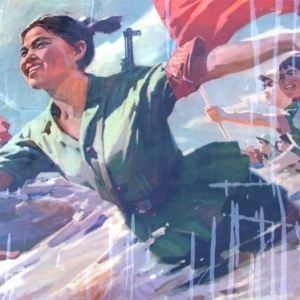
Many years ago in my university days, I was taken by this famous Chinese propaganda picture, based apparently on the late Chairman Mao’s quote, “women can hold up half the sky” depicting women leading a fairly equal gender divide of troops.

For me it was an amusing culturally mixed metaphor as it looked suspiciously like the parting of the Red Sea, but I liked the idea of a woman leading the way forward. I cut off the slogan because, for me, it was a work of art I liked which was, none-the-less, a fairy-tale version of the reality of women’s rights and opportunities. Battered and worn, I still have it, and despite 20 years of international debate since the Beijing Women’s conference, it may still be more aspirational than factual.

To an outsider observing any United Nations discussions, no matter how important the issue, it can appear to be what English speakers describe as “dotting the ‘i’s and crossing the ‘t’s”, so approaching a book which purports to examine decades of UN discussion and advocacy about women is a little daunting. Indeed in Women and Girls rising: Progress and Resistance Around the World, the first agreement on sexual rights in the Beijing platform is described as having being “negotiated painfully”, with the ongoing work to protect those agreements, “a continuing strain on activists.”  

However, the notion of being extremely, perhaps unnecessarily, precise by putting a dot in the letter i and crossing the letter t, seems quite apt, when Chinese IAWRT member Cai Yiping (photo below) and her colleague, Liu Bhonog. in a section entitled Negotiating Gender mainstreaming in China, declare it a problem that the Chinese Government defined ‘gender mainstreaming’ as being interchangeable with ‘equality between men and women’.

After China hosted the 4th World Women’s Conference in Beijing, they say the prevailing discourse of equality, enshrined in China’s constitution since 1954, should have made the adoption of ‘gender mainstreaming’ – ensuring policies benefit men and women equally  –  pretty straight forward. Yet the concept was co-oped and translated to mean “mainstreaming gender into policy-making”.  China has been very successful at this, incorporating the important concept of human rights into policy about women and allocating administrative responsibilities to the prevention of violence against women. Women’s development and gender equity and the commitment to the Convention to end all forms of Discrimination against women (CEDAW) have also been incorporated into China’s Economic and Social Development Plan. As noted elsewhere in the book, there are more UN member states in CEDAW than any other treaty; that should put China at least one step ahead of the United States, which has not ratified the convention.  

It all sounds pretty good, but Cai Yiping and Liu Bohong report that while many important policies have been implemented, gender inequality continues to grow in China, indeed inequality may have increased in the last three decades of economic liberalisation. In a country where women’s participation in the paid work force is 40 percent higher than the world’s average, the gender wage gap is increasing, along with rural urban disparities, as China has grown into the world’s second largest economy. In political participation, less than a quarter of the country’s decision-makers are women.  Yet, based on national averages, China is meeting its UN millennium development goals in education. However, the authors say this disguises a number of barriers to women in education. Likewise goals on maternal mortality have been met, but there are many other measures of women’s health, and reproductive rights remain a contentious issue.

In essence, they conclude that “current efforts on gender mainstreaming focussing on policy making, law and legislation are weak in implementation and enforcement”. This is of course a simplification of a rich and complex analysis of the status of Chinese women on the 20th anniversary of the Beijing Women’s conference, but it raises one issue which concerns many contributors to Women and Girls rising: Progress and Resistance Around the World, and that is the priorities given to women in the global development agenda, and the meaningful participation of women’s rights activists in policy building.  

As the editors Ellen Chesler and Terry Mcgovern point out in the introduction, “misguided economic policies are devastating poor women” in countries where governments are “acting at the behest of global financial institutions.”  Simply put, gender policies won’t work without larger policies to address the growing divide between rich and poor.

“Since 1995 The UN’s need to build consensus and reliance in public private partnerships has actually impeded the progress of feminists’ efforts and thinking” According to Indian activist and academic, Devaki Jain. While the UN enabled covenants to protect and advance women’s rights and nurtured feminist networks, Jain says globalisation is now pushing multilaterals like the UN aside ­—  “they lost their power to negotiate justice.” She is disheartened by the lack of change in the condition of women and girls, as the commitment to women’s rights and equality exists in high places, but “the ground remains largely still.”

In A feminists reflections on the partnership with the UN system, Devaki Jain questions the value of her time “walking alongside the UN system for 40 years”, when the condition of the world’s women in terms of work and violence, in particular, shows little improvement. She cites the sobering statistic that two thirds of the world’s 774 million illiterate adults are women and says the United Nations has become an unwieldy bureaucracy trying to fulfil: “multiple roles as development activist, human rights champion and negotiator of peace and security [which has] had a negative impact on the larger goals of peace and justice.”

However, the struggle to have nations recognise in law that women’s rights are human rights, only developed through activism and the many UN women’s forums held since the first women’s conference in Mexico. Charlotte Bunch and Roxanna Carrillo say that concept has grown exponentially in the past two decades. Now most countries have such rights in law, but certainly not in fact. These pre-social media world conferences of the 1990s were fundamentally important in shaping a generation of civil society activists, they say: “[and] still stand as a beacon of hope that concerted collective action can advance respect and the realisation of women’s rights.” However, the challenge now is for there to be new ways forward, to address the economic divide, and another particular issue of concern, the paucity of women’s involvement in peace-making, and post-conflict reconstruction policy.

Devaki Jain acknowledges that UN human rights frameworks are strong enabling tools for subordinated groups, and provide important access to legal systems. However, the lack of financial investment by states reduces such rights (to education or food, for example) to rhetoric. The women’s rights agenda “has floundered for lack of resources to back it up.” Her thoughtful contribution argues for a renewed feminist contribution to mainstream economic thought, where combating poverty can “bubble up [rather than] trickling down.” She suggests borrowing from the Indian economist and philosopher Amartya Sen, taking on board his powerful concept that eliminating injustice should take precedence over striving for the perfect goal of justice.

“The feminist movement should convince the UN to take up the challenge of the overall increase in inequalities – not limit ourselves to gender equality.” It is just one of the challenging and informative views in this rich collection which is well worth close attention According to Devaki Jain new macro-economic theories built and transacted by women “could be a great leap forward”, and then, perhaps, I could return my old Chinese poster to the wall.

By Nonee Walsh

The Roosevelt Institute will officially launch the book in New York, on September 17th 2015 at the Ford Foundation.


Women and Girls Rising: Progress and resistance around the world (Global Institutions) by Ellen Chesler (Editor), Terry McGovern (Editor) Publisher: Routledge (July 2, 2015)

August 31st   Last deadline to submit your outstanding documentary for IAWRT AWARDS. USD 1,000 Award in each category, TV, Radio, Web Audio and Web Video.  Find rules and entry form on http://iawrt.peoplesresearch.org/awards/2015/iawrt-2015-international-awards

This is the last chance to apply for the IAWRT FOKUS Scholarship, to advance the media skills of members, 

  • Sharpen your skills?
  • Earn a diploma or certificate?
  • Advance your advantage in the work place?
  • Gain skills in new areas of media, such as ICT Media for Development?
  • Become empowered to compete in the media landscape?

The IAWRT-FOKUS Scholarship was established to enable mid-career media women and young professionals. It is designed to: enrich skills in areas of media where women are otherwise underrepresented To move into the decision-making processes of media To gain the knowledge and skills to understand and communicate issues of importance to communities And, most importantly, to become agents of change

The funds must be utilised within the award year to Take courses, Research an independent study, Pursue specific endeavors to enrich knowledge of key public development interest issues.

The aim of the scholarship is to provide an opportunity and financial support to dynamic media professionals who want to enhance their professional skills through studies or other capacity building activities. The scholarship fund is full or partial support for short term or long-term academic program in media studies and media projects and related subjects.

Download details and application forms below. Assistance with membership dues contact IAWRT Secretariat at [email protected]


 The Round Table  will discuss: the pioneering role of international associations; creating a good structure and governance for associations; encouraging corporate activism for an inclusive society; establishing a consistent visual identity for associations; engaging, educating, and motivating volunteer workers in a competitive world and communicating clearly and effectively.

The meeting will be held at the Centara Grand at Central World in Bangkok. You will find the full programme on http://www.uia.org/roundtable/asia-pacific-2015The registration fee for association representatives is 2,500 THB or about 75 USD. Delegates are responsible for their own travel and accommodation arrangements and expenses. (Thai Airways is offering special fares.) To register for the Round Table, contact the IAWRT secretariat.The Non-profit, Union of International Associations has consultative status with ECOSOC and associate status with UNESCO.

“Chilling effect on freedom of the press.”Thai Journalist Chutima Sidasathian and her colleague Australian journalist Alan Morison, will not serve a jail sentence after they waited six weeks for a judgement as to whether they defamed Thailand’s navy. The trial went ahead despite the United Nations human rights office, (UNHRO) and international legal, human rights and media groups urging the Thai government to drop criminal defamation charges. Alan Morison is the editor of Phuketwan and Chutima Sidasathian writes for the small English-language newspaper which reports on the Thai island of Phuket. The defamation claim is over the citing of a Reuters investigative report alleging the involvement of Thai naval security forces in smuggling Rohingya asylum-seekers fleeing Myanmar, where ethnic Rakhine Buddhists and Rohingya Muslims have been involved in numerous clashes. there was concerns amongst journalist groups that only the small puublication was charged.

Phuketwan describes itself as reporting on “Phuket and its people, including both smiles and warts”, and the two journalists are award-winning human rights reporters. The paper publishes on line http://phuketwan.com/ and they have also been charged under the Computer Crimes Act, which came into force in Thailand in 2007, “seeking to bar the spread of material believed to threaten national security or create panic,” according to UNHRO.

A letter of protest sent to the Prime Minister, General Prayuth Chan-ocha, by a number of human rights groups in early July says “the post on the Phuketwan site only reproduced one paragraph from an article (“Special Report: Thai authorities implicated in Rohingya Muslim smuggling network”) by Reuters, and that was not contested by the Navy.” https://www.fidh.org/International-Federation-for-Human-Rights/asia/thailand/thailand-drop-charges-against-phuketwan-journalists-alan-morison-and

The UN human right office says Chutima Sidasathian and Alan Morison faced up to two years’ imprisonment on the criminal defamation charges and five years in prison for breaching the Computer Crimes Act, as well as fines equivalent to $3,125.

In condemning the laying of charges last year, the spokesperson for UNHRO, Ravina Shamdasani, said such criminal prosecutions for defamation have a chilling effect on freedom of the press. “International standards are clear that imprisonment is never an appropriate penalty for defamation.”

A number of international groups monitored the trial, follow the links below for further information.

http://phuketwan.com/tourism/trial-monitoring-phuket-thailand-defamation-case-against-alan-morison-chutima-sidasathian-22824/

http://en.rsf.org/thailand-prosecutors-skip-last-two-days-of-16-07-2015,48113.html

http://www.theguardian.com/world/2015/jul/14/australian-and-thai-journalists-on-trial-for-human-trafficking-report

http://www.lrwc.org/thailand-phuket-journalists-ms-chutima-sidasathian-and-mr-alan-morison-prosecuted-for-criminal-defamation-for-reporting-on-human-trafficking-of-rohingya-and-other-migrants/

http://www.un.org/apps/news/story.asp?NewsID=46828


Screen Shot 2015-07-10 at 3

The ABU Technology Webinar Festival is a series of online webinars offered free of cost to those interested in broadcast technology. The month long festival will include presentations on different aspects and applications of broadcast technology.

The webinar sessions will provide information on new technologies and developments in the industry. It is open for participation to all ABU members and those in the industry who are interested in broadcast technologies and its applications.

HOW THE WEBINAR SESSIONS WILL WORK

The content for these webinar sessions are taken from the workshops and conference sessions of the Digital Broadcast Symposium and other events held within the year. Each webinar session will be around 90mins, starting with a presentation by an expert on the subject matter followed by a Question and Answer session. The speaker or one of our colleagues from the ABU Technology department will be available to answer your questions. The webinar festival will start from 17th Aug and will continue until 21st Sept, with one session available every day except Sat and Sun. The webinar sessions will start at 0130hrs GMT (9:30am KL/Sin/HK time) each day and will be repeated at 0700hrs GMT of the same day (3:00pm KL/Sin/HK time). This is to facilitate participation of attendees from different timezone.

WEBINAR TOPICS & SCHEDULE FOR 2015

The webinar sessions have been grouped under the following main themes, each topic will include about 3-5 webinar sessions, with a total of 24 webinar sessions presented in the month long festival.

  • Spectrum
  • Workflow and Media Management
  • Media Evolution
  • Digital Radio Technologies, Implementations and Updates
  • Digital Television

Click here to download webinar schedule: <download schedule>

please visit http://www.abu.org.my/Event-_-WebinarFest2015.aspx for more information.