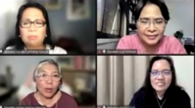
From Uganda: Jocylynne Nakibuule in conversation with Nankwanga Eunice Kasirye
In the last episode in the series, IAWRT Board Secretary and Uganda chapter president Nankwanga Eunice Kasirye speaks with journalist Jocylynne Nakibuule on a harrowing news coverage experience where she had to save a life and then still had to write the story.
Insight Talk is an original podcast by IAWRT. It is produced by the IAWRT Long Documentary Committee and Mentorship Committee and created through the support of the Journalism and Media International Center of the Oslo Metropolitan University.
Women journalists from India, Pakistan, Kenya and Uganda share insights on the challenges and breakthroughs while covering the pandemic. This is also with support from the JMIC of OsloMet small projects with IAWRT on women journalists, safety, and media freedom.
https://iawrt.org/wp-content/uploads/2022/04/insight-talk.png220220adminhttp://iawrt.org/wp-content/uploads/2021/11/logo.pngadmin2021-12-08 12:29:002022-04-14 12:32:18Last episode of Insight Talk is out
From India: Natasha Badhwar in conversation with Radhika Khanna
In the third episode, Radhika Khanna speaks to filmmaker Natasha Badhwar.
Natasha Badhwar is an independent filmmaker and writer who leads the media team of Karwan e Mohabbat, a people’s campaign in support of victims of hate crime, communal violence and socio-economic marginalization.
Natasha is interviewed by Radhika Khanna who teaches in the School of Media and Communication, Pondicherry University and heads the Educational Multimedia Research Centre at Puducherry.
Insight Talk is an original podcast by IAWRT. It is produced by the IAWRT Long Documentary Committee and Mentorship Committee and created through the support of the Journalism and Media International Center of the Oslo Metropolitan University.
Women journalists from India, Pakistan, Kenya and Uganda share insights on the challenges and breakthroughs while covering the pandemic. This is also with support from the JMIC of OsloMet small projects with IAWRT on women journalists, safety, and media freedom.
https://iawrt.org/wp-content/uploads/2022/04/insight-talk.png220220adminhttp://iawrt.org/wp-content/uploads/2021/11/logo.pngadmin2021-12-03 12:25:002022-04-14 12:34:12Third episode of Insight Talk is live
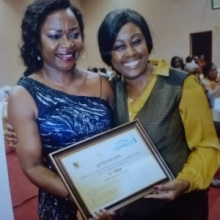
Tchonko Becky Bissong was given first prize in the “Awards for considering gender balance in the media in Cameroon.”
On November 26, during the first edition of an event organized within the framework of the #16daysofactivism campaign to #EndGBV in Cameroon, IAWRT Cameroon chapter Head Tchonko Becky Bissong was distinguished by UN WOMEN Cameroon for her contribution to the promotion of women’s rights and empowerment of women and girls through her radio magazine programme “CALLING THE WOMEN.”
The event was the first FALCON AWARDS by the Global Women Emancipation in Sports to showcase women sports icons who stood tall against discrimination and other forms of violence women encounter.
UN WOMEN Cameroon and the National Communication Council thereby used the occasion to encourage media professionals who promote women’s rights and gender equality through their work.
https://iawrt.org/wp-content/uploads/2022/04/IMG-20211130-WA0004.jpg220220adminhttp://iawrt.org/wp-content/uploads/2021/11/logo.pngadmin2021-12-01 22:04:002022-04-11 22:07:20Becky Bissong recognized by UN Women Cameroon for promoting women’s rights
By Ayse Kelce, IAWRT-USA and UN Youth Representative
The 2021 United Nations Climate Change Conference, also referred to as COP26, was held in Glasgow, Scotland between Oct. 31 and Nov. 13 with the attendance of representatives from nearly 200 countries both in-person and online.
The goals for the 26th UN Climate Change Conference included: securing global net-zero by mid-century and keeping 1.5 degrees Celsius within reach, adapting to protect communities and natural habitats, mobilizing finance, and working together to deliver.
World leaders came together to find sustainable solutions to combat climate change, however, finding common ground that would not clash with individual member states’ policies and perspectives have proved to be challenging.
As a result of the negotiations, more than 100 countries agreed to cut emissions of this greenhouse gas by 2030. More than 40 countries agreed to shift away from coal, and more than 100 national governments, cities, states, and major car companies signed the ”Glasgow Declaration on Zero-Emission Cars and Vans” to end the sale of internal combustion engines by 2035 in leading markets, and by 2040 worldwide. At least 13 nations also committed to ending the sale of fossil fuel-powered heavy duty vehicles by 2040.
Member states made individual promises to contribute to the global efforts.
By 2070, India will achieve the target of net-zero emissions. Today, the entire world acknowledges that India is the only big economy in the world that has delivered in both letter and spirit on its Paris commitments.
Indian Prime Minister Narendra Modi
In addition to the governmental efforts, nearly 500 global financial services firms agreed to align $130 trillion with the goals set out in the Paris Agreement, including limiting global warming to 1.5 degrees Celsius.
Money is not a concern if we want to use it well. This COP26 must be the start of a new momentum, a quantum leap in our fight against climate change.
Italian Prime Minister Mario Draghi
The United States and China also pledged to boost climate cooperation and promised to show greater efforts on certain issues including methane emissions, transition to clean energy and decarbonization.
“Important work was done there, and important work is being done here,” former U.S. President Barack Obama said during the conference. “That is the good news. Now, for the bad news. We are nowhere near where we need to be.”
During the Obama administration, the United States adopted the Paris Agreement, which is a legally binding international treaty on climate change, in 2015. Former President Donald Trump announced in 2017 that the United States would cease all participation in the Paris Agreement, however, the United States officially rejoined the agreement in 2021 under current President Joe Biden’s administration.
“This is a decisive decade in which we have an opportunity to prove ourselves. We can keep the goal of limiting global warming to just 1.5 degrees Celsius within our reach if we come together, if we commit to doing our part of each of our nations with determination and with ambition. That’s what COP26 is all about,” Biden said during his speech at COP26.
The outcome of COP26 is a compromise. It reflects the interests, the contradictions and the state of political will in the world today. It is an important step, but it is not enough.
UN Secretary-General António Guterres
Since the agreements from the COP26 are not legally binding, it is crucial for the member states to keep their promises to create a real attempt to combat climate change.
COP27 will be held between Nov. 7-18, 2022 in Sharm El-Sheikh, Egypt.
https://iawrt.org/wp-content/uploads/2022/04/Ayse_Kelce_Copy-Chief_Ticker.jpeg220220adminhttp://iawrt.org/wp-content/uploads/2021/11/logo.pngadmin2021-11-25 21:51:002022-04-14 12:28:59COP26 brings together nations to discuss climate change and solutions
From Kenya: Rose Kimotho in conversation with Toepista Nabusoba
In the second episode, Rose Toepista Nabusoba may be the first women media owner in Kenya but that did not protect her from confronting some of the most difficult challenges of her career.
Insight Talk is an original podcast by IAWRT. It is produced by the IAWRT Long Documentary Committee and Mentorship Committee and created through the support of the Journalism and Media International Center of the Oslo Metropolitan University.
Women journalists from India, Pakistan, Kenya and Uganda share insights on the challenges and breakthroughs while covering the pandemic. This is also with support from the JMIC of OsloMet small projects with IAWRT on women journalists, safety, and media freedom.
https://iawrt.org/wp-content/uploads/2022/04/insight-talk.png220220adminhttp://iawrt.org/wp-content/uploads/2021/11/logo.pngadmin2021-11-21 21:49:002022-04-14 12:35:08Second episode of Insight Talk podcast
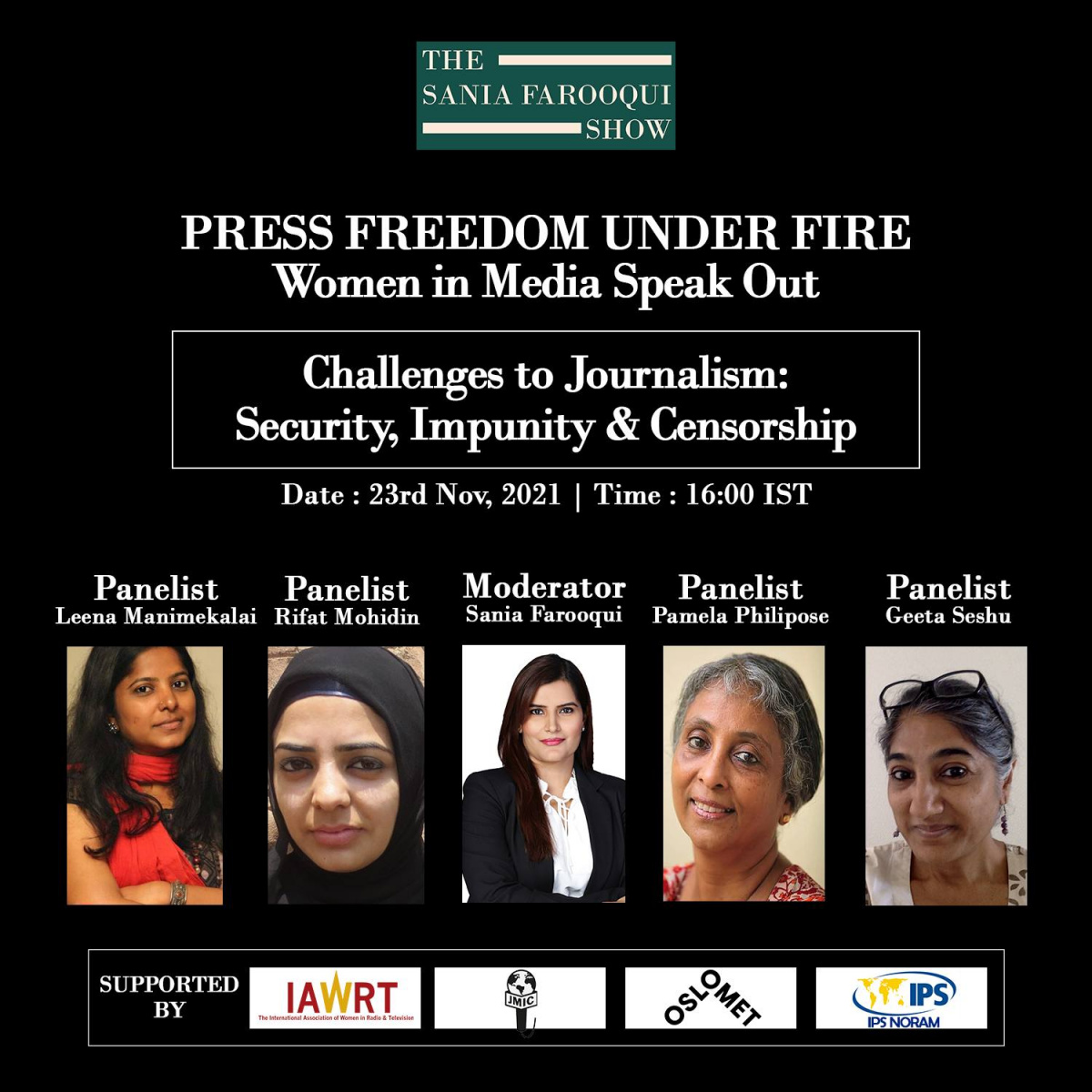
The Sania Farooqui Show is an online show hosted by journalist Sania Farooqui, published across social media platforms including, YouTube, Twitter, Facebook, Instagram and Spotify.
The IAWRT International Board has selected India chapter member Sania Farooqui’s project titled, Press Freedom Under Fire: Women in Media Speak Out with support from the Journalism and Media International Center (JMIC) at Oslo Metropolitan University (OsloMet) for their small projects on women journalists, safety and media freedom.
This project will be put together as part of The Sania Farooqui Show, where there will be discussions, webinars on #MeToo, hostile environment, press freedom, online trolling and digital safety. This will be followed by a short training available for IAWRT members and women journalists on digital safety and security.
Digital security and hostile online environments are important and significant issues that need to be discussed, online abuse against women is a growing international phenomenon, in forms ranging from sexual harrassment to rape threats and gender based hate speech. Press Freedom has become a big challenge and I hope to put together this event to raise and discuss these very important issues.
Sania Farooqui
The first series in The Sania Farooqui Show- Women and Islam, currently in its season two, is a deep dive into the lives of Muslim women from all around the world, exploring who they are, what they do, and how the current climate of global politics including Islamophobia and Xenophobia impacts their lives.
The next series is Women and Press Freedom, these are sharp conversations with journalists from around the world, where we discuss the state of press freedom in their country, on reporting from hostile environments, online violence against women and a special series on the #MeToo movement across countries and newsrooms and more. These conversations are followed by a detailed interview with the guest, covering a particular theme/angle that is published as an opinion piece on IPS News, where it is shared on their websites, newsletter and social media platforms. These opinion pieces are supported where possible by multi-media (video, podcast or picture essay) features.
About: JMIC belongs to the Department of Journalism and Media Studies atOsloMet, and is part of OsloMet’s international work. JMIC works to build bridges between journalists and academics; and between media people in a range of countries, particularly in the global South, through exchanges, training, conferences and publications.
JMIC works particularly with other institutions and organizations by contributing in areas such as freedom of expression and media freedom, human rights and democracy linked to the journalist profession. Among important areas of cooperation are journalist safety, access to information, media, journalism and gender rights, media and extremism, media and climate change.
https://iawrt.org/wp-content/uploads/2022/04/1122-Sania.png220220adminhttp://iawrt.org/wp-content/uploads/2021/11/logo.pngadmin2021-11-20 21:44:002022-04-11 21:47:31Press Freedom Under Fire: Women in Media Speak Out
The Long Documentary Committee and Mentorship Committee of the International Association of Women in Radio and Television (IAWRT) created a podcast series with support from the Journalism and Media International Center of the Oslo Metropolitan University in Norway.
Women journalists from India, Pakistan, Kenya and Uganda share insights on the challenges and breakthroughs while covering the pandemic.
The first episode is a conversation with Tanzeela Mazhar, a journalist from Pakistan who is a COVID-19 survivor. She also got pregnant during the pandemic but continued reporting despite the many health challenges. IAWRT member from Pakistan Qudsia Mehmood spoke with Tanzeela in this episode.
Early this year, the Long Documentary Committee held a two-part podcast workshop for members.
https://iawrt.org/wp-content/uploads/2022/04/1116-IAWRT-INSIGHT-TALK-POSTER-FINAL.jpeg220220adminhttp://iawrt.org/wp-content/uploads/2021/11/logo.pngadmin2021-11-16 21:38:002022-04-11 21:41:54Insight Talk: Pandemic Through the Eyes of Women Journalists
Collection of fact-checking posts on the current events and issues of the day in Ethiopia
by Rebecca Tadesse Hunde
These days, everyone is a self-proclaimed journalist just because they opened a YouTube or blog or any kind of platform on social media networks, and some talk and write without checking the facts. Unfortunately, people of any age tend to believe what they watch or hear just because it is on YouTube and the account has several followers and subscribers.
Disinformation, misinformation, and malinformation are also rife in traditional media, like radio and TV.
My country, at this time of war, at least needs those who can talk sense and facts. We need to debunk falsehoods and discourage them from spreading. This is a very important role of journalists and civil society actors.
Practicing fact-checking or creating an environment of fact-checking will help society to think twice before disseminating or spreading what they hear and hopefully push individuals and citizens to do fact-checking themselves.
Find below some stories and issues I have fact-checked:
False: The image doesn’t show the presidents watching the swearing ceremony of PM Abiy Ahmed
The image has been used on other websites to show different events not related to Ethiopia.
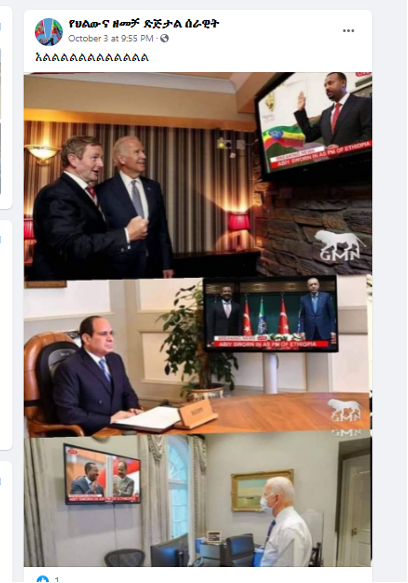
A Facebook page shared photographs showing us president Joe Biden and Turkish President Tayyip Erdogan watching the sworn-in of Abiy Ahmed as prime minister of Ethiopia.
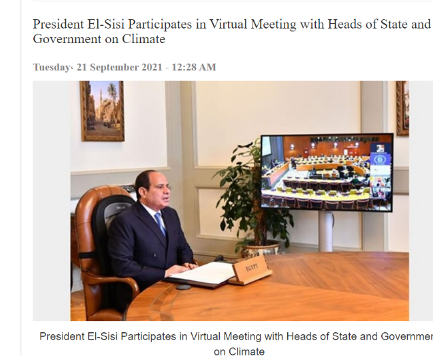
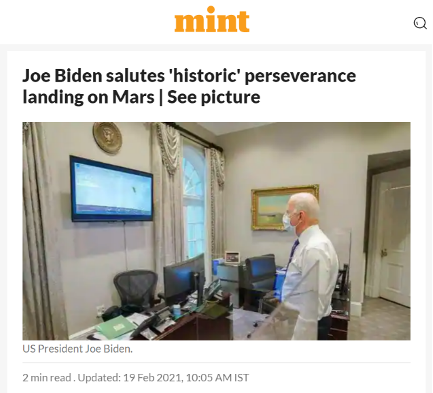
The first picture shows president Biden and some other people watching Prime minister Abiy Ahmed Swearing. The second one shows the Turkish president Tayyip Erdogan in his office watching Abiy Ahmed TV. The third one shows president Biden watching TV as well. The President of Eritrea Isaias Afewerki and Ethiopian Prime minister Abiy Ahmed can be seen on the screen.
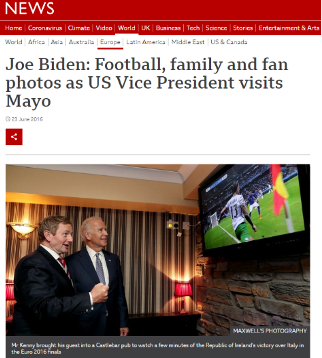
However, Google reverse image results reveal that the photos are taken on different occasions at different times of the year. The first photo is taken from the BBC News website published in 2016 when Joe Biden( then vice president ) visited Ireland and the person watching TV with him was Irish prime minister Enda Kenny watching a soccer match.
The second photo was taken from the Egypt information service website when President El-Sisi Participated in a virtual meeting with Heads of States and Governments on Climate on September 21, 2021.
The third photo was taken from the US president’s Twitter account when he was watching The NASA Perseverance rover safely land on Mars on February 19, 2021.
Pesacheck looked into a Facebook post with an image claiming to show president joe Biden, Irish prime minister Enda Kenny and president al Sisi watching television events regarding Ethiopia and finds it to be FALSE.
FALSE: The Kenya-Ethiopia border has not been closed
The NPS clarified that Kenya’s border with Ethiopia has not been closed, noting that they have only increased security at the border.
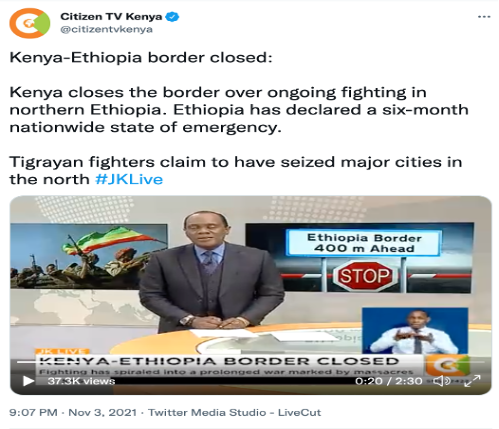
On November 3, 2021, Citizen TV Kenya reported that the Kenyan government had closed its border with Ethiopia.
The TV station posted the news on its Twitter and Facebook pages, as well as on its YouTube channel.
“Kenya-Ethiopia border closed: Kenya closes the border over ongoing fighting in northern Ethiopia. Ethiopia has declared a six-month nationwide state of emergency. Tigrayan fighters claim to have seized major cities in the north,” read the Tweet by the media outlet.
However, in a tweet on November 4, 2021, Kenya’s National Police Service (NPS) denied the claim that the Kenya-Ethiopia border had been closed, saying they have only increased security along the border and the security situation remains calm.
Additionally, no other credible media house has reported the news about the closure of the Kenya-Ethiopia border.
On November 3, 2021, NPS spokesperson Bruno Shioso issued a statement noting that the Government of Kenya was concerned about the recent and unfolding events that disturb the peace and stability in neighboring countries and the greater East African region.
“As an immediate neighbor to some of the affected countries, Kenya may be adversely impacted by the consequences of the events. The National Police Service has heightened security along the Kenyan borders and in other critical areas,” read the statement in part.
Ethiopia declared a six-month state of emergency on November 2, 2021, following an escalation of the Tigray conflict which began in November 2020.
Pesacheck investigated the claim that the Kenyan government closed its border with Ethiopia and finds it to be FALSE.
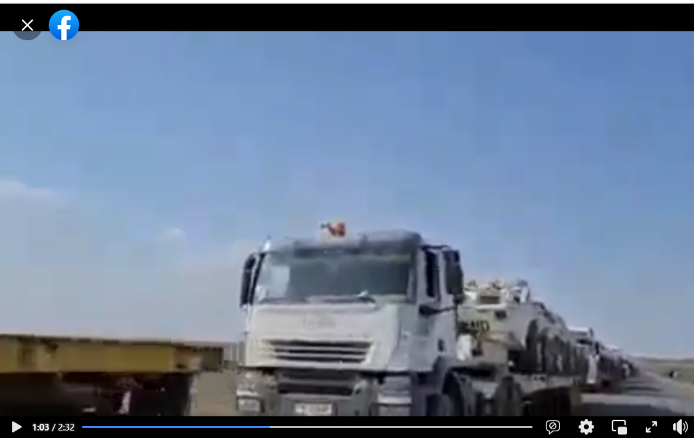
FALSE: The UN did not send war equipment to the Tigray region.
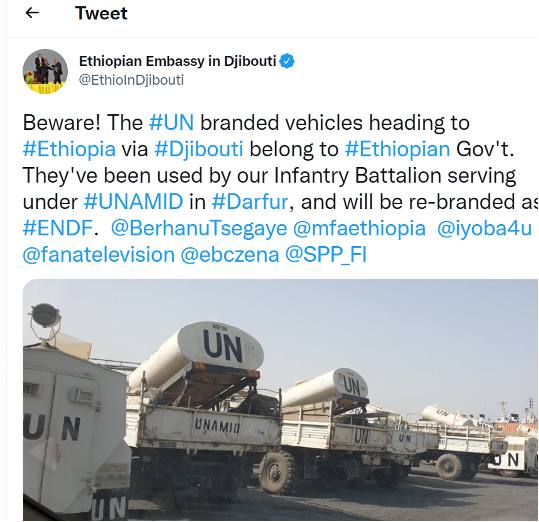
The Ethiopian Embassy in Djibouti dismissed the claim saying that the vehicles belong to the Ethiopian government, not to the UN.
This Facebook video claiming to show that the UN is giving war gear including tanks to the Tigray region is FALSE.
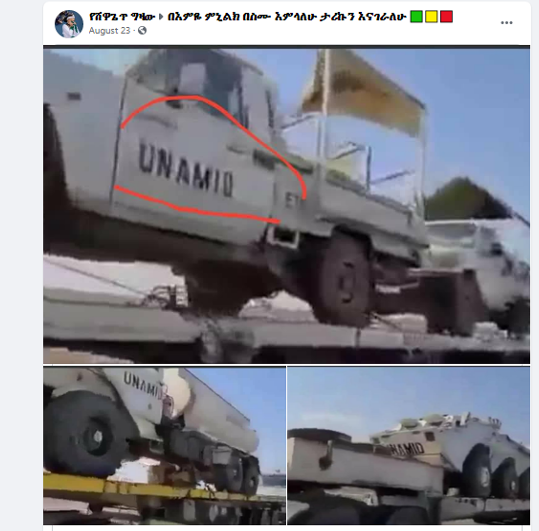
The video post on August 22, 2021, claims that the vehicles are traveling to the Tigray region.
The post includes several photos and videos showing UN-marked vehicles traveling from Djibouti.
The video shows different military-like vehicles on the road and the narrator says in Amharic and Afar language, “The vehicles are coming from Djibouti, as it is seen the vehicles have UN and UNAMID marks on them”.
UNAMID is The United Nations – African Union Hybrid Operation in Darfur, which completed its mandate on 31 December 2020.
However, the Embassy of Ethiopia in Djibouti released a statement confirming that the UN branded vehicles indeed traveled from Djibouti but to Addis Ababa, not to the Tigray region.
The embassy confirmed that the vehicles belong to the Ethiopian government, not to the UN. The vehicles used to serve under UNAMID in Darfur. The embassy on its Twitter page also said the vehicles will be rebranded as #ENDF Ethiopian Defense force.
HOAX: There is no Norwegian visa lottery program
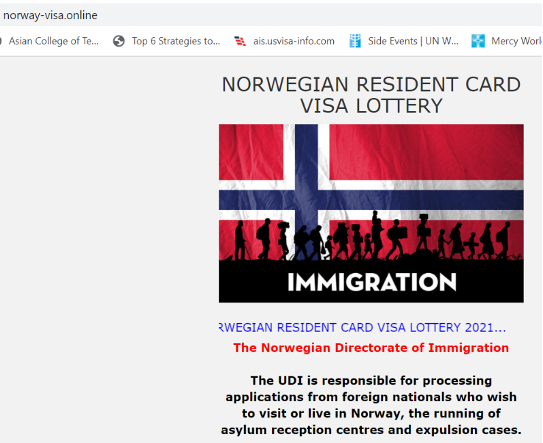
For the last few days, there have been links sent to many people using WhatsApp and mobile text messages (SMS). The text informs that the 2021-22 Norwegian resident card visa lottery application is open and anyone eligible can apply.
The link showed that The Norwegian Directorate of Immigration the UDI is responsible for processing applications from foreign nationals who wish to visit or live in Norway.
A similar post also appeared on different Facebook pages telling people to apply to the 2021-2022 visa lottery.
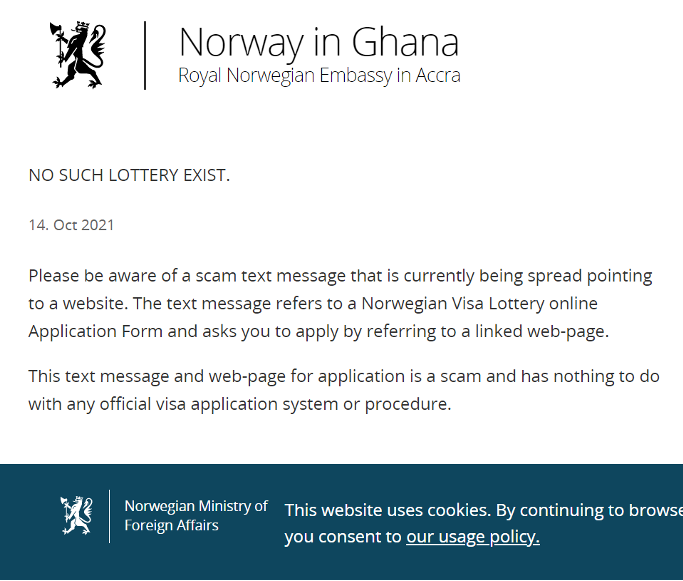
The Norwegian Ministry of foreign affairs sent a warning to all people explaining that there is no visa lottery plan to Norway, and the text, as well as the site that leads to the link, is a scam and the government of Norway has no knowledge about it.
Pesacheck investigated the claims posted on Facebook and WhatsApp about the Norwegian visa lottery and finds them to be HOAX.
Partly false: -Trading Khat did not ban in Dessie
The city mayor denied the claim saying that the restriction is on the youth who gathered to chew khat
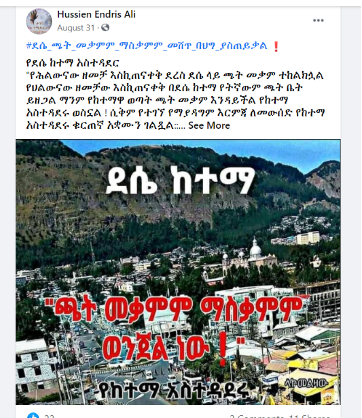
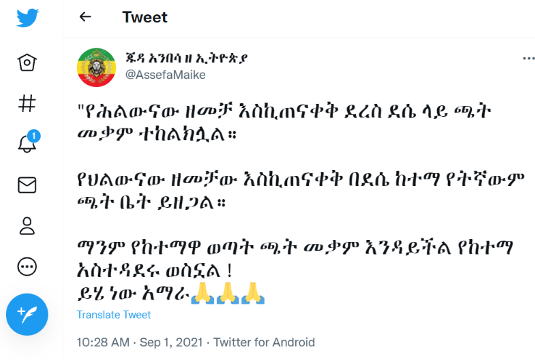
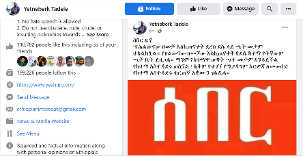
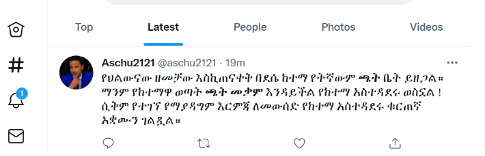
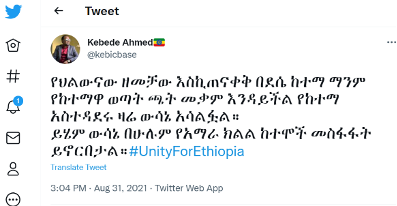
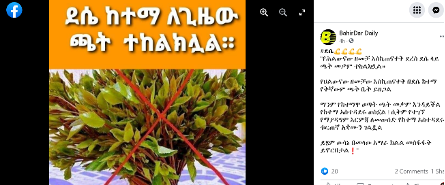
Several Facebook and Twitter posts on August 31 2021 are claiming that starting from tomorrow the residents in the city of Dessie will not be able to chew Khat, shops cannot sell khat and no one is allowed to trade it.
According to many posts written in Amharic, the city administration’s restriction is especially for the youth in Dessie until the end of the campaign. This decision will be extended to all cities in the Amhara region soon. Dessie is a city and a zone in north-central Ethiopia. Located in the Amhara Region.
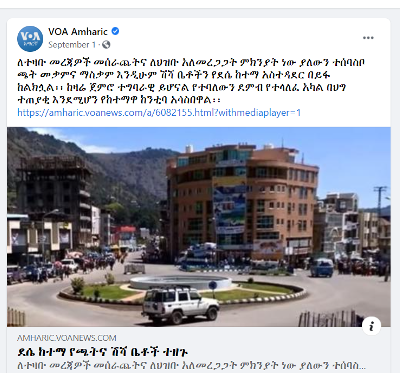
The city Mayor Abebe Gebremeskel confirmed to VOA that the restriction is made because the gathering of people to chew Khat is becoming the source of dissemination of wrong information and creating instability for the people and displacement. He also explained that the restriction will continue until the conflict is over.
He also explained the restriction is specifically on the gathering and chewing of khat, not on the trading of khat, since so many depend on it, making it difficult to completely ban it.
The decision was reached after the locals raised the issue, and was in consultation with more than 3000 merchants, the mayor explained.
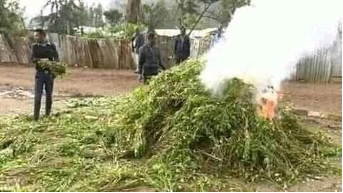
The post reached a hundred thousand people within a few hours. But most of the photographs used of police officers burning piles of khat were not taken yesterday as claimed. The same photo was used a year ago for different news articles.
Pesacheck has investigated the claims posted on Facebook and Twitter that claim the administration in Dessie has placed a complete ban on khat trading and chewing and finds it to be partly False.
https://iawrt.org/wp-content/uploads/2021/11/1114-rebecca.jpeg220220adminhttp://iawrt.org/wp-content/uploads/2021/11/logo.pngadmin2021-11-14 20:30:002022-04-11 21:23:28Fact-checking in Ethiopia
Third/last in a series on the Roundtable discussion organized by IAWRT Philippines, OsloMet Journalism and Media International Center, in partnership with the Philippine Press Institute and Hanns Seidel Foundation.
by Janness Ann J. Ellao
Gigie Cruz, Filipino photojournalist and editor for ABS-CBN News and former chairperson of the Photojournalists’ Center of the Philippines (PCP), discussed the safety of women journalists in covering the elections amid the pandemic during the roundtable discussion and forum, “Halalan 2022: Ready na ba ang kababaihan sa media?” on October 9.
Women journalists and female journalism/communication teachers and students participated in this online event organized by the International Association of Women in Radio and Television (IAWRT) Philippines and Oslo Metropolitan University (OsloMet) Journalism and Media International Center (JMIC) in partnership with the Philippine Press Institute (PPI) and Hanns Seidel Foundation (HSF).
Cruz emphasized that the safety of women journalists is brought to the fore again as the Philippines prepares for another national election. Citing a study by Dr. Tom Smith, principal lecturer in international relations and terrorism in the University of Portsmouth in the United Kingdom, Cruz said the Philippine elections next year could be “the bloodiest ever.”
I hope that will not happen, but we have to prepare ourselves. Given the forecast that it will be violent, do we step down? We have to find a balance between risk and safety. Women journalists in the Philippines have shown us that there’s always a way to tell our stories.
Gigie Cruz
As it stands, the Philippines is one of the most dangerous places for a journalist, with President Rodrigo Duterte named as one of the world’s 37 press freedom predators of 2021, according to the Reporters Without Borders. Also, during the pandemic, the National Union of Journalists of the Philippines (NUJP) said there were more attempts at silencing journalists through charges of libel, which is a criminal offense in this part of the world.
Cruz recalled that in recent history, among the deadliest attacks against journalists worldwide was the infamous Ampatuan massacre that killed 58 people, where 32 were journalists and media workers. This, she added, happened during the election period.
“It is also important to create safe spaces for women journalists where they can find support from each other, especially when things get rough. I think it is always helpful to have organizations like IAWRT and PCP and NUJP, so you can always have people to have your back in case threats happen,” said Cruz.
Apart from looming violence, the risks amid the COVID-19 pandemic must also be considered by journalists who will be covering the elections. Cruz pointed out that there have been changes in how Filipino journalists have been covering, including the wearing of double masks, the use of longer microphone posts, and physical distancing, to name a few.
In her presentation, Cruz highlighted the importance of assessing the risks and opportunities during pre- and post-coverage and protecting one’s digital security. To prepare for coverage, she said it is important to have a contingency plan, make use of location monitoring applications for the newsroom, and use personal protective equipment.
“We always do risk management. Is the threat bigger than the opportunities? Or are the opportunities bigger than the threats? And then you make a decision: should I stay or should I go?” she said.
Cruz also underlined the need to revisit the rights of journalists. “Before we go out there, we should know our rights. We should know the laws that cover journalists, so every time there is a threat against us, or harassment, we can emphasize to these people that I know my rights and I have the right to cover this story,” she said.
https://iawrt.org/wp-content/uploads/2021/10/1019-iawrt-ph-e1638467729534.png108195Lady Ann Salemhttp://iawrt.org/wp-content/uploads/2021/11/logo.pngLady Ann Salem2021-10-19 06:59:482022-11-14 15:30:36Filipino Women Journalists Must Prepare for Dangerous 2022 Polls
Second in a series on the Roundtable discussion organized by IAWRT Philippines, OsloMet Journalism and Media International Center, in partnership with the Philippine Press Institute and Hanns Seidel Foundation.
by Margarita Valle
Rappler Head of Regions Inday Espina-Varona discussed the importance of amplifying voices of the marginalized and people’s agenda of change for the upcoming elections and beyond during the roundtable discussion and forum, “Halalan 2022: Ready na ba ang kababaihan sa media?” on October 9.
Women journalists and female journalism/communication teachers and students participated in this online event organized by the International Association of Women in Radio and Television (IAWRT) Philippines and Oslo Metropolitan University (OsloMet) Journalism and Media International Center (JMIC) in partnership with the Philippine Press Institute (PPI) and Hanns Seidel Foundation (HSF).
Varona shared her thoughts on how journalists can make a difference, especially during elections. She said 2022 is “an ‘existential’ election” for several reasons.
For one, the veteran journalist who has persistently and painstakingly tackled social issues in her coverage across different government administrations for decades sees the Duterte government as one that is in “disarray.” Citing the slow drop in approval rating in the national surveys and discontent with key governance areas, Varona pointed out that citizens have become critical of the way Duterte tried to sneak into the vice presidency run machinations.
At the same time, the current political maneuverings of the status quo seem to dominate, particularly on social media, where the army of trolls seems to be determined to pursue spreading disinformation and deceit in whatever manner they see fit. However, she cited the “specter of accountability” faced by the president, even as “the ‘opposition’ is equally unwieldy” and there are “too many challengers” dissipating “odds of stopping Duterte’s favored successor and/or proxies.”
She added that the challenge of ending Duterte’s despotic rule seems gargantuan, citing the threat of COVID-19 that continues to hamper grassroots campaigns. Moreover, legacy and digital media battlegrounds only benefit the rich, as the “promiscuous chase for profits by tech companies worsen the problem of disinformation.”
Seeing that “even the most organized blocs of the opposition lack a strategic view of social media” and “parochial and sectarian mindsets trap messages in silos and prevent amplification,” Varona noted that these add up to the mounting challenges that media is facing. The lack of critical consciousness among the so-called opposition has somehow drowned their dissenting voices, making them invisible in their fight.
Varona then presented some strategies for journalists that would “highlight people’s issues” in the current race for government positions. Citing what surveys have revealed about the current national situation with regard to the lack of jobs, loss of income, poverty, hunger, COVID-19, and corruption, she laid out how the media should cover the elections.
Among these are the following tips:
Go beyond the usual suspects
Look for authentic voices
Frame stories on a human scale
Show how communities are linked by pain and struggle
Never forget hope
In addition, she suggested that journalists “be conscious of media consumption patterns.”
She encouraged using “live and video shorts (immersive experience) with dramatic photos” and practicing “data and visual journalism,” which helps explain complex issues.
Further elucidating on these strategies, she said issues that directly affect people’s lives need to be highlighted in the election coverage, as these are the political yardsticks that would measure the real intention of the candidates in running for specific positions in government service.
Varona likewise stressed the need for journalists to not only inform the public but more importantly, help the electorate understand issues. Citing the circus that the electoral processes have become for decades, she said the journalists’ most important role in Philippine society today includes engaging audiences, concretizing stories, and helping people understand the context of stories are crucial.
“Always bring a story down to the everyday experience,” she stressed. “That will mean that you are one. You are not separate, you are not above your audience… you are actually with them.”
https://iawrt.org/wp-content/uploads/2021/10/1017-iawrt-ph-inday-e1639562499964.png127220Lady Ann Salemhttp://iawrt.org/wp-content/uploads/2021/11/logo.pngLady Ann Salem2021-10-18 00:14:222022-11-14 15:31:20The Story of Our Lives: Election Issues for an Informed Citizenry