By Samina Mishra

Aaradhana Kohli is the new chapter head.

IAWRT Chapter India’s new Board of Trustees for 2022-24. 

The office-bearers are:

Managing Trustee – Aaradhana Kohli

Secretary – Kiron Bansal

Treasurer – Deepti Khurana

The other Board Members are:

Shikha Jhingan (Outgoing Secretary)

Padmaja Shaw (Outgoing Board Member)

Bina Paul

Anitha Balachandran

Kohli and Bansal are both long-time members of the chapter, inducted by former IAWRT President Jai Chandiram, and have been active in many different ways through the years. Kohli was also the Festival Director of the AWFF in 2018 and Khurana was the Festival Director of the online edition in 2021.

Jhingan and Shaw are also part of the previous board, and Paul from one of the previous boards.

Balachandran is an animator based in Bangalore and co-curated a package of student films for an event we organised on April 8.

The new board is a very talented team, with a good mix of experienced IAWRT hands as well as new voices that is sure to take the chapter to another level.

The Committee to Protect Journalists (CPJ) wrote to Philippines’ president-elect Ferdinand Marcos Jr to reverse “your predecessor’s abusive acts and policies targeting independent media and journalists and restoring the Philippines’ once-proud standing as a regional bastion of press freedom.”

CPJ asked Marcos Jr to drop all charges against Maria Ressa and Rappler.

“To start with, your administration should end the relentless persecution of journalist and Nobel Peace laureate Maria Ressa, a global beacon of press freedom,” the group in the letter.

CPJ also asked Marcos Jr to restore the operating franchise of ABS-CBN, the country’s biggest broadcast company before its franchise expired on May 5, 2020 as its application was not acted on by Congress and then the legislative body eventually rejected it.

“Duterte repeatedly threatened not to renew ABS-CBN’s 25-year franchise agreement before Congress decided against its application,” CPJ said.

The dangerous practice of red-tagging by government must also be stopped, according to the group.

“We also urge your government to cease the “red-tagging” of journalists, the wrongful and dangerous labeling of reporters as supporters of the banned communist insurgency. Duterte’s administration made red-tagging de facto government policy and employed the practice to threaten, harass, and jail journalists,” added CPJ.

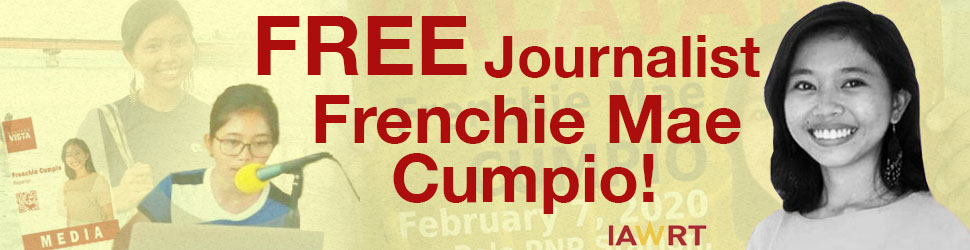
The group also asked for the release of IAWRT Philippines member Frenchie Mae Cumpio.

“In particular, we call on you to exercise your executive authority to drop the red tagging-related charges pending against journalist Frenchiemae Cumpio,” they said.

Cumpio was arrested on February 7, 2020 on trumped-up charges in a police pre-dawn raid in the office of her media outfit Eastern Vista. She has been in jail since then while additional charges were reportedly filed against her.

A similar raid and charges of illegal possession of firearms was also used to put IAWRT Communication Officer and Manila Today editor Lady Ann Salem in jail. She was released from prison on March 5, 2021 after the court dismissed the charges against her.

Read full CPJ letter to Marcos Jr here: https://cpj.org/2022/05/cpj-calls-on-president-elect-marcos-to-protect-press-freedom-in-the-philippines/

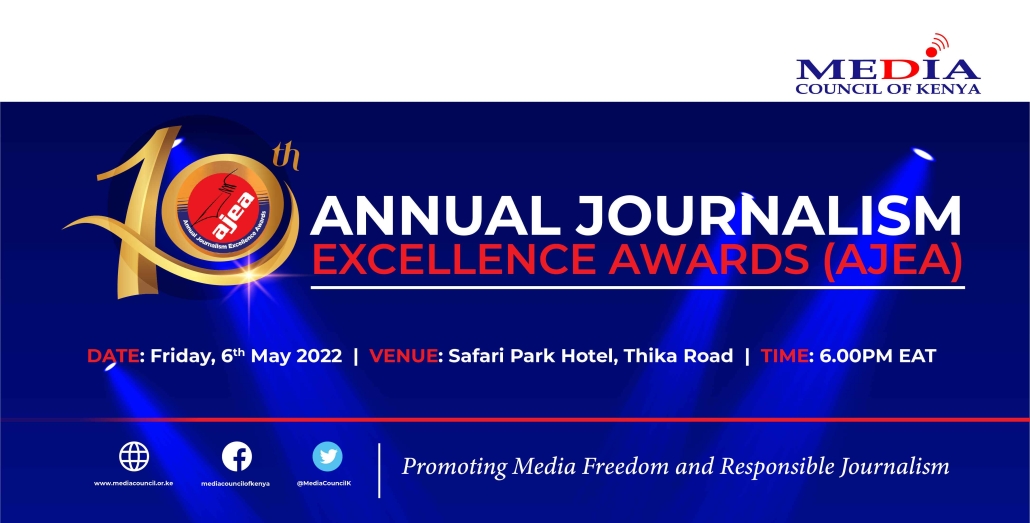
Three members from IAWRT Kenya chapter won in the 2022 Annual Journalism Excellence Awards (AJEA), known as one of Kenya’s prestigious journalism awards which was established since 2012 for print, broadcast, and now digital journalism

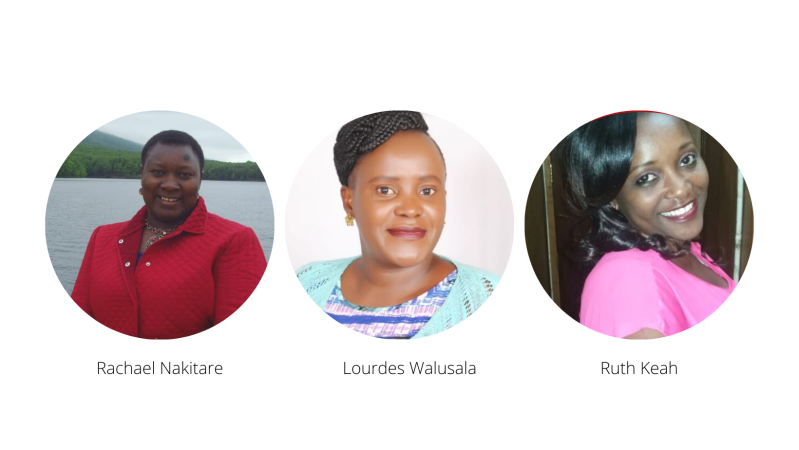
Former IAWRT Chairperson Rachael Nakitare received the Lifetime Achievement Award for her contribution to the media development in Kenya over the years. Rachael has been involved in mega media projects locally and internationally. She was the first Kenyan journalist to interview the former President Obama at the White House.

Ruth Keah of Radio Rahma bagged three awards in three categories: ICT and Telecommunication Reporting Radio for “Gharama ya mawasiliano kwa watu wenye changamoto ya matamshi,” Innovation and Business Reporting Radio for “Programu ya ranunu inavyosaidia watu wenye ulemavu kupata ajira” and Sports Reporting Radio for “Mohammed Munga – aaupuza ulemavu na kung’aa kimataifa kwenye mchezo wa soka.” All her stories, produced in the local Swahili language, highlighted the plight as well as achievements of people with disabilities.

Senior radio journalist Lourdes Walusala of KBC English Service won in the Innovation and Business Reporting Radio category for “Recovery of women-led smes.”

The chief guest at the awards ceremony was Court of Appeal President Daniel Musinga, while Auditor General Nancy Gathungu was the Keynote speaker. MCK CEO Mr. David Omwoyo reiterated the council’s commitment to upholding and ensuring ethical journalism practice.

He said, “It is prudent for the media to provide Kenyans and media content consumers with content that is prepared professionally, that promotes, respects and adheres to the fundamental principles and global standards of journalism.”

Through the awards, the media has an opportunity to enhance its professional standards of practice and grow in its mandate as an opinion shaper and a platform for discourse.

About AJEA

Three members of the International Association of Women in Radio and Television (IAWRT)- Kenya chapter scooped top awards during the prestigious Annual Journalism Excellence Awards (AJEA) 2022. This is a signature event of the Media Council of Kenya (MCK) that recognises and celebrates excellence and professionalism in the media industry in Kenya. The awards are usually the peak of celebrations to commemorate the World Press Freedom Day marked globally on 3rd May. This year’s event was particularly significant, marking ten years since the inception of AJEA in 2012.

Winners of these awards submit their stories on broadcast, print and digital platforms after which a panel of judges who then determine the winning stories. The stories must have been published or broadcast over the last one calendar year. Judges often look for innovative stories and investigative journalism that goes beyond the obvious, the ordinary, the expected, and the regular. They look for journalism that puts issues in context and in perspective, thereby making sense of issues of public interest.. The stories cut across radio, television, print and digital platforms . The MCK also presents the Life Time Achievement Award to persons who have shown significant contribution to the media industry at large.

The Council has held AJEA since 2012, with this year’s event marking ten years of its existence.

The awards are a continuous annual recognition and celebration of journalistic excellence and achievement in Kenya. The awards aim to identify, celebrate and maintain excellence in journalism and the media industry in general. It also endeavors to recognise journalists who have demonstrated high standards of reportage and ethics in their work and challenge them to achieve the highest standards of ethics in the profession and practice of journalism. The awards also identify areas of capacity, need for journalists and media practitioners to maintain standards of excellence in the profession. The awards also works to motivate young journalists to seek to excel in their work and grow in the profession and inspire journalists to play their role in upholding democracy, integrity and accountability in society.

The Media Council of Kenya is the guardian for the code of ethics and practice of journalism in the country. The Council is also expected to ensure that journalism standards are upheld and gaps identified in the practice of journalism are mitigated through capacity building.

Dear IAWRT members,

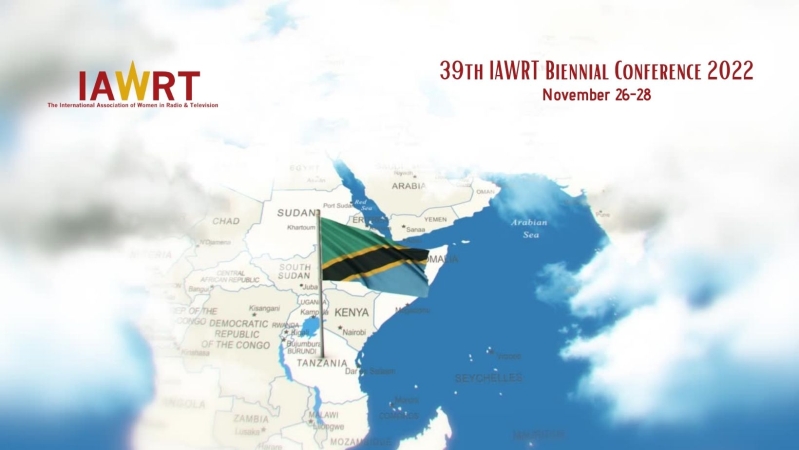
We are pleased to inform you that IAWRT Tanzania has won the bid to host The 39th IAWRT Biennial Conference 2022. 

The conference dates are set from 18th to 20th of November.

The conference will highlight the interlinked crisis of the 3 C’s: Conflict, Covid and Climate change

How do these impact the lives of women and what are the challenges for us as media women?

The conference will be a hybrid physical-online event in order to secure diverse participation among IAWRTs global network. 

All chapters are encouraged to fund one or two representatives to the conference. Individual members who wish to participate physically – and thereby gain access to a series of workshops – are encouraged to start mobilizing for funding as soon as possible. 

For further inquiries or if you need documentation to present to funders, please contact the Biennial Committee ([email protected]) or the secretariat ([email protected] or [email protected]). You are also most welcome to share ideas with us! 

We hope to see many of you in Zanzibar in November!!

Warm wishes,

Bibiana Piene, IAWRT Norway (Head of Biennial Committee)

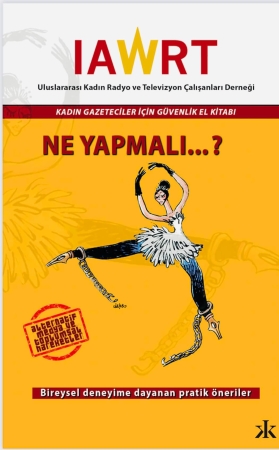
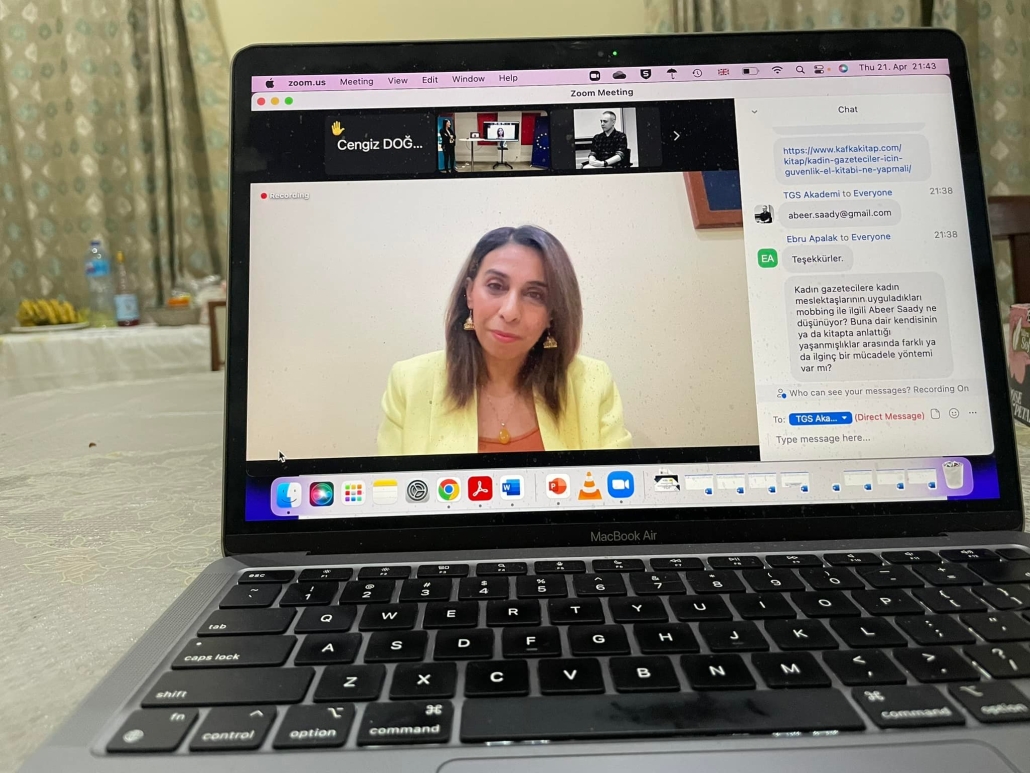
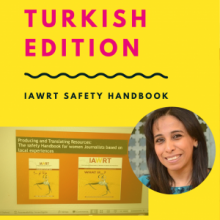
What if? Safety Handbook for Women Journalists” Turkish edition was launched on April 21, 2022 at 19:00 pm Istanbul time at the Turkish Journalists Union (TGS) with the presence of many Turkish journalists.

Abeer Saady, author of the handbook and former IAWRT Vice Chairperson, was not able to join the event in person as she was in Pakistan training journalists and media students, but was able to contribute online.

“Special thanks [go] to IAWRT, JMIC, TGS, and to the great media professors Bora Ataman and Barış Çoban who made that possible. I wish I was there in person with the editor of the book Nonee Walsh and editor of the Arabic version عماد ناصف Emad Nasif,” said Saady in her post on the launch.

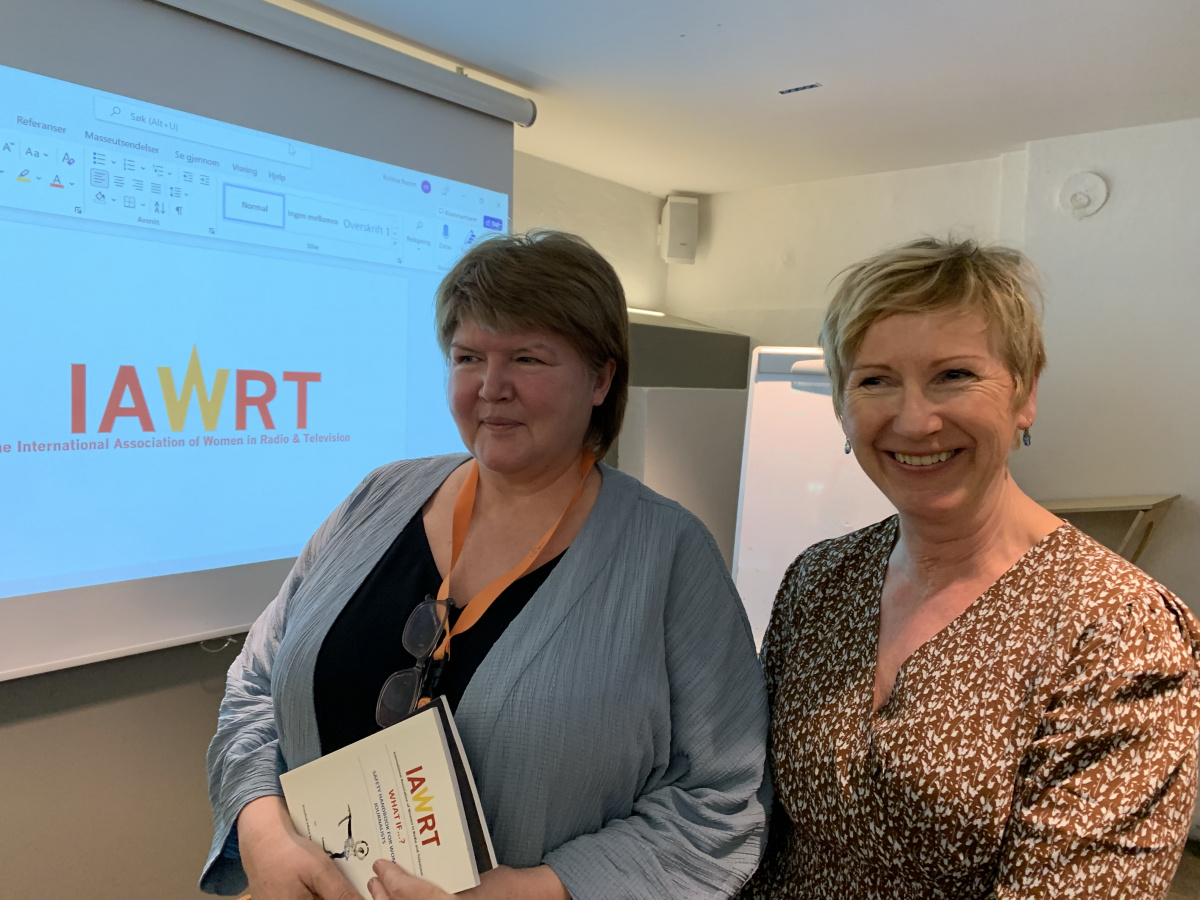
Report from a meeting in Oslo, Sunday, 3rd of April, with Alina Radu, editor and IAWRT Member from Moldova.

By Kristine Ramm

“When the media group Ziarul de Gardă started up 18 years ago, we were the smallest media group in the country. We wanted to give the people independent news.

Moldova is 30 years old, created in 1991. There have been 12 governments during these 18 years, and many members were dismissed because of our work.

Now we have become the largest investigative media group in the country. It includes the largest newspaper, a top web page, and a weekly investigative video program.

So my advice is this: Never give up,” shared Alina Radu, a journalist from Moldova.

On her way home from a journalistic conference in Norway, Alina Radu managed to slip in a meeting before returning home. Twenty people listened to her conversation with journalist Olga Stokke, a newly recruited IAWRT member and elected board member of IAWRT Norway.

Alina Radu has 30 years of journalism career, being awarded by many national and international institutions for her investigative reports against corruption and promoting human rights (Moldova, Romania, Slovakia, Netherlands, Switzerland). Her newsroom is known for impactful investigative stories about corruption at the highest level. She shared:

“Through investigative methods, we have revealed corruption amongst politicians, judges, and religious leaders.

Because of ZdG’s investigative articles about his forged diploma and qualification papers, a prime minister had to step down, and authorities relied on our reporter’s work. Moreover, they often use our investigative stories as the basis for the Prosecutor’s office penal investigations on corrupt politicians in the country”.

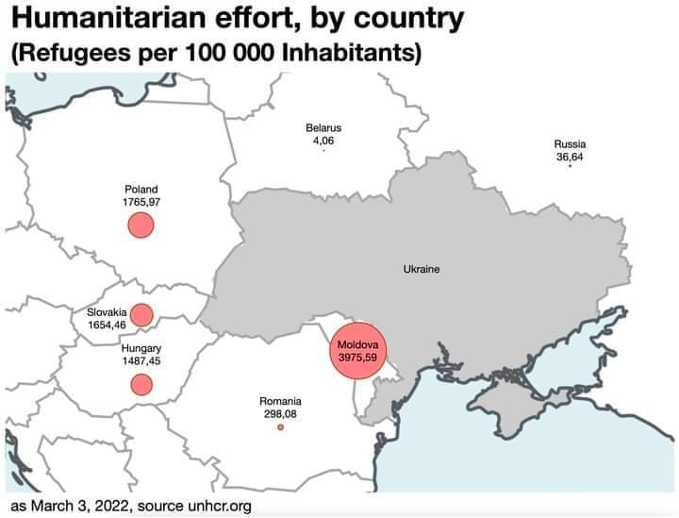
Situated between Ukraine and Romania, Moldova has received over 400,000 refugees, the highest nr per capita of all the countries in the region. But unfortunately, it is also the poorest country in Europe.

Some of them travel on, but about 100,000 had nowhere to go.

“Nobody has been left to sleep outside. On the contrary, 90 % have been taken into private homes, which can be ok for a week, more demanding after a month. And more refugees will come, and the next wave probably is more traumatized than the first ones.

Our situation is not as bad as for the Ukrainians, of course. Ukrainian journalists cover the war without helmets and salaries. But we feel a pressure to inform. We have established good connections in the neighboring countries. The journalists at ZdG now work in 3 shifts, from 6 in the morning till midnight.

Since the start of the war, the web page has become the most read in Moldova, a source of information for Moldovan citizens, Romania, and many European countries who want information about Ukrainian refugees.

Professionally we are on top. We have many readers, but financially we are in a crisis. Our ordinary subscribers are poor, and we cannot charge the full price. We depend on donations, and several of them have stopped.

But we don’t give up. The people need independent news more than ever,” shared Radu.

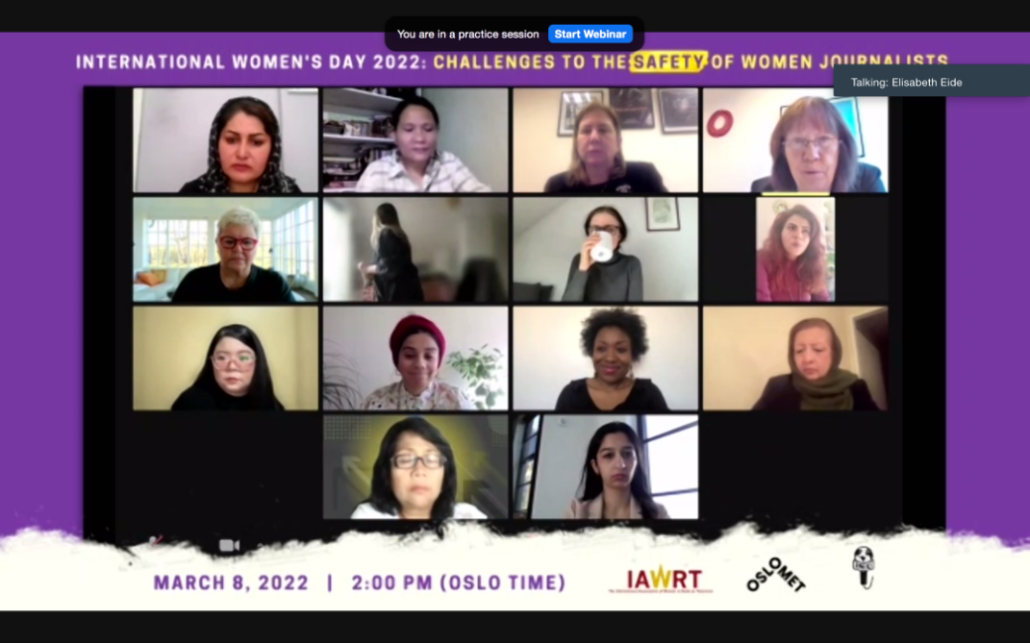
IAWRT gathers women journalists and students all over the world for International Women’s Day to hear women journalists and academics from Norway, Russia, Ukraine, Afghanistan, Turkey, Syria, Egypt, Tanzania and Philippines speak on women journalists’ safety. 

Courage, compassion, and commitment in the face of challenges—these were demonstrated by the women journalists and researchers who shared their stories on March 8, International Women’s Day.

Organized by the International Association of Women in Radio and Television (IAWRT) and the Journalism and Media International Center (JMIC) at OsloMet, the online event “Challenges to the Safety of Women Journalists” was moderated by Elisabeth Eide, veteran journalist, writer, and professor of journalism studies. IAWRT President Violet Gonda opened the program, while Prof. Oona Solberg of OsloMet delivered the closing remarks.

The discussions revolved around the obstacles women journalists face in different parts of the world, and how they continue to stand up against threats and attacks. The momentous event brought together eleven speakers from Europe, Africa, Asia, and the Middle East:

  • Oleksandra Hrybenko from Ukraine, a Ph.D. student at the Department of Journalism and Media Studies at OsloMet in Norway
  • Inna Berezkina from Russia, speaking from exile, programme coordinator at the School of Civic Education
  • Najiba Ayubi, US-based Afghan journalist and activist for human rights and media freedom, Director General of DHSA/The Killid Group, and chapter head of IAWRT in Afghanistan
  • Kreshma Fakhri, a Turkey-based journalist working with The Killid Group since 2009, reporting on corruption, human rights, violence against women and children, and civil war in Afghanistan
  • Birgitte Jallov from Denmark, Director of EMPOWERHOUSE, an initiative supporting community media and civil society organizations toward sustainability
  • Therese San Diego Torres, IAWRT Philippines Board Member and Research, Policy, and Advocacy Director at the Asian Institute of Journalism and Communication (AIJC) 
  • Rand Sabbagh, Berlin-based Syrian feminist journalist and researcher and Deputy Director at the Syrian Women Journalists Network
  • Dr. Naila Hamdy from Egypt, associate professor at the Department of Journalism and Mass Communication at The American University in Cairo, Egypt, and associate dean for research and graduate studies at the School of Global Affairs and Public Policy (GAPP)
  • Raziah Quallateon Mwawanga from Tanzania, media expert, trainer, mentor and consultant, and member of IAWRT Tanzania, East African and Tanzania Editors Society and Forum, and Tanzania Media Women’s Association
  • Nabeelah Shabbir, British-Pakistani journalist based in Amsterdam, the Netherlands, and Senior Research Associate at the International Center for Journalists
  • Sonali Dhawan, a researcher from the Committee to Protect Journalists (CPJ) who previously served as program officer with the American Bar Association Center for Human Rights

Among the highlights were the sharing of the speakers from Ukraine and Russia. With all eyes on their respective home countries, they talked about the experiences of journalists who stayed in Ukraine despite being targeted by the Russian army and facing threats of harassment and rape. They expressed their support for Russian journalists who continue to speak the truth amid the ban and shutdown of all independent media, and the detention, torture, and killing of journalists and human rights defenders.

During the program, participants also witnessed a performance by IAWRT Philippines member Marilyn Mirana, who sang “Easy to Lose Hope” against a backdrop of images of women displaying messages of support for journalists and media workers. The song was dedicated to Veronica Guerin, a crime reporter from Ireland who was murdered by drug lords in June 1996.

The keynote presentation provided a glimmer of hope, as it featured the Digital Safe House (DSH) for Women Journalists spearheaded by IAWRT and International Media Support (IMS) with IAWRT Philippines as beneficiary. A pilot project, the DSH in the Philippines is an online platform featuring a reporting mechanism for Filipino women journalists under threat or attack, as well as a portal of resources such as safety training, peer support and counseling, and legal assistance.

Inna Berezkina from Russia, speaking from exile, said, “I hope people will be judged by their deeds, not the color of their passport because evil has no nationality. And I believe that solidarity shouldn’t have it either.”

The online event provided a venue for women across the globe to listen to each other’s stories and strengthen their solidarity in order to overcome the common struggle against threats and attacks on female truth-tellers.

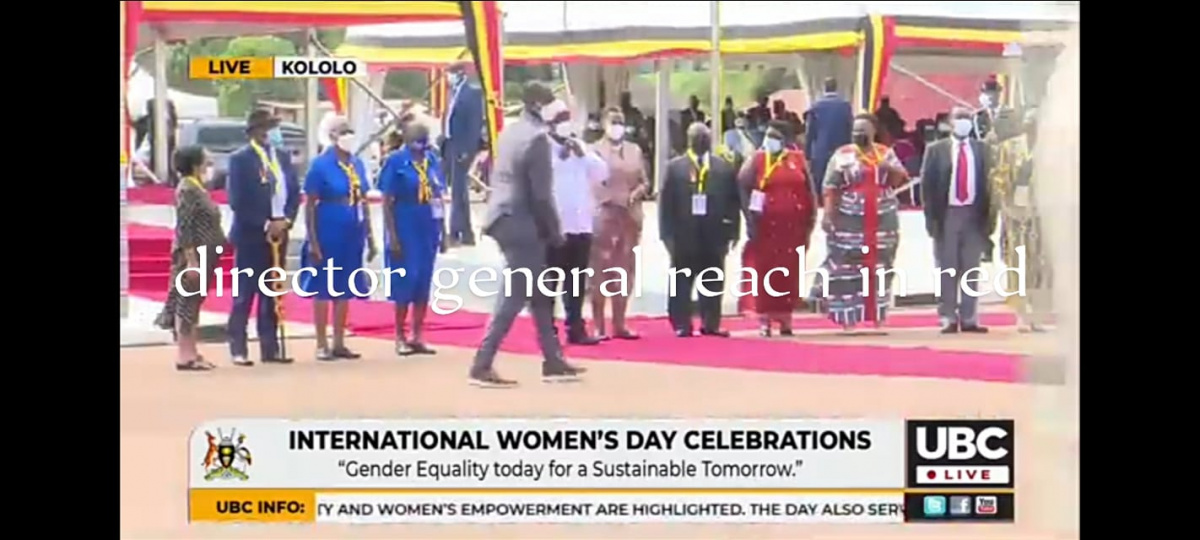
IAWRT Uganda member receives medal from Ugandan president Museveni on IWD 2022

Beatrice Chelangat received an independence medal as an anti-FGM activist since 1996 from the President of the Republic of Uganda H.E Yower Kaguta Museveni during the International Women’s Day commemoration at Kololo Kampala.

Beatrice Chelangat, the founder and Director-General of the REACH, an NGO based in Kapchorwa is one of the women leaders being recognized and received a medal from H.E the President of the Republic of Uganda for her outstanding performance in championing gender equality, women’s rights, equal opportunity for women and girls and abandonment of FGM in Sebei and Karamoja regions for over two decades.

As a result of her work, the region has witnessed a tremendous reduction of FGM including advocating for the law, education of all, and qualitative transformation of our society. The recognition of her efforts is timely and will go a long way in informing good men and women that development comes when we all join hands to condemn and fight injustice.

She is the founder of Sabiny FM radio station in Bukwo district with a focus on women empowerment. She is a woman of a unique character whose dream is to see a society free from all forms of violence and everyone enjoys their fundamental human rights. 

To know more about Chelangat, her work, and this recognition, read the article posted on Sabiny FM 90.3 Ug Facebook account at this link.

Read the English translation of the foreword to the Turkish Edition here.

The Turkish edition of the IAWRT Safety Handbook was printed by the Journalism and Media International Center of the Oslo Metropolitan University.

“We have the safety handbook now in English, Arabic, and Turkish,” said former IAWRT Vice President Abeer Saady and author of the IAWRT Safety Handbook. Saady is based in Germany and continues to give safety trainings to journalists online during the pandemic and lockdown, but is now slated to give face-to-face safety training soon. 

Download your copy here.

See below the English translation of the foreword to the IAWRT Safety Handbook Turkish Edition:

Journalism is not a safe profession.

Not only in Turkey, but also in a significant part of the world…

That’s our job, to be in unsafe places; in conflict zones, social events, disasters, catastrophes, riots…

It’s not safe to be a woman.

Not only in Turkey, but also in a significant part of the world…

Being a woman isn’t safe even when you’re at home.

Being a journalist woman is a struggle in itself; at work, in the field, in digital media…

Journalist women need to learn for themselves how to stay safe. If you are not very lucky, you will not have someone with you to tell you and guide you when you start your career. We do not have safety manuals, guides and protection mechanisms prepared by the media organizations. Of course, if you can work for an organization.

Freelance journalists are even more precarious. You often learn from experience how to stay safe.

And experience means trauma.

***

Newsroom culture still accepts men as the norm today, for practical and ideological reasons. Working conditions, discourse, terminology, needs are always determined by men. For example, women are not taken into account when buying steel vests and helmets for reporters going to the conflict zone.

As the Women and LGBTI+ Commission of the Journalists’ Union of Turkey (TGS), we conducted a survey in 2018 in order to reveal and make visible the discrimination and violence faced by women working in the male-dominated media environment in business life.

According to the results, the perpetrator of the violence was sometimes the manager, sometimes a colleague, sometimes a social media user, and sometimes the police.

Half of the women who participated in the survey stated that they had been exposed to violence at least once in their professional life because of their gender. These women stated that they were most exposed to psychological violence (61 percent) and mobbing (59 percent). While 54 percent stated that they were exposed to verbal violence, 17 percent were exposed to physical violence and 15.5 percent to sexual violence. The rate of victims of digital violence was 9 percent.

Male administrators were the first to use violence. Next came his colleagues and the police.

Since the declaration of the state of emergency in 2016, police violence has shown an increasing trend. Although the state of emergency has been officially lifted, five years later, we are still living under the conditions of the state of emergency in practice. The experience sharing at the “Workshop on Violence” that we organized as the Commission in October 2021 confirmed this fact once again. De facto detentions against women journalists, threats of rape by law enforcement, and illegal strip searches continue.

The sharing of experiences in the workshop in question also revealed how all these experiences traumatized journalist women, they lost their sense of trust and they felt left alone.

According to the Citizen Journalism Perception of Professional Journalists in Turkey Research conducted by Barış Çoban and Bora Ataman in 2019, 93.1% of journalists use social media for the purpose of following news/information. The rate of those who prefer social media to share their news is 59.5 percent. But journalist women are not safe here either.

The criticism of the new media environment, which fosters the ideals that it will be a participatory and democratic environment in its emergence, reproduces masculine domination, spreads it much more strongly, and tries to deter especially women with the oldest known methods. The recommendation of the Committee of Ministers of the Council of Europe of 13 April 2016 states that “[online harassment of women journalists], whether perpetrated by state or non-state actors, has a very serious chilling effect on freedom of expression…”

Areas of advice to take important steps in the right direction in building a sustainable community radio

By Birgitte Jallov, www.empowerhouse.dk

Anyone working with community radio in one way or the other longs for a recipe on how to ensure long-term sustainability. Such a recipe does not exist. But there are a number of important factors that are crucial for sustainability – and a related number of traps on the way it is easy to fall into which will effectively undermine long-term sustainability.

The text below is an excerpt from ‘Empowerment Radio – Voices building a community’ e-book, that is free to download here.  

  1. Don’t think a community radio can be a ‘quick fix’!

Change is made by people – and takes time!

A community radio can be the source of important community change and important community impact.

But getting this in place takes time.

Either by building the radio around existing community development activities or by letting the creation of the radio be the motor to begin – or strengthen – such community development.

Well, of course, you can put up a radio station, physically, in a week’s time. But having the equipment in place is NOT what does the trick, it does not generate social change!

  1. Don’t begin the life of a radio with a studio and equipment!

Find the players before starting to play!

To generate community engagement and ownership, it is important for the community to identify who they actually are: mapping all the communities in the community.

  1. Don’t hire a couple of journalists from the capital city to do the programmes!

Ownership comes from doing it yourself!

Community ownership is at the core of sustainability. The community needs to be in the studios and do the programmes themselves – or at least know those community members doing the programmes.

  1. Don’t think community volunteers represent a resource that cannot be exhausted.

There is no such thing as a free volunteer!

Community volunteers are the heart blood of the radio. The volunteers give their time, their enthusiasm and dreams for creating a better tomorrow, and they lend their credibility. And the volunteers receive a lot from the radio: training in how to produce good programmes, which requires planning, researching, systematizing material and presenting things effectively. It is important to register and document this in volunteer contracts, highlighting duties and rights.

  1. Don’t think capacity building, coaching and training ever ends!

Prepare for constant change!

It is important to plan for and maintain a continuous process of capacity building and volunteer introduction activities: volunteers by nature move on after some years – especially the many young people.

  1. Don’t let the community radio become owned by a small clique in the community.

A radio for all must be owned by all!

A community radio for development needs to belong to all.

  1. Don’t forget to maintain a high ethical profile and clear inclusive editorial line and style.

A power tool can cause harm!

Community radios – and other radios – have been the channels and thus promoters of terrible acts of violence through hate speech. And some radios promote hate speech and bring on air other kinds of destructive opinions and programmes on an ongoing basis. A radio in itself is just a channel – and as it can generate powerful social and other community development impact, it can do harm. It is important to build into the DNA of your radio, ways of regularly carrying out a check on such developments.

  1. Don’t push up your expenses – be wise, like you are in your home!

Modesty and cleverness can get you far!

For financial sustainability, the basics are to limit costs right from the start. Some examples:

  • do not to commit to salaries that cannot be met in the medium to long run
  • find ways of limiting energy costs
  • pursue wise equipment and studio configuration decisions
  • try to receive free mobile phone subscriptions and sets from providers against mentioning their sponsorship
  • engage in wise partnerships for important expense items
  1. Don’t think that everybody knows – or believes that your community radio is really worth their while, support and effort!

Know – and show – what you can do!

Documenting the community radio’s important community development function and the positive impacts it generates can be done in very expensive and elaborate ways, but it can also be done by yourselves – using adequate methods and only depending on some limited initial support.

  1. Don’t think you need to manage on your own, only! You are an attractive partner!

You are not alone!

With its high level of community credibility, many partners will want to work with the community radio, be it:

  • on effective programmes in specific areas like health, agriculture, children & youth etc.,
  • providing good, up to date information and documentation for the programme;
  • funding some of the airtime, or
  • contributing to core funds or
  • providing technical and other support to the radio.

This is all because the community radio is an extremely valuable asset for the development of the community.