UN Human Rights Council – Session 29 – Panel

GAMAG Europe – Global Alliance on Media & Gender –Issues & Challenges 

June 17, 2015

5:00 pm – 6:30 pm – Room IX

UN Palais des Nations – Geneva, Switzerland 


Distinguished Speakers: 

Mr. Alton Grizzle – UNESCO Focal Point for the Global Alliance on Media and Gender (GAMAG)

Ms. Mounia Belafia – Co-Chair of International Federation of Journalists Gender Council 

Ms. Diana Nastasia – Research on Voices & Portrayals of Marginalized Populations as Women, Children, Immigrants – IAWRT Media Monitoring Project

European Women’s Lobby – Fair & Equal Representation of Women in Media in Europe 

Ms. Sepi Roshan – Astute Radio – Training for Media Leadership, Challenging Stereotypes, Media & Minority Women

Ms. Lois A. Herman – Coordinator WUNRN, Women’s UN Report Network – Power Point on Gender Stereotypes

Ms. Cheryl D. Miller –  Founder, Digital Leadership Institute – Women and Digital Media 

Ms. Elly Pradervand – Founder & Executive Director Women’s World Summit Foundation – Women, Media & Beijing + 20

Ms. Marie-Noelle Bas – Chiennes de Garde – WECAMS – Gender Stereotypes & Discrimination in Media & Advertising   

Moderator: Ms. Greta Gober – University of Oslo Centre for Gender Research – IAWRT Media Monitoring Project 

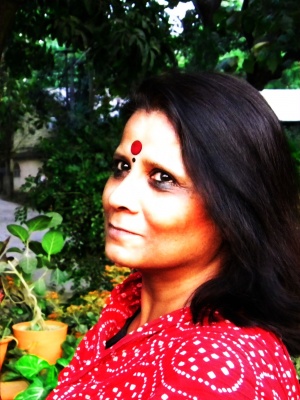
GEETA_SAHAI- january 2015

Name: Geeta Sahai

Location: National Capital Region, India

What do you do?

I have spent three decades as a Print, TV and Radio journalist. I have made many short documentaries for TV and radio on issues pertaining to gender, disability, mental health, developmental issues and on art and culture. I was and am associated with a radio channel on Hindustani Classical music. I am a writer, too and my short stories have won awards in international competitions. I have just joined IAWRT (July 1, 2015) as Communications Officer.

Why did this type of work interest you, and how did you get started?

Since my childhood I was interested in writing and films. Whenever I used to read something good, I used to dream about writing a book ‘like that’ myself.  And same thoughts came after watching a good film. Radio was my passion. The clear diction and husky voice of presenters arrested my attention. And again, I used to go into my world of dreams, thinking ‘one day, even I will present shows like them. All my three dreams were fulfilled, one after the other. 

After completing my Masters in History and a Diploma course in Journalism, I joined a newspaper. Through my journalistic writings I wanted to bring about a change in society. I could never digest injustice and violence – be it in any form. My first encounter with violence was the tangible and intangible facets of domestic violence. A domestic violence survivor once said, “Everybody can see physical abuse, but what about mental torture? How my self-esteem is being crushed, can anybody see that and believe me?”  This statement hit me.  In the 1980s, I began a campaign against it through my regular write-ups in the newspapers and along with it I also became Art and Culture critic.  In the 90s when I joined TV as a Correspondent-Producer I again began a sort of campaign, with my regular shows on Women and Mental Health for a TV channel. It was extremely weakening to see various facets of violence on women and young girls.  Simultaneously, I was regularly presenting shows on All India Radio. In the year 2002 I got an opportunity to initiate, curate and Head Hindustani Classical Music Station – Radio Gandharv, on Worldspace Satellite Network. Thus began my tryst with radio as a professional. For nearly 10 years I was associated with this radio channel, and without being immodest, I would like to say that listeners really loved my station. When Worldspace closed their operations in India in 2009 December, I joined TV – FOCUS Channel and later became an independent documentary film maker, writer and radio professional. In 2012, I received IAWRT-FOKUS scholarship to make a film on Changemaker. I made a short film – titled – ‘I have a Dream’ – https://vimeo.com/89276069

It was on a woman who is using music as a therapy for Special Children to empower and make them, their families and society realize the creative potentiality of Special Children.

Presently, I am running a net radio on Hindustani Classical music -http://hindustani.radioweb.in/

I write short stories and some of them have won prizes in international competitions. Short Story—A Dream is just a dream—won first prize in an online international Flash Fiction competition, 2013.

The links to my Films and Radio productions are:

http://hindustani.radioweb.in/

http://geetasahai.blogspot.in/

https://in.linkedin.com/pub/geeta-sahai/6/197/92

www.youtube.com/watch?v=JNubeIBECXs

www.youtube.com/watch?v=JNubeIBECXs

Links to short stories and articles:

http://wordweavers.in/short_story_2012_geeta_sahai.html

http://wordweavers.in/short_story_2013_shortlisted_15.html

http://atlantis-shortstorycontest.com/winners-2011/

http://www.ngoexpress.com/big-issuedetails.aspx?Id=19

http://indiatodayuk.com/uk-feature/

http://www.wpbyexample.com/detail/fystoris.info

What part of this job do you personally find most satisfying? Most challenging?

I enjoy doing stories about achievers, musicians, women who challenge situations and circumstances and stand with their head high. I enjoy meeting people who are never defeated – after all in life only one thing matters and that is  – ‘it is not about winning or losing, it is all about never losing hope.’  

The most challenging and heartbreaking experience was covering Bhuj, Gujarat after the earthquake in 2002. It was shattering to see the vast scale destruction by nature’s fury. After that I spent many sleepless nights, haunted by the mass destruction.  As a media person, one has to be strong enough to listen to heart-wrenching tales and witness massive destruction. It is a great challenge not to break down amidst such suffering. But one has got to learn to brave it.

What do you like and not like about working in this industry?

I was fortunate enough to work with people who had integrity and never ever made me feel that being a woman I could not walk on certain bumpy roads. I like doing the hard work and not be bound by time constraint of 9am to 5pm . I like the freedom that this industry gives. There are only two things that I do not like of this industry. The first thing that I dislike is that after highlighting an incident or an issue, we often tend to forget about that episode after some days, completely. Secondly, I do not like the race against time to capture bytes even at the cost of hurting sentiments of the survivors.

What are your long-term goals?

While being associated with IAWRT, I would like to encourage and highlight the work  done by women in various countries and in different spheres. I would like to highlight ‘Profile in Courage’ type of stories in the Newsletter, as well as on the website. Along with it, I would like to highlight the productions – documentary, research, radio—through proper seminars and conferences and subsequently, through these to bring IAWRT on the centre stage. And on my individual front, I would like to write a novel, based on the real life experiences of women.

What special advice do you have for a student seeking to qualify for this position?

Communication is a two way process. One has to be aware of the fact that we cannot just keep on bombarding information. There has to be a healthy exchange of ideas and views. Communication within the organization has to be smooth.  As a communication’s person, one has to have a good understanding of editing and proofreading and also be creative. One has to think creatively and ‘out-of-the-box.’ One has to think and take decisions immediately about the seminar and conference conclusions and how those points are to be highlighted. As a communication person one has to devise ways and means to make research findings reach ‘unreachable.’ Anybody aspiring to be a communication person should have sound knowledge of designing and copywriting. Many a time, articles are written by the communication person.  Hence, as a communication person, one has to be a good writer, be creative, an excellent organizer, have good contacts in media and elsewhere and last but certainly not the least, respect time and deadlines.

Do you have any special words of warning or encouragement as a result of your experience?

Just be honest and do the work with integrity. Things will fall at its place on its own. Respect and trust others. In media we meet innumerable people everybody, having different attitude and values. As a media person, we should have patience and respect for each and everyone. Deadlines are very important. Stick to them.

These are my strongest assets/skills, areas of knowledge, personality traits and values are….

I like meeting people; having heart to heart talk with them; knowing them and subsequently winning their trust and friendship. I like sharing my experiences and imparting knowledge to people without acting as an ‘advisor’ to them. I make them feel that they have a friend on whom they can bank upon. Because I am modest and humble, people generally open up with me very easily. I do not indoctrinate or frighten people with my knowledge. In fact, I share a slice from my life’s innumerable experiences. In this process, I win friends and they respect me for respecting their identity and knowledge.

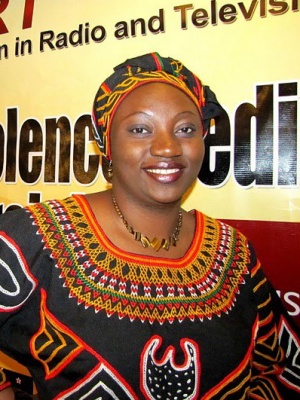
Pochi Tamba

Name: Pochi Tamba Nsoh, but please call me Poch

Location: Yaounde, Cameroon.

What do you do?

I work as a journalist with the Cameroon Radio and Television, where I produce for and present programs, including TV and Radio newscasts. Besides working as a journalist, I have over the years developed real interest in contributing in whatever little way I can to a better community around. So I started a project that today organizes regular activities in communities to foster exchanges on the rights of marginalized women and children. Through the project which started in 2007, we have also funded the studies of some very brilliant but orphaned children.

Why did this type of work interest you, and how did you get started?

I love talking to people, discovering places and understanding generally how things work, or do not work around me. I think I have journalism in my blood, and even on my most challenging days, I always come to the conclusion that I am where I belong. When I was in secondary school, I started getting very fascinated by the voices from the radio set. So one day, the set gave a phone number for any listener who wanted to interact. I called and from then, I never stopped calling in for one thing to the other. I think I took part in all programs that needed listener reaction at the time. From food programs to love chats. I just needed to be part of the magic. Later on when I had the chance, and despite my mother’s advice, I went on to study journalism and Mass Communication. It is a passion. 

What part of this job do you personally find most satisfying? Most challenging?

I find the chance to talk to people and carry their stories so unique. It always makes me so worthy each time I have a chance to speak for someone who is not able to. Challenges? I could think of a couple but, I prefer to retain only positive things.

What do you like and not like about working in this industry?

I like the different things that you get to do each time you start a day. It is never the same. I also hate the fact that it does not have working hours. It can just eat you up

What are your long-term goals?

I hope to be a better reporter by the day and to really have a chance to tell the most amazing stories.

What special advice do you have for a student seeking to qualify for this position?

Journalism is a very tough world. When you start, you need to work very hard to make a good reputation that matters. When you have a name that means something, you have to start working really hard to dodge all the internal intrigues that come with being at the top.

You need to really know what you want so that you do not chicken out at any difficulty. Simply put, just know what you really want, and put your faith ahead of you. It works for me.

Do you have any special words of warning or encouragement as a result of your experience?

Maybe I should say that it is very easy to get taken over by the ‘bling bling’ of stardom in this job. And very often, I see very gifted colleagues who have settled for the shallow star world, instead of filling their lives with endless undiscovered stories that will give it worth. 

If you get famous as you work, accept it as part of the things you will get, but do not let it distract you from what you set out to achieve. Also, we work often in very unsure conditions, with many of our colleagues not being sure if they will not lose their job the next day. It makes many of them succumb easily to the temptations of money. All I can say about this is that hard as it seems at times, we can always make the right decision- the one that does not stop us from sleeping at night

These are my strongest assets/skills, areas of knowledge, personality traits and values are….

I am told that I a frank person who often does not know the word diplomacy. I know I am hardworking and a go-getter. I am very patient and a loyal friend. I guess that is as much as I can say now.

PROGRAM FOR CONSULTATION DAY

“Celebrate the Feminist and Women’s Movements 1975-2015”

8 March 2015, 9:00 am – 3:00 pm
The program emcees are Houry Geudelekian, Armenian Relief Society and Susan O’Malley, International Federation of Business and Professional Women

9:00 – 9:30 am

Opening Event: Women of the World – Songs from Mexico, Denmark, Kenya, and China- Readings from the UN Conferences in Mexico, Copenhagen, Nairobi and Beijing by Mahnaz Afkhami, former Minister of Women’s Affairs of Iran and President/CEO of Women’s Learning Partnership, H. E. Ambassador Ib Petersen from Denmark, Sheila Katzman, Chair of the Cities for CEDAW/New York City, and Tanya Selvaratnam, Producer/Artist and author of “The Big Lie”.

9:30 – 10:00 am

Welcome messages

  • Soon-Young Yoon, Chair, NGO Committee on the Status of Women/New York
  • Phumzile Mlambo-Ngcuka, Under-Secretary-General and Executive Director, UN Women
  • Video clips: World Conferenced on Women in Mexico City  1975, 1980, 1985 and 1995

10:00 – 10:20 am

Keynote address: “The Selling of Innocents”, Ruchira Gupta, Women of Distinction Awardee and winner of a Clinton Global Citizen award (with film clips)

10:20 – 10:40 am

Special Message from Cherie Blair, founder, Cherie Blair Foundation (invited)

10:40 – 12:00 pm

“Beijing + 20 – Voices from the Regions”

Historic review of the UN/international women’s movement from 1975-1995 and impact by region, regional Declarations, Indigenous women’s Declaration

Panelists:

  • Dinah Musindarwezo – The African Women’s Development and Communication
  • Network (Femnet), Kenya
  • Asma Khader – Vice-President of Independent Elections Commission and former Secretary General of the Jordanian National Commission for Women, Jordan
  • Sepali Kottegoda – Women and Media Collective, Sri Lanka
  • Simone Ovart – Zonta International, Switzerland
  • Mabel Bianco – Fundacion para Estudio e de la Mujer (FEIM), Argentina
  • Gertrud Astrom – Swedish Women’s Lobby, Sweden
  • Agnes Leina – Ll’laramatak Community Concerns (ICC-K)
  • Ambassador Dubravka Simonovic – Ambassador to the UN from Croatia and former CEDAW expert.  

Moderator: Ambassador Carlos Garcia Gonzalez – former Permanent Representative for El Salvador to the United Nations

Discussant: Charlotte Bunch – Board of Governor’s Distinguished Service Professor in Women’s and Gender Studies at Rutgers University

12:00 – 1:15 pm

Lunch: (participants on their own)

1:15– 1:45 pm

“What Beijing Plus 20 Must Accomplish”
Dr. Gertrude Mongella – “educator, politician, diplomat activist”, former Under-Secretary General, UN Fourth World Conference on Women

1:45 – 2:45 pm

“Strategic Action to Strengthen the BPfA: Young Activist Perspectives” 

This panel will feature young activists who are actively carrying out the vision of the Beijing Platform for Action, CEDAW, and the post-2015 development agenda. With audience participation, the speakers will develop ideas for a strategic plan of action.

Panelists: 

  • Emilia Reyes –Equidad de Genero
  • Esther Kimani – Young Women’s Leadership Institute Nairobi
  • Diana Mao – NOMI Network
  • Geraldo Porteny Backal – Young Men for Gender Equality
  • Faith Nenkai Metiaki – Forum for African Women Educationalists (FAWE) Forum des educatrices africaines

Moderator/Panelist: Fabio Palacio – International Movement ATD 4th World

Discussant: Thayvie Sinn – Save Cambodia

2:45 – 3:00 pm

Announcements about the March and Closing Song

NGO CSW theme song – “Keep on Movin’ Forward” 

Led by Laura Kroh, singer


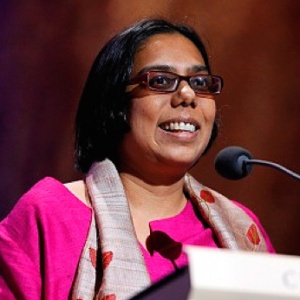
ruchira-gupta

January 28, 2015 – New York, NY – The NGO Committee on the Status of Women, NY (NGO CSW/NY), one of three women’s committees of CoNGO that advocates for women’s rights and gender equality, is pleased to announce the 2015 NGO CSW Forum Woman of Distinction awardee, Ruchira Gupta from India, founder of Apne Aap Women Worldwide.

After winning an Emmy for her documentary on sex trafficking, The Selling of Innocents, Gupta started Apne Aap Women Worldwide, an anti-sex trafficking organization in India that empowers more than 20,000 low-caste girls and women and their family members affected by prostitution. She received the Clinton Global Citizen award for giving a voice to the voiceless and for tenaciously standing by the last girl in brothels in Bihar and India.

For over 25 years, Gupta has worked to end sex trafficking by emphasizing the link between trafficking and prostitution laws and lobbying policy makers to shift blame from victims to perpetrators. In 2000, she testified in the United States Senate before the passage of the Trafficking Victims Protection Act and addressed the UN General Assembly on human trafficking. 

Gupta will be the keynote speaker at the NGO CSW/NY Consultation Day (8 March 2015 at the Apollo Theatre) along with Phumzile Mlambo-Ngcuka, UN Under-Secretary General and Executive Director of UN Women. The formal presentation of the NGO CSW/NY Woman of Distinction award will take place at the annual NGO Reception (9 March 2015 at the Armenian Convention Center Ballroom, 6 pm–8 pm). This year’s theme of the UN Commission on the Status of Women is the 20th review of the Beijing Platform for Action. Registration is available at: www.ngocsw.org.

About the Women of Distinction Award

This annual award is given to a woman in recognition of her leadership in the struggle for gender equality and women’s empowerment. The honoree is a leading activist from a developing country who can address the theme of the CSW, will benefit from participation in Consultation Day, and make a difference when she returns home.

About the NGO Committee on the Status of Women, NY

The NGO Committee on the Status of Women, NY (NGO CSW/NY) is one of the three women’s committees of the Conference of NGOs in Consultative Relationship with the UN (CoNGO). Under CoNGO’s umbrella, the NGO CSW committees helped plan the NGO Forums at the UN World Conferences in Mexico, Copenhagen, Nairobi, and Beijing. NGO CSW/NY is a volunteer-based, non-profit NGO funded largely by individual contributions. 

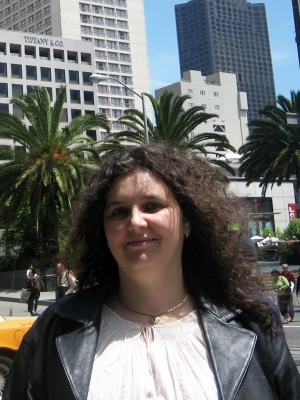
Diana Nastasia pic

Name: Diana Iulia Nastasia. Many of my students call me Dr. D.

Location: USA

Where do you live?

A question that doesn’t currently bear an easy answer for me ☺ There is a country I am a citizen of, a country my home is in, and what I consider myself to be. 

I am a citizen of Romania, where I was born, I still pursue various professional activities related to lecturing and research, and I reside for specific periods of time each year until I fulfill my 2 year home country residency requirement that came with the Fulbright fellowship I held several years ago.

My home however is in Saint Louis, MO, the United States of America, where I live together with my husband and two daughters, and where my family moved after I and my husband both earned our Ph.D.s in Communication and Public Discourse in the U.S.

I consider myself a citizen of the world, and not just because I have traversed various countries and cultures. I view borders as constructs – constructs whose objectification and politicization have dire consequences on the lives and well being on people worldwide, and constructs that we can collectively choose to take for granted or can choose to openly address.

What do you do?

I am an educator and a scholar in communication and media studies. I have also been involved in advocacy and activism project.

In Romania I taught, in full time and visiting capacities, at the Romanian-American University, the University of Bucharest, and the National University of Political Studies and Public Administration. In the United States, I taught in the Communication Program and the Department of Interdisciplinary Studies at the University of North Dakota, as well as at the Saint Louis Community College, Saint Charles Community College, and Southwestern Illinois College, and I also lectured in numerous university, academic, and community settings.

My research focuses on voices and portrayals of marginalized populations including women, children, and immigrants. In recent years, I have worked on several large scale research projects not just as a scholar but also as a project manager. I am currently a co-coordinator, together with Greta Gober, on the IAWRT media monitoring research project, which looks at gender equality and social justice issues in public media venues in eight countries, and which has already resulted in a presentation at the United Nations’ 59th session of the Commission on the Status of Women in March 2015. I was a national expert for two Eastern European countries in a project of collection of best practices regarding women and the media for the European Institute for Gender Equality. I took the role of Regional Coordinator for Eastern Europe in a project of the International Women’s Media Foundation, and in that capacity I provided oversight for data collection and analysis in eight Eastern European countries, and contributed background information and result writing. I have worked on two projects sponsored by Internationales Zentralinstitut für das Jugend- und Bildungsfernsehen based in Munich, Germany: a study of how girls from four countries (the United States, India, Fiji, and China) perceive ethnically diverse female characters in cartoons of the Disney corporation (including Pocahontas, Jasmine, and Mulan); and a study of how children worldwide perceived media representations of the Japan 2011 earthquake, tsunami, and nuclear power plant disasters. My research has resulted on over 150 conference presentations, and published chapters in edited volumes at Routledge, Palgrave, Peter Lang, Nova, and Fordham University Press as well as articles in U.S. and European journals.

Why did this type of work interest you, and how did you get started?

I grew up in Romania, in Eastern Europe, at the time when my home country was under a harsh communist dictatorial regime, which kept the population under poverty and in despair. One of our few hopes was getting an education, acquiring knowledge, conceptualizing the world not as it was but as it should be. The communist regime was marring educational processes with political propaganda, however I had a few teachers who were not afraid to encourage and even urge their students to develop intellectual curiosity and critical thinking. 

As I went to college right after the fall of communism, becoming an educator was a choice I made as I was seeking to contribute to forming new generations in the spirit of social justice. I also became a researcher as I realized there is need for data-based evidence to document the issues and problems of those rarely heard and affected by various forms of injustice.

What part of this job do you personally find most satisfying? Most challenging?

I love seeing how, on the duration of an academic semester, upon reflecting on the impact of gender, ethnicity, culture, or power on communication and the media, students get not just new concepts that they can employ in their personal, professional, and community lives, but also a new outlook on the world.

I am also passionate about seeing how patterns emerge from research data I worked on collecting, and how such patterns can help uncover for example who are those tacitly socially privileged and how having such social categories impacts society as a whole.

While there are challenges in both teaching and research, rewards definitely outnumber challenges. There are times when students seem more interested in leisure and entertainment than in working towards reaching their potential and contributing to public good, but there are also many other times when a teachable moment makes students aware of and capable of articulating, for example, the uses and abuses of technologies and the media. There are also moments, when doing research, when one could be discouraged, for example because of insufficient funding, differences in goals and desired outcomes between various contributors and stakeholders of the research, or failure to have an immediate policy impact; but those moments too are overcome when seeing concrete results of research. To give one example, scholarly efforts to evidence the portrayals of girls in stereotypically feminine gender roles in children’s television have lead to a diversification of girls’ depictions even as industry representatives have been trying to dispute such findings.

What do you like and not like about working in this industry?

As I mentioned above, I like the “aha” moments that both teaching and research can generate among students and professionals of communication and the media. There is little that I dislike about my professional activities, and it’s mostly hurdles that can be surpassed.

What are your long-term goals?

My long-term goals are related to educating my students as well as my own two daughters as persons who are sensitive about issues of culture as well as of power worldwide, and are themselves willing to put effort into making this world a better place. I will also continue to seek to contribute to research and service projects that can help bring to the forefront of society and the media the voices and ideas of the underprivileged and oppressed.

YouTube link of your documentaries or radio piece or book wrtitten? Please provide a link if possible.

Links to some recent publications (book chapters and articles):

http://www.palgrave.com/page/detail/the-palgrave-international-handbook-of-women-and-journalism-carolyn-m-byerly/?K=9781137273239 

http://www.izi-datenbank.de/search?q=&f=autor_herausgeber:%22Nastasia,%20Diana%22

What special advice do you have for a student seeking to qualify for this position?

Both teaching and research require passion and patience, but if done well can change lives and bring social change.

Do you have any special words of warning or encouragement as a result of your experience?

Carry on!

These are my strongest assets/skills, areas of knowledge, personality traits and values are….

I am an educator, a parent, a scholar, a critic of the media and of various other power structures, a believer that social, cultural, and environmental justice is within reach and can be attained within my own lifetime with acknowledgment and collective effort.

Screen Shot 2015-02-18 at 12

Gender Equality in the Media: An 8 country report proves the need for Implementation of Section J of the Beijing Declaration
13th March 2015 at 2:30pm

khedija-2

Name: Khedija Lemkecher

Location: Tunisia

First significant job:

Director / Film maker

What are you doing today?

Producer and director in Cercine film production.

What is your grestest achievement?

Producing the long feature movie “Bab el Fella – Le Cinémonde”

Journalist/s who inspire you:

I am not inspired by any journalist. Director, yes Ingmar Bergman for example.

Three Adjectives that describe you?

Intuitive, determined and sensitive.

What do you value most about IAWRT

You feel like in a big and wonderful family

In another life…

I would be the same

Sample work

You may view my latest documentary on www.babelfella-lecinemonde.com


Flyer-2-for-26-June-launch

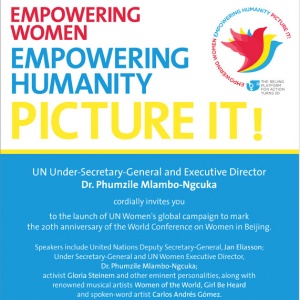
UN Under-Secretary-General and Executive Director, Dr. Phumzile Mlambo-Nguka

cordially invites you to the launch of UN Women’s global campaign to mark the 20th anniversary of the World Conference on Women in Beijing.

Speakers include United Nations Deputy Secretary-General, Jan Eliasson; Under-Secretary-General and UN Women Executive Director, Dr. Phumzile Mlambo-Ngcuka; writer and feminist activist Gloria Steinem and other eminent personalities, along with renowned musical artists Women of the World, Girl Be Heard and spoken-word artist Carlos Andrés Gómez.

26 June 2014, 5–7 p.m. EDT
Apollo Theater
253 W 125th Street, New York

RSVP to http://goo.gl/BTBB9p

PLEASE NOTE that that guests must bring a printout of their reservation confirmation to the event for entry.

Follow #Beijing20 and @UN_Women on Twitter