Journalism Education and Research Association of Australia (JERAA) 2018 conference, Hobart, December 3-5.
IAWRT’s Safety handbook will launched during a panel session From self-protection to advocacy & action: advancing the safety of women journalists.
Panelists are Dr Fiona Martin, Sydney University on digital safety strategies for women journalists, Dr Andrea Baler from Monsah University on #Metoo in music industry media, Dr Cait McMahon, DART Centre for for journalism and trauma, Asia Pacific on responses to violence and IAWRT webjournalist Nonee Walsh and Abeer Saady by Skype.
The handbook will also be later presented in the academic journal, Australian Journalism Review, which is producing Safety of Journalists issue.
http://iawrt.org/wp-content/uploads/2021/11/logo.png00Nonee Walshhttp://iawrt.org/wp-content/uploads/2021/11/logo.pngNonee Walsh2018-11-16 01:50:522022-11-14 15:36:11Safety Handbook at Educators Conference
http://iawrt.org/wp-content/uploads/2021/11/logo.png00Nonee Walshhttp://iawrt.org/wp-content/uploads/2021/11/logo.pngNonee Walsh2018-11-16 00:53:362018-11-16 00:53:36IAWRT NEPAL 2nd Film Festival
The 15th IAWRT Asian Women’s Film Festival will be held from 5th – 7th March, 2019. in New Delhi.
IAWRT India organizes this unique Asian women’s film festival each year to mark International Women’s Day.
Launched in 2005, the IAWRT film festival has over the years positioned itself with a conscious effort to showcase narratives weaved by Asian women filmmakers and grown in strength and reputation, with participation from around the world. Entries for the film section have closed, but the sound technology section of the Festival s o u n d p h i l e s | 2019 will receive entries ntil December 20th, 2018. details here.
http://iawrt.org/wp-content/uploads/2021/11/logo.png00Nonee Walshhttp://iawrt.org/wp-content/uploads/2021/11/logo.pngNonee Walsh2018-11-11 13:04:242018-11-11 13:04:2415th IAWRT Asian Women’s Film Festival
Filipino journalist Inday Espina-Varona has received a Reporters without Borders (RSF) Press Freedom Award for Independence, at a ceremony in London.
The citation is one of the most prestigious global awards for journalists for her resistance to “financial, political, economic or religious pressures or because of the values and rules that enable them to resist” in reporting on issues that are sensitive in the Philippines.
The RSF citation says Over the years, she has reported extensively on issues that are sensitive in the Philippines, such as child prostitution, violence against women, LGBT issues and the Moro Islamic Liberation Front on the island of Mindanao.”
In her acceptance speech, Espina-Varona said she shared the honor with her “embattled Philippine colleagues: the 185 killed since the 1986 restoration of a fragile, perpetually threatened democracy, 12 of them in the first two years of President Rodrigo Duterte’s rule.”
“This is also for colleagues who face death threats, vilification campaigns, and revocation of access to coverage, for doing what journalists are supposed to do — questioning official acts and claims, especially on issues of human rights and corruption,” she added.
“There is another grave problem we face: the proposed draconian changes to the law that would make terrorists of practically all critics of the government and make journalists and media accessories whenever we give voice to persons and groups the government deems ‘terrorist’ — practically all dissenters.”
Espina-Varona is veteran of the Marcos era and is now very active on social networks, as a contributing editor at the Philippine broadcast network ABS-CBN, where she formerly ran its citizen journalism website Bayan Mo i-Patrol Mo (BMPM). She was featured in the IAWRT documentary Velvet Revolution, where she told us, “Journalism is truth-telling. To pretend to be neutral and blind to what is happening around you. I think that is unnatural.” She was also panelist on ‘Truth-Telling in the Time of Fake News, and Post Truths’ at the 2015 IAWRT Biennial.
Espina-Varona’s facebook account was recently sutdown by online troll armies which managed to trigger Facebook’s community standards sanctions. This story is on the iawrt safety page in Filipino media women attacked but unbowed which outlines the latest news on media women in the Philipines.
Another Asian woman jouirnalist, India’s Swati Chaturvedi was awarded the prize for courage, “in the practice, defence or promotion of journalism in a hostile environment and despite threats to their freedom or safety.”
“A freelance reporter for print and broadcast media, Swati Chaturvedi has been the target of vicious online harassment campaigns, like many other outspoken journalists in India. She responded by using journalistic weapons, investigating the “IT cell” within the Bharatiya Janata Party, the Hindu nationalist party led by Prime Minister Narendra Modi, which is notorious for keeping an army of angry trolls. The result was a book entitled I am a Troll: Inside the Secret World of the BJP’s Digital Army.
In retaliation for her reporting, Swati Chaturvedi is now even more exposed to calls for revenge by social media trolls.” says the RSF.
The Prize for impact, went to Matthew Caruana Galizia, the Pulitzer Prize-winning Maltese journalist and activist whose mother, Daphne Caruana Galizia, was assassinated in 2017 following her investigations into corruption. A special award for the UK media L’Esprit de RSF went to Guardian and The Observer reporter, Carole Cadwalladr.
Full details Reporters Without Borders’ first-ever London Press Freedom Awards available from rsf.org
staff with Raymund B. Villanueva
https://iawrt.org/wp-content/uploads/2017/05/VELVET-Inday-Espina-Varona-5.jpg6751200Nonee Walshhttp://iawrt.org/wp-content/uploads/2021/11/logo.pngNonee Walsh2018-10-24 06:39:332021-10-30 14:18:34Press Freedom Award for Filipino Journalist
Increasingly, risky or dangerous reporting environments for women are not restricted to war zones and sites of civil conflict. It is now well documented that female journalists face far more threats and harassment in the digital or online environment than their male colleagues. In September, the International Media Women’s Foundation and Trollbusters rep[orted in the increasing scale of the issue in Attacks and Harassment: The Impact on Female Journalists and Their Reporting which is available for download from iwmf.org
Many journalists are facing attacks on media freedoms across the world, but women are also facing attacks on their personal reputations which can be devastating to careers in some cultures, along with threats of rape and other gender based online attacks. This has become so commonplace that there is growing agreement on the need for clear policies on supporting and protecting female media workers from online attacks. Of course, the #MeToo movement has been instrumental in making it clear that the starting place for reform is a harassment-free place of work.
In this video, safety trainer Abeer Saady canvasses the views of experts on cyber violence about policies which can protect media women; media editors on workplace initiatives which acknowledge the issues faced by their female workforce and action plans to protect them, and a senior journalist on personal strategies to end the violence which aims to silence women in media.
IAWRT is keen to provide resources for training and workshops on the safety of women journalists and appreciates any comment or feedback, to [email protected].
Interviews conducted by Abeer Saady, video production by Lady Ann Salem.
Personell in order of appearance (from online CV’s)
Joyce Barnathan, President of the International Center for Journalists (former executive editor, assistant managing editor for Asia regional editor and Hong Kong Bureau Manager for Business Week. Barnathan came to Business Week from Newsweek, where she served as State Department correspondent, Moscow Bureau Chief and Special Projects Correspondent covering presidential elections. As president of the ICFJ since 2006, Joyce Barnathan has helped to develop and oversee a wide variety of high-impact programs at the nexus of quality journalism and technology. Under her leadership, ICFJ helps journalists to tell compelling stories, engage audiences and deepen coverage. Over 34 years, ICFJ has worked with 100,000 participants from 180 countries.
Emma Alberici Chief Economics Correspondent Australian Broadcasting Corporation, Sydney. Alberici was the presenter of the ABC’s flagship current affairs program, Lateline. and served a term as the ABC’s Europe correspondent. She has worked as a reporter for the ABC’s The 7.30 Report and began her career at the Herald Sun Newspaper and as a reporter and producer at Australia’s commercial TV Nine Network.
Leyla Boulton Editor of Special reports and an Executive Editor of the Financial Times. Since joining the newspaper as a correspondent in Moscow in 1990, Leyla has been FT correspondent in Turkey, environment correspondent, as well as a news editor and web pioneer. She takes a keen interest in gender equality at work since she began reporting on this topic and pressing for change within her own organisation a decade ago.
Gunnar Falck is the managing editor at Västerbottens-Kuriren in Umeå, Sweden. After completing his studies at the University of Journalism in Stockholm in 1980, he worked at Nerikes Allehanda in Örebro and Norra Västerbotten in Skellefteå, before joining Västerbottens-Kuriren in 1982. Gunnar has worked as a reporter, as a sportswriter, head of the sports department, night editor and since 2002 as the managing editor. Gunnar was put in charge the same year that the newspaper decided to start a project aimed at increasing the number of women as the main character in the news and in stories. The project was quickly made a permanent part of the daily operation and is still ongoing. Gunnar has written a chapter about this in the Swedish national report Count on women as a part of the Global Media Monitoring Project 2015, and in English in Making change: Nordic examples of working towards gender equality in media.
Doctor Anastasia Powell, Associate Professor in Criminology & Justice Studies at RMIT University, Melbourne, Australia, currently a member of the editorial board of the international journal Crime, Media, Culture, and serves on the board of directors of Our Watch, Australia’s national organisation for the prevention of violence against women and their children. Her research has specialised in sexual and intimate partner violence, as well as emerging forms of technology- facilitated violence against women. Anastasia has published widely in these fields, including the book Sexual Violence in a Digital Age (2017, Palgrave). From 2013-2015, Dr. Powell was lead Chief Investigator on an ARC Discovery Project with Dr Henry, titled Technology-facilitated sexual violence and harassment. The project examined the ways in which technologies (including mobile phones, video recordings, online spaces, social media) are being used in connection with sexual violence and harassment against women.
IAWRT acknowledges – and there are many examples around the globe which we have commented on in films and publications – that online attacks are not always random opportunities offered by the anonymity of the internet but often carefully orchestrated and controlled by particular political interests.
India’s Swati Chaturvedi responded to vicious online harassment campaigns by using journalistic weapons. According to Reporters Without Borders (RSF) which has nominated her for one of its 2018 Press Freedom Awards, she began investigating the “IT cell” within the Bharatiya Janata Party, the Hindu nationalist party led by Prime Minister Narendra Modi, “which is notorious for keeping an army of angry trolls.”
That lead to the publication of a book I am a Troll: Inside the Secret World of the BJP’s Digital Army. The RSF says, “in retaliation for her reporting, Swati Chaturvedi is now even more exposed to calls for revenge by social media trolls.”
In Finland the courts have upheld the right of journalist Jessikka Aro, a reporter for the Finnish national broadcaster YLE, to be safe from the harasment and hate crime which she suffered when she began investigating Russian propoganda troll factories. The court has sentenced Ilja Janitski, nthe founder of a pro-Russian website, MV-Lehti to 22 months in prison on charges of defamation and negligence. Janitski and two other Finish journalists were ordered to pay 136,000 euros compensation. The BBC has a good explanation of the story here.
There is no ‘one size fits all’ response to cyber violence and IAWRT is committed to sharing any safety strategies which may keep media women safe to continue doing their important work.
https://iawrt.org/wp-content/uploads/2018/08/SHUTDOWN-FB-52.jpg1200786Nonee Walshhttp://iawrt.org/wp-content/uploads/2021/11/logo.pngNonee Walsh2018-10-23 03:21:272022-11-14 15:32:57How to Counter Gender-based Online Harassment of Journalists
Young woman journalists work under military surveillance, are arrested and have equipment confiscated and receive death threats. Online publications are hacked after they criticise the government. Journalists face hate-trolling and are locked out of their Facebook accounts when troll army complaints trigger Facebook sanctions. “Journalists cannot sit idly by while the highest official of the land leads the attacks on press freedom and wields the machinery of government to peddle lies and deception” writes Ronalyn V. Olea
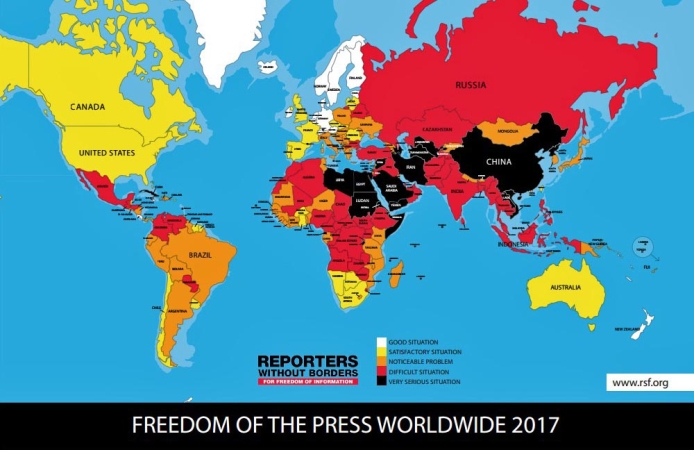
https://iawrt.org/wp-content/uploads/2017/05/press-freedon-map.jpg6481000Lady Ann Salemhttp://iawrt.org/wp-content/uploads/2021/11/logo.pngLady Ann Salem2018-10-16 08:17:462018-10-16 08:17:46Filipino media women: attacked but unbowed
We asked members to communicate about a crucial issue in their region and what women in media can do. Qudsia Mahtab Mehmood from Islamabad, Pakistan writes the recent elections held in Pakistan on 25 July, 2018 brought many challenges for women journalists attempting to report fairly about the elections.
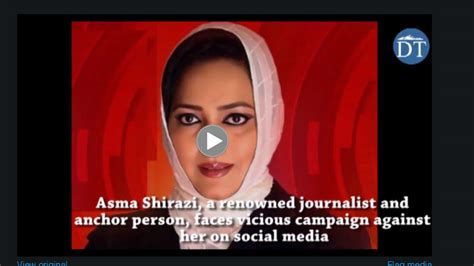
Many journalist’s programs were banned before and after the elections. One such example is Asma Shirazi (a well-known senior TV anchor) whose program which contained an interview with a former Prime Minister of Pakistan Mr. Nawaz Sharif, was banned.
Asma tweeted that she had recorded an exclusive interview with Sharif but her program was not allowed to be broadcast. Shirazi travelled with him and his daughter Maryam Nawaz from London to Pakistan. (Both father and daughter were recently jailed for 11 and 8 years respectively by the accountability court in Islamabad, but have since been released by the high court)
Even though the interview was not broadcast, Shirazi had to face online harassment and harsh trolling. She was targeted by followers of a rival political faction, Pakistan Tehreek e Insaf and also state actors online. She was called a “whore”, a “slut”, a “traitor” and a “western agent”. She faced the comments bravely and even responded to some of them, receiving widespread support not only from female colleagues but from male journalists too. But this all has put a question mark on the safety and security of female journalists in Pakistan.
This intolerance of female journalists is not only in society but in their workplace, too. Female Journalists are less than five percent of the total population in the media industry and they commonly face harassment in the workplace. According to a survey conducted in Khyber Pukhtoonkhuwa and Punjab provinces, every second female journalist has faced gender-based violence. The other major issue is inadequate maternity leave, some received a month’s leave. Others had it even worse, no leave and many employer’s policies are not women friendly. Low wages and a failure to provide transport to reporting jobs by the employers is another gender discrimination. Women are mostly not encouraged into the media industry by society at large.
These burning issues are a hindrance
While talking to some journalism students I came to know that they are looking for careers in the social sector field instead of the media. They said media work was not good for women and above all, they believed they would receive a lot of sexual harassment in the field. This is the general perception which prevails in the society.
Laws against harassment in the workplace law are available and applicable. Federal and Provincial ombudspersons are there to help. But very few women journalists report it.
The ultimate threat is character assassination by colleagues and the perpetrator of online trolling. Examples are available from the last year when some Pakistan Television (state controlled PTV) employees filed a complaint of sexual harassment against their director, they had to face negative consequences in the workplace and also from society at large. Eventually the matter was resolved in the federal ombudsperson court. But the process of getting justice was not easy; they had to suffer a lot before they were reinstated in their respective positions.
We need to work and sensitize the media owners and policy makers so that they can make gender friendly policies and ensure their implementation. Threats and challenges are there and they will be present in one form or another, but we need to equip our female journalists with the skills to handle the harassment and to utilize the existing women friendly laws.
Role of IAWRT
There is dire need of a platform which not only sensitized but can build the capacity of emerging female journalists and help solve their issues with their employers.
Most of the campaigns running or groups formed are primarily focused on the journalist working in the field but the people who are associated with policy making and decision making are mostly neglected. The bias against women within the media industry is a major concern. IAWRT can play a role by its presence in Pakistan and working on the sensitization of media employers and female journalists. especially in small cities where women have very limited space.
Women journalists need to have a choice of beats and a conducive environment. Pro women laws sensitization in media is another issue. Digital security workshops and professional training can equip female journalists to meet the challenges.
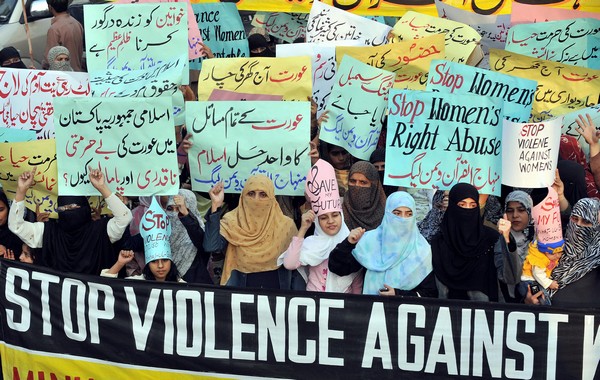
Pic ‘women protesting in Pakistan’ from Wonderlist
https://iawrt.org/wp-content/uploads/2018/10/women-protests-in-pakistan.jpg380600Nonee Walshhttp://iawrt.org/wp-content/uploads/2021/11/logo.pngNonee Walsh2018-10-04 12:42:142018-10-04 12:42:14Women Journalists of Pakistan: Resilient to Challenges
We asked members to communicate about a crucial issue in their region and what women in media can do. From Iraq, Binay Shorsh writes: In Iraq, women face a lot of danger and threats and are killed if they defy traditions. Increasingly women are breaking the barriers and working in media, but they also face gender based online attacks.
“I never feel shame to confess that my society is killing women to keep traditions alive — there is only one thing I am ashamed of … the killing of women in my community.”
Women are an important part of society and societies must do their utmost to ensure that women can choose their way of life on equal terms with men.
In Kurdish society in Iraq, despite some small progress in women’s rights, there are still people who consider women as less than the opposite gender, because we live in a tribal society which prefers males over females .
If we looking back into the past, most women when they get married wish to have male children more than female children, because boys have more chances in life and they became freecreatures. But if they have females even if the mothers wish for the same freedoms, society makes mothers feelof afraid of raising them.
First, raising girls and preventing them from doing many things does not give them rights so when they grow up they are not asking for their rights, for example. there are many women who will not express their opinion in society because they consider themselves to be uneducated and have no right to express their opinion freely, and they must listen to the words of their brother and father before marriage and after marriage the words of their husbands.
In the past, women were considered to be weak creatures, a creature that had to bow to the words of the male, for example, if they do not want to marry, but when her father asks to marry the man he has chosen, she has no right to refuse him because she is breaking her father’s words and it’s not accepted .
In recent years because of technological development, we have been able to learn about some of the world’s cultures and change our ideas through our connection with the outside world, but now there are still some areas where women face a lot of danger and threat to their livessome areas where women face a lot of danger and threats to their lives.
Victims:
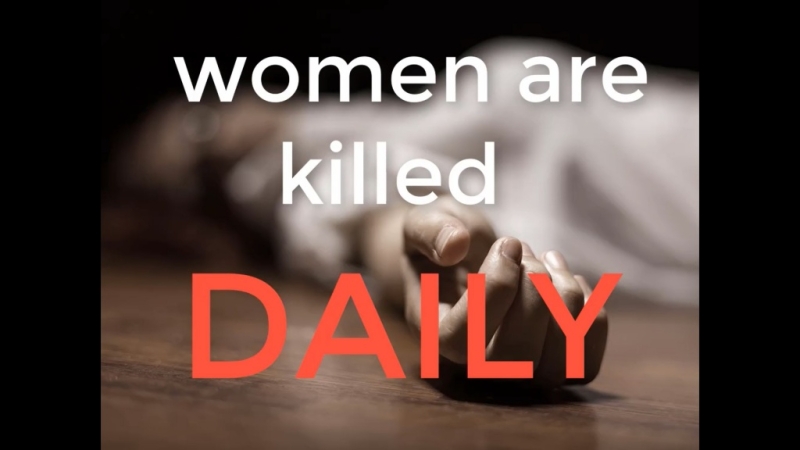
* Most prominent is the issue of honor, in the past period many women have been killed due to violence and because of bribery the case has become a suicide issue and closed .In factle killing for many this is a disaster, women are killed daily, and most of the time the killer are a father, a brother or a husband, unfortunately The law does not penalize them, and We Scarcely hear that the “Criminal has been punished”, Every time we hear and hear in the media about the killing of women because of honor, but so far we have not heard any man killed because of the same issue, and what makes us more sad because these situations make a noise for some days and then forgotten as if nothing happened.
* according to 2017 data, the violence rate has been increased 30% compared to 2016 data. and unfortunately I’m sure that this rate will increase for 2018. Judicial intervention has been increased and most interventions indirect , but most cases result in low levels of, or no punishment for the accused.
Somne reasons for this are
– Lack of necessary proof.
– Victims fear of society, slander and defamation.
– Society, law, religion which are supporting male gender.
– Judges, police and investigators who are involved in the case always look at victims as contributing to the problem,rather than the “accused” because we are in a society that supports males more than females and they believe women are guilty most of the time, for example: The victim: “After my husband tortured me, they took me to the hospital, where the wound was treated with six stitches. When I met the judge, the first question he asked, was: “What mistake did you make, that your husband tortured you like that?”
In some cases the families of the victims avoid taking legal avenues, and the main reasons are that they feel ashamed or fear scandal, desoite the fact that only one person should feel shame and this is the guilty person. But the guilty person does not feel he is guilty.
online and on screen
* There are many girls who do not put their own pictures on their account in social media because there are some people who steal their pictures will change or distort it to destroy their reputations or threaten them; there are many girls who use tnicknames as a protection.
* In this country women are not allowed to take every job that men can, because society pretends that women are weak and while women try to achieve their goals, there are many people including men and women trying to stop them instead of supporting them. In the past, a number of female candidates presebted themselves for election to the Parliament of Iraq in 2018 but they faced online attacks, with opponents trying to distort them through the publication of their private documents on social media.
* In some areas, people watch the artists and the media category in the other eye, because according to religion and tradition it is not appropriate to have women on the screen, so many women who work on the media or acting face difficulties and bad words from society.
Here I would like to explain more about the media situation in Kurdistan. In the past, the number of women in the media was slight, because of a lack of education and the opposition of families to girls and women being shown on the public screen. They were thinking that women must be home workers and raising children. Luckily now a days we can see the number of women in the media field is increasing but clearly we can note that still a section of society make gender-based attacks on them with bad and inappropriate words and also trying to ruin their personal reputation, But rarely we notice the same level of efforts to discredit men who work in the media.
If you see social media, every week, you’ll see a lot of fake accounts trying to defame women, and you’ll notice that many victims are women in every area of life. There are many female journalists and news editors facing harassment from their office manager, as well as in some cases they are pressured, even required to have sexual relations and if the senior men are rejected, they threaten to expel them from work.
As a result of their conditions in media, many women leave their jobs.
Women in Iraq
Sometimes those activists who ask for women’s rights and solutions to women’s problem, also face violence. In my opinion some women can not bear the situation and they find all the doors closed and resort to suicide.
The main reasons for increasing death rates victims are broad: Family. Society. Authority. Economy. Religion. Prevalence unlicensed weapons.Lack of awareness in society. Inequality in law.
Families does not raise their daughters to be powerful and to stand on their feet and face the society, so when they advane into participating with society, they find it hard to bear society’s commentary.
As well corruption is an issue in the government authorities of this countrry, and there is no plan or strategy for protecting women and also Iraq’s economy is reduced, so budgets for for women’s organizations are cut and there are no funds to spread awareness in society. Religions are forbidding so many things for women which are normal for males, and some of the clergy spread wrong education in society through their speeches, for example telling families it is not suitable for a female to work in a public place because it is mixed with male and this is against religion.
There is also an increase in the proportion of weapons without authorization, where people get weapons easily.
And what is the solution?
The authorities should educate the community by opening courses and media channels, and also government must develop plans to improve the country’s economy and trying to identify foreign traditions by opening courses and training in foreign countries.
Courts should make an effort to interrogation women’s issues and supporting them rather than looking at them inappropriately, and also Justice must sanctions the guilty.
Despite all this, women should not be silent, and demand their rights and reject violence and never give up.
Also i must to say that there are a lot of males which are supporting women to reach their rights and refusing all violence toward women and killing them, and trying to spread awareness in society.
I never wanted to know that my community, is in a society where killing women is easy but it is a dark fact that we must to fight it, I never feel shame to confess that my society is killing women to keep traditions alive!!!
Actually the only thing I am ashamed of is… the killing of women in my community….
https://iawrt.org/wp-content/uploads/2018/10/iraq-killing.jpg5761024Nonee Walshhttp://iawrt.org/wp-content/uploads/2021/11/logo.pngNonee Walsh2018-10-04 06:27:372018-10-04 06:27:37Women Killed in name of Keeping Traditions Alive
We asked members to communicate about a crucial issue in their region and what women in media can do.
From the Philippines Lynda Catindig-Garcia writes: continuing education of media professionals is imperative. A focus on what good journalism is must be prioritized
The Philippine media is considered to be the freest media in Asia. The media channels the information via traditional media (newspaper, radio and TV). This means that from the source the information passes through the traditional media and the people receive the information (linear nature).
On the other hand, the social media process begins from the source; social media is connected with the internet to the receiver of information. From the receiver, it can almost instantaneously give feed back to the source.
Presently, there is the convergence of all these media where there is the use of both the traditional media and the social media. With the nature of media, information is at the palm of the hands of its citizens where they can access information in various modalities.
Two pressing issues of the Philippine media: fake news & gender
This is the presence and proliferation of fake news. Fake news is made-up, masterfully manipulated to look credible journalistic reports that easily spread on-line to large audiences willing to believe the fictions and spread the word. The propagation of fake news is among the most serious problems many countries are now facing, as the explosion of social media and technology made it easy and convenient to skew not only textual information, but also digitally manipulated images and videos.
The antidote to fake news, is good journalism, which means true, accurate, unbiased, informed decisions, fair, inclusive, responsible and educated reporting. Our democracy is in peril when the public is guided by wrong information. The media cannot do combat fake news alone, but the citizens must be encouraged to practice citizen journalism, which is the right to seek and receive and impart information.
The second issue is gender and the media.
The four basic institutions of society: family, school, community and church and others tend to promote traditional gender relations that, in general, privilege men while discriminating against women and the lesbian, gay bisexual, transgender and queer (LGBTQ). The media as the fourth estate has shaped and reinforce these unequal gender relations. And, on the other hand, media could also be a potent tool to deconstruct this content as well. In 2012, the United Nations, Educational, Scientific, and Cultural Organization (UNESCO) prioritized gender equality and produced a global framework of Gender-Sensitive Indicators for Media with the International Federation of Journalists and other partners.
The Philippines maintained its status of having the narrowest gender gap, but fell three places in the 2017 Global Gender Gap Index. According to the annual report of the World Economic Forum. The country dipped to 10th place this year from seventh place last year. The Global Gender Gap Index has been monitoring equality and equity within media organizations and gender-sensitivity in media content production.
In spite of these challenges, there have been milestones that have been achieved to help institute gender sensitive policies and guidelines in Philippine media. The 2009 Magna Carta of Women provides for the non-discriminatory and non-derogatory portrayal of women in media and film. It also aimed at government to work with media organizations and media schools to endure that they integrate gender-equality guidelines in their work and learning activities. The Philippines Commission on Women has developed: Gender Equality Guide which is about the guidelines for increasing representation, voice, and influence in media and ensuring fair portrayal in media content; the Guidelines to Protect Women against Discrimination in Media and Film, which lists the” do’s and don’ts” in the portrayal of women in news stories, programs, ads, and films; prescribes the use of gender-inclusive language; and suggests measures to attain gender quality in the workplace.
These efforts are breakthroughs but much still has to be done.
What are the ways forward to address these challenges?
The continuing education of media professionals is imperative. A focus on what good journalism is must be prioritized
Development of information, education and communication materials – this is a resource kit which contain existing codes of ethics and reference materials on good journalism and gender
Organize- online network of media professionals, genuine journalists and gender advocates. This will be a venue for reference materials and quick access for journalists should they need information on gender issue, gender reporting and good journalism
Video competitions for bloggers, social media user’s citizen on gender and good journalism
Competition among professional media workers using social media promoting good journalism and gender
Find gender champions and journalism icons to conduct dialogues on work conditions sponsored by media companies
Hold feedback session with women journalists about their careers and how they handled their gender challenges.
IAWRT Philippine Chapter Efforts
It is evident that funding of IAWRT has depleted. With this condition, the IAWRT Philippine Chapter proactively sourced possible local and international funders to push for the establishment of organizations projects.
Recently, the Philippine IAWRT Chapter met with the International Media Support (IMS) of Denmark to fund the IAWRT women journalist safety training with the inclusion of gender in its framework. This project is in partnership with Asian Institute of Journalism and Communication and Miriam College. The proposal for the training was approved and details shall be discussed soon. The participants are the women journalists from the alternative press.
From this jumpstart, the Philippine Chapter wishes to connect IAWRT international to IMS for possible engagements.
In the local scene, perhaps IAWRT Philippines can also connect with organizations that could provide funding support or laudable engagements.
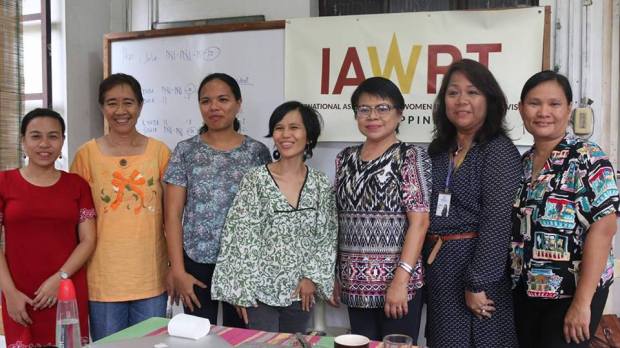
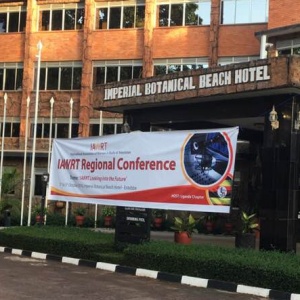
Lynda Catindig-Garcia is the IAWRT Philippine Chapter Vice President and will be attending the regional Conference in Uganda. pictured second from right with board members; Marvie Matura, Yanni Roxas, Ilang-Ilang Quijano; Treasurer; Ronalyn Olea; Secretary; Sonia M. Capio; President; Jola Diones-Mamangun. (pic by Jo Maline Diones-Mamangun)




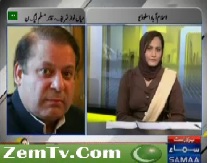 Many journalist’s programs were banned before and after the elections. One such example is Asma Shirazi (a well-known senior TV anchor) whose program which contained an interview with a former Prime Minister of Pakistan Mr. Nawaz Sharif, was banned.
 This intolerance of female journalists is not only in society but in their workplace, too. Female Journalists are less than five percent of the total population in the media industry and they commonly face harassment in the workplace. According to a survey conducted in Khyber Pukhtoonkhuwa and Punjab provinces, every second female journalist has faced gender-based violence. The other major issue is inadequate maternity leave, some received a month’s leave. Others had it even worse, no leave and many employer’s policies are not women friendly. Low wages and a failure to provide transport to reporting jobs by the employers is another gender discrimination. Women are mostly not encouraged into the media industry by society at large.