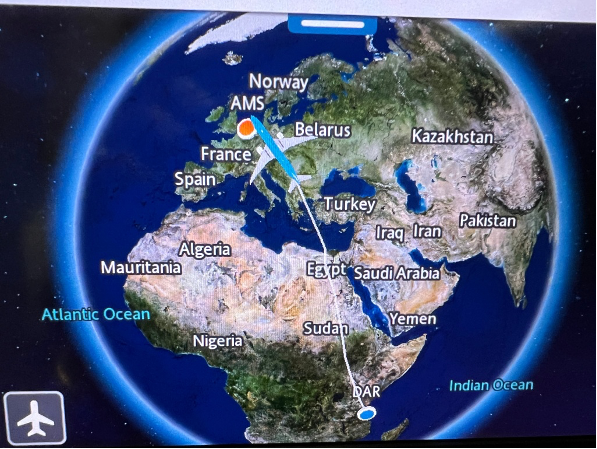
Karibu! Welcome from Tanzania, Zanzibar (and above the Earth as I type) where the International Association of Women in Radio and Television (IAWRT) concluded its 39th biennial and members’ meeting from 18-20 November that ushered in its new board and strategic agenda. Centered around three critical themes of conflict, climate change and COVID-19, delegates from 14 chapters spanning more than 55 countries shared strategies and reports of pressing issues around the globe. 

My sincere thanks to our host chapter and chapter head, Fatuma Matulanga, the head of Tanzania Broadcasting Corporation, TZB Zanzibar Office (Unguja and Pemba), Rose Haji Mwalimu, IAWRT Tanzania chapter advisor and the host team and program committee for creating a safe, engaging environment for our deliberations. I will personally be forever grateful for your grace under multiple, unforeseen pressures. I look forward to our continued partnership and growth of the chapter in Tanzania.

The 400-member strong international community of journalists, broadcasters, filmmakers, educators, media researchers and others hail from countries around the globe. Uganda. Kenya. Tanzania. Cameroon. South Africa. Norway. Philippines. United States of America. Cambodia. Moldova. Nepal. India. Iraq. Afghanistan.
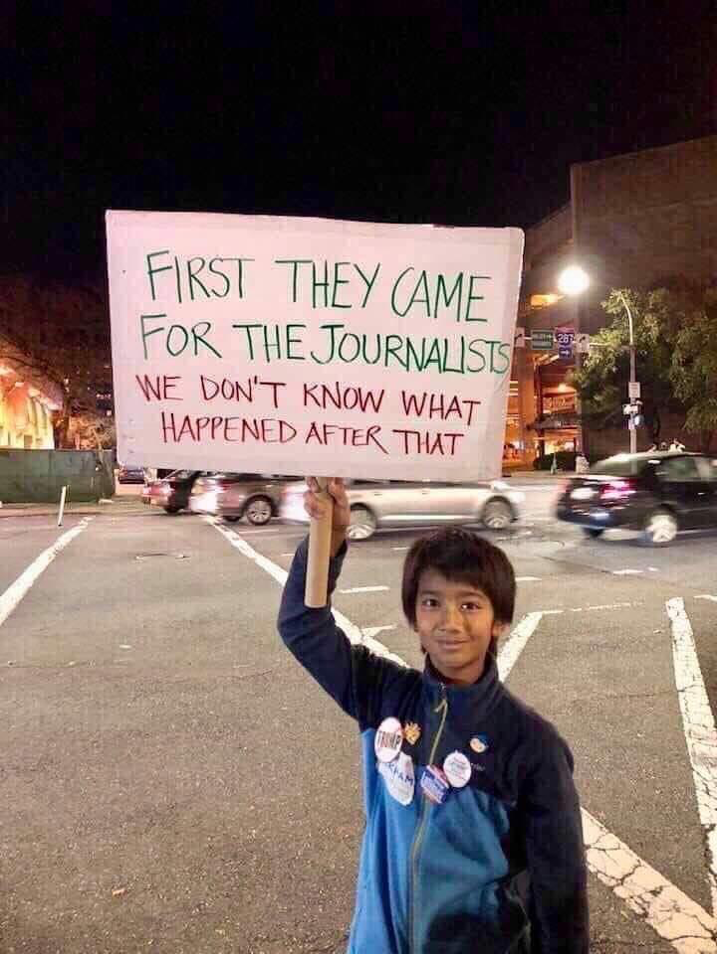
No issue is more urgent than the lives of our members, many of whom have faced unprecedented challenges sustaining press freedoms in their countries, and have paid the ultimate sacrifice with their lives and livelihoods.

Many of our Afghan chapter members are in exile, run from the airwaves and their country, on the takeover by the Taliban. Journalists and those representing civil society were targeted and the entire media family is kept under tight scrutiny. According to a survey conducted by Reporters without Borders, the working journalists corps has declined from 10,790 people working in Afghan media at the start of August 2021 to 4,360 working journalists by December 2021. For women journalists, the numbers are even more stark. Out of 2,490 women working before the Taliban takeover, only 410 women journalists remain. IAWRT Afghanistan chapter head, Najiba Ayubi, has been instrumental in negotiating with the Taliban to overturn the human rights restrictions, so women journalists can continue to inform, educate and report on their country’s most pressing issues — gender equality, media plurality and human rights. But media freedom remains a dream.

The AWRT-Kabul chapter shared their latest research on the conditions inside Afghanistan in the report Lives, Jobs, Homeland: Afghan Women Journalists Lose All, supported by Internews. Their survey of 308 respondents, all women, details the devastation to the media corps.
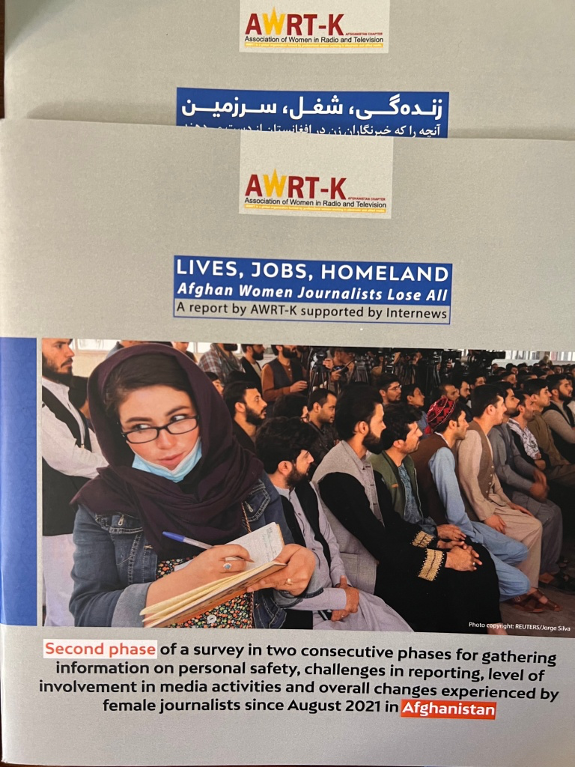
According to the survey, all 100 percent of the respondents reported that they have received some kind of threat since the takeover. The restrictions and threats have been particularly hard for women in provincial media. A majority of respondents (67.86%) reported that they have lost their jobs since the de facto authorities’ takeover of Afghanistan in August 2021, with Bamyan, Kandahar and Balkh areas reporting high job losses and even the complete shutdown of media houses.

“My whole body shakes when I think of that time,” shared one Afghan chapter member, now in hiding with his family. Utilizing intimidation, pressure on extended family, threats, arrests, torture and killings, the Taliban tactics have caused journalists to flee or go underground, staying out of the public eye to protect themselves and their extended families.

Kreshma Fakhri, an Afghan journalist and newly elected IAWRT-International board member, shared her harrowing and dangerous route to refuge. She described the hostile working conditions inside the country.

“The Taliban have set up three red lines. Publishing and broadcasting in accordance with Sharia law, observing the national interest, and limitation of women in media. This has caused fear among the media and has opened the way for self-censorship. Thus, many realities will remain hidden and unwritten.” 

Now in exile, she and her colleagues are trying to work again as journalists. But they are out of the country and the situation is dire. 

“The end result is a rising tide of violence and lack of resolution for Afghan society. Condemnation is not enough. Sanction the Taliban. The future of Afghanistan is in the hands of women. We must protect them and the future of Afghanistan.”

Our Nicaraguan chapter has left their country, disbanded and scattered about the globe.
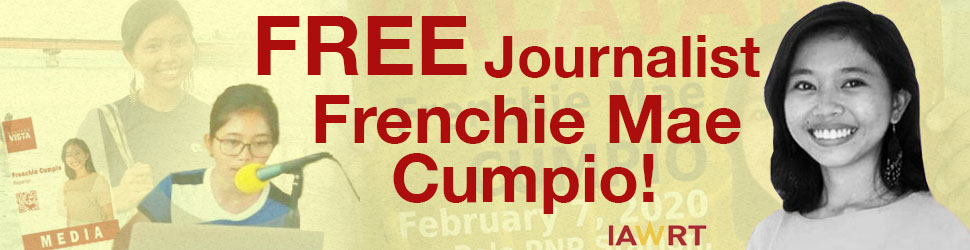
Free Frenchy Mae Cumpio: Sign on to our IAWRT-Philippines campaign

Our members in the Philippines have faced continued pressure from authorities who use “redtagging” or blacklisting tactics to target journalists with false arrests, equipment seizures, and loss of jobs. IAWRT member Frenchy Mae Cumpio, has been imprisoned for more than two years on false charges from aiding terrorism to “fake news.” Our own secretariat and communications officer, Lady Ann Salem, remains on the run, evading authorities by moving to various safe houses. 

The Philippines courts recently acquitted journalists, including IAWRT Philippines members Crimson Labinghisa and Krisma Nina Porquia, who were arrested, jailed and charged when they were covering a protest during the pandemic in May 2020. Using statements of support and other public pressures, the Philippines chapter has been using International Women’s Day and other activities to focus on the unique needs of women and bringing gender equality — with safety — to their communities. 

Our members have faced two very challenging years, led by our outgoing President Violet Gonda, exiled from Zimbabwe for 20 years and now working for Reuters in the UK. Serving for 10 years on IAWRT’s international board, she helped members and chapters navigate Taliban takeovers and political extremists, massive layoffs in the media around the globe, a global health crisis, the precarious financial state of journalists, the migration and brain drain from repressive countries and an internet weaponized to sow mis/disinformation, Violet and our outgoing board members have navigated these perilous times with care and grace. Key to our survival has been our collective might as a distributed, diverse professional network. Our members have provided training in digital and physical safety, self care, legal aid and coaching, and professional development. The power and resilience of this global network allows us to be responsive in crisis, to share resources, share skills and even share our homes. Our primary mission as an international organization is to support our members to keep telling the stories of their communities during these multiple threats to press freedom, individual freedom of expression and continued violations of human rights.

Unity is our superpower.

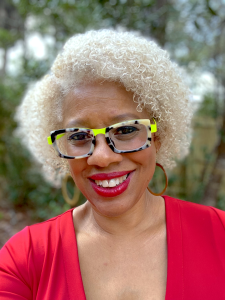
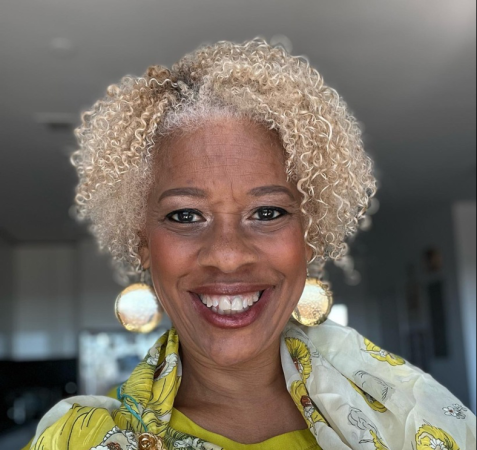
I am Dr. Michelle Ferrier, your new president. I humbly accepted this role to serve IAWRT members and chapters in building a more inclusive, diverse and resilient network that helps build a vibrant, independent media sector across the globe, with care to our individual members who must live and do their work in difficult conditions.

Over the past 10 years, my work has been at the highest of global forums, advocating for the safety of women journalists by bringing media and technological research, awareness and actions to our world leaders. As founder of TrollBusters, we have been educating journalists on digital security, online threats, and strategies in workflow and personal protections. Our website, at www.troll-busters.com, is a rich resource of data and knowledge about global conditions on press freedoms, providing a dynamic view of an ever-changing global “triple pandemic” of COVID, climate change and conflict. And as an educator, I have been training emerging journalists all over the world in new ways of doing our work, creating new curricula and research and advocating for journalists’ safety. The award-winning Toxic Avenger magazine, produced by TrollBusters, publishes at the intersection of digital harms and the lives and work of journalists. Our regional analysis of press freedoms and amplification of specific cases, tactics and support helps amplify already existing projects and strategies that can be replicated elsewhere. I’ve been working directly with journalists, both men and women, to help secure their data, stories and their lives in geographies across the Earth, advocating for better education and training on the hostile digital and physical environments in which we now find ourselves doing this work.

In my research, monitoring and service work, I’ve seen unprecedented attacks on journalists by state-sponsored, state-aligned actors, online coordinated social campaigns to discredit journalists and destroy the credibility of journalistic work. I’ve seen social spaces weaponized to shame, name and harass journalists and women, sometimes to deadly effect. Our Iraq chapter shared a sobering report of “honor killings” where private information and culturally provocative images are weaponized, resulting in family killing family, fathers killing daughters, brothers killing sisters who they assumed brought shame to their families. This is a strategy, especially targeting women journalists, to break networks down to the family core – to sow confusion, fear, and doubt. 

And sometimes — as with our sisters in Iraq — with deadly consequences.

The effects of these actions ripple across our global network. And they threaten the resilience and growth of our network, which is our greatest strength. These times call for collective action of passionate voices. As journalists, we must continue to speak to these atrocities on human rights and press freedoms and create spaces within our communities and countries for dialogue — and healing — on the most pressing issues of our times.

I am honored and humbled to work over the next two years with our newly elected board, many of them returning to the board from prior positions within the international board: 

  • Vice President, Jola Diones-Mamagun.
  • Secretary, Mandira Raut.
  • Treasurer, Josephine Karani.
  • And our board members: Kreshma Fakhri, Anjali Monteiro, and Razia Quallatein Mwawanga.

Together — with intention and urgency — we will help weave together a powerful network of members and chapter leadership leading the charge on assessing their local conditions and collaborating to develop strategies to support and mentor each other. Through our rich, diverse, network of sisters and allies in journalism, we can continue to create journalism that matters that sustains us and our communities.
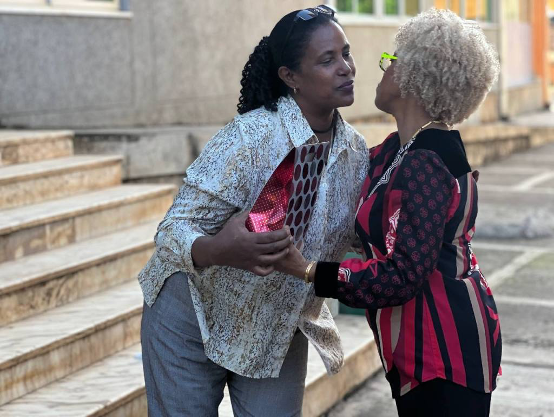
Prior to our biennial, I was in Addis Ababa in Ethiopia with Sheila Dallas-Katzman, president of IAWRT-USA, to inaugurate a training program in media innovation and entrepreneurship. We met with local leaders in state-operated media and independent journalists, media workers and others to reimagine a more equitable, inclusive news and information ecosystem across Ethiopia. The six-month accelerator program is designed to introduce new communication enterprises to reach underserved and underrepresented audiences. Led by our own member, Rebecca Tadesse Hunde of Addis Ababa, we are strengthening the IAWRT network and building a new local chapter. We were introduced to independent media producers, our partners at Amhara Media Corporation, and powerful women and men who are passionate about building an independent and resilient media community. Several followed our conference proceedings on our Facebook live, streaming links and I have acquired quite a following of Ethiopian sisters — and brothers and allies— interested in media change. More than 20-plus journalists, bloggers and broadcasters have reached out since then, eager to join a community of like-minded professionals.

One sister emailed me her thoughts during the three-day event.

“Hello Michelle, 

The conference was important, especially when it comes to the trials of female journalists, which teaches a lot about the experiences of the rest of the countries.” 

What these journalists crave is connection, to not stay isolated in fear of one another, but to join together in building a mutual aid network in Ethiopia. I am pleased that one woman journalist has opened her home to her colleagues for a traditional coffee, starting the process of connecting on a personal level and rebuilding trust.
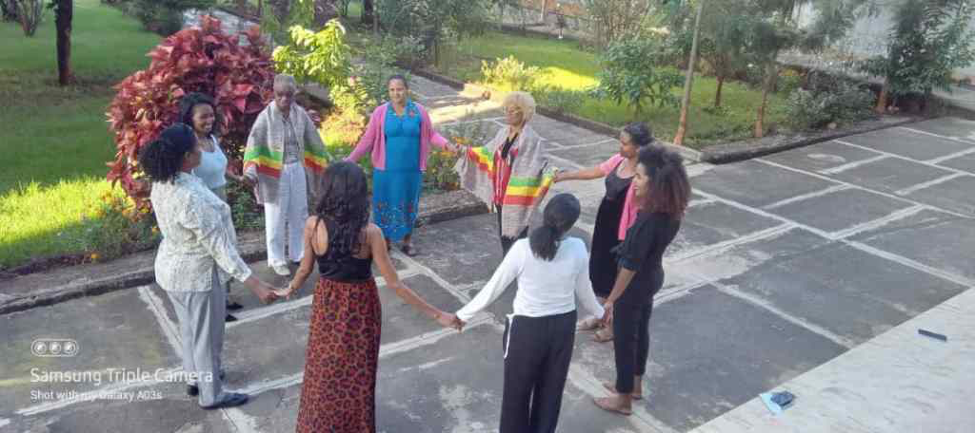
Headed by Sheila Dallas-Katzman a former United Nations communications officer, the USA chapter holds a consultative status with the United Nations Commission on the Status of Women. The 2023 priority theme, “Innovation and technological change, and education in the digital age for achieving gender equality and the empowerment of all women and girls” dovetails with the work we will be doing in Ethiopia on media innovation and entrepreneurship and provides strategic direction to our work moving forward. During international forums from the UN to UNESCO and beyond, IAWRT members have represented the organization on a global stage, most recently during our own biennial. Pamela Morgan of the USA chapter represented us before the UN Climate Change Conference with an introduction to IAWRT-USA’s My Climate Change Story cellphone cinema project, sharing the power of visual personal narratives to effect global change. The India chapter also tackled the issue of climate change in mentoring and long documentary productions. Reena Mohan and the chapter produced the 18th year of the Asia Women’s Film Festival, utilizing the theme “I’m Living It” to share personal stories of climate change impacts.

We welcomed the formation of a new chapter in Sierra Leone on 19 October 2022, headed by Cynthia Anthony, a journalist and gardener, who gave away excess produce from her farm to feed her community during the pandemic. Other journalists and community members in Sierra Leone — leaders, farmers, and women advocates along with Anthony— had participated in the My Climate Change workshop to train the trainers and community members to create and share stories of local conditions and share strategies for resilience. Powerful, direct interventions like the My Climate Change Story not only enrich local policy, but help strengthen the resilience of the whole community. And it is through these enrichment activities that bring value to local residents that we strengthen the whole IAWRT network by creating new chapters and partnerships with local civil society and other community stakeholders.

Our Cameroon chapter, headed by Becky Bissong, developed an online campaign during the 16 Days of Action on Gender-Based Violence, using WhatsApp, email and targeted seminars to strengthen their local network. Our Cameroon members describe the perilous lives of Cameroon journalists in this way:

“If you’re a journalist in Cameroon, you’re caught between the devil and the deep blue sea.” 

Recognizing the isolation and silencing that comes from sustained online and offline violence and harassment, Cameroon seeks to elevate these stories to make the world take notice.

In the Philippines, headed by Lynda Catinging-Garcia, the IAWRT chapter initiated a digital safe house — a repository of country and context-rich supports to help women journalists navigate perilous times, build their skills and resilience. This localized model is being replicated in Moldova, as our chapter and journalists struggle to manage the ripple effects of the conflict in neighboring Ukraine. The project provides direct support at the local level by bringing local expertise, context and safety in both digital and physical spaces. 

During the past two years, many chapters focused their work around the themes of self-care: mental health and wellbeing, stress management and tactics to deal with online harassment or harassment in the workplace. Building on these local initiatives, our goal as the international board is to nurture these efforts across the globe, learning and sharing our strategies. That is our charge from you, the members, to help you develop the strength to grow.

Our work ahead does not come without its challenges. Managing a distributed network of committed journalists requires that we support the individual members as we nurture the whole. In the strategic plan developed by the outgoing board in partnership with working groups, the 2020-2024 document outlines the key areas of our interventions:

  • Advocacy for women’s rights
  • Women journalist empowerment and the development of gender parity in the media
  • Deepening professional skills in documentary and film production
  • Expanding our global reach
  • Developing strategic and fiscal strategies to sustain our organization

To effect change in these spaces, IAWRT International must deepen our understanding of local context. We exist to facilitate and amplify the excellent work of our media colleagues around the globe. Our challenges lie in strengthening our network, building in multicultural contexts to our work, rebuilding communication channels to ensure all of our chapters and members are heard and seen and the work amplified. IAWRT’s capacity to mobilize this rich network, especially in times of crisis, has been shown to be our greatest strength. 

Global solidarity is our superpower.
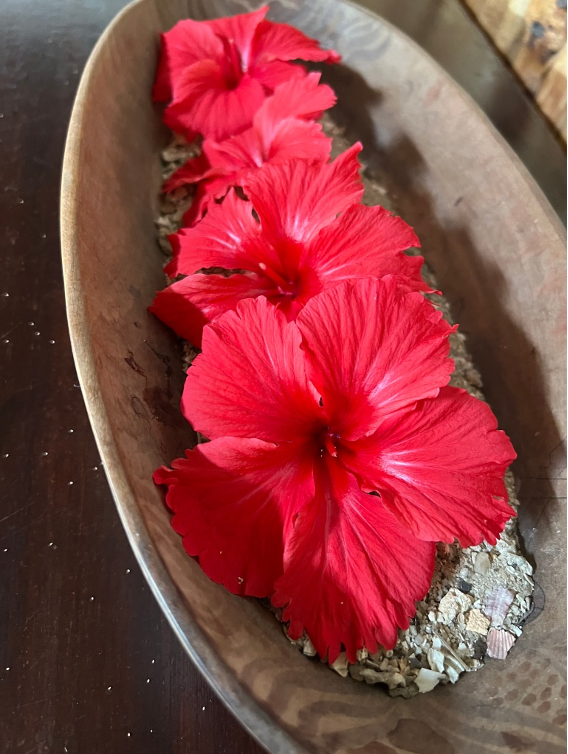
Chapters are collaborating with each other on programs and professional development. Members help members to navigate hostile work and living environments through financial, psychosocial and professional development. Even, sometimes, sharing the clothes off our backs or a safe bed in which to rest and recover. 

A powerful example of the impact of IAWRT members: Newly elected board member Raziah Quallatein Mwawanga, a veteran broadcaster and media consultant, was a pioneer of the Tanzania media stakeholders Coalition of the Right to Information which successfully advocated for the enactment of the Media Services Act and the Access to Information Act of 2016. At our biennial, Minister of Information and Communication Technology the Honorable Nape Nnauye welcomed IAWRT delegates at the opening, sharing welcome news that a review of the 2016 Media Services Act is underway. Under the first-ever woman president in the history of Tanzania, Her Excellency Samia Suluhu Hassan, The President of the United Republic of Tanzania, the country has set an ambitious agenda to bring gender equality to the country.

the review is designed to encode gender parity into the law with a goal of 50/50. Zanzibar’s Minister of Information Tabia Maulid Mwita shared that Zanzibar is currently reviewing its information policy to accommodate more liberal media reforms. What a powerful example of the diligent work of committed people to effect systems change! And a strategy that we, in our unique position, can replicate across the globe. 

The Minister of Information of Tanzania explained the new changes under Her Excellency’s leadership:

“You’ve seen the initiatives to promote women in leadership including women journalists in different positions, from ministers, prominent secretaries, regional commissioners, district commissioners and directors. It is my hope that his noble initiative of ensuring gender equality, penetrates in your media houses and encourages women around the world to fully participate in this noble profession which is among the most important pillars of good governance.”

Liberation

Education

Elevation

This is what it means to be of support to one another. This is what it takes to build a community of committed leaders. We ARE the community weavers, helping to bring the richness of our own communities, together with our skills, to heal and grow the world.

American cultural anthropologist Margaret Mead is quoted as saying:

“Never doubt that a small group of thoughtful, committed citizens can change the world: indeed, it’s the only thing that ever has.”

I wholeheartedly agree. We must grow local women media leaders, owners, innovators and connectors, because it is through our listening, collaborating, creating and growing with, by, and for our communities that we can effect real healing and change in our world.

Yours in service,

Dr. Michelle Ferrier
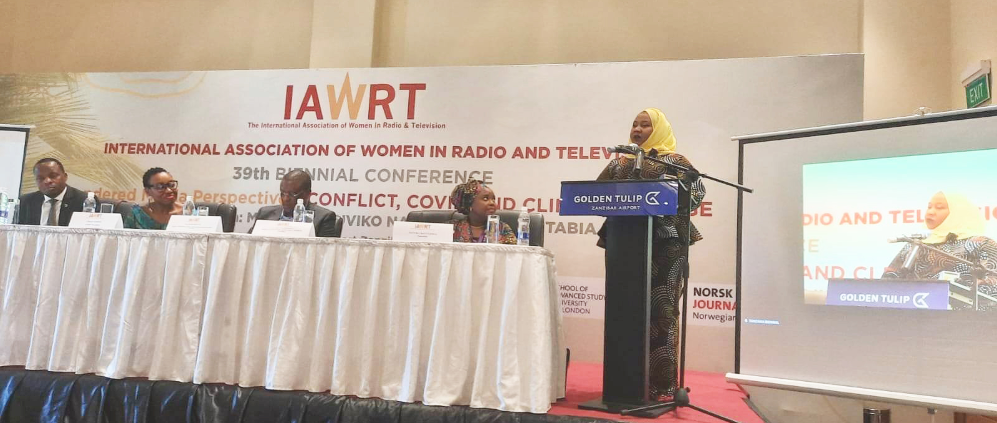
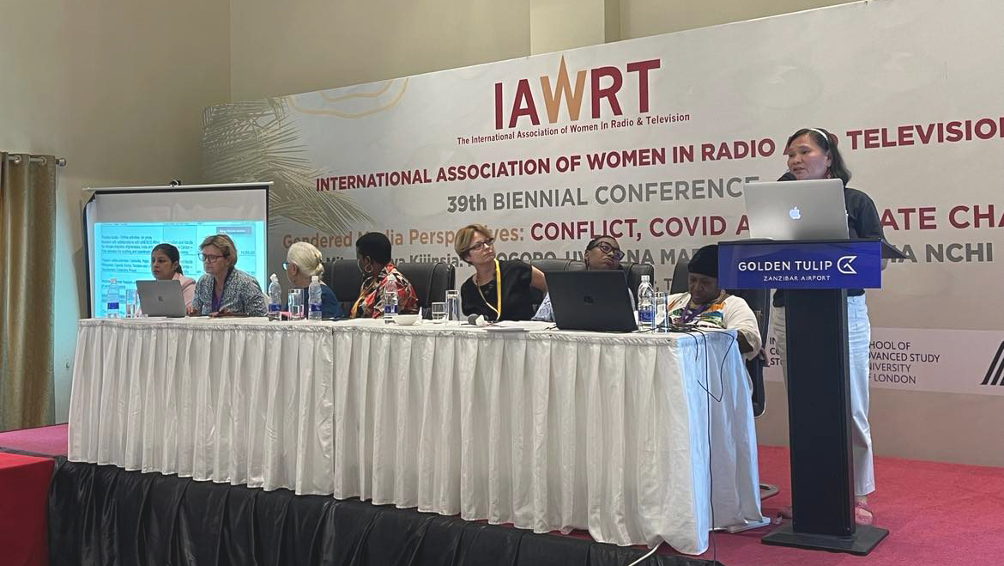
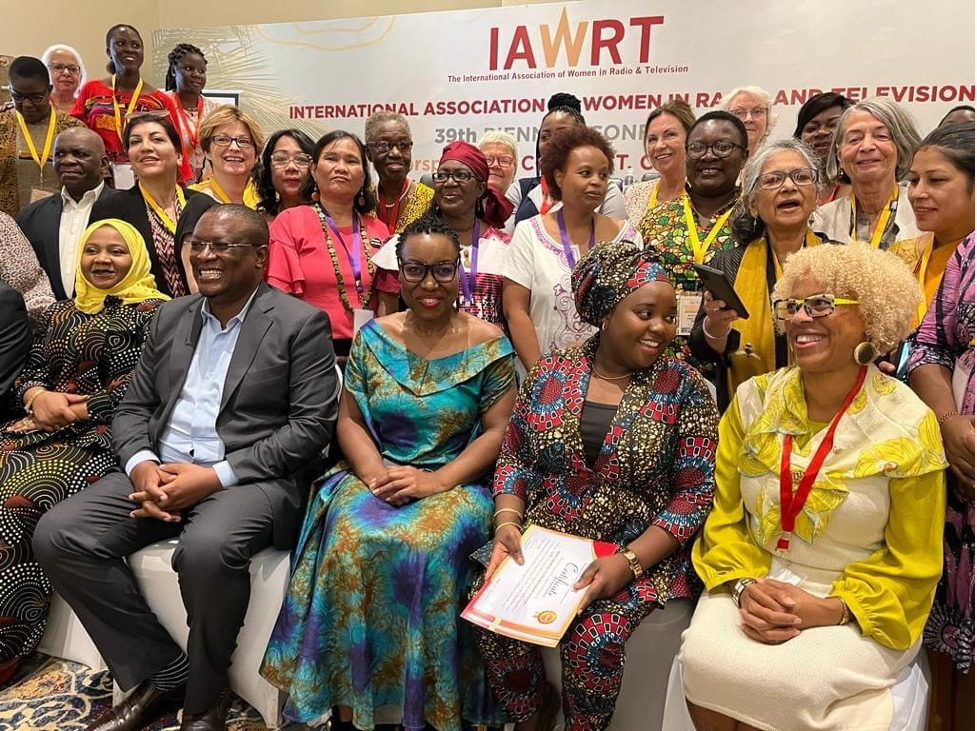
The three days of 39th IAWRT Biennial Conference took place from 18 to 20November 2022. This year, marks the Biennial Conference with the theme on the gendered Media perspectives on 3C’s: Conflict, COVID and Climate Change, their challenges and how they impact the lives of women in media.

It was hosted by IAWRT Tanzania Chapter, where IAWRT delegates from all chapters worldwide met at the Golden Tulip Hotel Airport Zanzibar, Tanzania. This conference provides a platform for engagement of women journalist globally both physically and virtually.

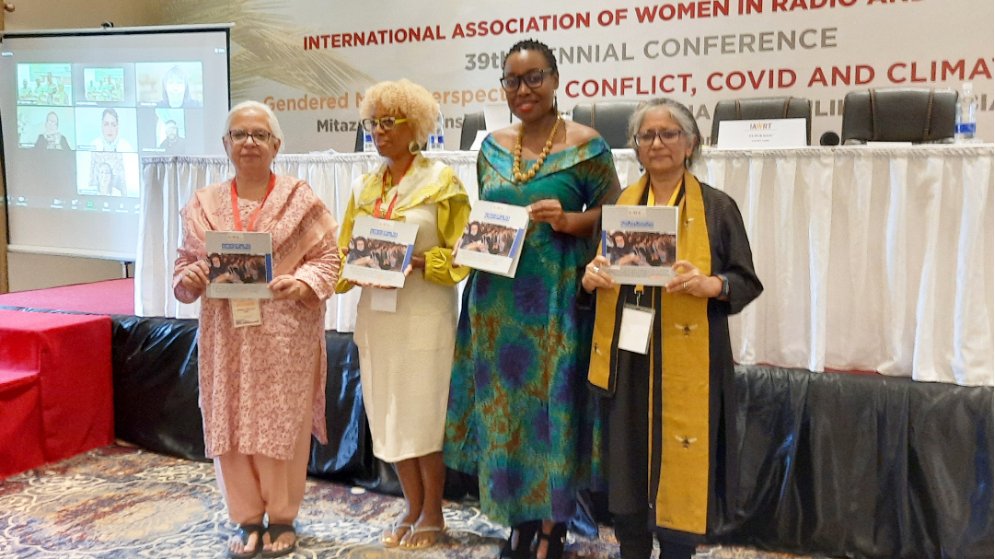
Photo by Jola Diones-Mamangun: Launching of the book – “Lives, Jobs, Homeland: Afghan Women Journalists Lose All”. From left Reena Mohan (India), Michelle Ferrier (USA), Violet Gonda (Zimbabwe) and Nupur Basu (India)

Each day featured a unique thematic area with Day One focusing on conflict with presentations of Breaking Social Barriers to Women Leadership in Tanzania using Media, Status of Women Journalists, and the second agenda was on Safety, Resistance and Resilience. The main plenary for the first day was Afghanistan after Taliban: Status of Women Journalists where the testimonies came from Abdul Basir Quraishi, Najiba Ayubi and Somaia Walizadeh, all IAWRT Afghanistan members and online. Reena Mohan (India) and Elisabeth Eide (online) of the Journalism and Media International Center (JMIC) of the OsloMet Norway were also shared their stories about the status of the Afghan journalists during the invasion of the Taliban in Afghanistan. Sharmin Boyle (online) of Internews Pakistan was also present and their sponsored book “Lives, Jobs, Homeland: Afghan Women Journalists Lose All” was launched.

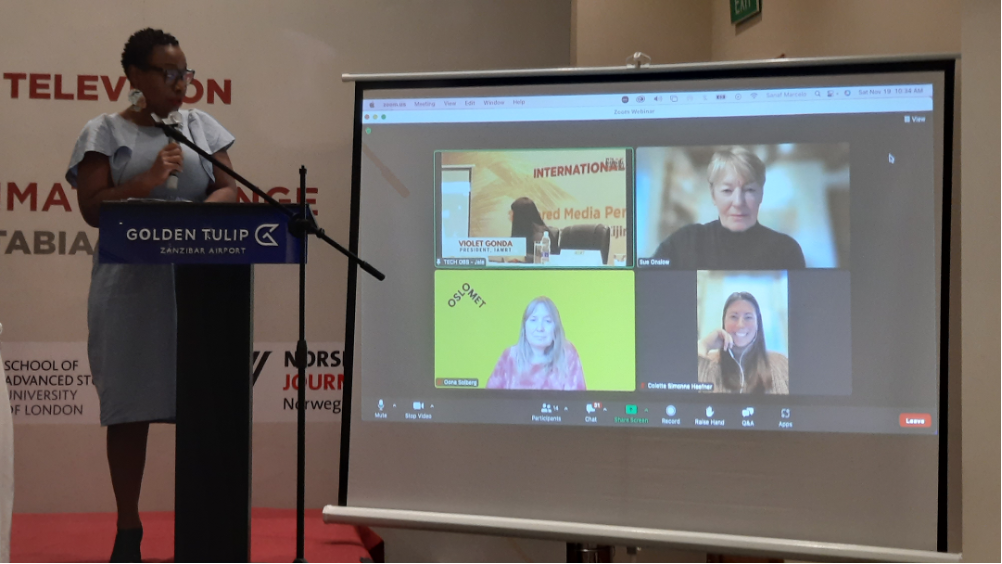
Photo by Jola Diones-Mamangun: (From left) Violet Gonda (Zimbabwe), (Top)  Sue Onslow (UK),  (Below) Oona Solberg (Norway) and Colette Simonne Heefner (USA)

Day Two started with the information about the IAWRT Digital Safe House (DSH) Project which launched in the Philippines to empower women living under threat. Lady Ann Salem, IAWRT communication officer and lead speaker of the session explained the importance of the DSH in the Philippines. The second session was focused on DSH for the Journalists at Risk and Way Forward. Speakers were Colette Simone Heefner of International Media Support (IMS), Oona Solberg of Journalism and Media International Center (JMIC), Sue Onslow of Institute of Commonwealth Studies, School of Advanced Study, Therese Patricia San Diego Torres of DSH Philippines, Birgitte Jallov of DSH Moldova and Ukraine and Greta Gober, the DSH proposal writer. The session was moderated by Violet Gonda, the previous IAWRT president.

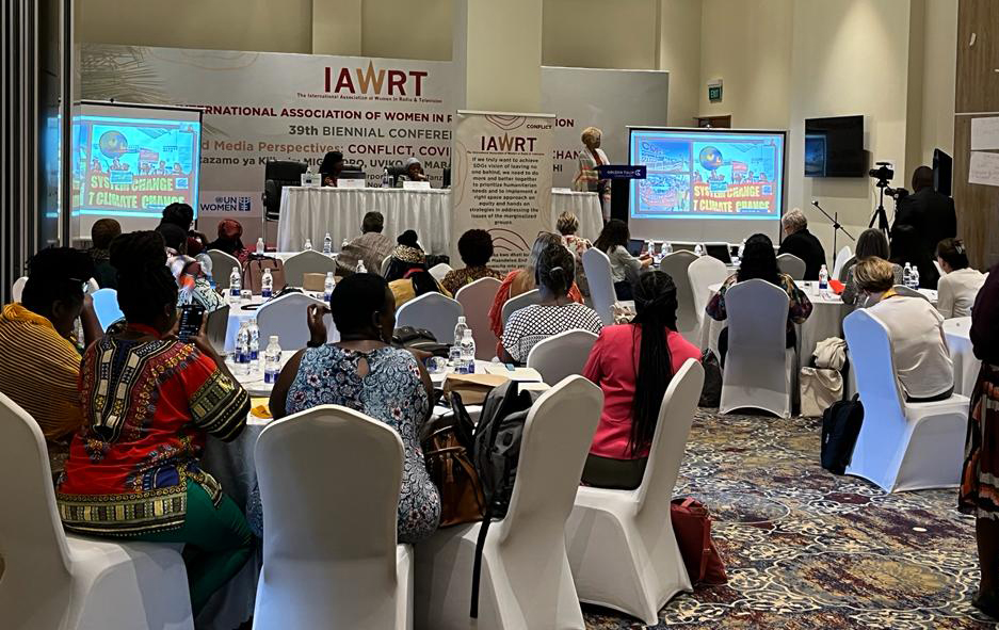
(Photo by Jola Diones-Mamangun) Climate Change Plenary and moderated by Michelle Ferrier.

Another plenary session on Countdown to Climate Change was next and moderated by Michelle Ferrier, the new international board president.

The participants were then divided into breakup workshop groups which focused on three areas: Fake news, Media Methodology, and Breaking the Glass Ceiling in Women at Work.

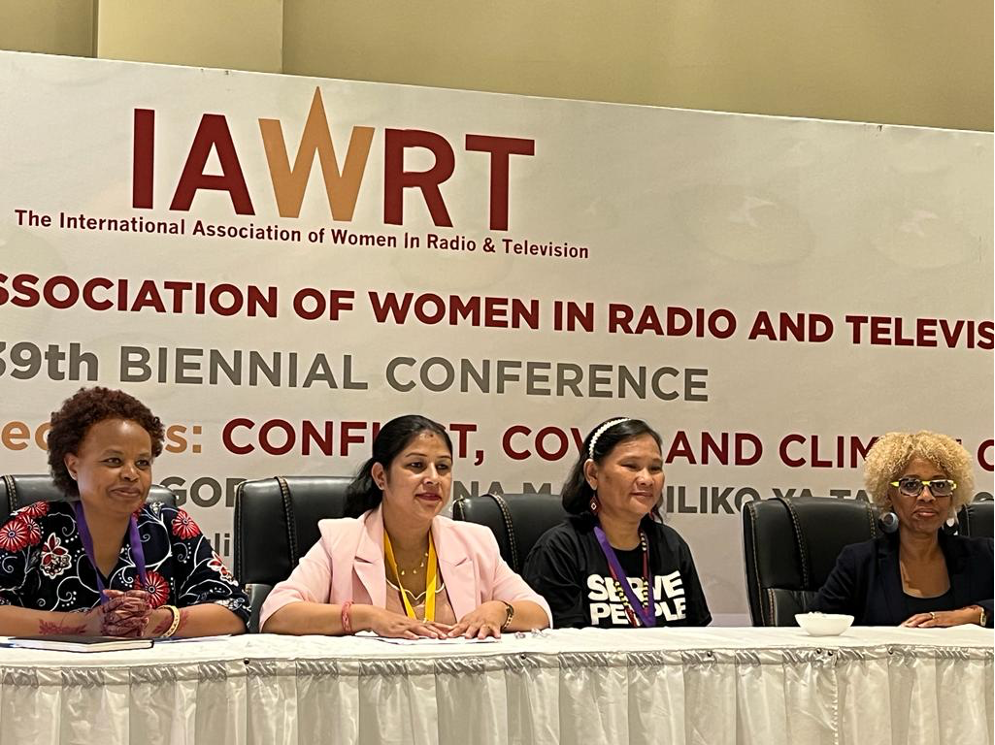
(Photo by Rebecca Myles: New IAWRT International Board – (From left) Raziah Quallatein Mwawanga (Tanzania) – Board Member, Mandira Raut (Nepal) – Secretary, Jola Diones Mamangun (Philippines) – Vice President and Michelle Ferrier (USA) – President. Not in the photo – Josephine Karani (Kenya) – Treasurer, Kreshma Fakhri (Afghanistan) and Anjali Monteiro (India) for Board Members.

The Third Day and final day of the 39th IAWRT Biennial conference was focused on the Untold Stories of COVID 19, and its impact on women in media, lesson learnt and how to prepare ourselves, Different experiences and challenges that were encountered in different countries for example loss of jobs, loss of life, and lack of adequate funds etc.

(Photo by Therese Patricia San Diego Torres: Treasurer Jola Diones-Mamangun shared her three years report to the IAWRT members.

Final session of the conference was highlighted by the reports from the IAWRT president and treasurer,  Violet Gonda and Jola Diones-Mamangun. It was followed by the chapter reports from Afghanistan, Cameroon, India, Iraq-Kurdistan, Kenya, Nepal, Norway, Moldova, Philippines, Tanzania, Uganda, USA and the new IAWRT chapter – Sierra Leone. Different committees also shared their reports. The turned-over ceremony of the new IAWRT International Board was also one of the highlights.

(Photo by Nupur Basu) Out-going IAWRT International Board – (from left) Secretary – Eunice Kasirye (Uganda), Board Member – Reena Mohan (India), Vice President – Greta Gober (Poland), Treasurer – Jola Diones-Mamangun. (Philippines), Fatuma Matulanga (IAWRT Tanzania Head), Board Members – Mandira Raut (Nepal) and Bibiana Piene (Norway), and President – Violet Gonda.

The day was concluded by the awarding of six IAWRT members for their Outstanding Dedication & Commitment to the IAWRT organization.Namely Rose Haji Mwalimu (Tanzania), Birgitte Jalov (Denmark), Nupur Basu (India), Liz Miller (Canada), Sheila Katzman (USA) and Nonee Walsh (Australia). And the Gala Night and Dinner with IAWRT members.

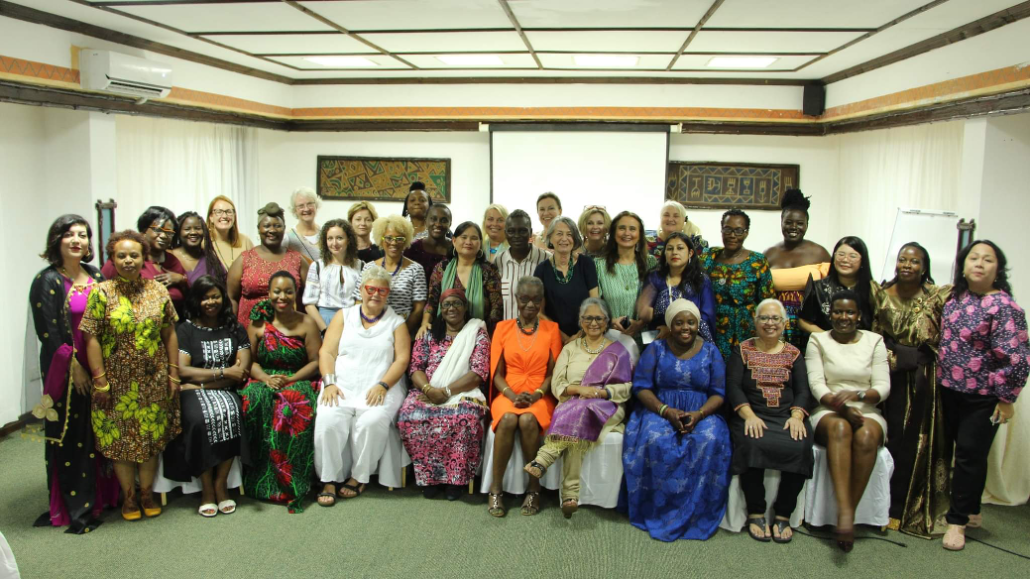
IAWRT Group photo by Jek Alcaraz.

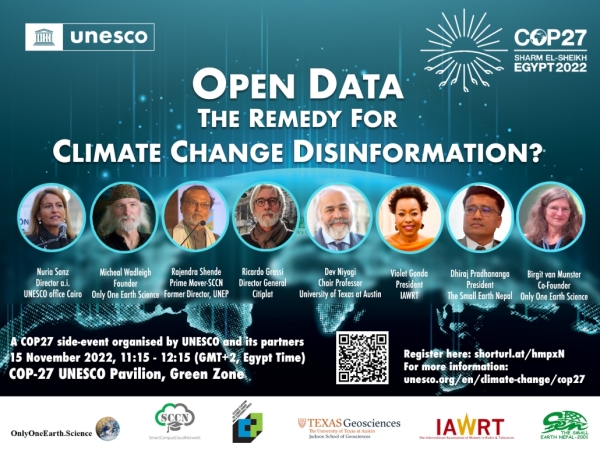
UNESCO with IAWRT, OnlyOneEarth.Science, Smart Campus Cloud Network, Citizens’ Platform on Climate Change and A Sustainable World, Texas Geosciences and The Small Earth Nepal offer this side event to COP27.

The session will discuss the importance of climate change data and explore how open data models can counter disinformation. The aim is to create a global narrative on the importance of open data for climate change. Open data serves as one of the most important solutions to make the climate change processes more transparent, inclusive, and democratic. 

The session will discuss responses for the following questions:

  • What is the state of climate change and natural resource consumption data in communication processes?
  • What can stakeholders do to enhance citizens’ access to and understanding of big picture for existential climate-consumption data?
  • What can be done to institutionalize good practices and processes for climate-consumption disinformation and enhance citizens’ access to information?

IAWRT will be represented by Pamela Morgan of IAWRT USA Chapter.

Pamela Morgan is the Executive Director of Woman In Media – Newark, a not-for-profit organization which she founded that advocates for and educates the community about issues affecting women globally using film, video and new media as its platform. As a global advocate, her work centers on the implementation of the United Nation’s Sustainable Development Goals focused on women and migration. 

November 2 is the observance of the International Day to End Impunity for Crimes Against Journalists.

UNESCO reports that already this year, over 70 journalists were killed. 9 out of 10 killings go unpunished. 

“Impunity for crimes against journalists affects the core of our freedoms of expression and information. Silencing a journalist has consequences for everyone. We cannot turn a blind eye to impunity. We cannot let their deaths be invisible to society,” UNESCO stressed. 

UNESCO publishes its latest figures on the global impunity rate for journalists’ killings. Although this figure remains unacceptably high, it represents an 9 percentage points reduction in the rate of impunity since 2012 when the United Nations launched its Plan of Action on the Safety of Journalists. (Read the report available in multiple languages here.) 

Key figures in the reports:

  • Of the 117 journalists killed in 2020-21, 91 or 78% were killed while off the clock, for example, at home, in their vehicles or in the street but not on specific assignment. Several were killed in front of family members, including their children.
  • The last year have also seen the number of killed women journalists rising from 6-11% of the total, a worrying trend continuing this year.
  • In the 2020-2021 period, 6 journalists were killed while covering protests, riots or demonstrations. This confirms the trend identified in the previous Director-General’s Report which noted a rise in the number of journalists killed in such contexts.

The United Nations General Assembly proclaimed 2 November as the ‘International Day to End Impunity for Crimes against Journalists’ in its 70th plenary meeting in 2013. The date of the UN day marks the death of Ghislaine Dupont and Claude Verlon, two French journalists killed while reporting in Mali earlier that year. 

10th anniversary of the UN Plan of Action of the Safety of Journalists

Organized by the Ministry of Foreign Affairs of Austria, in cooperation with UNESCO and the Office of the High Commissioner on Human Rights, a High-Level Conference will commemorate the 10th year of the UN Plan of Action on the Safety of Journalists and discuss the issue of impunity on November 3-4. Well-known journalists and freedom of expression activists will speak at the event, including Novaya Gazeta Editor-in-Chief and 2021 Nobel Peace Prize Laureate Dmitry Muratov and Colombian Journalist and UNESCO/Guillermo Cano Award Laureate Jineth Bedoya Lima. 

10 years of impact of the UN Plan of Action on the Safety of Journalists are highlighted:

  • The 10th anniversary is a milestone to Reaffirm, Recommit and Reposition efforts to advance the UN Plan of Action on the Safety of Journalists and the Issue of Impunity, the first concerted effort within the UN to address attacks and impunity of crimes against journalists.
  • 26 UN resolutions on safety of journalists adopted since 2012 by UN General Assembly, UNESCO General Conference and the Human Rights Council.
  • A network of UN Focal Points for the Safety of Journalists within UN agencies, funds and programmes and increased number of reports by the Special Rapporteurs on Freedom of Expression.
  • An International Coalition of Civil Society Organizations of Safety of Journalists, a Media Freedom Coalition of 50 countries, a Journalism Safety Research Network.
  • At least 50 National Protection Mechanisms for the safety of journalists established since 2012.
  • More than 24,000 judicial operators from 150 countries and more than 11,500 security forces from 160 countries trained on safety of journalists and freedom of expression. Over 500 lawyers trained in 30 countries and 1,000 cases of legal assistance provided to journalists.

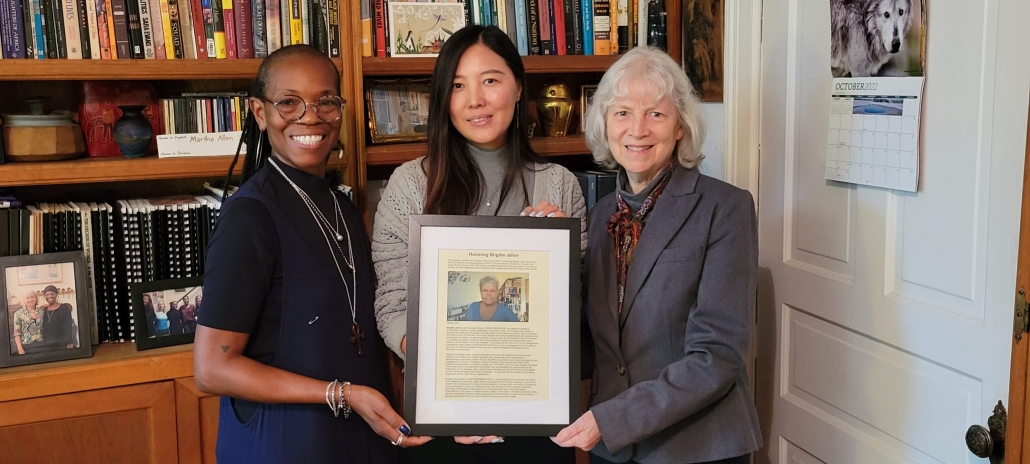
The ‘Women’s Institute for Freedom of the Press’ in Washington DC, USA has selected Birgitte Jallov to receive an award at this year’s ceremony for her work in strengthening women’s opportunities to have a voice in the media. The institute’s leadership has emphasized that they want to present her this award precisely this year, where they celebrate the institute’s 50th anniversary. 

Birgitte’s work in more than 70 countries has always combined a focus on the fact that women can and must have a role and a voice when the world is interpreted, and where the future is planned. She has done this by supporting local communities in many African and Asian countries in their work to create their own local community radio stations, where women have always been an equal and significant part of both planning, management and implementation; and she has been a mentor and coach when many small women’s organizations had to find their way forward with strategic planning, inclusive management and sustainable frameworks. 

Birgitte currently uses, among other things, time to support women journalists in Moldova build up a ‘digital safe house’: a one-stop shop where journalists can report when they experience online and offline harassment and threats of the worst kinds… At the moment it’s mostly Putin’s ‘troll army’ trying to scare especially female journalists from writing the truth about what is happening in Ukraine and what impact the war has on Moldova. In the digital safe house, there is access to advice and counselling, to addresses where help can be found and to a supportive community. It is, among other things, this work Birgitte will work with when in November she is involved as a speaker and workshop facilitator during the IAWRT biennial conference in Zanzibar, Tanzania. 

Birgitte runs EMPOWERHOUSE, an initiative she founded almost 20 years ago, as a framework for her work. In addition to advising, evaluating development projects, lecturing and training, Birgitte has written books, manuals, policy documents and articles about her work areas and experiences.

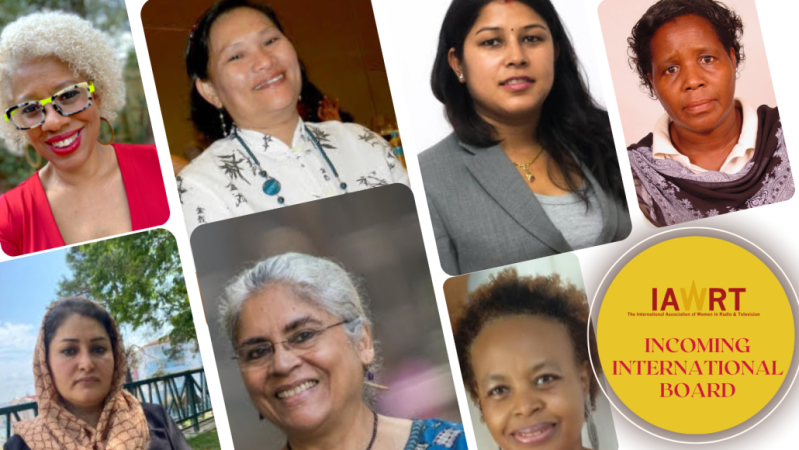
The new IAWRT International Board will join the current board as observers and take the reins of IAWRT at the November biennial in Zanzibar, Tanzania.

Executive:

President

Dr. Michelle Ferrier (USA chapter)
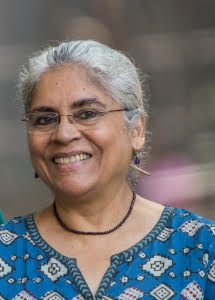
Executive director, Media Innovation Collaboratory; founder, Trollbusters.

Link: https://vimeo.com/743797005/d80bb21f16

Vice President

Jola Mamangun (Philippines chapter)

Executive Director, Kodao Productions and present IAWRT International Treasurer

Link to video: https://www.youtube.com/watch?v=EsnaejFVFPM

Secretary

Mandira Raut (Nepal chapter)

Founder/C.E.O., UTSAH Learning Center; President, UTSAH Nepal (Volunteer Professional Youth Trainer on Non-formal education; Working as freelance Producer and Director-TV/Radio Production;

Link to video: https://youtu.be/LcH2Dxdu3go

Treasurer

Josephine Karani (Kenya chapter)

Seasoned / career broadcast journalist & Chairperson, IAWRT Kenya Chapter

Link to Audio: Link: https://on.soundcloud.com/

Board members

Kreshma Fakhri (Afghanistan chapter – exiled in Turkey)

Freelance journalist and investigative team leader for the Zan Times (volunteer)

Video link: https://youtu.be/puCzGYWWJ7A

Anjali Monteiro (India chapter)

Filmmaker, teacher and author, retired from academia in 2020

Link to video: https://youtu.be/WWhe6ANndaI

Raziah Quallatein Mwawanga (Tanzania chapter)

Media trainer and project management consultant

Link to audio: https://youtu.be/Lg3jsyIfg3c

The board members and treasurer were elected in last week’s vote. The remainder of the executive were declared elected, after nominating unopposed.

To view the results, visit https://secure.electionbuddy.com/results/8Q277CGV3HSJ

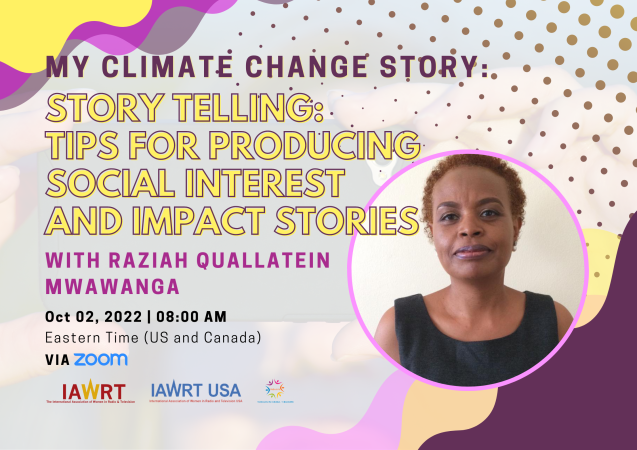
Workshop with Raziah Mwawanga of IAWRT Tanzania takes place with pre-registered participants on Zoom on October 2, 2022 | 8am Eastern Standard Time

Part of the My Climate Change Story: Cellphone Cinema Workshop series

When investigating the impact of climate change one most often reads articles written either by scientists, journalists, or scholars. The voices of those who actually experience the devastating effects of this phenomenon are most often unheard.

In order to find a way to develop women and girls into streams of consciousness — looking at common themes: Themes emerging from these stories will be highlighted and used to initiate and forge networks, conversations, and collaboration to craft appropriate and relevant solutions. One of the goals is to teach women and girls to use their cell phones to tell their own stories.

The workshops will prepare women globally with an intergenerational lens to go into their communities, and use their cell phone to create a 3 to 7-minute vignette that will be uploaded to the IAWRT My Climate Change YouTube channel.

The My Climate Change Story YouTube Channel shall be a laboratory for innovation and solutions that can be shared and emulated globally.

From the IAWRT Biennial Committee

The countdown to the IAWRT Biennial 2022 has begun!

Get ready to pack your bags and be part of the 39th Biennial Conference being hosted on the beautiful island of Zanzibar on November 18 – 20.

The conference Gendered media perspectives: COVID, CONFLICT and CLIMATE CHANGE will include panels and plenary sessions that will invigorate and energize your minds. In addition there will be a number of workshops, such as trainings to use cell phones to make climate change documentaries, safety trainings, fact checking and how to protect yourself from online abuse.

All panel sessions and some of the workshops will be streamed so they can be followed online. The opening of the conference will be broadcasted on TV by the Zanzibar Broadcasting Corporation (ZBC).

If you are planning to attend the Biennial – physically or digitally – please fill out this registration form: https://forms.gle/5WCZm5L93wZF3imB7

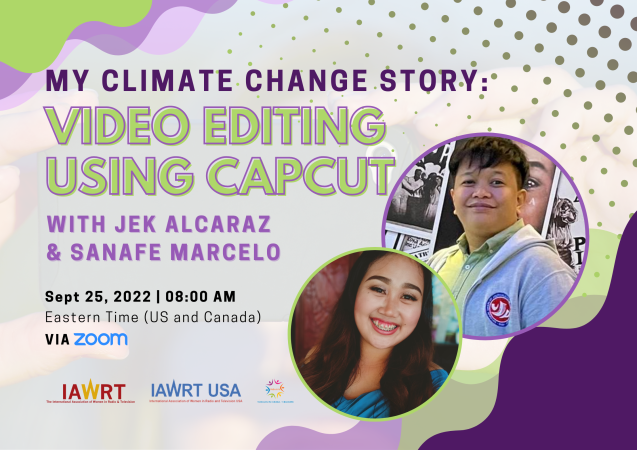
Workshop takes place with pre-registered participants on Zoom on September 25, 2022 | 8am Eastern Standard Time

Part of the My Climate Change Story: Cellphone Cinema Workshop

When investigating the impact of climate change, one most often reads articles written either by scientists, journalists, or scholars. The voices of those who actually experience the devastating effects of this phenomenon are most often unheard.

In order to find a way to develop women and girls into streams of consciousness — looking at common themes: Themes emerging from these stories will be highlighted and used to initiate and forge networks, conversations, and collaboration to craft appropriate and relevant solutions. One of the goals is to teach women and girls to use their cell phones to tell their own stories.

The workshops will prepare women globally with an intergenerational lens to go into their communities and use their cell phone to create a 3 to 7-minute vignette that will be uploaded to the IAWRT My Climate Change YouTube channel.

The My Climate Change Story YouTube Channel shall be a laboratory for innovation and solutions that can be shared and emulated globally.

By IAWRT India

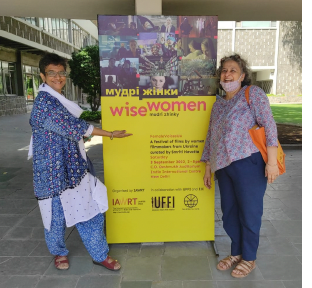
Mudri Zhinky is a festival of films from Ukraine made by women filmmakers, held on September 3, 2022 at the India International Centre in New Delhi.

Organized by the International Association of Women in Radio and Television (IAWRT) Chapter India the day-long festival, “Mudri Zhinky: Wise Women” featured 11 short films and a long documentary made by women filmmakers from Ukraine to a packed auditorium.

It was a specially curated package by IAWRT India member Smriti Nevatia. Each film portrayed a different aspect of life in Ukraine.

The event was held in collaboration with Ukrainian Female Film Industry (UFFI).

Three sessions of virtual interaction with the filmmakers were also conducted with the audience members asking questions of the film makers leading to animated discussions on Zoom.

Smriti Nevatia, curator of the festival shared that it was great to have this opportunity to create a package of films by Ukrainian women directors for an Indian audience and hoped that after watching these films viewers would be inspired to hold embattled Ukraine in their thoughts even as they enjoyed these cinematic voices from a country and culture about which they knew so little.

Aaradhana Kohli, Managing Trustee of IAWRT India Chapter who put the festival together was very happy that audiences here in India were able to see for the first time, images other than of war and destruction from Ukraine. Images of everyday life. Of love and loss. Of childish pranks and friendships. Children and families trying to cope with all kinds of ordinary everyday issues. As also existential questions.

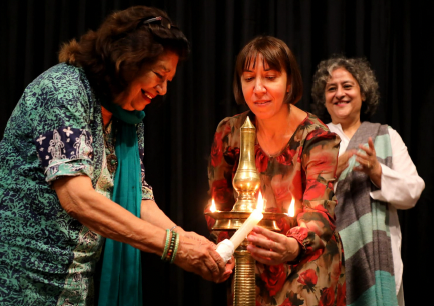
The ceremonial lamp was lit by Mrs. Natalia Polikha, the Ukrainian ambassador

to India’s wife, and Ms. Aruna Vasudev, founder of Cinamaya and Osian and also known as the mother of Asian cinema, in a solemn inaugural ceremony in solidarity with the people of Ukraine.

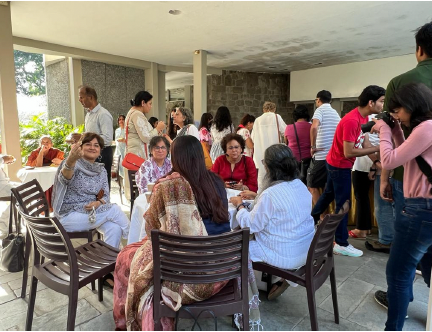
The cultural attaché at the embassy of Ukraine in India Ms. Olena Ivanchuk, Katharina Görig of Goethe Foundation India and many other eminent people, students, and film buffs were seen enjoying and watching the films till the very end.

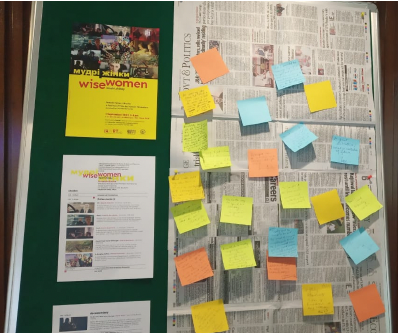
Sticky notes kept in the foyer for audience feedback and comments were a very popular initiative with many a witty comment left on the board.

To close the festival Aaradhana Kohli thanked everyone for coming to the festival and especially to the Programme Division India International Centre for collaborating with IAWRT Chapter India on the festival.