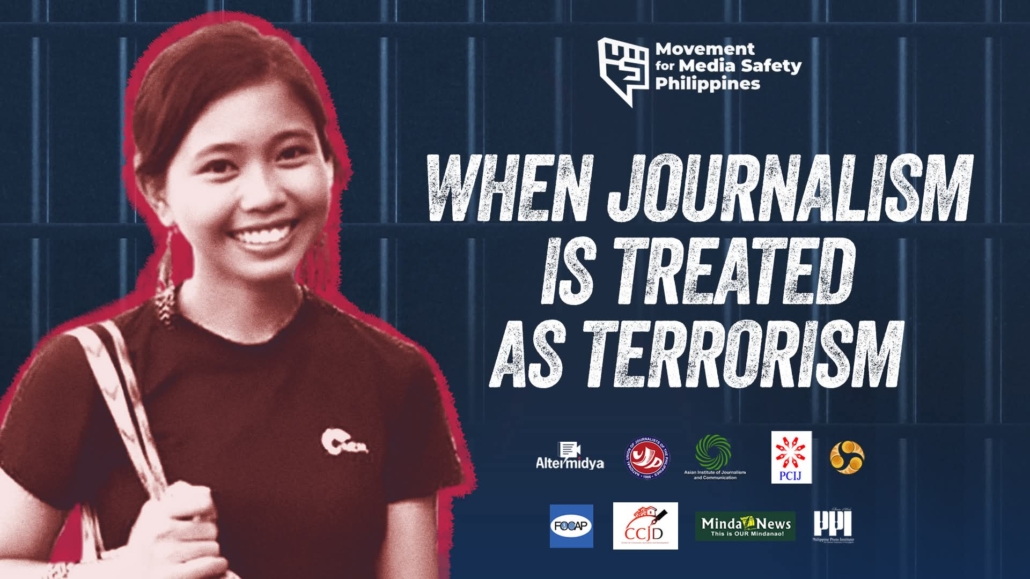
On February 7, Frenchie Mae Cumpio, a community journalist from Leyte, marks her sixth year in detention—an incarceration that rights and media groups strongly believe stems from her work as a journalist.
As a radio broadcaster, Frenchie reported on the lives of farmers, urban poor communities, and disaster survivors in Eastern Visayas—stories rarely covered by national media. This is the democratic function of community journalism: to surface realities from the margins and hold power to account where state oversight is weakest.
That work placed her at risk. Months before the February 2020 raid that led to her arrest, Frenchie reported being tailed by unidentified men and receiving death threats. At the time, Eastern Visayas was under heavy militarization pursuant to former President Rodrigo Duterte’s Memorandum Order No. 32, and Frenchie was documenting alleged abuses against civilians.
Her arrest, prolonged detention, and eventual conviction for terror financing – based largely on testimonial evidence – form part of a broader pattern: the use of terror-tagging and anti-terror laws to blur the line between journalism and criminality. This practice did not end with the Duterte administration. Despite having the power to reverse course, President Ferdinand Marcos Jr. has failed to dismantle the mechanisms that allow such prosecutions to persist.
The case sets a dangerous legal precedent. It signals that reporting on militarization, development projects, or marginalized communities can be recast as terrorism. The result is a chilling effect, particularly for community journalists with limited legal protection.
International press freedom groups have repeatedly warned that Cumpio’s case exemplifies the criminalization of journalism in the Philippines. Reporters Without Borders has described her prolonged detention as emblematic of how terrorism-related charges are used to silence critical and community-based reporting. UN Special Rapporteur on freedom of expression Irene Khan has likewise flagged Cumpio’s case as raising serious concerns over due process and the misuse of security laws to suppress legitimate journalistic work.
This pattern is not isolated. Another journalist, Deo Montesclaros, faces similar terror financing charges after reporting on the adverse impacts of development projects in Cagayan Valley, following red-tagging and surveillance.
Frenchie Mae Cumpio’s continued detention is not only an injustice against one journalist. It is an assault on press freedom, community journalism, and the public’s right to know. When journalism is criminalized, entire communities are silenced –and democracy is further diminished. #
*This pooled editorial is adapted by members of the Movement for Media Safety Philippines, a network of media organizations advocating for journalists’ safety and press freedom, together with its allied and partner organizations.
Altermidya – Alternative People’s Media Network
Asian Institute for Journalism and Communication
Center for Community Journalism and Development
Center for Media Freedom and Responsibility
Foreign Correspondents Association of the Philippines
Mindanews
National Union of Journalists of the Philippines
Philippine Center for Investigative Journalism
Philippine Press Institute
The Peace and Conflict Journalism Network (PECOJON)
University of the Philippines College of Media and Communication
VERA Files
https://iawrt.org/wp-content/uploads/2026/02/frenchie-12.jpg7631920Secretariathttp://iawrt.org/wp-content/uploads/2021/11/logo.pngSecretariat2026-02-06 06:40:102026-02-06 06:48:00Pooled Editorial: When Journalism is Treated as Terrorism
We are proud to honor Dr. Inge von Bönninghausen, a German national and dedicated feminist, with IAWRT’s Lifetime Achievement Award. A committed member of IAWRT, Inge, now 87 years old, has made significant contributions to the organization, including serving on the AWRT Board.
A veteran journalist, Inge has spearheaded campaigns focusing on women’s lives, reporting on issues such as work, health, sports, sexuality, violence, culture, politics, and international women’s concerns. She produced the first women’s political television programme on German TV and is one of the last remaining veteran IAWRT members who researched and co-authored the IAWRT History Book.
Inge has consistently demonstrated her dedication to IAWRT by bringing the Biennial Conference to Cologne in 1986 and to Berlin in 2001—both before the establishment of IAWRT chapters in 2005—and by actively engaging in IAWRT activities over the years.
Her recent work with the organisation includes volunteering as a member of the three-person IAWRT Archives Committee, which aims to centralise the organisation’s globally scattered archival materials.
A pioneer in the German television landscape and a founder of the German Journalists Association, Inge has long championed the impact and influence of women in the media. Her tireless work and unwavering commitment to IAWRT’s mission make her an exemplary recipient of this award.
Outstanding Dedication and Excellent Service Award
OONA SOLBERG(Norway)
We are pleased to honor Oona Solberg, a dedicated IAWRT member since 1998, with this award. Despite her retirement, Oona remains actively engaged in IAWRT activities. Her contributions include:
Serving on the IAWRT International Board (2001–2005)
Securing small grants for IAWRT projects, enabling virtual chapter activities during the pandemic
Facilitating a successful partnership with the Journalism & Media International Center (JMIC), culminating in the 2022 Biennial Conference in Zanzibar, Tanzania
As a History graduate, serving as one of three IAWRT members on the Archives Committee, including self-funding research trips to gather and centralize IAWRT’s scattered records
Oona’s dedication and service have had a significant impact on IAWRT’s ability to sustain activities and partnerships during challenging times. We are deeply grateful for her tireless efforts and proud to present her with the IAWRT Outstanding Dedication and Excellent Service Award.
Outstanding Dedication and Excellent Service Award
VIOLET GONDA(Zimbabwe)
We proudly recognise Violet Gonda, a fearless Zimbabwean journalist, and a devoted IAWRT leader, with this prestigious award. After helping to set up her country’s first privately owned radio station broadcasting from London, Violet was forced into exile by the Zimbabwean government for more than 2 decades – for exposing the political crises and human rights abuses in her country.
Besides her professional work as a political journalist, She joined IAWRT in 1999, rising through the ranks becoming its youngest elected President and serving in multiple Executive Board roles – from Secretary, Treasurer to President.
Her dedication, passion for women’s empowerment, and calming professionalism make her an invaluable asset. Violet’s remarkable accomplishments include:
• leadership and crisis management, guiding our Afghan female journalist members through Taliban takeovers and steering IAWRT during the pandemic and financial hardships.
• Her Board introduced the Digital Safe House pilot programme for Filipino women journalists in crisis, in collaboration with IMS.
• She helped to spearhead virtual Chapter events and innovative programmes in collaboration with the Oslomet University’s JMIC during the lockdown.
• Violet did not leave us in the midst of organisational challenges. She has gone above and beyond the call of duty always showing up to help with crisis management,. Despite debilitating heath issues Violet continues to be active as:
• Chair of the Advisory Board made up of former Presidents,
• She is chair of the Elections Committee,
• She is the 3rd member of the IAWRT Archives Committee that is helping to secure IAWRT’s historical records.
• Her contribution to fundraising is evident in the successful Biennial held in Zanzibar in 2022. Because of an emergency, Violet helped to secure alternative arrangements for the Biennial conference to be held in Bangkok.
• She is always among the first to offer connections, networks and ideas to help the organisation grow!
• We are honored to bestow Violet Gonda with the Outstanding Dedication and Excellent Service Award.
Outstanding Dedication and Excellent Service Award
DR. GRETA GOBER(Poland)
We’re proud to announce Dr. Greta Gober as one of the 3 recipients of this year’s *Outstanding Dedication and Excellent Service Award*.
As a renowned academic and dedicated IAWRT member, Greta has made significant contributions to the organisation, including:
• Serving as a Board Member and Vice President for five years
• Playing a leading role in the IAWRT GoFundMe fundraising initiative to raise much needed funds for the Biennial Conference and developing the concept note for the conference.
• Contributing to the development of the *Handbook on Working Towards Gender Equality in the Media*
• Moderating various international panel discussions on Gender Mainstreaming
• Heading IAWRT’s Gender Mainstreaming Committee
• Providing creative and sharp ideas that have helped shape the organization’s direction
We’re grateful for Greta’s dedication, expertise, and passion for promoting gender equality in the media. We’re proud to honor her with this award.
Service Award
REBECCA MYLES(USA)
Rebecca Myles, a respected journalist and active IAWRT–USA member, consistently helps to organise events such as the United Nations Commission on the Status of Women (CSW), offering insightful ideas and strong support. At the Zanzibar conference, she introduced IAWRT members to a LinkedIn expert who conducted a workshop to help enhance members’ professional profiles.
Rebecca also frequently shares members’ work on her live programmes in the USA, increasing their visibility and reach. Her dedication to supporting women in media is truly admirable.
Service Award
EUNICE KASIRYE (Uganda)
Eunice, an exceptional African Chapter Head, inspires members to stay engaged despite challenges. She organised unfunded events and previously served as International Board Secretary, helping to clean up the member database and Chapter Heads, encouraging subscriptions. Eunice also contributed to the CSW Committee and serves on the Biennial and Election Committees. Her contributions are truly appreciated.
Courageous Service Award
NAJIBA AYUBI (Afghanistan)
N
Najiba Ayubi is the Head of the Afghanistan chapter of IAWRT. A distinguished journalist, human rights defender and peace activist with over two decades of experience, she has dedicated her career to covering news stories in Afghanistan, often under threats and attacks from state and non-state actors for her reporting on politics, society and human rights, with a focus on gender justice.
When she was the Managing Director of The Killid Group, Ms. Ayubi led a diverse team of reporters working across print, broadcast, and online media. She is known for her staunch refusal to censor content and her passion for independent media.
Ms. Ayubi co-founded the Afghan Independent Media Consortium and the Freedom of Expression Initiative, providing crucial resources and support for independent journalists in Afghanistan. Her commitment to journalistic integrity and bravery in the face of adversity earned her the International Women’s Media Foundation Courage in Journalism Award in 2013. In 2014, she was recognized by Reporters Without Borders as one of the first-ever 100 Information Heroes. Additionally, she received the Press Freedom Prize from the Swedish Section of Reporters Without Borders (RSF).
Despite being in exile and with severe health challenges, Najiba Ayubi continues to advocate tirelessly for the rights of women in Afghanistan. We are proud to recognise her significant contribution to women’s rights in Afghanistan and to IAWRT’s advocacy initiatives for peace and justice by honouring her with IAWRT’s Courageous Service Award.
Courageous Service Award
FRENCHIE MAE CUMPI(Philippines)
Frenchie Mae Cumpio is a member of the International Association of Women in Radio and Television (IAWRT) from the Philippines. She began her career in broadcast journalism at the age of 16, after she and other survivors of Typhoon Yolanda received training through an IAWRT Philippines program conducted in coordination with IAWRT International. This initiative formed part of the Community Radio Project supported by FOKUS in 2015.
In 2016, Radyo Tacloban was established as a women-led community radio initiative. Ms. Cumpio became one of its broadcasters and subsequently served as the Regional Coordinator of Radyo Tacloban, based in Eastern Visayas.
Her reporting focused on the conditions of peasant communities in Eastern Visayas and the persistent poverty experienced by many in the region. As a result of her work, she was subjected to surveillance and received death threats in 2018 and 2019. In February 2020, she was illegally arrested on fabricated charges of possession of firearms and explosives, to which the government later added an accusation of financing terrorism. She was acquitted of the murder charge in November of this year.
It is hoped that she will be released in January 2026 upon the promulgation of her remaining cases. She remains one of the youngest community journalists currently incarcerated.
We would like to present a special token of appreciation to Nupur Basu(India) and Supattra Limbabandhu(Thailand) in recognition of their exceptional contributions to the successful organisation of the 40th IAWRT Biennial in Bangkok. Nupur was closely involved from the very beginning as a member of the Biennial Committee, contributing to the development of the concept and the initial plans to hold the event in Kathmandu. When circumstances necessitated a change of venue, she played a pivotal role in planning the relocation and in coordinating communication with members and resource persons, helping to shape the Biennial in significant ways. Supattra, meanwhile, worked tirelessly and single-handedly to secure all on-ground arrangements required to organise the Biennial in Bangkok at very short notice. Without her dedication and hard work, the event would not have been possible. We are deeply grateful to both Nupur and Supattra for their unwavering commitment to IAWRT.
Today, we begin by extending our deep condolences to the people of Thailand for the passing of their beloved Queen Sirikit last October 24th. Her leadership and devotion to her nation will always be remembered.
May I invite everyone to rise as we observe few seconds of silence in her honor.
(few seconds of silence)
Thank you. Please be seated.
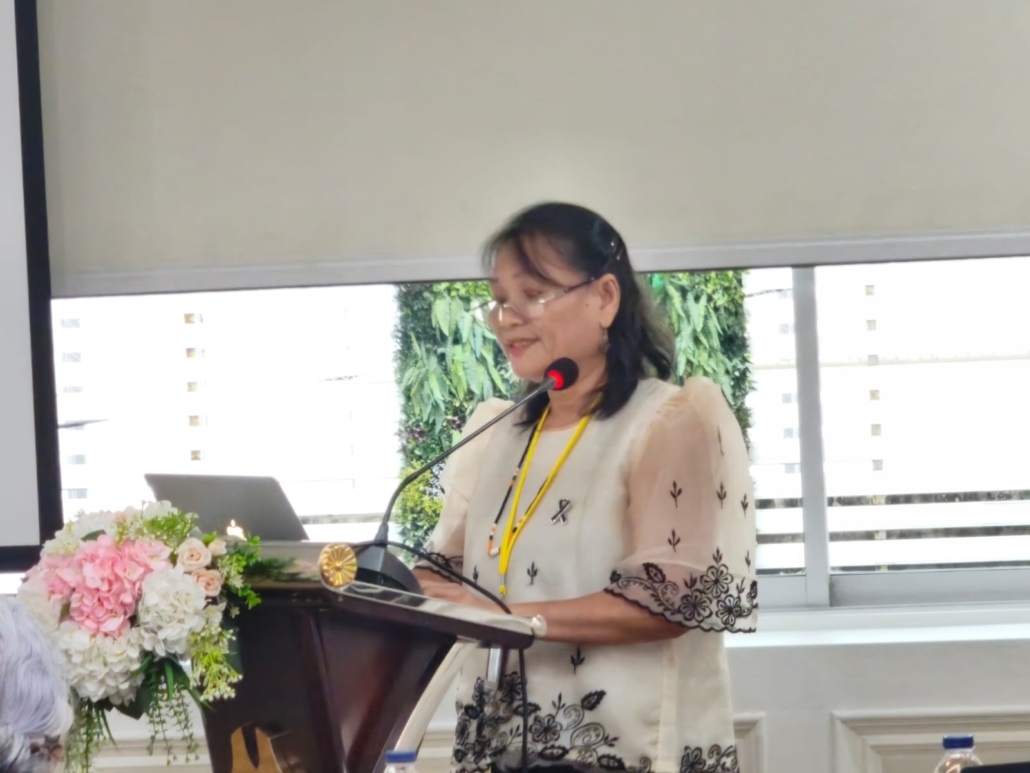
Today, we warmly welcome all delegates who have traveled from different regions to be part of our 40th IAWRT Biennial Conference. Your presence reflects your commitment, your enthusiasm, and your belief in our collective mission.
Today is also the first time in our history in IAWRT that we gather for a conference fully self-sponsored. This truly shows how eager and dedicated our members are to be here, despite so many challenges. Thank you for coming.
Our conference begins today, December 4, and will continue until December 6th.
We gather at a time when the world is facing profound challenges—political unrest in Indonesia, Bangladesh, Nepal, the Philippines, Afghanistan, Iraq, the United States, and most recently in Kenya and Tanzania.
These tensions shape the lives of millions and directly affect the work of journalists everywhere.
Our colleagues in the media face growing risks—not only in reporting on instability in their countries, but also in navigating how to stand with their people and participate in the transformations they demand. Many of us have been victims of corruption, harassment, threats, unjust arrest, assault, and imprisonment simply because we dare to tell the truth. Because we speak for the powerless, challenge injustice, and refuse to be silent.
We are truth-tellers—yet we remain among those most deprived of press freedom and freedom of expression.
Our colleagues in Palestine continue to endure the greatest vulnerability—experiencing unimaginable violence, displacement, and deprivation. The loss of life in Gaza has been staggering. Families are grieving, communities are shattered, and the world is witnessing suffering that should never be acceptable. It is a painful reminder of how global systems, inequalities, and the actions of powerful states determine who is protected and who is not.
And yet, despite all this, the world is still watching. And more importantly, we do not lose hope that the world is still listening.
It is listening to us—the journalists, the documenters, the women who refuse to be silenced. It is listening to the communities demanding justice. It is listening to the mothers protecting their children, the activists seeking dignity, and the citizens who believe that peace is their right.
This is why we are here today — to give voice to the voiceless, to reaffirm our solidarity across borders. We gather because truth-telling is not just our profession—it is our responsibility.
But we must also recognize a deeper reality: gender justice in a conflict-driven world is still far from being achieved. Women journalists often become direct targets of violence and intimidation—particularly by those who fear the truth they expose.
In Afghanistan, after the withdrawal of the United States and the return of the Taliban, women and girls have been stripped of their right to education and forced into silence.
In Iraq, years of conflict and power struggles have left women journalists struggling to report freely, their voices constrained by fear and repression.
Across Palestine, where more than 200 journalists have been killed since October 2023, women continue to document the truth amid devastation and danger.
And in the Philippines, Frenchie Mae Cumpio was only 21 when she was illegally arrested in February 2020 on trumped-up charges of possessing firearms and explosives—accusations widely condemned as fabricated. Authorities later escalated the case by adding an allegation of terrorism financing. Although she won a murder case against her this November, her long-awaited freedom remains painfully elusive.
At 26, Frenchie’s dream is the same as that of many colleagues unjustly deprived of their liberty: to reclaim her life, see the world beyond prison walls, and continue speaking truth to power with courage.
So the question remains: How can gender justice prevail in a world where women are denied the freedom to speak, to learn, to work, and to live without fear?
To move toward real gender justice, we must commit to real solutions:
First – Protect women journalists through enforceable international guarantees.
Mechanisms must exist that compel governments and armed groups to respect the rights and safety of women in the media. Second – Hold perpetrators accountable—no matter who they are. War crimes, gender-based violence, and attacks on journalists must be investigated and prosecuted, regardless of political alliances or the identity of the perpetrator. Third – Support and strengthen women’s networks and local media communities. Women need resources—funding, training, safe communication tools, digital protection—to continue telling the stories that matter. Fourth – Demand universal access to education for women and girls. Without education, justice becomes impossible. The international community must challenge regimes that deny girls their rights and support alternatives wherever necessary. Fifth – Ensure women’s full participation in peacebuilding and reconstruction. There can be no meaningful peace, no durable justice, when half the population is absent from decision-making tables.
Gender justice will not come from hope alone. It requires action, courage, and a united voice. And that is why this conference matters.
Let it be a place of courage and insight—a space where we lift each other up, challenge one another, and build strategies that protect our rights and our safety. May it empower us to defend press freedom, support one another, and continue the work that unites us as women in media.
Together, we carry the stories of our people. Together, we continue the fight for justice, dignity, and freedom. And together, we remind the world that the truth will not be silenced.
Thank you, and I wish everyone a meaningful, powerful, and inspiring 40th IAWRT Biennial Conference.
Sima’s Song spotlights the human drama of the friendship between two women of opposing ideologies in war-torn Afghanistan… A story of an evening with director Roya Sadat who spoke to a Delhi audience just as her film won a major Canadian film award.
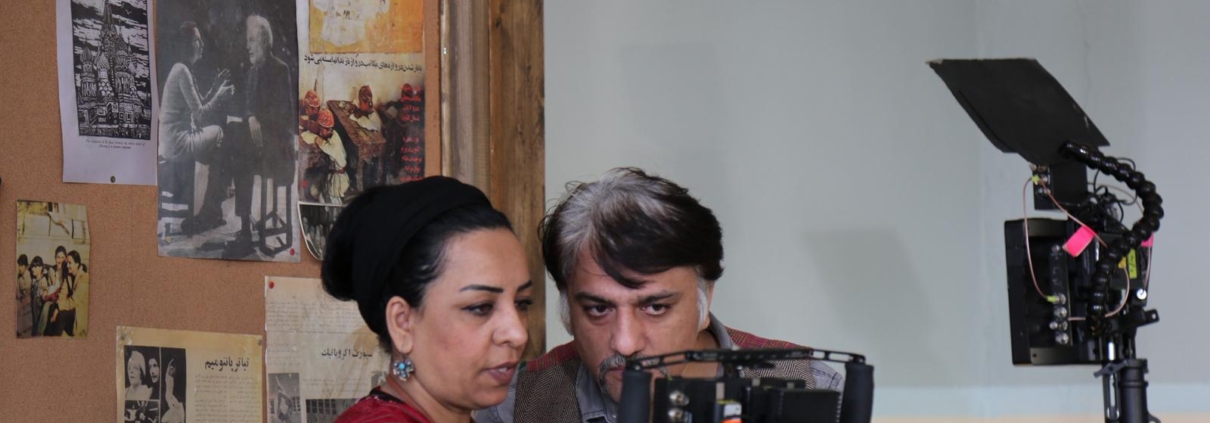
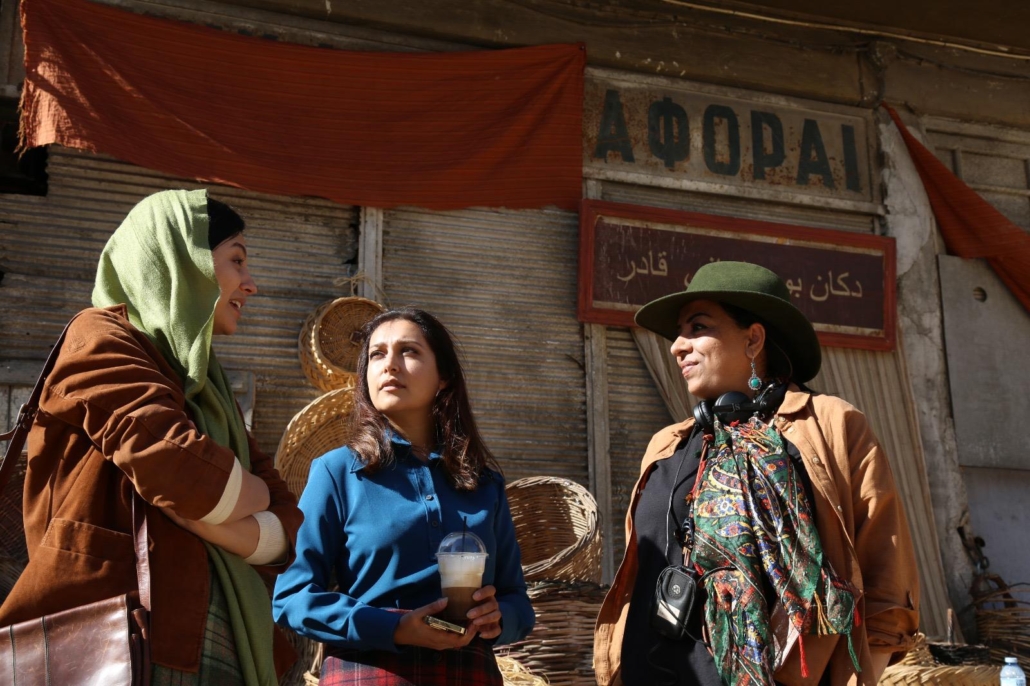
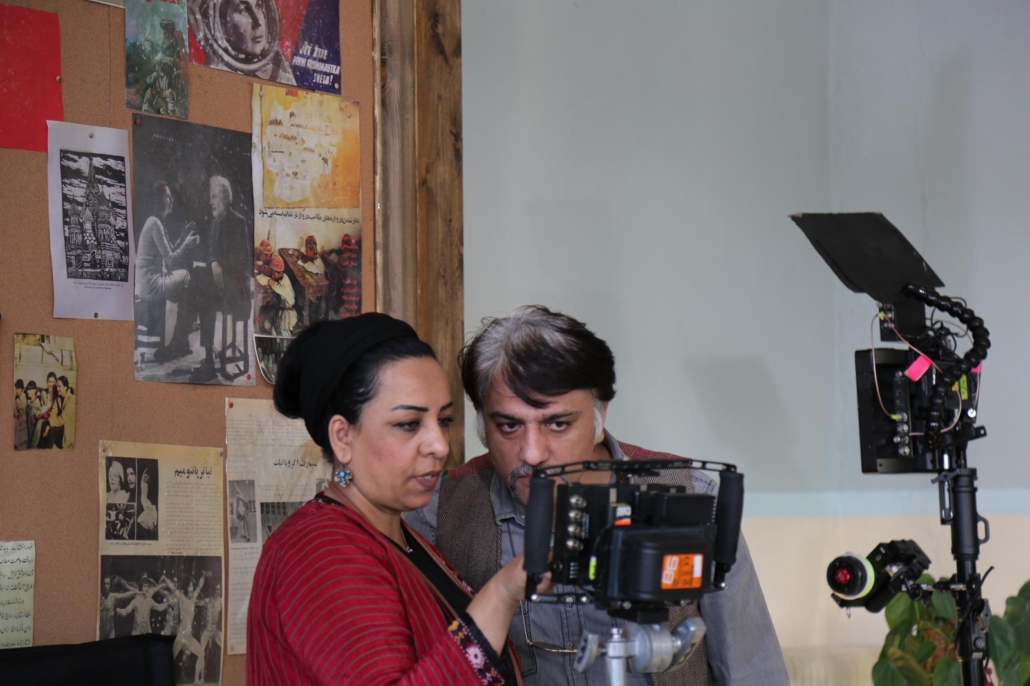
Roya Sadat Afghan Filmmaker directing her actors in exile for Sima’s Song
The October chill was just setting in and as the evening turned to night, the audience eagerly waited to view celebrated award-winning Afghan woman Director, Roya Sadat’s latest film Sima’s Song in Delhi’s Max Mueller Bhavan. Roya, like many women filmmakers, journalists and activists in Afghanistan now lives in exile in the West and made this film in 2024 while in exile. Sima’s Song begins after the Taliban have taken control of Kabul city. It zeroes in on a protest demonstration on the streets by Afghan women and the Taliban forces using force and trying to disperse them.
Cut to the interior of a home in Kabul. An elderly Suraya tells her granddaughter about her friend, Sima, a singer. The grandmother recalls the Cold War which was about to break out in Afghanistan in the late ’70s, and how she and her friend Sima got caught in the opposing ends of the conflict.
Suraya is played by award winning actor Mozhdah Jamalzadah, an Afghan Canadian singer, actress, model, and activist known for championing women‘s rights in Afghanistan. Raised in Vancouver after fleeing Kabul during the Afghan civil war, she gained fame with her song ‘Sher Bacha e Afghani’. Niloufar Koukhani who plays Sima in the film is a renowned Iranian actor best known for her roles in popular TV serials in Iran such as Viper of Tehran (2024), a TV series. Sadat has extracted powerful performances from both the lead characters.
Flash back to 1979, Kabul. Suraya and Sima are in the prime of their youth. Despite the difference in their social status – Suraya is the daughter of a top Communist leader in Afghanistan and Sima is the daughter of the domestic help in their house – both women are soul sisters. Suraya studies politics and Sima music at the university of Kabul. But the country’s unstable political landscape is soon about to cause deep chasms between them.
Suraya takes on a political mantle after her father’s assassination and Sima succumbs to pressure from her father to marry and follow tradition. The tension threatens to rip apart their relationship but better sense prevails and they decide to accept differences and save their bond. Suraya puts aside her annoyance that her friend is marrying early and gets her bridal dress ready. After all they do share the same conviction to women‘s right to education and art.
We at the International Association of Women in Radio and Television congratulate our fellow woman journalist Frenchie Mae Cumpio of Eastern Vista for her nomination for the 2025 Reporters Without Borders (RSF) Courage Prize.
We thank RSF for nominating our detained colleague from the Philippines. This recognition highlights the bravery that Frenchie Mae has demonstrated as a community journalist before she was unjustly arrested in February 2020.
As a coordinator of IAWRT’s Radyo Tacloban, a radio anchor for Lingganay Han Kamatuoran, and correspondent of Altermidya in Eastern Visayas, Frenchie fearlessly reported on critical issues affecting marginalized communities.
Even in detention, Frenchie Mae has exemplified the determination of Filipino journalists. Despite facing fabricated charges and prolonged detention, Frenchie Mae’s courage persists – campaigning against the continued harassment of state forces and mistreatment of prison authorities.
Frenchie’s case has drawn international attention, including that of UN special rapporteur on freedom of expression Irene Khan. Over 250 journalists worldwide called for her immediate release, including Nobel prize winner Maria Ressa, among others.
We at IAWRT recognize the crucial role of women journalists in upholding press freedom and human rights. Frenchie Mae’s courage and dedication serve as an inspiration to all of us. We stand in solidarity with her as we persist in our call for Frenchie’s immediate release and dismissal of all charges against her.
Her nomination for the RSF Courage Prize is a testament to the collective struggle for press freedom and justice. We call on the Philippine government to heed the calls of the international community and ensure that Frenchie Mae Cumpio is freed and allowed to continue her vital work as independent journalist.
Reference: 1. Rhea Padilla, IAWRT coordinator for Frenchie Mae’s campaign
https://iawrt.org/wp-content/uploads/2025/10/frenchie-mae.jpeg375375Secretariathttp://iawrt.org/wp-content/uploads/2021/11/logo.pngSecretariat2025-10-21 11:01:202025-10-21 11:01:21On the Nomination of Frenchie Mae Cumpio for the 2025 RSF Courage Prize
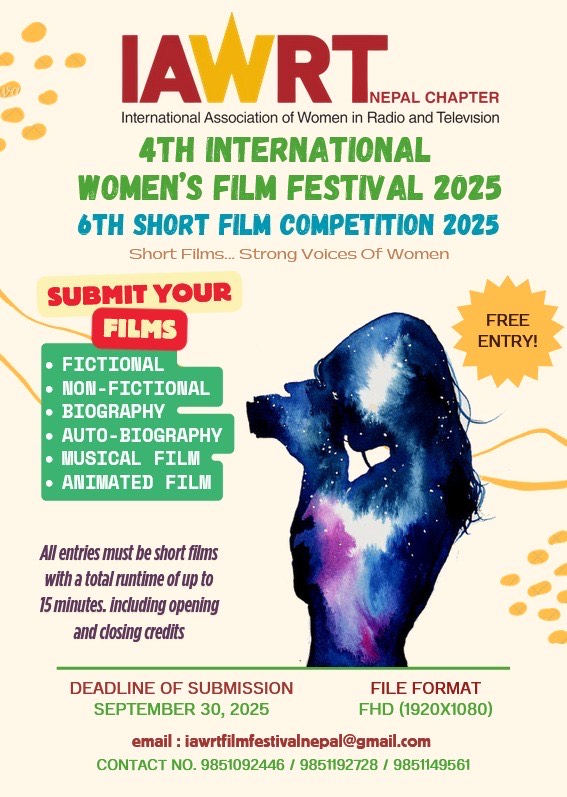
IAWRT Nepal proudly presents the 4th International Women’s Film Festival & 6th Short Film Competition – 2025
Are you a female film director with a story to tell? This is your stage!
IAWRT Nepal invites powerful narratives from women filmmakers around the world for its upcoming International Women’s Film Festival and Nepali Short Film Competition. This year, we’re celebrating women’s voices through cinema, bold, diverse and unapologetically creative.
Eligibility: Open exclusively to female directors
Competitions:
• Short Film Competition: Only for Nepali films
• International Showcase: Films in any language accepted (non-competitive)
We welcome bold, original storytelling that reflects the diversity and power of women’s perspectives. Submit your film and join a growing global community of women in cinema.
Sangita Shrestha, Festival Director
https://iawrt.org/wp-content/uploads/2025/09/7e740b33-2eec-4818-abb9-eb87484edbe4-1.jpeg797567Secretariathttp://iawrt.org/wp-content/uploads/2021/11/logo.pngSecretariat2025-09-05 12:49:302025-09-05 12:50:10 Call for Entries!
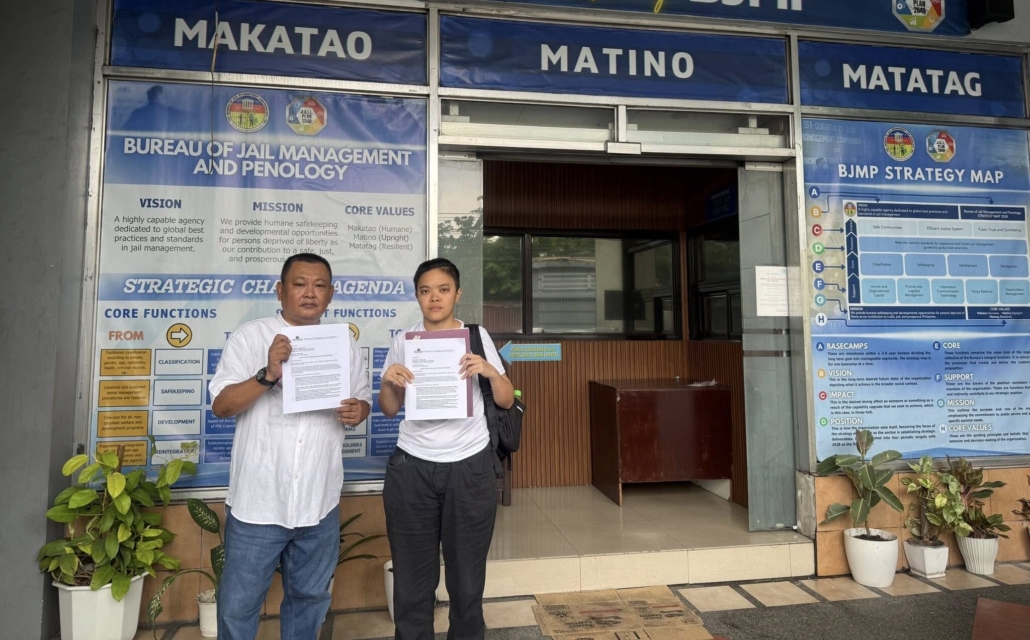
On July 16 of this year, Altermidya– People’s Alternative Media Network filed a complaint against Tacloban City Jail Warden J/Insp. Eva E. Naputo with the Bureau of Jail Management and Penology (BJMP) over alleged abuses committed against persons deprived of liberty (PDLs) — specifically Frenchie Mae Cumpio and Marielle Domequil — inside the Tacloban City Jail. The same complaint was also sent on the same day to the Commission on Human Rights (CHR) in Manila.
In a statement, Altermidya reported that Cumpio and Domequil have been subjected to “repressive treatment,” which includes denial of access to medical check-ups, and restrictions on visits from media representatives, the international community, and diplomatic missions. The complaint further alleged that letters addressed to Cumpio and Domequil were read by the jail warden but were never delivered to the intended recipients.
Photo by Altermidya: Altermidya National Chairperson Raymund Villanueva and National Coordinator Avon Ang
A week ago, it was learned that the jail warden had been replaced. However, the name of the new officer has not been disclosed, as such changes are often handled internally within the BJMP.
The International Association of Women in Radio and Television (IAWRT) expressed its appreciation for this development and hopes that the new leadership will implement policies more favorable to the rights and welfare of PDLs.
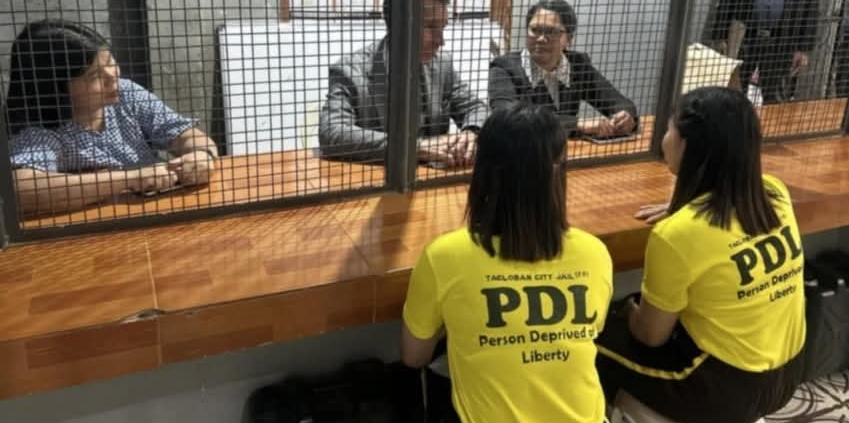
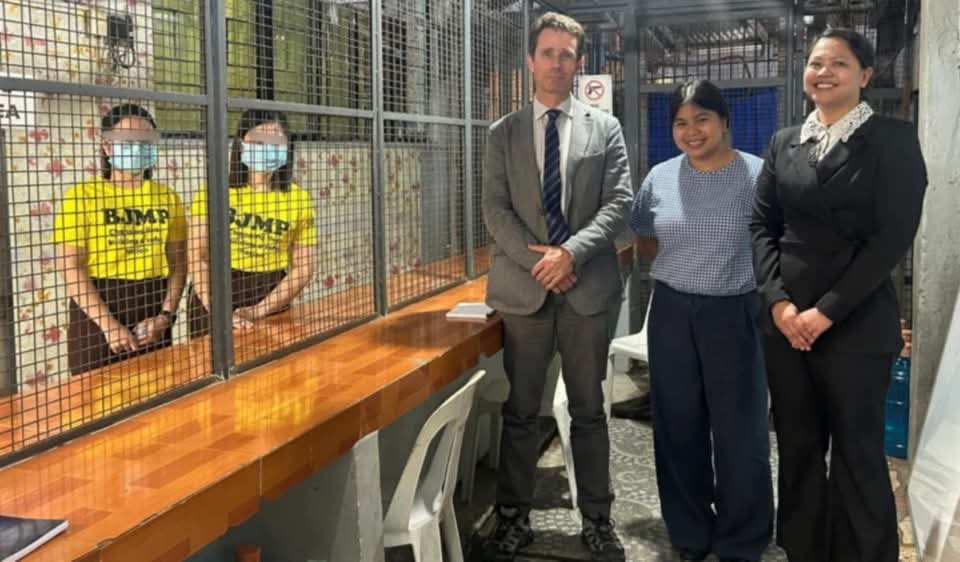
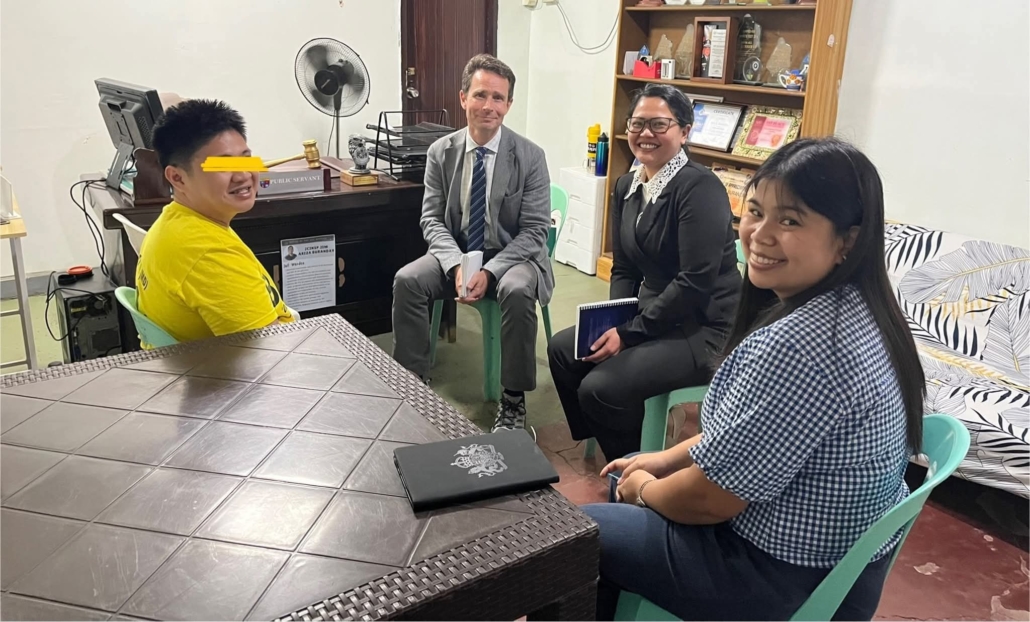
Photos from British Embassy Manila: BEM team with Frenchie Mae Cumpio and Marielle Domequil at Tacloban City Jail
Recently, it was confirmed that representatives from the British Embassy Manila (BEM) were able to visit Frenchie Mae Cumpio, Marielle Domequil, and Alexander Philip Abinguna at Tacloban City Jail.
This visit is part of the embassy’s commitment to media and press freedom and its role as a member of the Media Freedom Coalition (MFC). The embassy has expressed its intention to continue monitoring the case, which has remained in court for five years.
(Photos from British Embassy Manila: BEM team with Alexnader Philip Abinguna at Tacloban City Jail)
Cumpio, Domequil, and Abinguna are part of the so-called “Tacloban Five,” who were arrested on February 7, 2020. Two of the five have since been released on bail.
Frenchie Mae Cumpio is a community broadcaster and a member of IAWRT Philippines.
https://iawrt.org/wp-content/uploads/2025/08/draft3.jpg530849adminhttp://iawrt.org/wp-content/uploads/2021/11/logo.pngadmin2025-08-28 02:06:202025-08-28 03:39:55Frenchie Mae Welcomes Change as Jail Warden Is Replaced
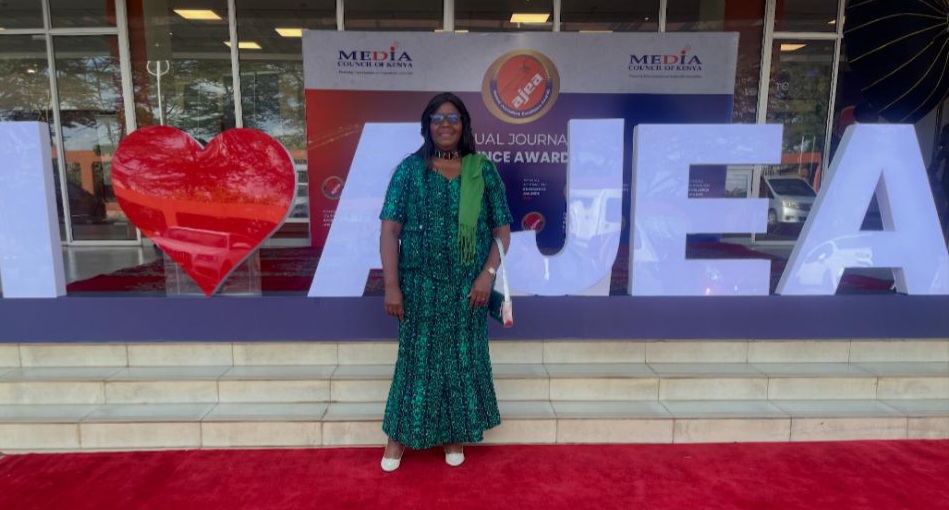
Josephine Karani is a name that would fill pages of a book on television production, in Kenya. Her fingerprints dot the broadcast media landscape, where she has helped shape it as a seasoned journalist, a mentor, and the current International Association of Women in Radio and Television (IAWRT) treasurer and Chairperson of IAWRT Kenya Chapter. She is indeed walking right past the glass ceilings and opening doors for many more.
It is a journey that began at the Kenya Broadcasting Corporation KBC television station 30 years ago. From scripting childrens laughter in her early works, to shaping the coverage of sports and current affairs, and later to broadcasting national debates while the head of the Parliamentary Broadcast Unit PBU, her work has been nothing but remarkable.
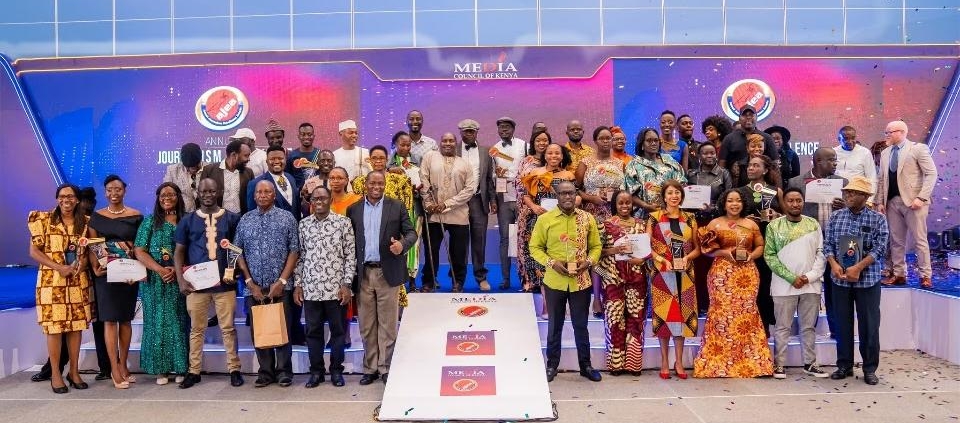
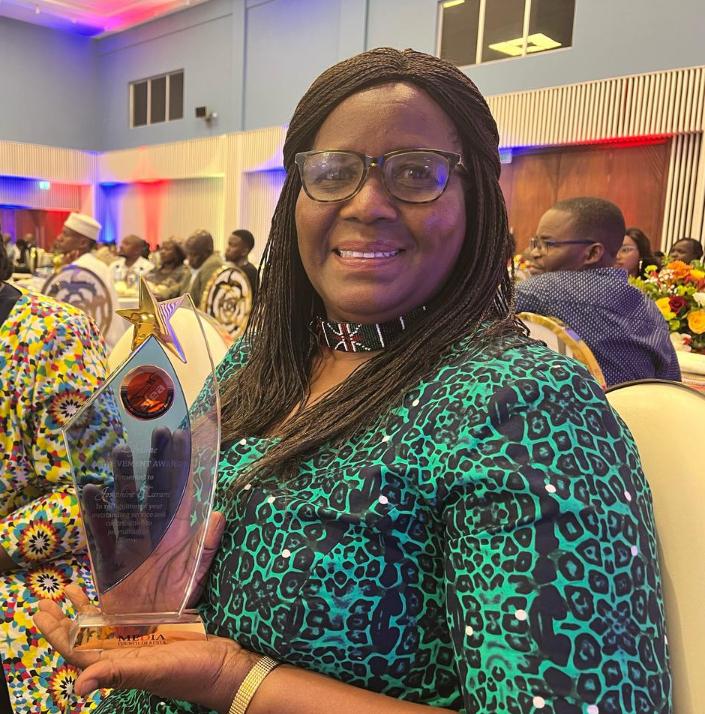
It is this decades of contribution to television production and public service that saw the Media Council of Kenya MCK fete her with the Lifetime Achievement Award. This was not just a personal accolade but a testament of the quiet but powerful legacy she has built over the years.
While receiving the award at the 2025 Annual Journalism Excellence Awards (AJEA) , Josephine expressed her excitement dedicating it to all women who keep pushing boundaries in the media.
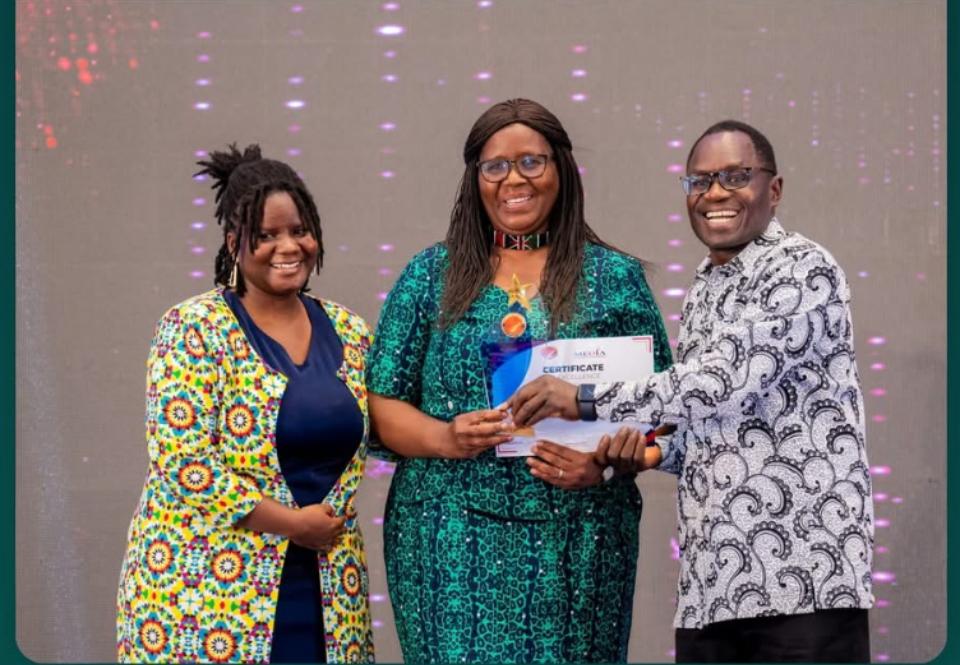
Josephine Karani, accompanied by her daughter Natalie(Journalist), receives the Lifetime Achievement Award from the Media Council of Kenya during the Annual Journalism Excellence Awards (AJEA) in Nairobi. Presenting the award is Principal Secretary ICT and Broadcasting, Stephen Isaboke.
“This award is not just for me, it is for every woman who has been told their voice do not matter. It is for every young journalist I have trained, mentored and believed in. And it is for the communities whose stories have been neglected but whose truth continues to move mountains. I am deeply honored.”
Karani’s journey is that of grit, grace and generational impact, exhibiting commitment to mentoring and growing the next generation of media professionals. Indeed, beyond the studio lights and the control rooms, she is now in the lecture hall at Masinde Muliro University of Science and Technology. Here she is shaping future story tellers, the young women,passing the baton as she helps them find their voice in the crowded, and quite challenging industry.
As she serves at IAWRT international body, she continues to champion the causes of women in media, both locally and globally. She is a steering committee member of the African Media Convention. Her leadership at IAWRT has seen over 200 female journalists from 7 public universities mentored under a US Embassy partnership. Her rich journey that has taken her from the control room , to the committee rooms of parliament, from children shows to stadia, is one that encourages women to dare to dream, lead boldly, and write their own scripts- on screen and off!
https://iawrt.org/wp-content/uploads/2025/08/1000296076-1.jpeg636960Secretariathttp://iawrt.org/wp-content/uploads/2021/11/logo.pngSecretariat2025-08-07 11:12:392025-08-07 11:12:40Josephine Karani: A Lifetime of storytelling, Service and Sisterhood!
What if doing your job puts your life at risk- just because you’re a woman speaking the truth?
For many women journalists across Africa, this is the harsh reality. From online abuse to physical and sexual threats, the profession presents real danger. This is not just for what they report, but because of who they are.
A tool that will change how the threats are documented and addressed is now here.
“We are moving from mapping to action, “ declared Racheal Nakitare, project coordinator for the International Association of Women in Radio and Television (IAWRT) at the official launch of the second phase of the IAWRT led initiative to protect women journalists.
SAFETY ON THE MAP
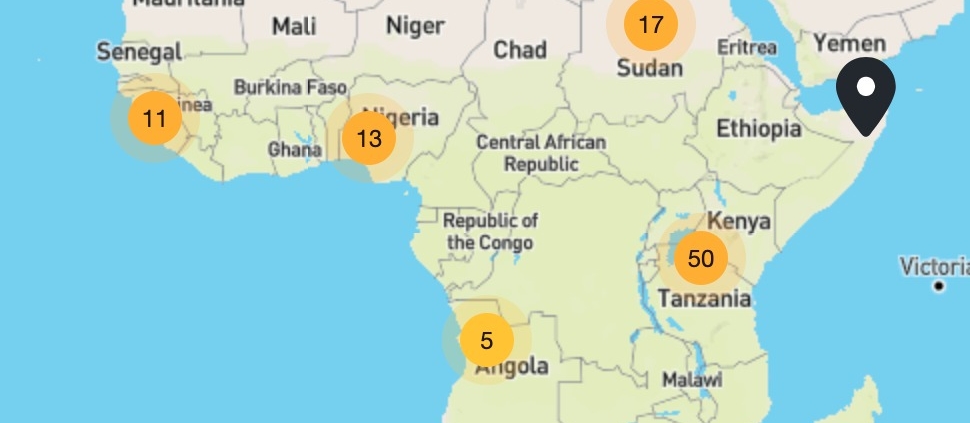
In partnership with UNESCO’s international Programme for Development of Communication (IPDC), IAWRT launched a digital platform report.iawrt.or.ke to track and report attacks against women journalists across Africa.
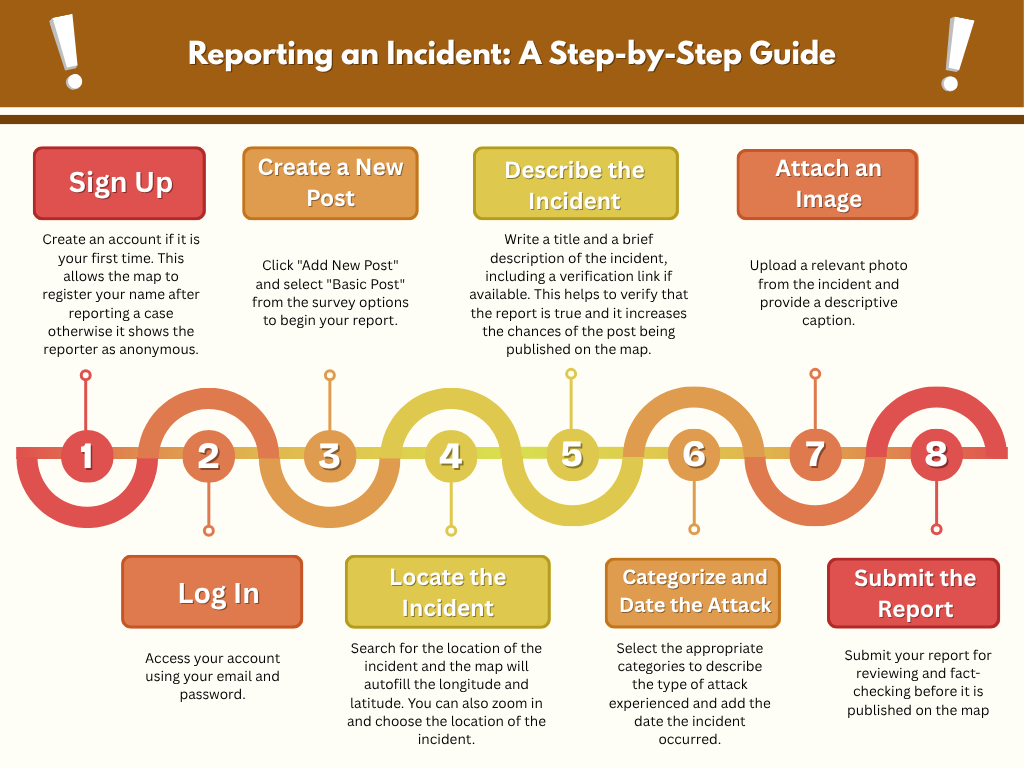
Developed with Kenya ICT network (KICTANET) and powered by Ushahidi technology, the platform allows users to log incidents in real time, tag locations and categorize threats, from harassment and censorship to physical and sexual violence.
“This map is not just a tool. It’s a call to action, said Josephine Karani, Chairperson of IAWRT Kenya.
Already over 120 stories have been documented from 16 countries, including Kenya, Uganda, Nigeria, Cameroon and Zambia.
THE THREATS IN NUMBERS
According to UNESCO’s Research on safety of women journalists:
73% have faced online violence
25% have been physically threatened
18% have been victims of sexual violence
20% of those attacked online have later been attacked offline.
“Most female journalists in Africa don’t even speak about what they go through-because of fear, lack of legal support and isolation after speaking out”, Eunice Nankwanga, a journalist from Uganda said.
The initiative is a regional force with focal points in each sub region. The participating countries are Kenya, Uganda, Tanzania, Ethiopia, South Sudan , Nigeria, Ghana, Sierra Leone, The Gambia, Zambia, Malawi, Botswana, Cameroon. The platform has regional leads for East Africa, Central Africa, West Africa, and Southern Africa.
Phase one of the project focused on the training and documentation, while the recently launched phase two is on institutional engagement.
IAWRT is now partnering with the Pan African Lawyers Union (PALU) and national enforcement agencies for evidence-based intervention.
“Despite global efforts, journalism remains a dangerous profession. Women face disproportionate threats- not only for what they report, but simply because they are women.” Said Lea Simonini, Freedom of Expression and Safety of Journalists, UNESCO Regional Office.
“Too often, these attacks are met with silence, impunity, inaction. We aim to create coordinated pathways for institutional response.” She added
Law enforcement agencies across the continent have pledged support to the initiative.
“The rights of female journalists are human rights,” said Commissioner Polycarp Ngufor of Cameroon. This project is at the heart of our work.”
Kenya’s police representative Jared Ojuok, Zambia’s Jimmy Mhango, Nigeria’s Buhari Abdullahi and Uganda’s Beyanga Cornelius among other police representatives backed the project.
ACTION
The monitoring and reporting platform is open for use. If you are a journalist or know someone at risk, help map the truth.
For years, attacks on journalists both online and offline have largely gone unreported for fear of reprisal or simply not knowing where to report. During the International Day to End Impunity Against Journalists in 2022, IAWRT Kenya and Human Rights Journalists Network -Uganda launched an initiative to combat violence against women journalists. The project’s core component in partnership with UNESCO was the creation of a crowd sourcing digital map under the banner “Applying Modern Technologies To Enhance Mechanisms for Monitoring and Reporting Attacks against journalists in Africa”. The project has had a significant impact, successfully applying emerging digital innovations to promote the safety of journalists and combat impunity for crimes against them. The initiative has also enhanced the capacity of media monitors to use modern technologies, leading to increased awareness of crimes against journalists in Africa, particularly for women in the media. Going forward, the availability of real time data on attacks will empower duty bearers, such as law enforcement and legal institutions, strengthening their role in investigating and prosecuting perpetrators.
The launch marks a pivotal moment in IAWRT’s mission to protect female journalists in Africa. By effectively mapping and documenting these cases, a robust body of data is built. This is not just a reporting tool but a powerful instrument for advocacy and change.
IAWRT-Kenya is deeply committed to the protection of women journalists and are confident that sustained and collaborative action is the path to a safer environment for professionals across Africa and beyond.
https://iawrt.org/wp-content/uploads/2025/08/IMG-20250803-WA0002.jpeg974970Secretariathttp://iawrt.org/wp-content/uploads/2021/11/logo.pngSecretariat2025-08-07 10:35:042025-08-07 10:38:24Mapping Danger: New Tool To Protect Women Journalists in Africa