
Introduction
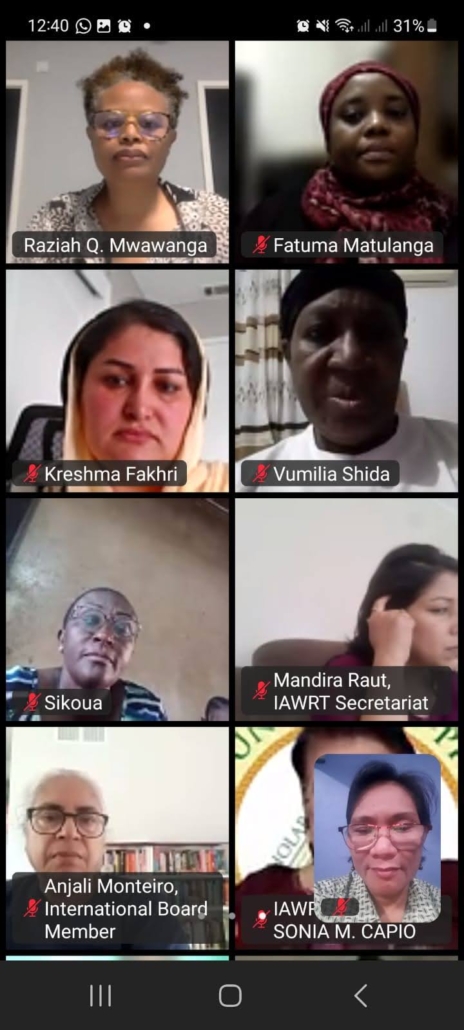
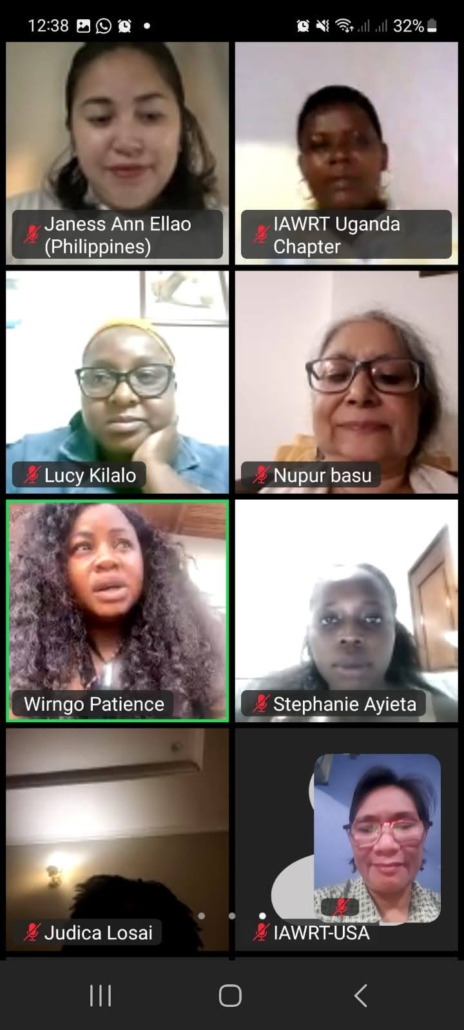
On the occasion of International Women’s Day, IAWRT International organised a virtual seminar on the theme ‘Urgency for Women Journalists’ Safety and Security’ on 15 March 2025. The focus was on the pressing need to enhance safety and security for women journalists worldwide. The objectives included:
- Analysing and reviewing current country-specific and global safety challenges.
- Discussing sustainable solutions to accelerate safety and security.
- Identifying legal, policy and institutional barriers to progress.
- Identifying country specific best practices and interventions that can be replicated.
Participants comprised IAWRT global members, chapter heads and stakeholders from the media sector. Presentations were made by Kenya, the Philippines, Tanzania, Uganda, Cameroon, Afghanistan, Nepal, India and the United States chapters, who presented national perspectives and potential solutions.
Opening Remarks
The meeting was moderated by Raziah Quallatein Mwawanga, IAWRT International Board Member, who organised and facilitated the proceedings. She welcomed participants and provided a sobering context for the discussions, noting that while progress had been made towards gender equality and journalist safety, the World Economic Forum estimates it would take five generations to achieve full gender parity at current rates of progress. She emphasised that women journalists could not afford to wait that long for their fundamental rights and safety to be realised and stressed the urgent need for proactive collaboration, peer learning and implementation of best practices to accelerate progress in closing the safety and security gap.
In her opening address, President Jola Mamangun outlined the precarious safety situation facing women journalists globally, citing specific cases of imprisoned journalists in the Philippines and severe restrictions under Taliban rule in Afghanistan. She emphasised the critical need for international solidarity and immediate action to address violence against journalists and support those at risk.
Keynote Presentation: IAWRT-Kenya’s Monitoring & Reporting Programme
Josephine Karani (Head of IAWRT-Kenya and International Board Treasurer) made a presentation on the Monitoring and Reporting Violations on Safety of Journalists Programme, which was established to combat impunity for crimes against journalists in Africa, with particular focus on women. This initiative commemorates the 10th anniversary of the UN Plan of Action on Safety of Journalists, utilising a digital mapping tool (IAWRT Violations Map) to systematically document attacks.
Key achievements include the training of 14 journalists across five African regions to undertake documentation. They have documented 116 verified cases including physical assaults, intimidation and threats, online harassment and disinformation campaigns, arbitrary arrests and detentions and economic coercion and censorship.
The interactive mapping system has proven as an effective data collection evidence advocacy tool for policy reform and accountability measures.
Country Safety Profiles & Best Practices
Representatives from nine IAWRT chapters presented detailed analyses of national safety conditions, challenges and successful initiatives. These are summarized below:
A. Success Stories & Best Practices
1. Kenya (Josephine Karani)
o Implementation of digital monitoring system (IAWRT Violations Map) for documenting attacks
2. Tanzania (Fatuma Matulanga)
o Establishment of Tanzania Journalists Accreditation Board to enhance professionalism
3. Nepal (Manita Pokharel)
o Elimination of mandatory journalist registration requirements
o Introduction of workplace breastfeeding facilities
o Mandatory 33% gender inclusion quota for all participant events
B. Key Challenges
1. Afghanistan (Kreshma Fakri)
o Severe repression of female journalists under Taliban regime
2. Uganda (Eunice Kasirye)
o Lack of professional solidarity and brutality against journalists exacerbating vulnerability
3. United States (Sheila Kazman)
o Erosion of public trust in journalism
o Persistent gendered violence in the media sector
C. Opportunities for Action
· Philippines: Mobilisation of international pressure for jailed journalist releases
· India: Strengthen legal protections against online harassment, spying and vandalism on journalists and their equipment
D. Strategic Priorities
· Policy and legal reforms to combat impunity
· Increased funding for safety training programmes
· Adoption of monitoring technologies for evidence-based advocacy
E. Sustainable Strategies to Accelerate Action
· Enhanced monitoring systems for accountability
· Implementation of gender-sensitive policies
· Industry-wide improvements to journalists working conditions
· Data-Driven Advocacy: Use of real-time monitoring tools (IAWRT Violations Map) to hold perpetrators accountable.
· Legal & Policy Enforcement: Mandate gender-sensitive policies (e.g., Nepal’s 33% quota).
· Criminalize and enforce laws and punishment for perpetrators of online harassment and threats against women journalists.
· Media Industry Reforms: Improve working conditions (contracts, timely payments, safety protocols).
· Promote solidarity networks to boycott abusers and support victims.
F. Call to Action
· Governments to enforce journalist protection laws, Ratify and enforce laws protecting journalists (UN Plan of Action).
· Media organisations to implement and adopt zero-tolerance violence; and harassment policies
· International bodies to increase funding for safety initiatives
· International Bodies (UN, UNESCO): Amplify funding and advocacy for journalist safety.
G. Conclusion
Despite country, regional and global progress, women journalists continue to face disproportionate risks of violence, discrimination and systemic neglect. Addressing these challenges requires:
· Robust accountability frameworks across legal and policy spheres
· Adoption and replication of existing best practices the likes of Tanzania, Nepal, Philippines
· Increased inter Country, Regional and International cooperation to share effective best practices, laws and policies solutions
· Sustained global advocacy to maintain focus on women journalists safety and security to Accelerate Change and Urgency
The discussions underscored the necessity for coordinated action among governments, media institutions, stakeholders, the public and international organisations to implement and reinforce measures effectively. Without such commitment, the fundamental rights and safety of women journalists will remain under threat, with significant consequences for press freedom and gender equality worldwide.