DEFENDING THE DEFENDERS

By Nankwanga Eunice Kasirye
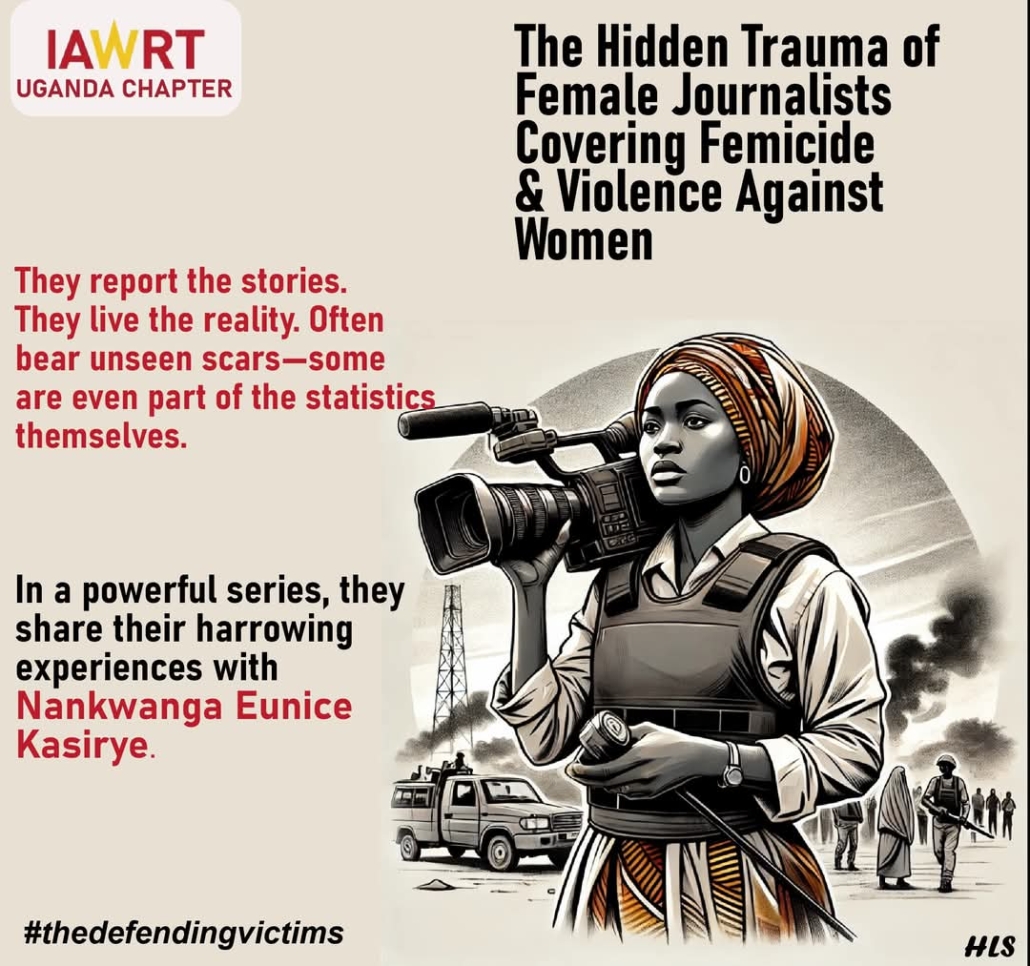
Defending the Defenders is a three-year story telling project profiling experiences of journalists who report on Violence Against Women and Girls (VAWG), and other female social justice defenders across Uganda and Africa. These “Defenders” not only amplify the suffering of survivors, but also silently carry their own psychological, Social and economic wounds.
Through their reporting, they create awareness and hold hands of others yet no one asks how they are copping. Society assumes they are immune to the violate they expose, overlooking their own vulnerability and pain. Defending the Defenders therefore seeks to break this silence, honour the emotional truths behind the professional bravery.
The project profiles two stories every month. Early examples include Beatrice Chelengant, a Uganda activist against Female Genital Mutilation (FGM), she was trolled, bullied, threatened and resented by her own people but remains a symbol of hope and dignity. Yvonne Moka of Botswana, fights with deep psychological trauma, after years of reporting about VAWG, finds solace in religion. And ZamZam, a Sudanese journalist lives under constant death threats for exposing decades of unrest in
Darfur region, she refused to be silenced. These are not just stories but chronicles of women warriors, wounded, yet refuse to retreat- fighting for the safety and dignity of every woman and girl.
The project builds a data base for the defenders, conduct background research, get in touch, plan and schedule for the interviews physical or virtual. I write the original scripts, collaborate on visuals, publish on my blog and social platforms, engage other publications to amplify visibility.
Explanation
Defending the Defenders story telling project addresses a critical gap often overlooked in reporting Violence Against Women and Girls (VAWG), the emotional psychological, social and economic toll these female journalists and other social justice defenders face while doing their work.
Most attention is on survivors in these reports, reporters could be facing the same violence and the toll she cultivates from being the witness and the bearer of the pain of the survivors. They amplify the voices of the survivors but no one checks on them, no one amplifies their plight- yet, silently the defender as a woman faces the same violence.
Defending the Defenders therefore seeks to break the silence, turn the microphone to the frontline defenders, who carry the double burden as survivors of the violence thy report on as well as pain from being the bearers and witnesses to the survivors’ pain.
The project is a turning point for the reporters of the stories become sources, survivors in their own right. This is to honour their emotional bravery and recognise their vulnerability. This will in the long run turn the data base of contacts, into a peer safe community, to hold each other’s hand from a place of understanding without the need to try to prove bravery but seek and accept support were one feels empty to keep going. Break the silence and create a judgement free community for the
defenders through solidarity and collaborations.
Methodology
Defending the Defenders uses mixed methods story telling approach to collect and document experiences of journalists who report on Violence Against Women and Girls (VAWG), and other female social justice defenders across Uganda and Africa.
Data Collection
The project identifies, mobilises and develops a pool of potential subjects identified through content analysis of the available and accessible content from physical media houses, organisations reports, social media platforms and, professional networks. The criterion includes consistent demonstrated engagement in VAWG reporting or social justice.
Background research is conducted to contextualise each subject’s professional course and public visibility. Semi-structured interviews are then arranged either physical in the, agreed upon locations or virtual via encrypted communication platforms to ensure participants safety and flexibility. Interviews are designed to elicit rich first-person narratives focusing on personal challenges, emotional burdens, professional risks, copping strategies and broader societal responses to their
work.
Data Analysis
Collected data is analysed through thematic analysis. Interviews, transcripts, field notes and secondary materials are coded to identify recurring themes such as secondary trauma, societal backlash, professional isolation, financial uncertainty, coping mechanisms and pathways to resilience. Attention is given to the intersectional factors such as geographical context, ethnicity and type of activism. The analysis seeks not only to narrate individual experiences but to map patterns that illustrate broader systemic issues affecting female defenders.
Content Production
I craft the original stories from the data, weaving quotes and lived experiences into compelling narratives. Each is accompanied by carefully designed content such as digital banners and cards as well as infographics developed through collaboration with graphics designers to enhance engagement and visibility.
Publication and amplification
The final pieces are primarily published on my personal Blog
https://nankwangaeunice.blogspot.com and cross shared on personal social media platforms as well as International Association of Women in Radio and Television (IAWRT). Going forward, I am actively engaging with broader media outlets and advocacy organisations to secure to secure publication and partnerships that amplify the stories to new audiences. This is intended to humanise the women behind the frontlines of the fight to stop VAWG.
Impact
Over three years Defending the Defenders aims to create and establish a vibrant multimedia archives that not only documents the emotional cost of frontline work but seeds a peer support community. By recognising these dual burden these defenders carry, the project aspires to break their silence, normalise seeking support and foster solidarity, healing and resilience among women defenders.