DEFENDING THE DEFENDERS Second Story

By Nankwanga Eunice Kasirye
Defending the Defenders is a three-year story telling project profiling experiences of journalists who report on Violence Against Women and Girls (VAWG), and other female social justice defenders across Uganda and Africa. These “Defenders” not only amplify the suffering of survivors, but also silently carry their own psychological, Social and economic wounds.
Second Story
A Mother Caught in Endless Conflict
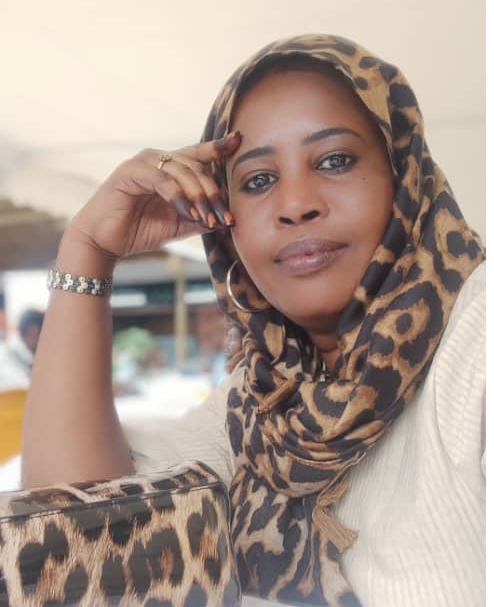
ZAmZam Mohammed Khater is not just a journalist; she is a relentless warrior against the shadows of war that have plagued Darfur for over two decades. At 38, she is a single mother of two—a 14-year-old son and an 18-year-old daughter—trapped in a land where fear dictates every sunrise and sorrow lingers in the air like an unshakable curse.
She has seen the unspeakable. Massacres that leave villages lifeless, women brutalized beyond recognition, children reduced to silent witnesses of carnage. She has fled through the darkness, gripping her children’s hands as gunfire echoed behind them, the night air thick with terror. And yet, through it all, she dares to dream.
“I dream of a Sudan where my children wake up to the sound of birds, not bombs. Where a mother can send her daughter to school without fearing she may never return.” — ZamZam, her voice trembling with sorrow.
Determined to comprehend the roots of this endless bloodshed, she pursued an education in political science, believing that knowledge was her strongest weapon against the forces that sought to silence her.
“The brutality of war and societal harshness against women in Darfur wouldn’t silence me. I knew that knowledge, not fear, would be my greatest weapon.”— ZamZam, her words fierce with defiance.
A Journalist on the Run, A Voice That Won’t Be Silenced
ZamZam believed in the power of truth, so she became a journalist. She exposed the brutal reality of Sudan’s conflicts, working as a freelance reporter, publishing stories without pay,she sounded the trumpet in all the available spaces she could access- her social media pages became the wall of the cries of her people- driven only by the urgency of amplifying the voices of the oppressed.
Her fearless reporting made her a target. The government labelled her a traitor, militias called her an enemy, and she was arrested twice, each time warned that her journalism would cost her life. Still, she refused to stop. She was later banished by all factions from her community.
“When I write, I don’t just tell my story—I tell the story of every mother who has buried a child, every girl who has been violated, every village reduced to ashes. They can take my home, my country, even my life—but they cannot take my words.” —Zamzam, her voice quaking with righteous fury.
The Horror of Darfur’s Unending Tragedy
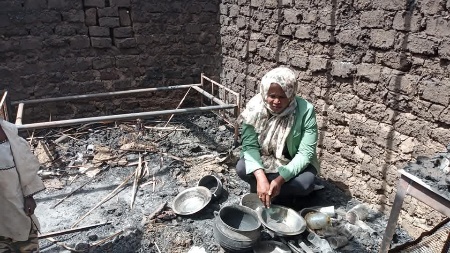
The Darfur conflict, which began in 2003, has left a devastating mark on Sudan. The Janjaweed militias have waged a campaign of ethnic cleansing against non-Arab communities, committing mass murder, sexual violence, and village destruction. More than 300,000 people have been killed, and over 3 million have been displaced.
Survivors live in fear, knowing that there is no justice—no courts, no police, no one to hold perpetrators accountable. Men are executed on sight. Women, left as the sole providers, are brutalized, gang-raped as they search for food and firewood.
ZamZam has seen these horrors firsthand. She once found a mass grave where seventeen community members had been murdered and pilled . In another instance, she came across a mother and her seven-year-old daughter—both victims of a gang rape. The child was bleeding, her small body broken. There was no doctor, no medicine, no hope.
Risking her own life, ZamZam went out to look for medicine to treat the child, knowing full well that even stepping outside could mean death.
“I have seen things no human being should ever have to see. But the world looks away while my people suffer. If no one will fight for them, I will.” — ZamZam reaffirms, her voice heavy with anguish.
From the War in Khartoum to Exile in Uganda
When war erupted in Khartoum in 2023, journalists became primary targets. Within months, eleven of ZamZam’s colleagues were assassinated for their reporting. Fearing she would be next, she fled to Uganda. But her struggles did not end there. Food is scarce, shelter uncertain, and the fear of being hunted never leaves her.
“Exile is not freedom. It is just another kind of prison. The only difference is that here, the bars are invisible.” — her voice laced with quiet despair.
A Mother’s Endless Worry
Though she is physically safe, ZamZam’s soul remains in Sudan. Her children are still trapped in the conflict, and communication is rare. Days pass with no news, leaving her gripped by fear. Recently, the home where her children were staying was attacked just because the people there were her blood relatives. Three young men were executed as the children watched.
She is torn between staying in Uganda, where she has no resources or community, and returning to Sudan, where certain death awaits. The weight of helplessness crushes her.
“I am a mother first. If I cannot protect my children, then what is the point of my survival? The anxiety over their safety is killing me. I barely sleep, I have tremors, hallucinations, always looking over my shoulder, thinking someone is following me… It is too much, yet I cannot be silenced.” — her words suffused with aching sorrow.
A Call for Solidarity
ZamZam has fought alone for too long. She needs a community that will stand with her, journalists who will share her burden, and support—financial, social, mental, and psychological—to keep her going. Her story is not just hers; it is the story of a people fighting for their right to exist.
She will not stop fighting, but she needs the world to listen.
“I don’t ask for pity. I ask for action. Stand with me, stand with my people, and together, we can bring change.” — her plea echoing with unwavering determination.